

Synergy
Efficiency
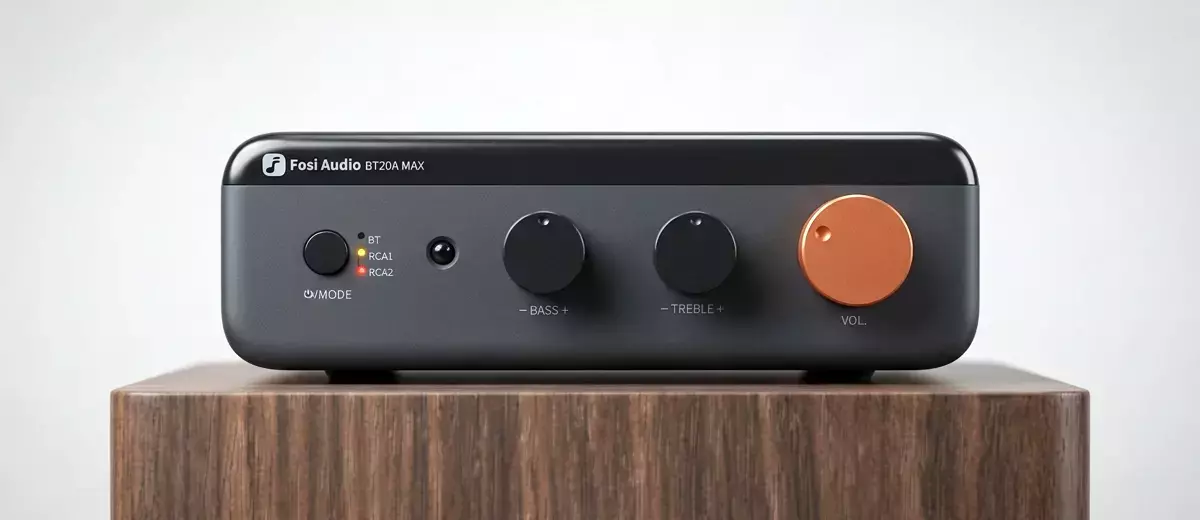
The Fosi Audio BT20A MAX is ideal with speakers ranging from 2-8Ω; there was no lack in driving any of the speakers I used.
I did not have any 4Ω speakers on hand, but driving both the Dynaco and KEF speakers was successfully achieved. I had no trouble driving both speakers I used.
Power
300W of Class-D power from the BT20A MAX should be plenty for your 4Ω speakers. The 180W x2 @8Ω is quite sufficient for both speakers I used, too.
Sometimes, as you add volume, you can add potential discrepancies in sound, such as distortion or spikes in sound quality. This did not occur as I raised volume levels.
I found that I could push whatever source and speaker combination I used to its full extent.
Pairings
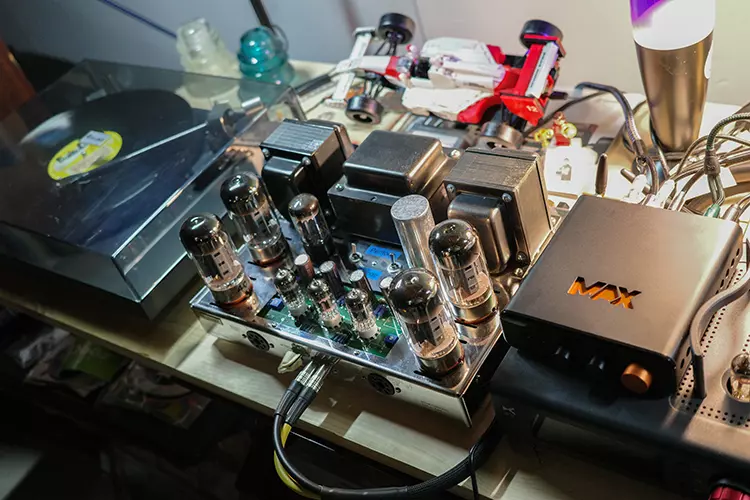
The BT20A MAX worked well across various platforms, ranging from streaming through my iPhone 16 Pro or the HiBy R4 to paired use between the JC Acoustics UDP5 and Oppo BDP83, and the Cambridge Audio Alva Duo using both the Pro-Ject Debut Carbon Pro and Denon DP1200.
I would say that my favorite use was through both turntables and the Dynaco A25s. Each turntable presented a slightly different sound, based not only on the cartridge but also on the sound from within.
The Debut Carbon Pro sounded more laidback and smoother compared to the energetic Denon DP1200. This made for a wonderful dichotomy of sound. Volume levels were never lacking, and the BT20A MAX could easily slip into rotation with my main system.
In the same vein, the HiBy R4 sounded more vibrant than the JC Acoustic/Oppo pairing when using CDs.
I did have to raise the volume higher when using the Oppo, but this could be easily accommodated by setting the UDP5 to full volume as a DAC.
As an office system paired with the KEF 150s, the BT20A MAX showed its versatility in not only a nearfield experience, but also a small room setting, with good results.
Throughout all the pairings, there was never a lack of power and energy coming forth from any of the sources. The versatility of the BT20A MAX paired well with all the above.
Selected Comparisons
Fosi Audio ZD3
Features
At its heart sits the ESS ES9039Q2M DAC chip, which enables the ZD3 to achieve an industry-leading 126 dB SNR and a THD+N of less than 0.00008%. Both numbers are better than the BT20A MAX.
One of the ZD3’s most appealing features is its user-replaceable DIP8 dual discrete op-amps, as opposed to the TI op-amps in the BT20A MAX.
The unit ships with LME49720 op-amps, but users can swap them for alternatives like NE5532 (which the BT20A MAX uses), MUSES02, or SS3602 to tailor the sound signature to their preferences.
The ZD3 also comes with some nice-to-have connectivity features like Bluetooth and the novel inclusion of HDMI ARC inputs, making it fit perfectly into different listening set-ups.
Different inputs separate the BT20A MAX and ZD3. The pairing of the two together might be a better option than a separate comparison.
Design
The ZD3 follows Fosi Audio’s modern design language that I first saw on the K7, featuring a clean, minimalist aesthetic that prioritizes both form and function. The BT20A MAX follows the new design aesthetic as well.
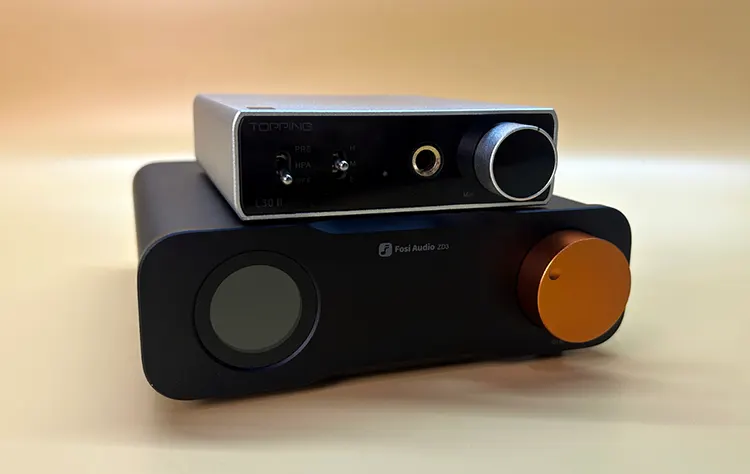
The all-metal chassis is constructed from CNC-machined aluminum with a matte black anodized finish that resists fingerprints and looks professional in any setup. The BT20A MAX on top with the vent fan helps to differentiate the BT20A MAX from the ZD3.
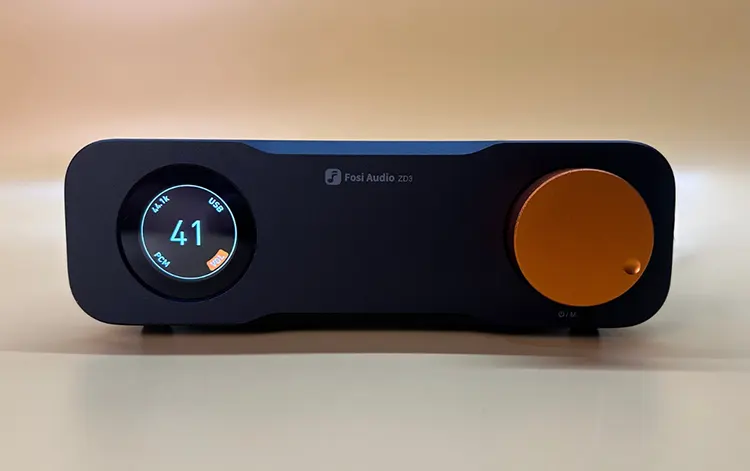
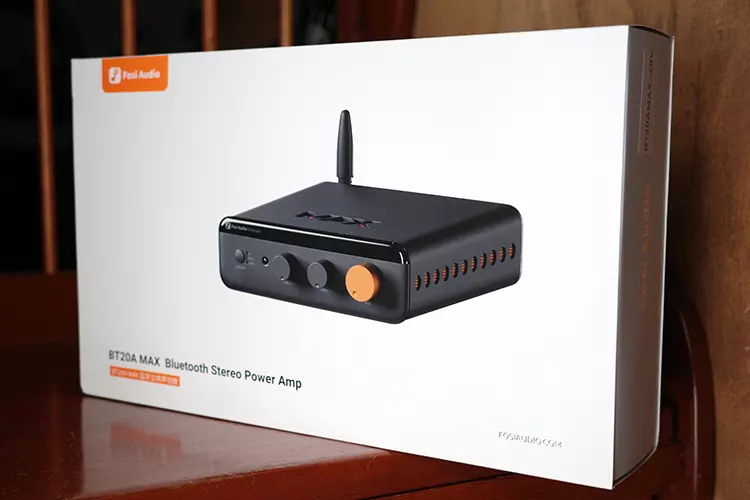
The front panel is dominated by two circular elements: a bright orange volume knob on the right and a 1.5-inch round OLED display on the left. The lack of features on the front and the curvilinear shape help to differentiate the two.
This symmetrical design creates a balanced, modern appearance that’s instantly recognizable as part of Fosi’s Z-series lineup. The BT20A MAX, even with its curved shape, looks more traditional.
The volume knob is made of aluminum with knurled edges for improved grip. Both are orange and function well, besides looking the part.
The OLED display is crisp and bright, showing key information like active input, volume level, sample rate, and bit depth. The BT20A MAX does not have a display.
The build quality of both is excellent, with tight panel gaps and a solid, unified feel.
Performance
The Fosi Audio ZD3 presents a warm, smooth, and musical sound signature that prioritizes listenability and natural timbre over clinical precision. The BT20A MAX remains more neutral.
Both present a forgiving signature, with the ZD3 being warmer. The neutral signature of the BT20A MAX allows music to shine without becoming shrill or bloated.
Bass response is slightly elevated in the mid-bass, lending kick drums and bass guitars body without becoming overwhelming. The BT20A MAX can add more with tone controls or a subwoofer.
The midrange is the ZD3’s strongest suit, delivering vocals and instruments with natural warmth and realistic texture. Male vocals carry appropriate chest resonance, while female vocals maintain clarity without sounding thin. The BT20A MAX’s strength lies in the midrange, too.
Treble is relaxed and smooth, rolling off gently in the upper regions. This avoids harshness even with bright recordings, though at the cost of some air and sparkle. The same rolled-off top end presents a pleasant response in the BT20A MAX.
Soundstage width is respectable, creating an enveloping presentation. However, depth layering is somewhat compressed, with instruments tending to cluster. Ditto for the BT20A MAX.
Imaging is clear enough to place instruments, though not with pinpoint precision. In complex mixes, elements remain distinguishable, but exact positioning can feel approximate. The BT20A MAX also lacks micro-detail precision, which can hinder imaging.
Dynamics are a highlight, with satisfying impact and natural note decay. The ZD3 conveys the weight and texture of real instruments effectively, giving music an organic, analog-like quality. This is a highlight of the BT20A MAX, too.
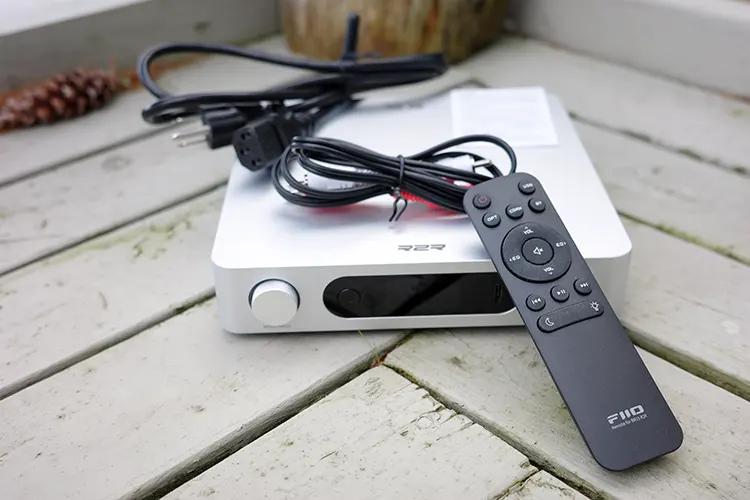
FiiO BR15 R2R
Features
An R2R DAC is a type of digital-to-analog converter that translates binary data into analog voltage using a simple but precise resistor network.
Again, the comparison may seem different, but both models hope to achieve nearly the same results: presenting an option across multiple platforms.
The result of the R2R is a more direct signal path, prized by some audiophiles for its natural tonality and transient clarity. The neutral signature of the BT20A MAX matches.
Because every resistor pair contributes a specific voltage step, accuracy depends on how tightly matched the resistors are. Even minor mismatches can affect linearity, leading to increased cost and complexity to maintain consistency.
An R2R DAC seemingly represents a purist approach to digital-to-analog conversion: simple in theory, intricate in execution.
The BT20A MAX represents Fosi’s approach to a dedicated desktop amplifier that is used in a passive speaker situation, instead of being powered like the FiiO.
The FiiO BR15 R2R benefits from this proprietary 24-bit R2R resistor array architecture, featuring 192 precision thin-film resistors arranged across four channels with 0.1% accuracy and ultra-low 3 ppm temperature drift.
The BR15 R2R includes a 10-band parametric EQ system, accessible via the FiiO Control app or web interface, offering precise frequency-specific adjustments.
The BT20A MAX counters this with the bass & treble control, and the subwoofer option.
Design
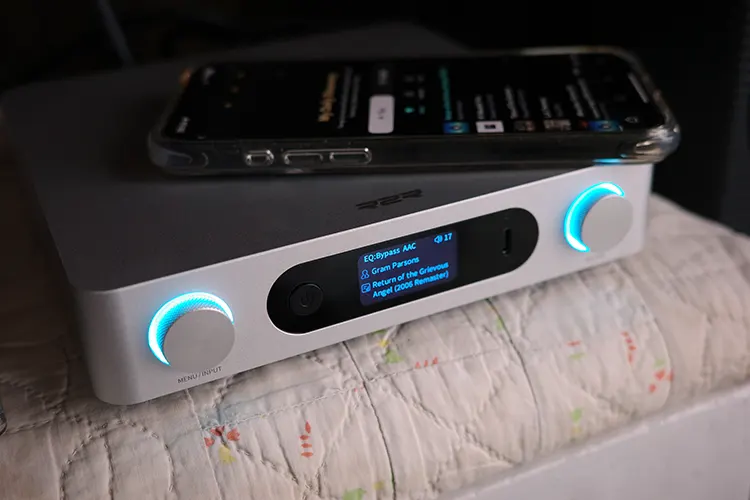
Measuring approximately 7.5 inches square, the BR15 R2R’s closed-top design is highlighted by the two front knobs, which both light up in the frequency response color, and an oval OLED screen, which shows necessary information. The unit is light. but almost too light.
The silver accentuates the design, where the BT20A MAX presents a more subdued, fade into the background look, except of course for the orange volume knob.
The unit features a unibody CNC-machined aluminum chassis that comes in either a black or silver anodized finish. My unit is silver, and its finish provided good scratch and fingerprint resistance during testing.
The rounded black OLED display sits centered between the two lit knobs, one for menu options and the other for volume control and sub-menu choice.
Both knobs feature tactile detents and smooth rotation with distinct stops, as well as RGB addressable LEDs, which change based on bitrate input.
The screen is hard to read, unless used in a nearfield situation. The BT20A MAX not having a screen makes this a draw for me.
Substituting a USB-C connection on the front instead of headphone jacks, the BR15 R2R can be used with a USB-C AUX input. When both are connected, the front does take preference.
The BT20A MAX uses only the dual RCA inputs along with BT. This is not a slight to me, since you can hook an external DAC to the BT20A MAX, which might have other input options.
On the opposite side of the OLED display is a black power button, subtly laid out. I do like the noticeable orange volume knob of the BT20A MAX.

Performance
Using the R2R technology has paid off for the BR15 R2R. Detail was rich and inviting, with clarity that allowed for clear, concise music to come across without being sharp, thin, or dry.
Detail retrieval was better than the BT20A MAX, as it should be, since the Fosi is a Class-D amplifier.
The emotive effect of that detail retrieval made for an enveloping, organic sound, which also provided the necessary clarity for the subtlety of music to come forth.
The neutral signature of the BT20A MAX was nonetheless enticing, since this allowed the source to promote the signature offered.
The lower regions grabbed hold when called upon, and the upper stretched when necessary. The midrange came across as inviting, enveloping, and teasingly thorough.
Never was there a lack of depth or thinness to the music, coming across as emotive and expressive. The BT20A Max, of course, can have the addition of a subwoofer for the low end.
The 3D awareness of the balanced XLR output into appropriate listening devices proved fruitful and expansive. Choice of speakers plays as large a part in the signature of the BT20A MAX as does the input source.
Even with speakers not in ideal locations (yet), there was never a lack of one channel or overbearing of another. Both provided good holography and expanse to the presentation.
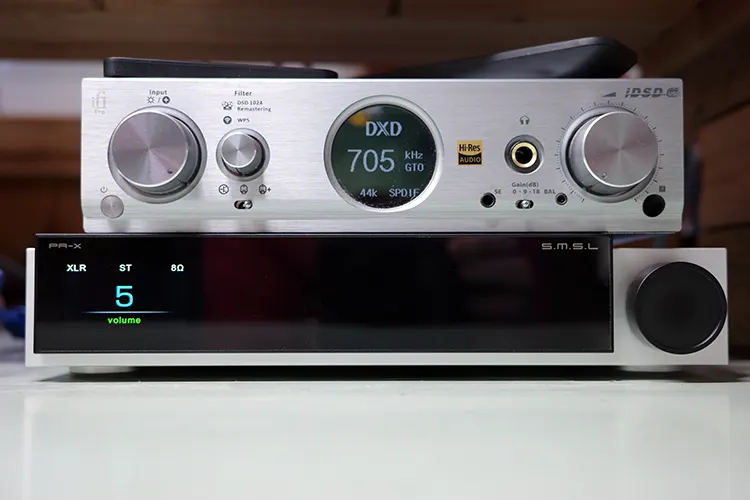
SMSL PA-X Gallium Nitride
Features
The SMSL PA-X uses Infineon’s latest Gallium Nitride (GaN) FET, with a switching frequency of up to 1MHz. This is probably the most direct comparison made here, but the SMSL costs significantly more.
Instead of a rolling or slow frequency response time, this 1MHz switching carries out changes much more quickly, with a (reportedly) more accurately represented signature.
The Texas Instruments advanced volume chip, PGA2311, is used, with more steps in the volume control, along with purportedly an ultra-low distortion. The TI op-amps in the BT20A MAX perform as expected, too.
With Class-D power up to 250Wrms x2 in 4Ω, and 200Wrms x2 in 8Ω (Mono 8Ω: 500Wrms x1), the PA-X can drive a variety of speakers while consuming a fairly low 40W of power (nominal). Power is comparable in the BT20A MAX, with slightly more in 4Ω, and slightly less in 8Ω.
The PA-X also possesses overheating and over-current protection for those times it is driven past its capacity, something I did not approach in testing.
An SNR of 115 dB allows for a large, expansive sound combined with very low distortion (0.003% THD). The numbers are similar in the BT20A MAX, and the fan helps to control excess heat.

Design
For a long time, SMSL was known for plain black boxes. Then silver kicked in with more flair, matching the BT20A MAX’s version of “stepping outside the box.”
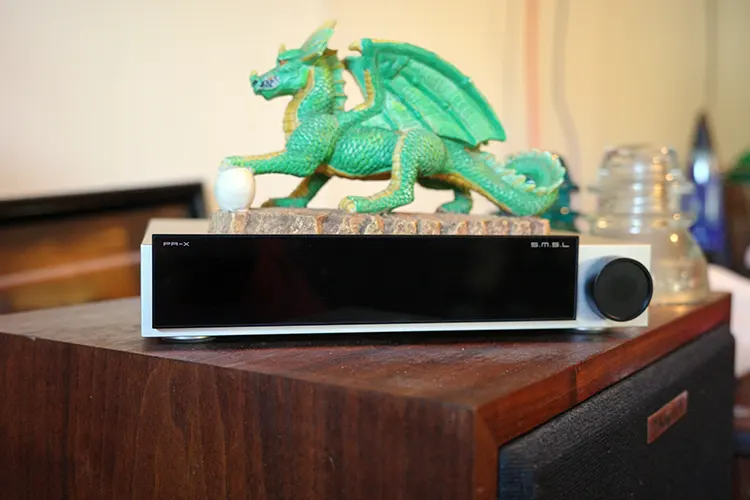
The PA-X is of the latter, shod with a black plexiglass front cover. I wish more of that cover was taken up with electronic responses, such as EQ or bitrate, to break up the long frontal plate.
That plate has the necessary information on the left side: amperage, volume, stereo or mono, and input level. There is no such option on the BT20A MAX, with simplicity ruling there.
The black volume knob can be used for volume or accessing sub-menus. The front plate sits slightly above the aluminum case, so stacking should be done with care. While the knob helps break up the front, I prefer the orange volume knob of the BT20A MAX.
The sides have black plastic slotted “vents” to offset the silver and provide a heat release area; however, they aren’t ventilated. The side vents are functional on the BT20A MAX, in concert with the top fan.
The back panel has the standby switch, two sets of banana plug speaker jacks, a dual RCA source input, and dual XLR inputs. The BT20A MAX is similar in speaker connection but lacks XLR inputs.
I appreciate the heft of the PA-X, which suggests a hearty amplifier section and internal heat sink, though I would have liked more flair.
The BT20A MAX is no lightweight, but the PA-X carries a more upscale look. As it is, the PA-X can occupy a place on your desktop unobtrusively. Both will certainly look the part.
Performance
To me, most SMSL units are known for a neutral(ish) signature that can lose note weight in some parts. While the sound emanating from within is vibrant, you might wish for weightier notes.
The PA-X delivers very good note weight to go along with a vibrant character that is neither too thick nor too thin in quality. I never had to raise the volume level too high, either. The neutral signature of the BT20A MAX matches the PA-X, except in levels of detail.
Most of the time, I limited the source volume, so I could press the KEFs through the PA-X, with good results.
I never came close to the BT20A Maximum headroom of the PA-X, volume-wise, which speaks to the power in reserve. The same held for the BT20A MAX, and I enjoyed pushing it through the 150s and A25s.
The treble region comes across with good extension and a presence that ties nicely to the midrange, which sits even with both ends. The BT20A MAX cannot match that top end, but rolls off nicely to prevent sibilance.
Punctuating bass notes held tight, with little decay, adding to a sharpness that prevented note weight from becoming too elongated.
The attack was quick as well, giving a good, succinct definition to the notes across the spectrum. The subwoofer option on the BT20A MAX provides the ace here over the PA-X.
The PA-X has that neutrality, which allows it to pair with different sources, imbuing the character of the source or DAC nicely.
The increased cost certainly plays a part in the PA-X benefiting over the BT20A MAX, but the BT20A MAX should still be considered for an entry-level or secondary system.
My Verdict
For a starter or secondary system, the Fosi Audio BT20A MAX desktop wireless-capable power amplifier covers all bases for sources and playability. Whether you are integrating a subwoofer or rotating in older gear, it handles the task with ease.
The sound quality is well worth the entry price. With plenty of power on tap, it easily drives speakers in medium to large rooms, while filling the nearfield niche perfectly for desktop users.
While some might notice the internal fan or the lack of USB-C, XLR, or Coax inputs, adding a dedicated DAC easily fills those voids.
Any lack of micro-detail is forgiven by its vibrant yet laidback signature. It rewards the gear attached to it, offering a presentation that can be tailored by your choice of components, and that is half the fun.
The Fosi Audio BT20A MAX has earned a permanent spot in my rotation, both on my desk and wherever else I see fit to place it in the mix.
Fosi Audio BT20A MAX Technical Specifications
- Channel: 2.1
- Chipset: TI TPA3255, NE5532
- BT20A MAX Output Power: 300Wx2@4Ω
- RMS Output Power: 180Wx2@8Ω
- Input: RCA1/RCA2/Bluetooth
- Output: Speaker Out/Sub Out
- SNR: ≥112dB
- THD+N: ≤0.003%
- Terminal Impedance: 2-8Ω
- Bluetooth SoC: Qualcomm QCC3095
- Bluetooth Device Name: Fosi Audio BT20A MAX
- Bluetooth Version: 6.0
- Bluetooth Connection Range: ≤15m (50 ft)
- Bluetooth Audio Codecs: SBC/AAC/aptX/aptX HD/aptX Adaptive/aptX/LDAC
- Frequency Response: 20Hz-20kHz(±0.5dB)
- Voltage Range: DC 32V-48V
