

Synergy
Efficiency
Despite its tube components, the Warmer R2R operates remarkably quietly, a quality reinforced as hinted by its low noise rating.
Discernible hiss is almost negligible and could as well be originating from the amplifier rather than the DAC. In general, noise levels should not be a concern unless the Warmer R2R is paired with extremely sensitive equipment.
Power
As mentioned, the XLR output is quite a bit more powerful than the RCA outputs, though it doesn’t suggest the RCA outputs are underperforming.
Instead, they can still sound solid in the bass punch and clean, also not dampened in the upper frequencies, just that the separation doesn’t feel as strong, and the bass doesn’t slam as clean when in need.
For those who have dedicated amplifiers with XLR inputs, it is recommended to use the XLR input for better performance, and it also helps suppress noise over a longer cabling range.
Pairings – FiiO K15
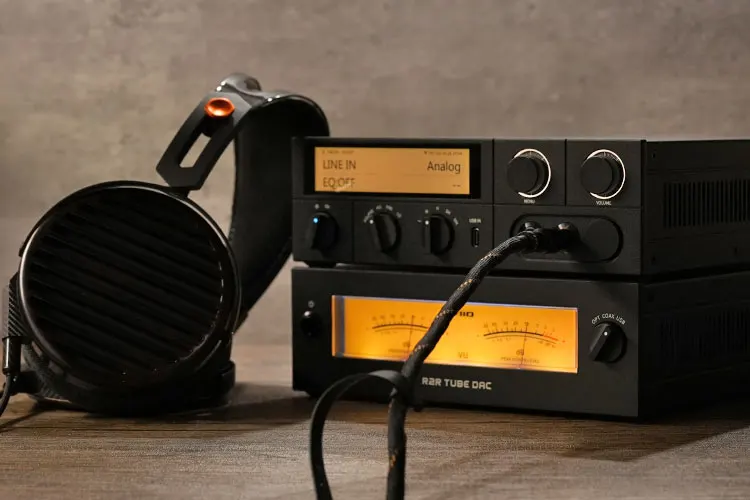
Using the FiiO K15 as an amplifier, bypassing its dual AKM AK4497SVQ DAC chips, when playing lower-resolution music, the combo with Warmer R2R exhibited a more robust, defined, and punchy low-end performance, enriching vocals with added richness and brilliance.
The treble roll-off sounded more natural on the Warmer R2R combo. Whereas the K15’s standalone, original decoding emphasized higher frequencies, resulting in smoother yet less engaging midrange expression, particularly noticeable with darker and grainier voices.
The K15 on its own still sounds satisfactory in terms of vividness and technicalities, but it is not as expansive, textured, and separated, defined in positioning, nor as holographic in the vocal image as with the Warmer R2R.
Overall, I find this combo scaling quite well, and this is a good enhancement on the timbral qualities.
Pairings – FiiO K17
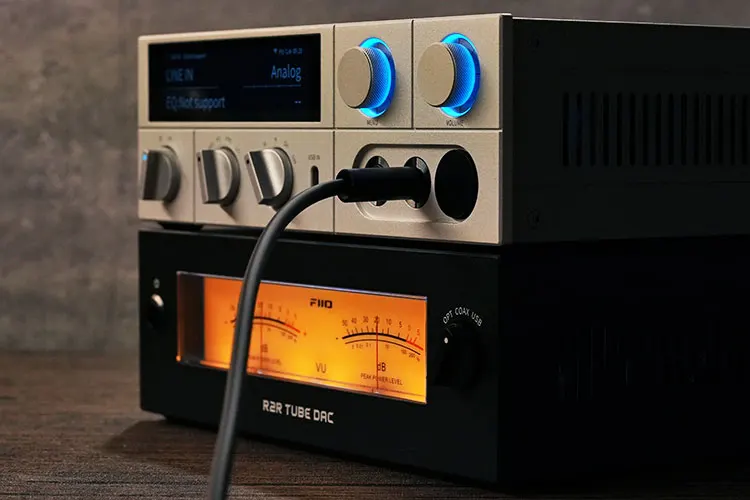
Connecting the Warmer R2R with the K17 revealed a similar behavior, but with more details and an improved extension.
The combo delivers a potent, lusher bass line, adding weight and texture to fundamental vocal frequencies, which gives it a bit more forwardness and dynamics alongside the slightly elevated upper vocal frequencies.
Guitar solos sound substantial and tense, while the bass resonated with more air and harmonics, highlighting the presence of string instruments like violas and double bass.
You can choose between clarity in OS mode, which sharpens the picking and gives more air, or use NOS mode for a lusher tone with the treble smoother.
The Warmer R2R also offered richer details and texture to the upper vocal frequencies, with added brilliance without introducing harshness.
I find the Warmer R2R more pleasing in terms of coloration and technicalities, and vocals are given better weight. You may use the equalizer on the K17 to give the bass a bit more power.
With a stronger amplifier design and linear PSU inside, the K17 scales nicely with the Warmer R2R.
I think the perceived quality is similar compared to its inbuilt decoding solution, but it feels lusher, more expansive, and textured in the bass and vocal range with the Warmer R2R.

Pairings – SONCOZ SGA1
When paired with the SONCOZ SGA1, which accepts XLR input signals, the qualities on the Warmer R2R are more pronounced due to significantly higher output levels on the XLR connection, enabling cleaner bass attacks and stronger definition in the upper frequencies.
The combo imparts a well-controlled, transparent, and impactful signature. With lighter loads, the output can sound somewhat lighter in tone, and with the HD 800s and MOONDROP Venus, a good balance is achieved.
The pairing delivers decent depth perception, providing a strong stereo image for vocals, allowing voices to sound more expressive, and has sufficient separation between complex backing instruments and vocalists.
This enhancement benefits genres like jazz and fast EDMs, Acid synths, Dubstep, as well as 80s, 90s, and modern pop music, adding a nostalgic touch to contemporary tracks while maintaining strong technicalities and a very smooth timbre.
Classical music also creates an airy ambience that allows you to better feel the reverbs in the venue. While brilliance in woodwinds and brass instruments is nicely captured without sounding harsh or sharp.
Selected Comparisons
Eversolo DMP-A6 Gen 2
Technical
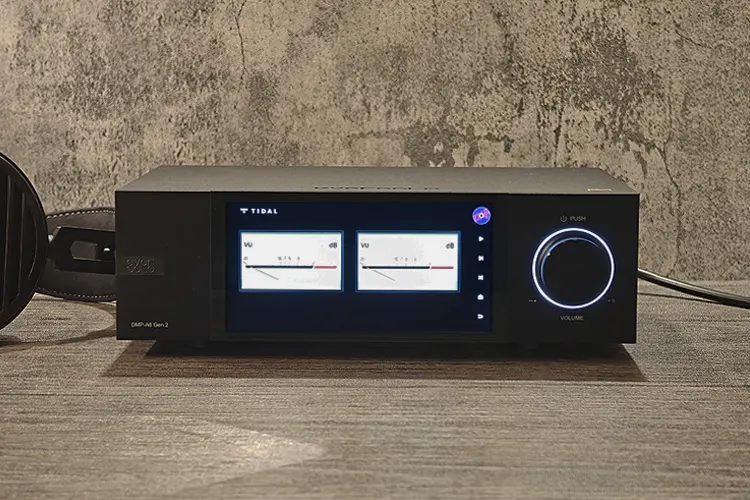
I have extensively utilized the DMP-A6 Gen 2 as my desktop source due to its versatility, which prompts me to explore the potential enhancements in overall quality and timbre by incorporating the Warmer R2R for decoding.
Equipped with dual ES9038Q2M DACs, dual clocks, and the TI OPA1642 for amplification, the DMP-A6 Gen 2 boasts a dynamic range and SNR exceeding 128 dB, with a THD+N performance measuring at 0.00009%.
This performance outshines the Warmer R2R due to its architecture, where tube implementations may introduce subtle noises on paper, even if they are not audible.
The DMP-A6 Gen 2 supports HDMI 5.1-channel decoding and 24-bit 192kHz decoding over Optical and Coax connections, which is higher than the rates on the Warmer R2R, which could be more limited in codec support due to its R2R architecture.
Design
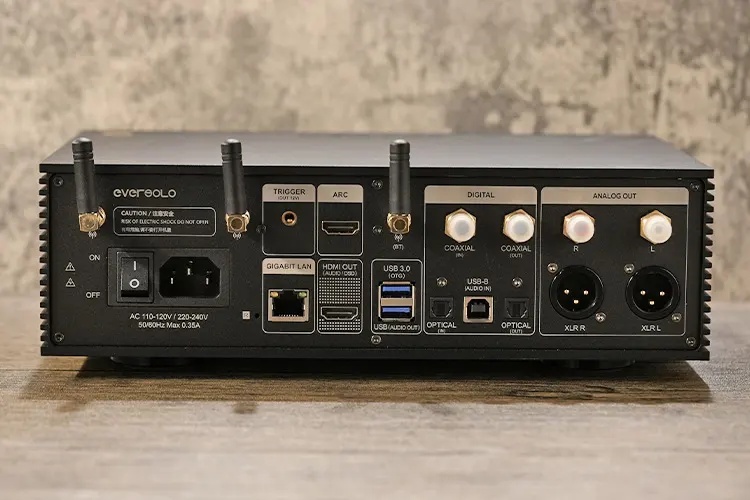
While the Warmer R2R is a dedicated DAC and the DMP-A6 Gen 2 has more functions integrated, I will focus more on the performance of their output as well as utility here.
With the DMP-A6 Gen 2, you get various digital inputs just like the Warmer R2R, though you can also connect to your other devices over Bluetooth, which I think could be a small caveat on the Warmer R2R.
Despite this, you could also connect a Bluetooth receiver to its Coax input, such as the BR15 R2R from FiiO.
For sure, the best of both worlds would be connecting the Warmer R2R to the DMP-A6 Gen 2 or other integrated source to enjoy maximized connectivity. It is also noteworthy that both brands are very well built and have a clean, minimalist design without excess buttons.
Performance
I tested the two standalone devices connected to other amplifiers, and together with the Warmer R2R, hooked up to the DMP-A6 Gen2.
The Connection is a quick process; simply stack them up and link them with a Coaxial or USB cable, the latter being more readily available.
The difference is noticeable, with more elaborate mid-bass, dynamic range, and stronger stereo imaging on Warmer R2R’s output.
This is likely attributed to the Warmer R2R’s discrete power supply and dedicated decoding circuitry, which bring about enhanced texture and resolution.
Comparing the RCA and XLR outputs of the two devices as a DAC, and connecting to an external amplifier, the DMP-A6 Gen2 appears smoother, slightly drier in the midrange, and not as stereophonic. It does not provide as much depth and layering, though it enhances the vocal tonal contrast.
The Warmer R2R adds more warmth to the output, which works nicely with cleaner-sounding devices while sounding more defined.
If you prefer a cleaner, more laid-back presentation, the Warmer R2R still gives a slightly more defined and textured output with stronger weight in the mids and more agility in the bass with its OS mode compared to the DMP-A6 Gen 2.
I still think the DMP-A6 Gen 2 does a nice job, as it is an integrated streamer but not a dedicated DAC, and somehow the Warmer R2R beats the dual clocks and DAC chipsets in the DMP-A6 Gen 2 and delivers more depth and engaging timbre.
The output is also more textured, cleaner, and effortlessly extended, and it works nicely across different genres, offering stronger technicalities in terms of decoding.
Even with sharper K-pop and ACG music, it creates a more three-dimensional stage with better separation and control.

SMSL D1
Technical
I acquired the SMSL D1 for its implementation of ROHM decoding chipsets, similar to some of its higher-end counterparts that I have yet to evaluate.
Positioned as an entry-level USB-powered DAC, the D1 supports decoding up to 32-bit/768kHz and DSD512, driven by the ROHM BD34352EKV decoding chipset.
It boasts an impressive 126dB signal-to-noise ratio. It facilitates USB connectivity through the XMOS XU-316 solution and is compatible with Coaxial and Optical signals.
One reason for this comparison is that not all amplifiers feature XLR inputs, prompting me to explore the advantages the Warmer R2R offers over the SMSL D1 when both are connected to a stable and clean power supply.
This assessment aims to highlight the strengths of the Warmer R2R in comparison to the SMSL D1 in a setup without XLR inputs, and to see how the affordable D1 with rather strong technical measurements performs against the Warmer R2R.
Design
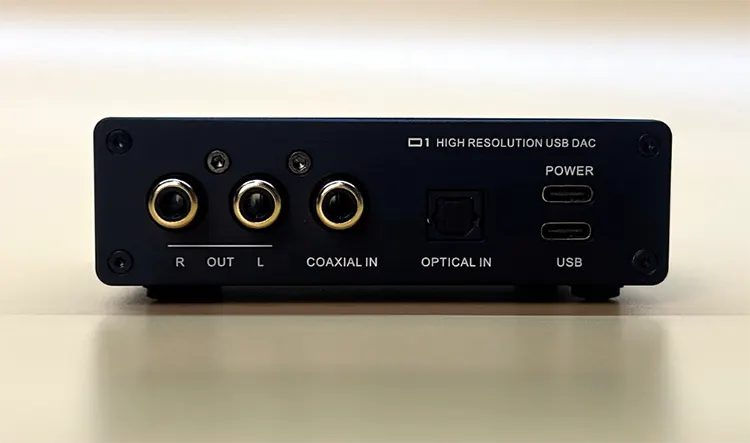
The SMSL D1 is notably more compact, primarily due to its USB power source and the absence of features such as VU meters or XLR outputs at the back.
Its sleek design and straightforward layout make it self-explanatory, requiring minimal explanation. When comparing sizes, the Warmer R2R is approximately six times larger than the D1.
One observation regarding the D1 is the occurrence of small popping or relay noises within the circuitry, a common issue that seems unavoidable with current ROHM designs.
While this issue isn’t significant, it can be noticeable during moments of deep musical immersion, potentially diverting attention away from the listening experience.
Performance
The SMSL D1 performs exceptionally for its class, characterized by an organic timbre, enveloping bass ambience, and smooth mid-range delivery.
However, treble extension exhibits limitations likely attributable to USB bus power constraints or standard cabling. Experimentation confirms that pure silver RCA interconnects effectively mitigate this, restoring high-frequency brilliance.
A direct comparison with the FiiO unit reveals a distinct performance gap. While both devices share a tuning philosophy, prioritizing organic lower-register fullness and spectrum-wide clarity, the FiiO delivers significantly greater impact.
The Warmer R2R also offers superior resolution and bass layering, with natural decay characteristics that enhance depth perception.
During dense, high-BPM playback, the distinction widens. The Warmer R2R maintains a darker noise floor and superior dynamic range. The D1, while pleasingly articulate, lacks the textural retrieval and extension of its competitor.
Utilizing the Warmer R2R’s XLR output further accentuates these traits, increasing bass energy while preserving mid-range separation. This balanced connection tightens low-end bloom, resulting in a perceived shift toward greater treble air and brilliance.
In isolation, the D1 serves well for slow Jazz and high-resolution mastering, despite its evident power ceiling. The Warmer R2R demonstrates a substantial leap in definitive power, note weight, and stereo imaging.
The FiiO tuning achieves clean, fast bass transients without excessive coloration, maintaining the strict control and resolution required to accurately render the tension in aggressive brass and string compositions.
My Verdict
FiiO has made significant strides in design and tuning in recent years. If you had asked me a few years ago, I would never have imagined FiiO stepping in to design a high-resolution R2R and Tube buffer DAC.
However, this time around, FiiO has delivered a stunning product with solid build, a lovely design, and satisfactory performance.
The sound performance is commendable, offering a clean tonal signature with a decent sense of accuracy and naturalness that blends the merits of R2R and tube amplification, without overly coloring the output.
The Warmer R2R embodies a delightful blend of retro tuning and modern technical capabilities, reminiscent of higher-end tube amplifiers. As a capable DAC, it excels in enhancing performance when paired with integrated devices that may lack strong decoding capabilities.
Beyond improving technical aspects, the Warmer R2R also introduces a richer, more engaging signature that elevates the listening experience to a satisfying level.
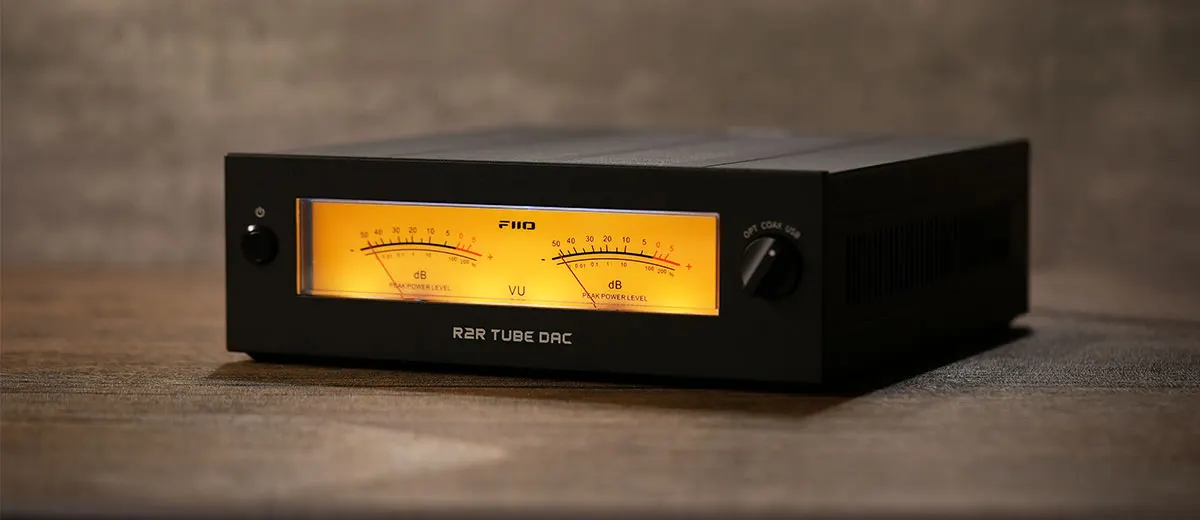
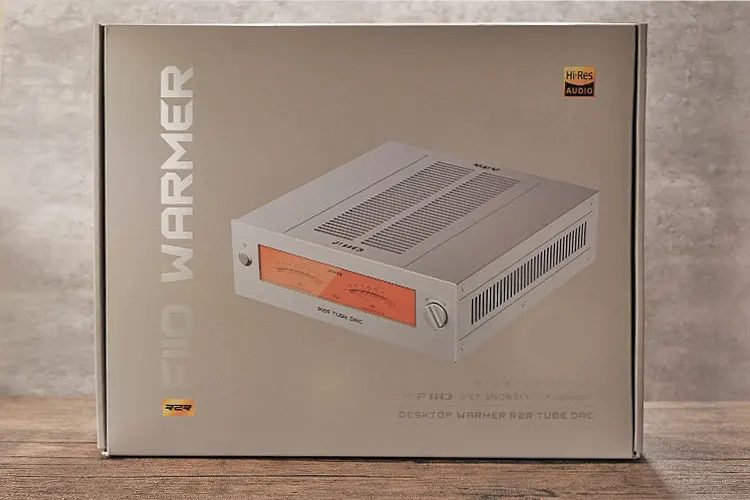
Last but not least, I particularly appreciate the inclusion of the physical VU meter. This is a charming touch to the design, and it is seldom featured on desktop designs. The amber lighting also adds good charm to the listening environment.
Overall, for those who love the rich texture and timbre on R2R and Tubes and want to make the discreet headphone amplifier setup more engaging, the FiiO Warmer R2R undoubtedly offers great value and is a technically capable and fun option to consider.
FiiO Warmer R2R Technical Specifications
- Decoder: Fully differential complementary true 24-bit R2R resistor array
- Tubes: 4* JJ ELECTRONIC E88CC
- USB Decoding rate: 384kHz/32bit max
- Coaxial Decoder: 192kHz/24bit
- Optical Decoder: 96kHz/24bit
- RCA Output: L+R≥1.8Vrms+1.8Vrms (1kHz@10KΩ)
- XLR Output: L+R≥3.3Vrms+3.3Vrms (1kHz@10KΩ)
- Frequency Response: 20Hz~45kHz: attenuation < 2.4dB
- Signal-to-Noise Ratio: ≥114dB (A-weighted)
- Background Noise: ≤7µV (A-weighted)
- THD+N: 0.053% (1kHz/-7dB@10KΩ)
- Dimensions: 223.5 × 213 × 66.8 mm
- Weight: 2.9kg
