

Synergy
Power
The K15 can output up to 3000mW per channel, which is sufficient for most headphones on the market. With five different gain levels, there is good flexibility in matching various IEMs, planars, and demanding gear.
Noise control is satisfactory in general. At a higher gain level, the background noise is still faint when listening via sensitive headphones.

Pairings
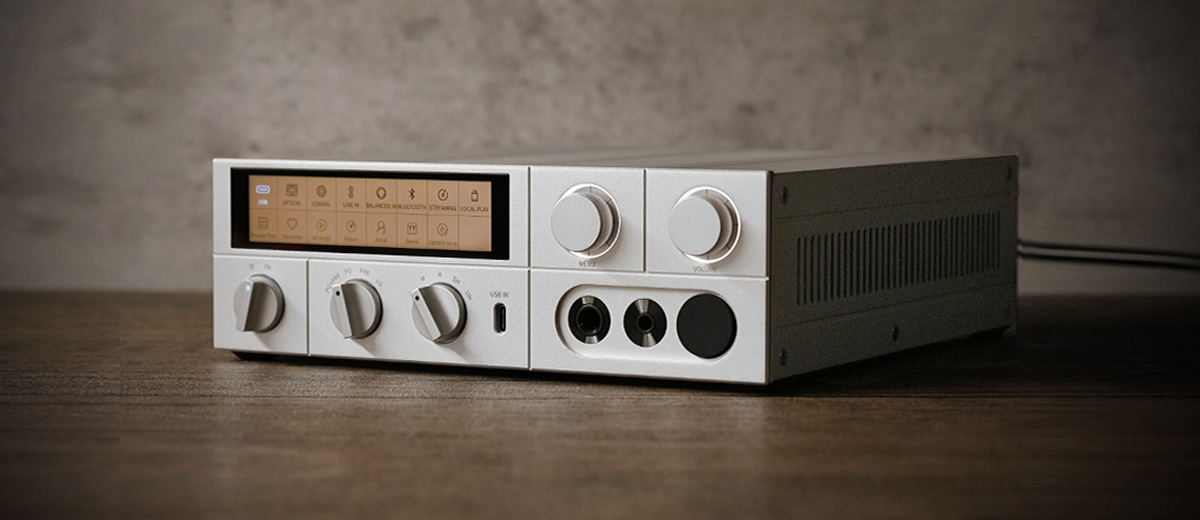
The five-level gain knob is a standout feature when it comes to pairing versatility. It enables users to switch between different gain levels instantly, without needing to navigate through multiple menu clicks.
The power and flexibility of its gain configuration allow the K15 to deliver an engaging and dynamic sound with sensitive headphones and IEMs, while still maintaining an extended, natural, and well-defined presentation with higher-impedance gear.
When tested with the sensitive Meze Audio 105 SILVA, the K15 delivers a solid sub-bass presence while retaining sufficient nuance and air in the decay.
Its warmth and body make it particularly suitable for genres like R&B and rock, as well as live recordings, where a sense of arena-like ambience is conveyed with liveliness and depth. Bass instruments come forward with confidence and presence.
The K15 performs well in maintaining strong dynamics and responds to current demands with impressive agility.
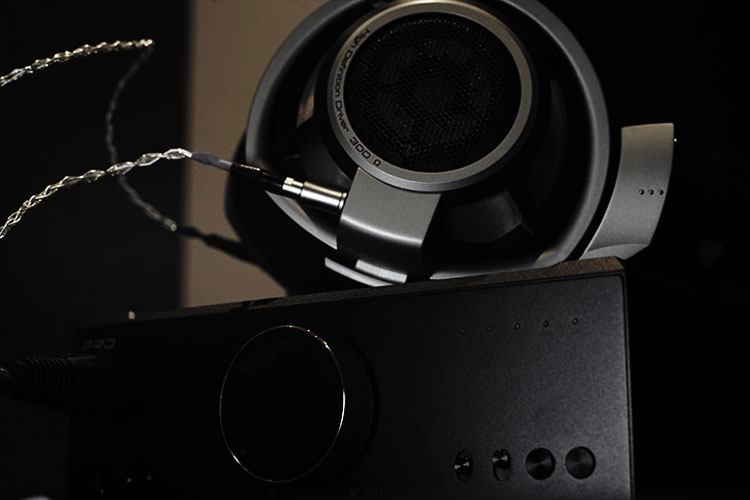
It also remains tonally balanced, even at the highest gain level. When tested with the HD 800S and HIFIMAN ISVARNA, both headphones delivered clean and impactful bass without sounding compressed or flat.
The ISVARNA exhibits a slightly thicker low end while retaining acceptable dynamics, though it may benefit from pairing with a cleaner-sounding source.
The HD 800S, on the other hand, sounds natural and enjoyable, and with a minor EQ adjustment in the upper vocal range, vocals become more clearly defined and airy.
Additionally, it’s worth noting that the K15 is quite revealing of poorly mastered recordings. For optimal performance, especially when using the Bluetooth connection, it is recommended to use high-resolution audio files.
Select Comparisons
FiiO K17
Technical & Design
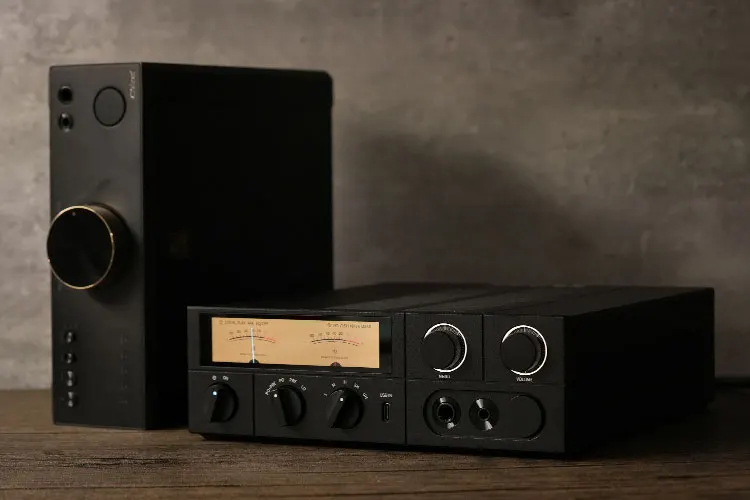
The K15 is derived from the K17 with the same control interface and some shared hardware.
As mentioned, the biggest differences are the decoding solution (DAC), the power supply unit, and the discrete chipset for equalizing, which is removed on the K15.
The K17 has higher peak outputs at 48Vp-p, and the K15 measures 41Vp-p. Noise level and SNR are slightly better on the K17 at <7.9μV and ≥124dB compared to K15’s <9.5μV and ≥120dB.
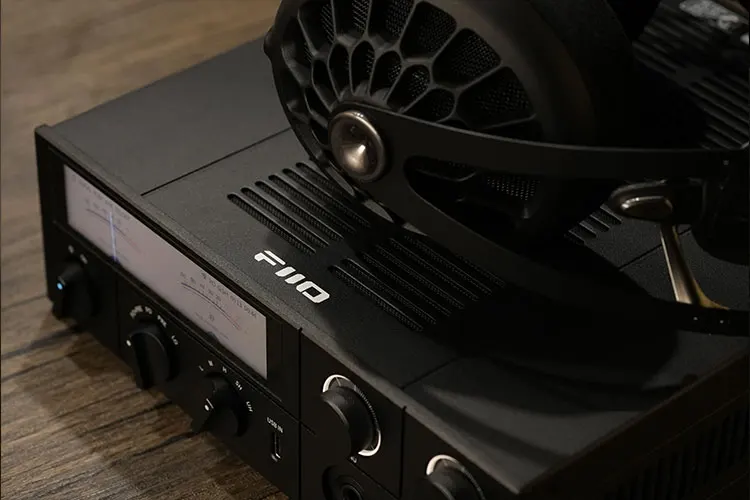
The two units come with the same design and color schemes, except that the K17 is much heavier, probably due to the transformer inside.
I find it a great move as many users like the design of the K17, but may not need the advanced features such as the 31-band equalizer on it.
Therefore, it is very welcoming that FiiO reuses the same lovely design and takes out some of the features that not everyone can enjoy. This makes the design more affordable while adding features like external DC input for future upgrades.
Performance
Although the power measurements are higher on the K17, the perceived difference in output compared to the K15 is not particularly noticeable when paired with sensitive headphones.
When using the HD 800S and planar models like the MOONDROP COSMO, the K17 offers better bass control along with a firmer, faster attack, while still retaining texture when the bass carries additional richness.
The K15, by contrast, delivers a lighter punch and sounds less firm, but it presents a cleaner, more uplifting character with swift articulation and a polished treble. While its transients aren’t as tight or dense, the overall presentation feels more natural and effortlessly rendered.
With sensitive headphones such as the Meze Audio 105 AER and SILVA, both models are easily driven by the K15 at relatively low gain levels.
The sound remains engaging and dynamic, with impactful bass, good upper register extension, and quick articulation. The K17 offers slightly better detail retrieval, with more noticeable separation between vocals and bass, and presents slightly more layering in the low frequencies.
Although the K15 lacks some of the agility and firmness in attack that the K17 provides, it offers a softer and more relaxed listening experience.
For headphones that emphasize transients, such as the 105 SILVA, the K15 may offer better synergy. Meanwhile, the K17 delivers enhanced richness, control, and bass texture, particularly benefiting cleaner-sounding equipment.
FiiO K9 Pro ESS
Technical & Design
The K15 feels more like a replacement for the K9 Pro ESS than the K17, albeit the K15 is offered at a more attractive price and has even more advanced features.
The newer generation product K15 is easily more powerful with 3000mW per channel in its output compared to 2100mW on the K9 Pro ESS.
While the SNR performance is higher on the K9 Pro ESS at 129dB, the K15 offers >122dB on its 6.35mm output and ≥120dB on its 4.4mm balanced output.
FiiO also switched from THX amping modules to in-house developed amplifying circuitries, which introduces some changes to the tuning as well.
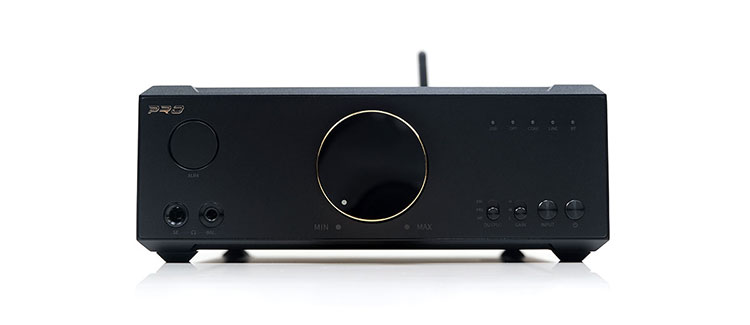
The K15 has many more features, lights, and stronger versatility, which makes the K9 Pro ESS comparatively duller to look at, though the K9 Pro ESS feels more solid and professionally built.
The cleaner, more compact K9 PRO ESS design on the K9 Pro ESS allows it to stand up-right, which is more friendly to those who have limited desk space.
Performance
The K15 bears a strong resemblance to the K9 Pro ESS in terms of sound signature, as both deliver a clean and natural presentation.
Setting aside aesthetic differences, the K9 Pro ESS demonstrates greater clarity in the upper frequencies, with tighter, denser bass and more sharply defined vocals, offering stronger contrast.
In comparison, the K15 sounds slightly softer but more refined in the sibilance region, while still achieving a similar level of treble extension.
When tested with the HD 800S, the K15 delivers a more impactful punch and a more expansive decay, whereas the K9 Pro ESS responds with greater precision, control, and a more restrained, polite character.
The higher power output of the K15 contributes to a more open soundstage. While it may not be as delicate or nuanced as the K9 Pro ESS, it retains a dynamic and engaging presentation.
With planar headphones such as the FT7, the K15 also exhibits firmer and more articulate performance in the mid-lows. In contrast, the K9 Pro ESS places less weight on bass notes, resulting in a flatter and less contrasting presentation.
Overall, the K9 Pro ESS still stands out for its superior output quality. However, the K15 comes remarkably close while offering more user-friendly features, such as the five-level physical gain knob compared to the three-level gain on the K9 Pro ESS, along with several additional modern features.
When paired with sensitive headphones, the difference becomes less pronounced, and the K15 proves to be an equally capable option.

My Verdict
While the K17 is certainly appealing given its features and price, the K15 delivers most of the same functionality at a significantly lower cost.
By removing DSP features and adopting the AK4497S, successor to the well-regarded AK4497 DAC, alongside a switching power supply that supports potential upgrades with external linear PSUs, FiiO has made the K15 a much more accessible option.
Few other brands offer such a comprehensive feature set in this category, with everything operating smoothly through a responsive user interface.
Sound performance is equally commendable, especially for listeners seeking a smooth and pleasant listening experience. It handles a wide range of genres, including Pop, Rock, and Jazz, with an airy, uplifting character and enough power to remain engaging and authoritative.
Overall, the K15 distinguishes itself as a flexible and well-rounded desktop DAC/amp. It provides a satisfying entry point for users with entry-level to mid-tier headphones and IEMs, offering straightforward streaming capabilities and solid amplification at an approachable price.
FiiO K15 Technical Specifications
- Color: Black/Silver
- Dimensions: 244.6 x 213 x 66.8mm
- Weight: 2,100g
- Master control: X2000, ESP32-S3
- DAC: AK4497S x 2
- USB: XMOS XU316
- Headphone amplifier transistor: MJE243G/253G
- Display: 3.93-inch LCD
- Bluetooth 5.1
- Audio codecs: SBC/AAC/aptX/aptX LL/aptX HD/aptX Adaptive/LDAC
- Decoding USB: 768kHz/32-bit; DSD512 (Native)
- Coaxial input: 192kHz/24-bit; DSD64
- Optical input: 96kHz/24-bit
- Local playback: 384kHz/32-bit; DSD256
- Streaming playback: 384kHz/32-bit; DSD256 (DOP)
- RCA output: L+R=2.4Vrms+2.4Vrms (1kHz@10kΩ)
- XLR output: L+R=4.8Vrms+4.8Vrms (1kHz@10kΩ)
- Frequency response: 20Hz – 80kHz, attenuation < 2.8dB
- SNR: ≥122dB (A-weighted)
- Noise floor: <5.3μV (A-weighted)
- THD+N: <0.00054% (1kHz/-12dB@32Ω)
