

Synergy
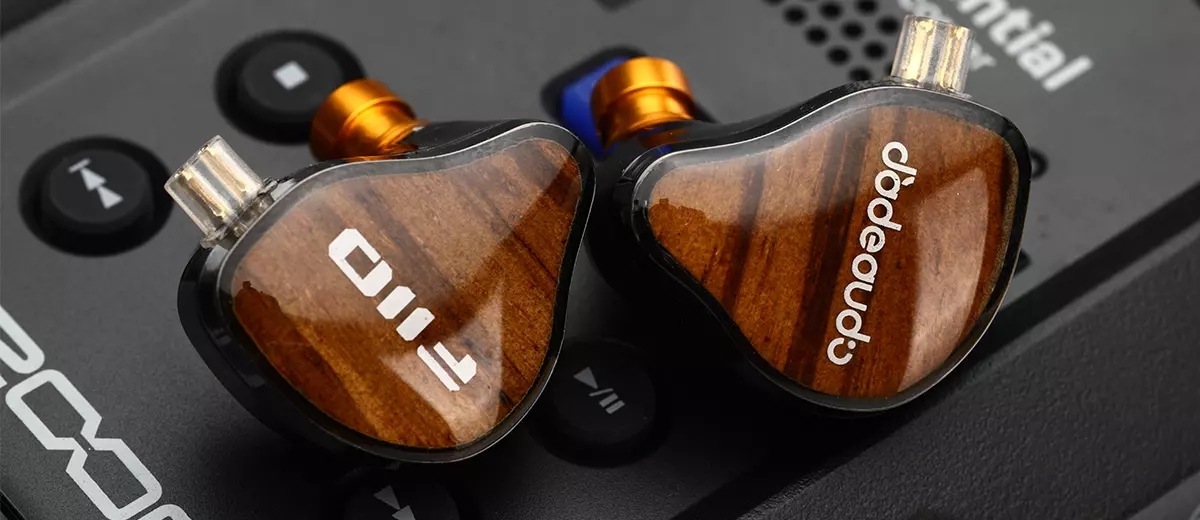
On days listening to the JH13, during walking exercises, or at home, I’m happy to report that the JH13 never caused any noise across all the sources I paired it with.
The cable never picked up any radio-frequency interference, and the JH13 drivers are not sensitive enough to hear the sources’ noise floor.
Despite the 24Ω impedance, which is below average, but not too low, it would seem that, on paper, it should be fine with any source.
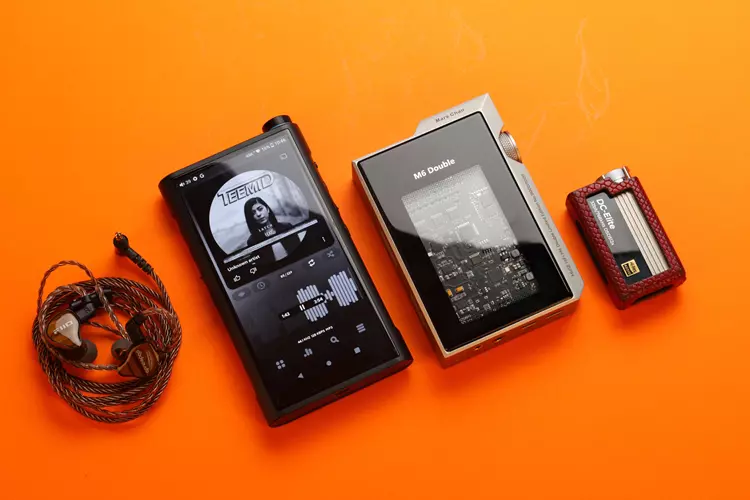
However, I find that my iBasso DC-Elite, MUSE HIFI M6 Double, and other dongle DACs with around 300mW of output power struggle to drive the JH13 smoothly.
I hear a considerable amount of distortion at medium to loud volume caused by these sources.
When used with the powerful FiiO M15S DAP, the sound is much cleaner until I crank the volume high enough for the drivers to distort.
This might be caused by V-shaped tuning, in which the midrange is tuned lower to make the bass and treble more prominent. This would force the listener to increase the volume to achieve the right midrange vocal level, causing the source to struggle.
But that’s just one of the reasons for that, I’m sure other factors are causing it. As I heard, high-end basshead IEMs sound much cleaner at loud volumes.
Pairings
That said, for this review, I mainly use my FiiO M15S for its robust output, rather than the iBasso DC-Elite and the MUSE HIFI M6 Double, because the JH13 causes them to struggle at high volume, as mentioned above.
I get relatively clean, distortion-free sound with the JH13 and FiiO M15S pairing until the JH13 distorts at a volume high enough to be noticeable. That volume is very high and not advisable for long-term listening, as it would cause hearing damage.
I must say that if you want the cleanest sound from the JH13, get a source dongle DAC with at least 400mW of power, or a DAP with at least 250mW of power. Dongle DACs and DAPs don’t overload in the same way.
Selected Comparisons
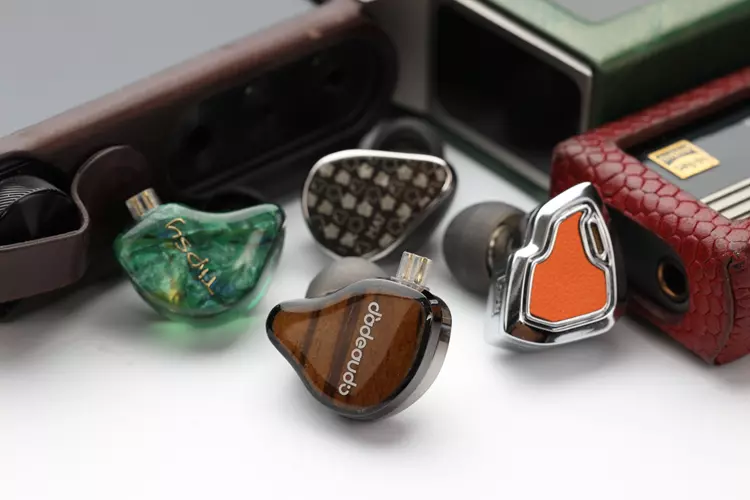
For the reasons discussed above, I used only the FiiO M15s for this comparison to give the JH15 its full potential.
MOONDROP MAY
The MOONDROP MAY was released in late 2023. It is a hybrid set with a detachable DSP USB-C cable. For this comparison, I use a third-party cable.
Technical & Design
The MAY is a hybrid set featuring a 10 mm dynamic driver and a coaxially mounted 6 mm planar driver. The MAY has an impedance of 30Ω and a sensitivity of 120 dB/mW.
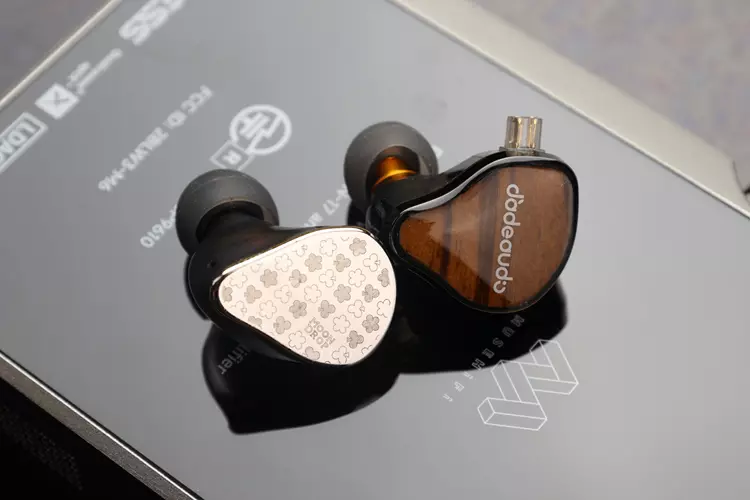
The MAY is a lightweight, medium-sized IEM with a 3D-printed resin shell and a reflective metal faceplate featuring flower and leaf patterns. The nozzle is made of 3D-printed resin. There are small holes near the nozzle and the faceplate, which serve as vents to release pressure.
MAY features a semi-recessed 2-pin connector and comes with a nice-looking grey USB-C cable.
Performance
The MOONDROP MAY has a bassy-warm U-shaped sound signature with boosted bass, though it is not as boosted as the JH13. It has a neutral midrange, a relaxed upper midrange, and a smooth and polite treble, compared to the JH13.
The JH13 is much more bassy with more powerful impact in the low end; they have about the same amount of midrange, but starting from the upper midrange to upper treble, the JH13 is much more boosted.
The MAY is a warm and non-fatiguing set. When I switched to the JH13, the peakiness in the treble became very apparent and could sometimes glare; there is sibilance, and there is extra sizzle on top of the music every time.
When it comes to soundstage, both are about equal in size, but the MAY is much deeper, while the JH13 is wider and shallower. I like the imaging in the MAY better, as there are better layering and separation, and the definition is better, too.
In terms of dynamics, the JH13 is apparently more dynamic, while the MAY sounds polite in comparison.
Hidizs MS2 PRO
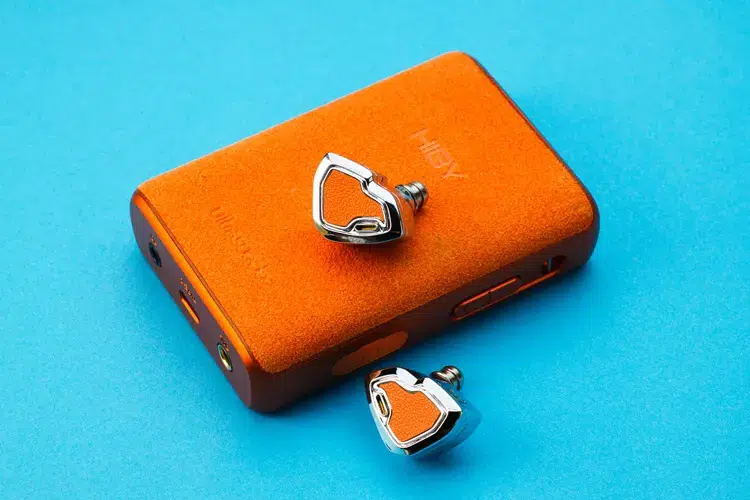
The Hidizs MS2 PRO is a recently released IEM in August 2025. Like the JH13, it uses both dynamic and balanced armature driver technology.
Technical & Design
The MS2 PRO is a hybrid set featuring a 10.2mm dual-magnetic circuit and dual-cavity hybrid driver, and a Hidizs ‘Silvercore BA’ high-frequency Balanced Armature Driver. The MS2 PRO has an impedance of 17Ω and a sensitivity of 111 dB/mW
The MS2 PRO is an all-metal IEM with a shiny chrome finish. It would have been a fingerprint magnet, but luckily, Hidizs designed it with a leather cover on the faceplate, reducing the likelihood of fingerprints being visible.
The MS2 PRO is heavy, weighing 13 grams each, and comes with a high-purity silver-plated OFC Hybrid Wire 2-pin cable with a fixed plug, available in 3.5mm and 4.4mm variants.
Performance
The MS2 PRO has a mild V-shaped sound signature, characterized by slightly boosted bass and treble. It has much less bass than the JH13, with a neutral midrange and mildly elevated upper midrange and treble.
In comparison, the JH13 has a much more impactful bass, albeit bloated and ‘boomy-sounding.’ They have about the same amount of midrange, but the upper midrange is much more in the treble on the JH13, making the treble sound sibilant when switching between the two.
In terms of staging, both have about the same size, but the MS2 PRO has a more equal width-to-depth ratio, while the JH13 is wider and flatter.
And when it comes to imaging, the MS2 PRO has by far better edge definition, more accurate placement, better layering and separation, and, most importantly, greater holographic effect.
Both are dynamic-sounding, with the JH13 having an edge due to its more contrasty dynamic presentation caused by its V-shaped sound tuning.
Tipsy M3
Released in late 2025 and recently reviewed, the Tipsy M3 shares the same driver configuration as the JH13.
Technical & Design
The Tipsy M3 is a hybrid set featuring a 9.2mm PET-titanium-coated dynamic driver and two customized composite balanced armature drivers. The M3 has an impedance of 17Ω and a sensitivity of 105 dB/mW.
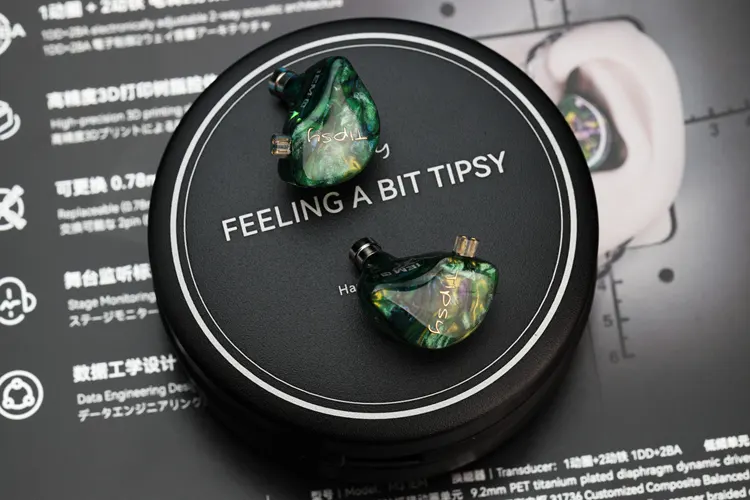
It also features a lightweight 3D-printed resin and is hand-painted with Light-reactive artistic designs.
The M3 uses metal nozzles covered by a perforated metal grill. There is a small hole near the nozzle, and a larger vent with a horn-shaped gold orifice located near the QDC Type 2 pin connector.
The M3’s included cable is thin enough for easy portability but thick enough to avoid tangles. It is a dark, titanium-colored 4-core cable, around 1.1mm in thickness per wire, with QDC-style IEM connectors; it is only available with a 3.5mm plug.
Performance
Both the M3 and the JH13 have a deep, V-shaped sound signature with prominent bass and treble.
However, comparing the two, the M3 sounds milder, with bass and treble elevation not as high as those of the JH13.
The M3 is less ‘boomy’ in the bass and less peaky in the treble. When switching between the two, I can clearly distinguish JH13’s more bloaty and overbearing bass, with its more sibilant and hot treble.
Though both have the ‘boom’n’tizz’ kind of sound, I must say that the M3 is milder of the two.
In terms of staging, they are about equal in size, though I noticed that the M3 is deeper, while the JH13 is wider.
Due to the M3’s deeper soundstage, the images seem to emanate from further away and have greater layering depth, while the JH13 images sound less three-dimensional.
Regarding dynamics, both are very dynamic, with the M3 having a slight edge due to its ‘boomier’ bass and peakier treble.
But the M3 can get loud even with less powerful sources, unlike the JH13, which can make modest sources struggle because it has difficulty driving them properly.
My Verdict
The hybrid triple driver FiiO JH13 in-ear monitor offers a ‘boombastic’ sound, with overtly boosted bass that sounds big and elevated treble to balance it out.
I like that, even though it has a lot of bass, the vocals are clear. And naturally, the V-shaped tuning makes it a very engaging IEM, especially for bassy electronic music.
What I don’t like is the colored presentation of sound, where the bass sounds overbearing and adds bloat to some songs, and the treble response is peaky at times.
I know many people would like this kind of sound, especially for beginners or younger listeners, including me when I was younger. However, the JH13’s sound is not for ‘older me’, as it would cause fatigue with prolonged listening.
All in all, FiiO JH13 is a fun-sounding IEM that I know many people would enjoy, especially if they often listen to bassy music, if they don’t mind its flaws.
FiiO JH13 Technical Specifications
- Driver Setup: 1 x 10mm dynamic driver + 2 x balanced armature drivers
- Style: In-Ear
- Sensitivity: 110 dB/mW
- Impedance: 24Ω
- Distortion: <1%
- Frequency Response: 10Hz~40kHz.
- Cable Length: 1.2m
- Connectors: 3.5mm unbalanced
- Weight: 6.2 grams each
- Nozzle diameter: 6 mm
