

Synergy
Softears Enigma
If you’ve owned or used the Enigma extensively, you already know how the right combination of source and cable can transform and scale up its tuning. That’s exactly what the CENTURION II does.
Coincidentally, the stock cable of the Enigma is an Effect Audio collaboration cable called the Kryptos. While the Kryptos pairs well, it still leaves room for improvement, particularly in the treble and a clean presentation, which feel like weak points in the tuning.
The most noticeable changes the CENTURION II brings are in transparency and resolution. With the stock cable, resolution often takes a back seat, and details don’t quite stand out clearly.
This also affects imaging and the overall perception of the soundstage. The CENTURION II addresses all these issues and makes the Enigma’s grand presentation even grander.
The cable adds tightness and control in both the sub-bass and mid-bass regions, enhancing depth and the way punches land. Detail and texture in the bass also show noticeable improvement.
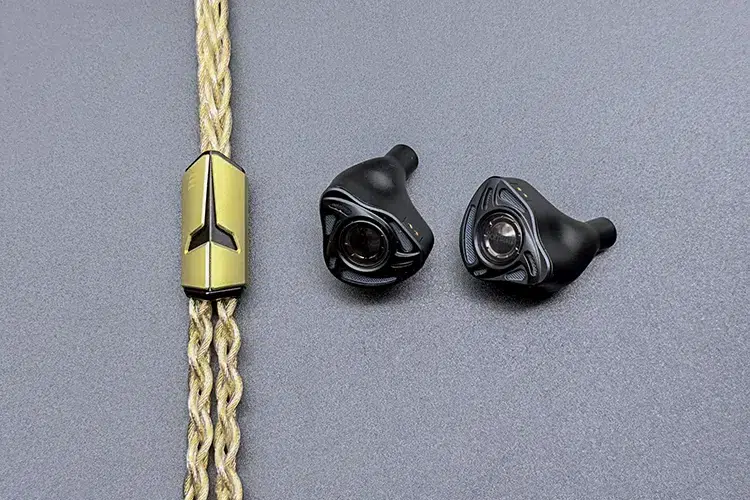
The Enigma cannot be labelled a basshead IEM, but its sub-bass reaches incredibly deep and delivers a solid rumble.
The cable also injects some energy into the midrange and treble. Notes sound more precise, resolve better, and benefit from an improved sense of space and instrument placement.
At the same time, the warmth is preserved, making the midrange richer and more musical with all the added refinements.
The treble on the Enigma, which at times feels too controlled and lacking in energy, gains the right amount of air and sparkle with the CENTURION II.
Treble notes resolve more precisely and have a very natural decay. They feel more accurate, neither too fast to sound thin nor too slow to blur detail.
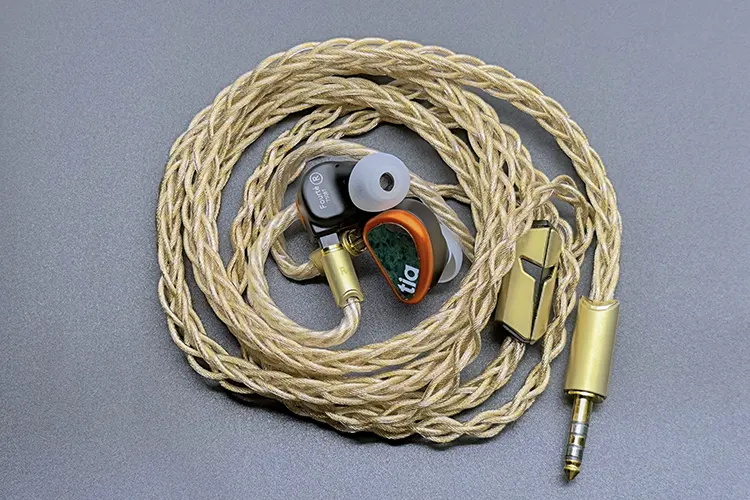
64 Audio Fourté
The 64 Audio Fourté, a flagship IEM, has a driver setup consisting of one tia high driver, one high-mid driver, one tia mid driver, and a dynamic driver.
It delivers impactful sub-bass, a natural midrange with warmth and clarity, and treble that carries a good amount of energy and sparkle.
First things first, the Fourté is notoriously popular for its polarizing treble region; however, with the CENTURION II, the treble becomes smoother yet remains highly detailed, with some of the peaky regions trimmed down. There is a sense of added air and sparkle, along with better-resolving notes, making the treble highly enjoyable.
On the low end, the Fourté has a tighter response, with both sub-bass and mid-bass showing improvements in their impact. I had never experienced this heavy and guttural bass response from the Fourté before, so I believe there is still a lot to explore.
I also think the dynamic driver bass is more prone to transformation with cable rolling. The bass gains improvements in texture and detail as well. I find this bass to be on the warmer and thicker side, but certainly not sluggish, and it does not overshadow the higher frequencies.
The midrange on the Fourté gains more detail and clarity due to the better resolution offered by the cable.
The soundstage presentation, at which the Fourté already excels, gains more depth and height. This expansion of the soundstage, seen in almost all directions, gives more space to instruments and vocals. Imaging also shows some improvements, not razor-sharp but consistent and accurate.
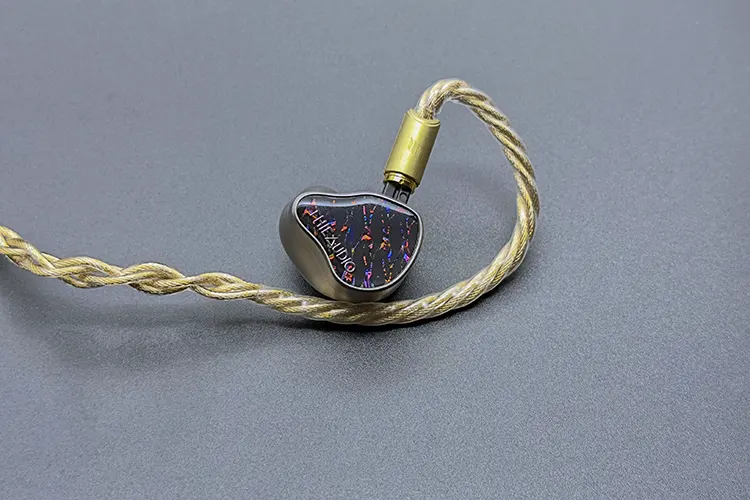
THIEAUDIO Valhalla
In my books, the Valhalla is worthy of flagship status, limited in performance only by its stock cable.
I was hoping for some notable changes to the low end, but the CENTURION II did not significantly alter the bass impact or overall depth.
One noticeable improvement in the low end is the control in the mid-bass. With some cables, Valhalla’s mid-bass can sound a bit bloomy, but not here. It is very controlled, with solid definition and edge, giving space for more details to shine through.
In the sub-bass region, while the impact is not drastically improved, when called upon, the sub-bass delivers solid weight and impressive depth. The bass is also better textured, with nuances coming through more clearly.
In the midrange, owing to better resolution and a cleaner background, the Valhalla sounds richer. I only wish it added some weight to the lower midrange region or, say, some heft to the vocals, as this is where I feel the CENTURION II misses the trick, at least with the Valhalla.
Beyond that, I could not ask for much more. Female vocals are a touch sweeter and more expressive due to a more energetic and extended upper midrange.
On its stock cable, the Valhalla has extra-sharp treble, though not particularly bothersome, which the CENTURION II smooths out. At the same time, a more resolving treble with an extra hint of air and sparkle pushes the Valhalla firmly into treble head territory.
Valhalla’s stage presentation takes flight with the CENTURION II. On a few cables, I found it somewhat limited in width, but here it opens impressively wide with superb depth and height.
Imaging is more precise, with instruments spread across a more cavernous stage. The front-to-back staging presentation also sees significant improvement.
Selected Comparisons
Effect Audio CENTURION I
Technical
The first generation of the CENTURION cable already made a big mark in the aftermarket IEM cable industry, featuring an 8-wire 26 AWG gold-plated UP-OCC silver-gold alloy that EA claimed was the first of its kind.
With the new generation, most of the core design elements are preserved, while a few fresh upgrades have been introduced to push the performance even further.
The highlight of this updated version is the addition of an UP-OCC platinum-silver alloy, which is said to be even more premium than the materials used before.
Both generations continue to use EA’s proprietary 7-core, multi-sized Litz build, along with the familiar UltraFlexi insulation for the outer sleeve, ensuring a soft and comfortable feel.
One more notable change comes with the termination: the 4.4 mm plug is now palladium and gold-plated copper, whereas the older model only used gold-plated copper.
These refinements together give the CENTURION II a more advanced and premium identity, building on the strong foundation of the first generation.
Design
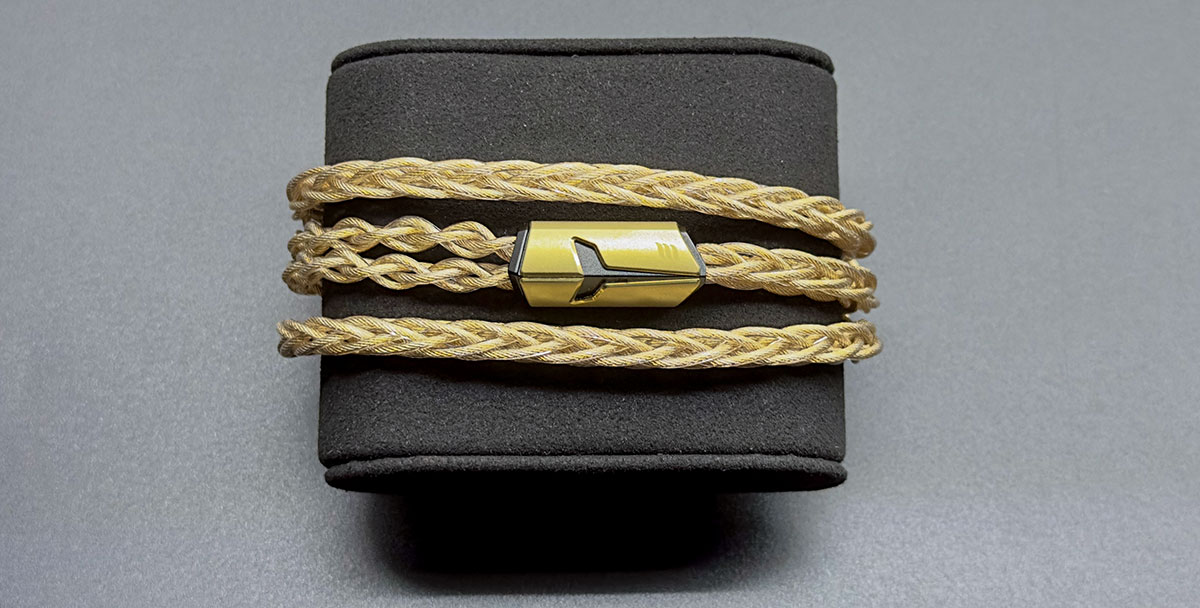
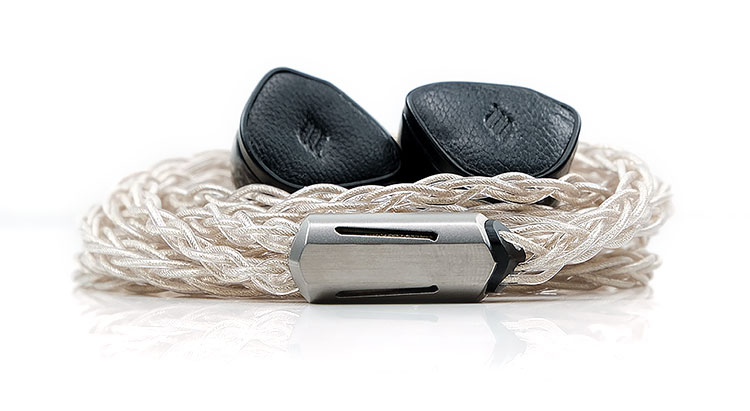
Like the first generation, the CENTURION II still retains an overall design language, although many refinements have been made. The color tone now has an additional layer of richness. The overall impression, look, and feel are more luxurious.
The original CENTURION cable leaned toward a pearly finish with a slight hint of gold, while the new version is decidedly more golden, adding richness and vibrancy to the appearance.
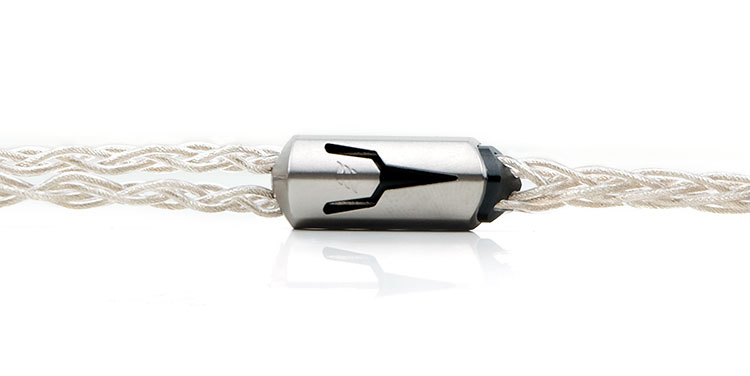
The Centurion helmet-inspired splitter follows a similar pattern but feels smoother in finish. It now has a larger and bolder form factor, which enhances its prominence.
The same can be said of the termination adapter, which has also been refined to have softer edges and a sleeker overall shape, with more golden elements tied to the new color scheme.
The CENTURION II cable has more shimmer and sparkle, and as a result, feels more premium. The finish is also slightly thicker, which gives it a more solid impression when compared to the original CENTURION I.
Performance
In brief, the first generation of the CENTURION cable focused more on clarity and transparency while keeping most things balanced.
The newer version builds upon this and takes a step forward with some noticeable changes in the low end with a slightly enhanced bass body, a sharp and energetic but less revealing midrange, and an airier and more sparkly treble region. That is quite a lot of change, yet it keeps the original character intact.
In the low end, the impact is better, especially as the sub-bass gains newfound rumble that was missing in the original. I could not ask for a better level of detail and bass texture, as the CENTURION I is no less than perfect itself.
In the midrange, if you thought the CENTURION I was highly detailed, the CENTURION II goes even further, being cleaner with more vivid details and carrying a more musical touch with a slight hint of warmth.
The CENTURION II preserves the energy, which makes the midrange more expressive. I also find the background darker and a bit cleaner on the CENTURION II, which makes the midrange richer.
On the CENTURION I, I occasionally found the treble to be sharp or intense, which is not the case with the new version. While keeping the treble smooth, the CENTURION II pushes the boundaries by adding more air and sparkle and improving the resolution of treble notes.
The soundstage and imaging on the CENTURION I were already quite impressive, but with the CENTURION II, the stage becomes more immersive, especially with improved depth and height, while the width remains the same. The spacing among instruments also improves slightly.
PW Audio Century Series – 1950s 4-wired with Shielding
Technical
The 1950s is a high-end cable from PWAudio, a brand widely appreciated for its copper-only flagship cables. The 1950s used premium-grade single-crystal copper as the conductor, with the entire copper composed of one grain.
There is a total of eight conductors in the four-pair wire, and each conductor is attached to an independent shielding, with OCC used as the shield layer. This “one conductor, one shielding” design improves performance and allows the background to be quieter and more detailed.
The cable uses 26 AWG for conductors and close to 24 AWG for shielding. The cable I have uses a Pentaconn OFC 4.4mm for its termination adapter and can be ordered in 2.5mm, 3.5mm, or 4.4mm ends.
Design
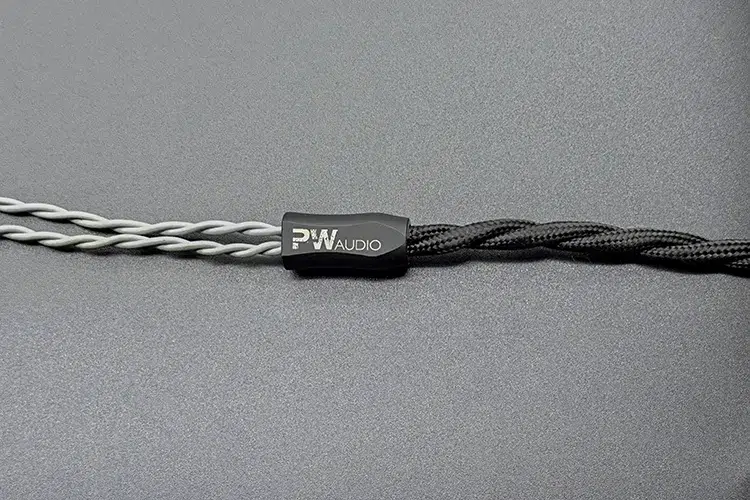
Most of PW Audio’s high-end cables have a similar look and feel, with a minimal all-black theme, at least from the termination adapter to the splitter.
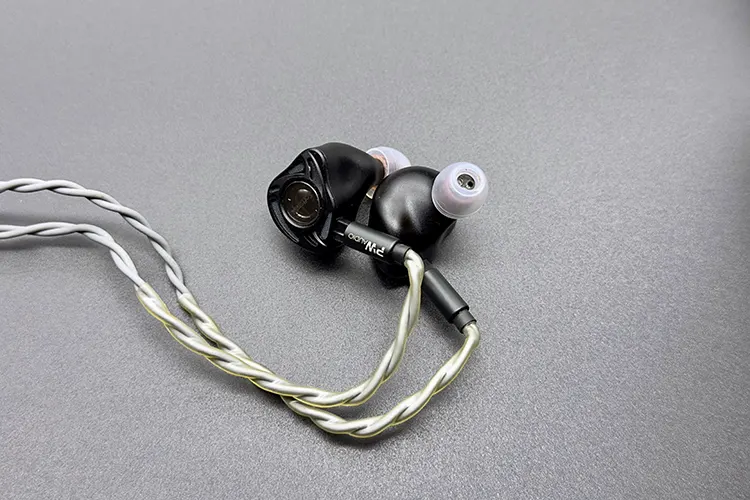
Here, the wires above the splitter to the 2-pin connectors are without any external sleeve, making them feel a bit rubbery and less sturdy.
The outer black layer of the cable is made of soft PE. The cable is on the stiffer side and takes up more space when coiled. The hardware, such as the Pentaconn OFC 4.4 mm plug, splitter, and 2-pin connectors, is well-built and durable.
The Effect Audio CENTURION II cable is designed with a richer, more vibrant colourway, with elegant elements that add to its premium touch.
The 8-wire cable takes up more space when stored, but remains more pliable than the 1950s. The CENTURION II is the heavier of the two. The termination adapter of the CENTURION II is smaller in both length and diameter.
Performance
The 1950s creates a very dark and silent background. This black backdrop makes the music sound clean and clear, with excellent detail retrieval. The CENTURION II achieves a similar or even cleaner sound but with more details.
Compared to the CENTURION II, the 1950s is not as airy or sparkly in the treble. CENTURION II adds more openness and shimmer to the top end, giving instruments and vocals extra life and energy. The treble on the 1950S feels a little rolled off at the very top, which makes it sound slightly more laid-back, relaxed, and less resolving.
The 1950S has fast and controlled bass with good speed and texture. In contrast, CENTURION II offers bass that feels a touch more powerful and immersive, with deeper sub-bass rumble and a more extended reach.
Paired with the Enigma, the CENTURION II delivers tighter, weightier low notes that add to its engaging character. The midrange on the CENTURION II adds little to no warmth and is more transparent and more energetic compared to the smoother, calmer presentation of the 1950s.
Soundstage is another key area where the CENTURION II is significantly ahead. The 1950S stage feels more intimate, with less depth and height. CENTURION II has a more open sound, offering a larger, more spacious, and more immersive presentation.
Instruments and vocals have more breathing space among them, and separation feels cleaner and more natural. Imaging is sharper and more precise on the CENTURION II.
Overall, the 1950S shows how far a copper-only cable can go, with its quiet background and resolving yet musical sound. In many ways, CENTURION II feels like a worthy upgrade over the 1950S, while PW Audio’s First Times or the Orpheus might be a fairer direct comparison.
My Verdict
For me, cable pricing is always one of the trickiest aspects to justify, but when a cable brings such favorable improvements, the debate hardly matters.
Audiophiles who own ultra-flagship IEMs are often found looking for heavy-duty cables to unlock their IEMs’ full potential, and the CENTURION II slots right into that league.
The CENTURION II delivers flagship-level performance that upholds its premium price and rivals some of the very best cables available today.
It has a balanced yet engaging sound signature, offering an all-around improvement. You get an impactful low end, a more expressive and detailed midrange, and an airier, highly resolving treble that adds sparkle and air without any harshness.
The enhancements it brings to the imaging and soundstage, especially in the depth, are quite noticeable too. And all this much is enough to push your IEM’s performance even further.
Creating a successor to the CENTURION I must have been a daunting task, but the people at Effect Audio took their time and delivered.
Compared to its predecessor, the CENTURION II, as a package, offers a much-needed upgrade, from its build to its grand presentation and a sound profile that enhances key areas, making the experience even more immersive.
It keeps the original’s DNA intact while pushing technical boundaries further, making it not just an iteration but a true evolution worthy of its flagship status.
I am sure the new CENTURION II will receive as much love and recognition as the first generation. If you are ready to invest at this level, seeking to squeeze out every last drop of performance from your IEMs, the CENTURION II deserves a place on your shortlist.
Effect Audio CENTURION II Technical Specifications
- Spec: 24 AWG 8 Wires
- Materials:
- Platinum-Silver Alloy
- Gold-Plated Gold-Silver Alloy
- Gold-Plated Silver
- Palladium-Gold-Silver Alloy
- Palladium-Silver Alloy
- Pure Silver
- Sleeve: EA UltraFlexi™ Insulation
- Plug: Palladium and Gold Dual-Plated Copper 4.4 Termination
- Connector: ConX® Full Set Interchangeable Connector
