

Synergy
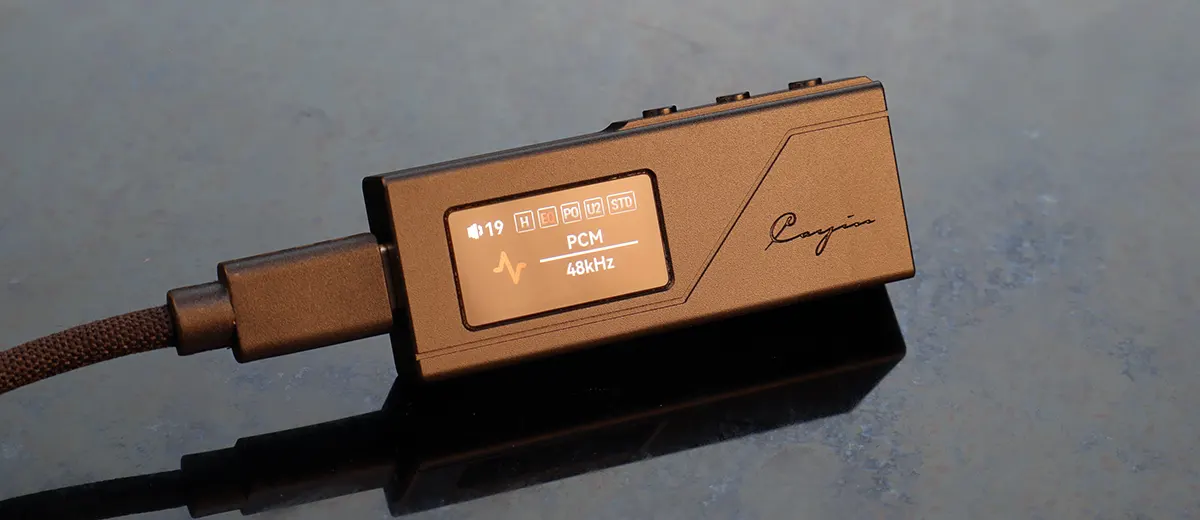
I never experienced any noise issues with the RU3 when using the IEMs and headphones included in this review, as well as those excluded.
There was no popping or scratching sound with the headphones or IEMs connected while plugging and unplugging the RU3, and the device remained quiet throughout this review. It doesn’t pick up any RF interference when placed near my phone.
The RU3 has no issues driving the challenging-to-drive Sennheiser HD 6XX headphones to a deafening level, with the resulting performance of this combo sounding really good.
It is almost as if a competent desktop amplifier was driving the HD 6XX, something I cannot say for similar dongle DACs at this price point.
IEM Pairings
Thanks to its analog-style sound, warm tonality, low coloration, and high power output, the RU3 is compatible with nearly any IEM or headphone.
Due to its excellent bass control and mild treble, the RU3 never adds boominess to the bass or shoutiness to the midrange and treble in the IEMs and headphones.
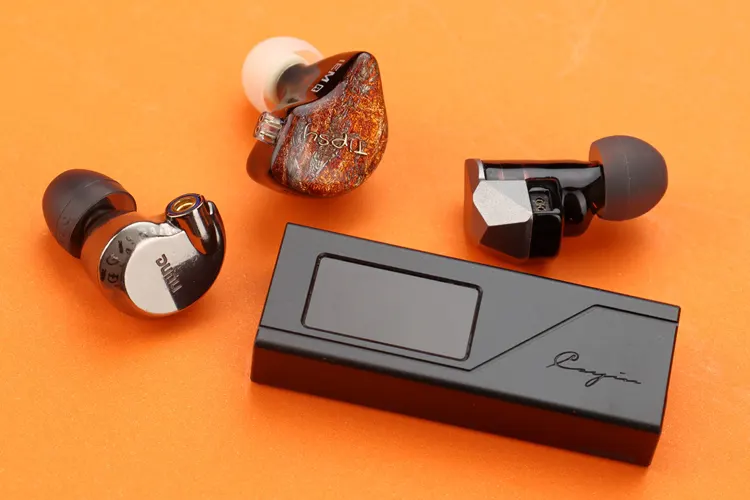
When paired with the DUNU Falcon Ultra and the Tipsy M5, the RU3 allows them to sound as they should, which is neutral, and the RU3 doesn’t add its own coloration, apparently.
When paired with the bassy and difficult-to-drive MOONDROP Horizon IEM, the RU3 drives the Horizon to a very high level effortlessly without losing dynamics, unlike most dongle DACs I’ve used before.
Headphone Pairings
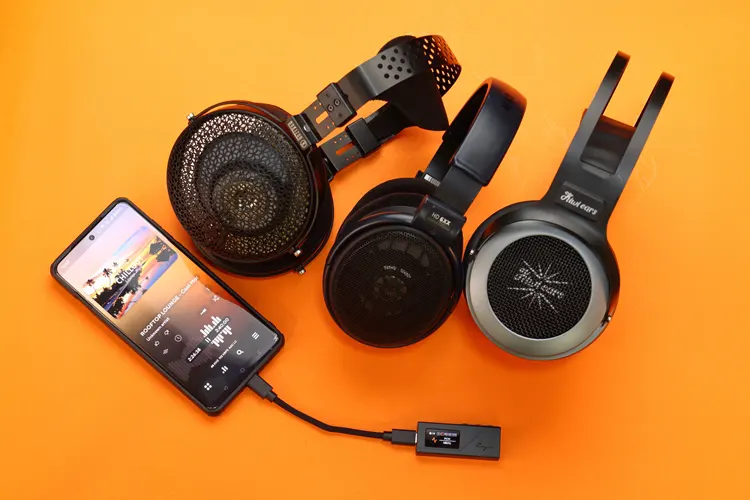
The RU3 has no issues driving all my headphones. The Kiwi Ears Altruva and the MOONDROP Horizon are easily driven to high volume levels and sound very good with no hints that the RU3 is struggling.
I can confidently recommend the RU3 to people looking for a dongle DAC solution for the difficult-to-drive HD 6XX.
It is also easily capable of driving the HD 6XX to a very high volume level, resulting in tight and powerful bass, a clean midrange, and extended treble, with no apparent dynamic compression.
Select Comparisons
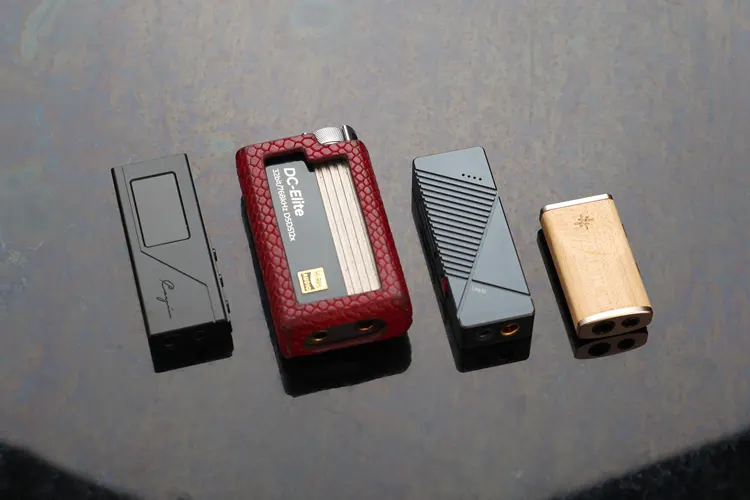
Fiio SNOWSKY Melody
Technical
The SNOWSKY Melody, like the RU3, features a 10-Band DSP EQ that can be controlled via the Fiio Control App.
The Melody features Dual 43131 DAC chips with balanced and single-ended outputs for its 4.4 mm and 3.5mm jacks; however, it is not as powerful as the RU3, outputting only 250 mW into its 4.4 mm output jack.
Design
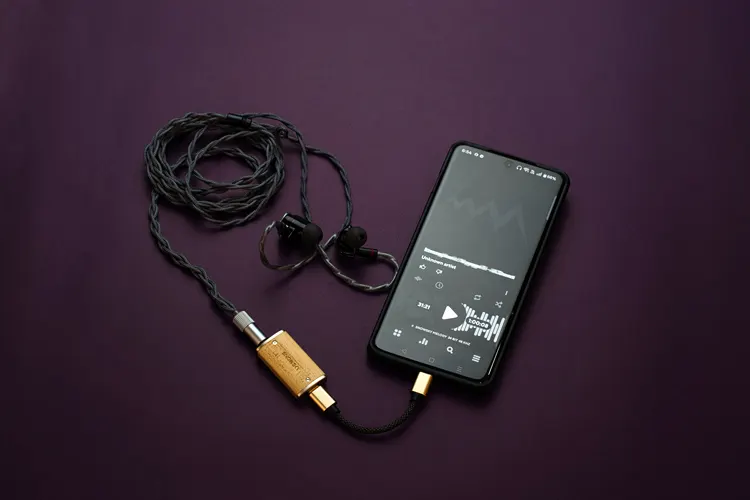
The Melody looks nice with its wooden chassis and a metal top and bottom. It is lightweight and easy to use with only two control buttons on the right side.
Due to its simplicity in design, you cannot control its parameters other than the basic controls, unlike the RU3, where there is a lot that can be controlled with its screen and button combination.
Performance
When I switched from the RU3 to the Melody, I noticed a slight roll-off in the upper treble with the Melody, making it warmer-sounding.
I also saw a cleaner decay with the RU3, while the Melody has a very faint haze in the treble; both seem to aim for the analog-style sound signature.
I noticed that the RU3 has a larger soundstage in every direction and, most notably, its soundstage height is significantly better, thanks to the cleaner instrument decay.
The RU3 is also noticeably better at controlling the motion of the transducers, making the low end tighter and the midrange cleaner, which helps achieve good staging. I find the RU3 to be technically superior to the Melody.
When comparing them at an equally high volume, it is apparent that the RU3 has significantly more power in reserve, as it exhibits more punch and slam in the bass and offers better dynamics.
The RU3 has this impression that I can increase the volume and my hearing would be the one to surrender first before the RU3 runs out of headroom, especially with IEMs.
xDuoo Link10
Technical
The xDuoo Link10 features two CS43131 DAC chips, which serve as the converter and the amplifier for the headphone output, while the RU3 utilizes separate amplifier chips for the output.
The Link10 decodes digital audio signals up to 32-bit/384kHz and DSD256, with a maximum output of 300mW into its 4.4mm balanced output jack
Design
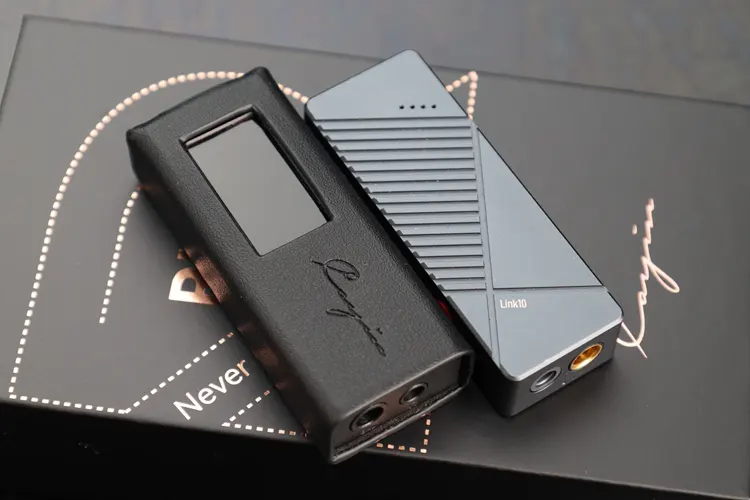
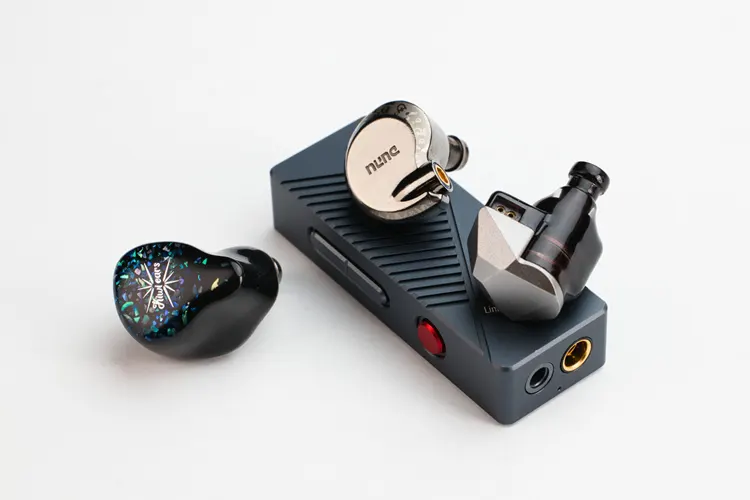
The Link10 features a full metal chassis with a somewhat retro 80s design language. Link10 features three control buttons on the right side, allowing for basic control functions.
It doesn’t have a companion app; therefore, it doesn’t have an EQ feature. The RU3 can be controlled via the app as well as through the physical buttons.
Performance
The Link10 is another analog-style sounding dongle DAC with a gentler treble presentation and a slightly less resolved rendition of the music.
Tonally, the Link10 seems to lean more towards a warm, mid-centric sound, while the RU3 is more neutral by comparison.
The Link10 has a good staging, but due to the cleaner instrument decay, I find the RU3 has a better soundstage, with superior depth and height.
In terms of width, I find them to be about equal. The most notable difference in the soundstage is that the RU3 gives me a cleaner and more defined soundscape, while the Link10 has a more diffuse stage and less edge definition in the images.
The RU3 appears to excel in dynamics, as I find it to have better punch, transients, and greater agility. In contrast, Link10 presents the sound in a more relaxed manner, regardless of the volume.
iBasso DC-Elite
Technical
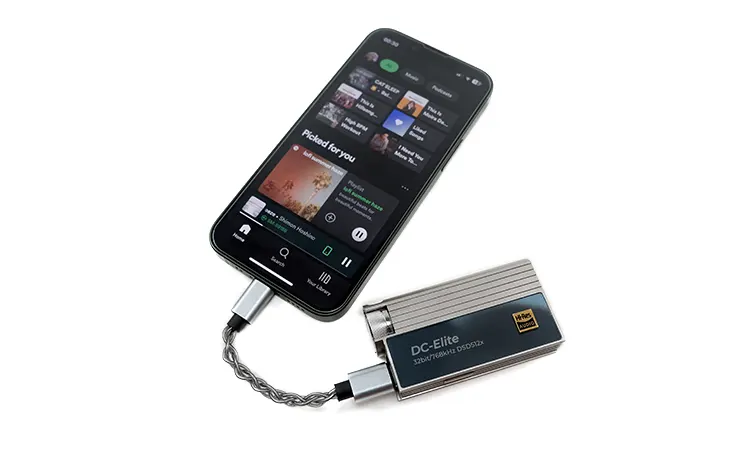
The DC-Elite features a ROHM BD34301EKV DAC chip, which is rarely used in portable devices, unlike the more common ES9069Q chip used in the RU3, contributing to the DC-Elite’s distinct sound.
Additionally, it features a physical series resistor stepped attenuator volume control, further enhancing its uniqueness. However, it isn’t as powerful with its 280mW of output, compared to the RU3’s 560mW.
Design
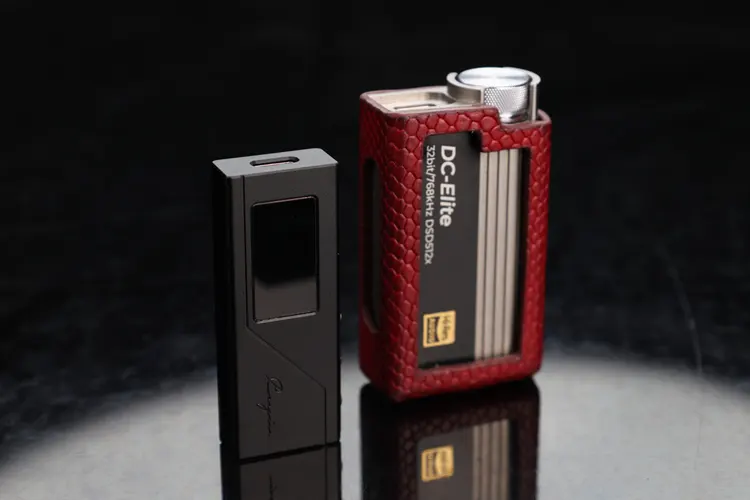
The DC-Elite features an industrial-looking titanium chassis, enhanced by tempered glass on the front and back, and an attractive knurled knob at the top.
The DC-Elite is bigger and feels bulkier compared to the RU3. However, in terms of appearance, DC-Elite looks more refined.
Performance
While the RU3 is warmer, with a slight boost in bass, the DC-Elite is not warm at all. The DC-Elite features a very flat and more accurate perceived frequency response, with tighter bass and extended upper treble.
I find the DC-Elite to have a bigger soundstage with better definition and accuracy in the imaging, which I attribute to its more extended upper treble.
The DC-Elite sounds more airy by comparison, and this contributes to its wider soundstage, though the RU3 is not far behind.
Although the RU3 is twice as powerful as the DC-Elite, both of them are equally dynamic-sounding; in fact, I find the DC-Elite more so, due to its tighter and faster bass and sharper and faster transients in the treble.
As the volume increases, the RU3 begins to outperform the DC-Elite, especially with difficult-to-drive IEMs and high-impedance headphones.
My Verdict
I’m pleased to discover that the Cayin RU3 not only delivers on its promise of competitive output power from a dongle DAC but also achieves it with clean, high-quality sound.
I highly appreciate that it has a companion app called the Cayin Control app, which is very easy to use and with value add features such as a 10-band parametric EQ.
What I wish to improve is the screen. I find it too small, too dim, even at maximum brightness, and the small texts are poorly legible, even when I’m wearing my reading glasses. Switching to theme 2 makes everything better, but I still wish the screen were bigger.
Finally, I am pleased that it can effortlessly drive any of my headphones, including the high-impedance ones, to high volume levels with good sound. For that, I would confidently recommend the Cayin RU3.
Cayin RU3 Technical Specifications
- USB Audio Bridge: SPV5068 (RISC-V Dual-Core)
- DAC Chip: ESS ES9069Q*2
Amplifier Chip: SGM8262*2 - Output: 3.5mm SE / 4.4mm BAL (PO/LO shared)
- Power Output
- 5mm: 180 mW + 180 mW (32ohms)
- 4mm: 560 mW + 560 mW (32 ohms)
- LO output level 3.5mm: 2V 4.4mm: 4V
- Output impedance
- 5mm single-ended: 0.6 Ohms
- 4mm balanced: 1.2 Ohms
- Supported Formats: PCM 32-bit/768kHz, Native DSD512
- SNR: 115dB (SE) / 117dB (BAL)
- THD+N: 0.0018% (SE) / 0.0015% (BAL)
- Frequency Response: 20Hz-50kHz (+- 0.2dB)
- Dimensions: 60mm x 25.4mm x 11mm
- Weight: 24g
