

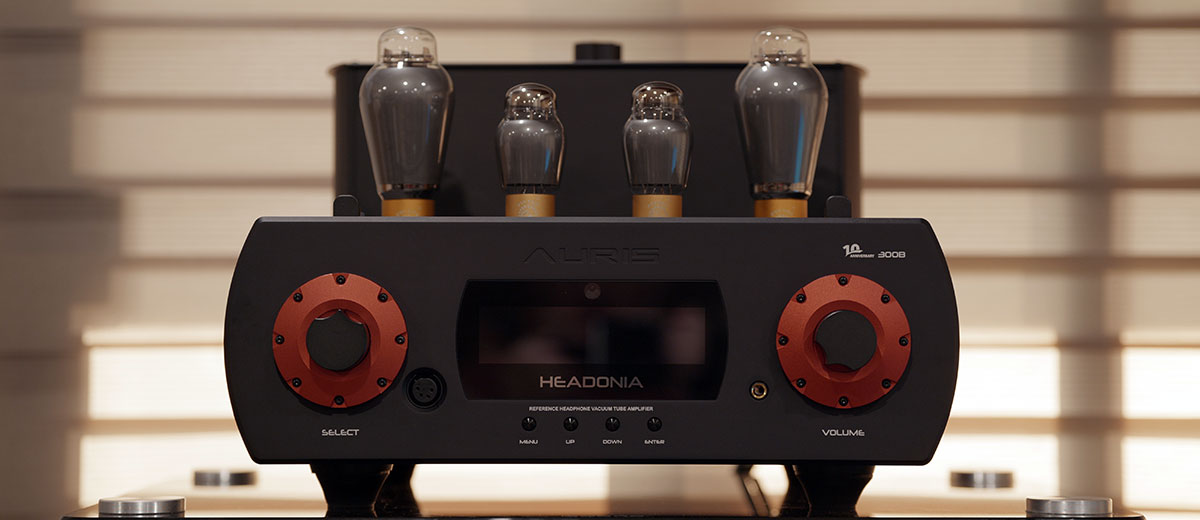
Marcus reviews the Auris Audio Headonia 300B, a Summit-fi desktop tube headphone amplifier and pre-amp with up to 7W of output power. It is currently priced at €11999.
Disclaimer: This sample was purchased by me at a discount price and does not have to be returned. Headfonics is an independent website with no affiliate links or services. I thank Auris Audio for their support.
You can click here to learn more about the Auris Audio products we have previously reviewed on Headfonics.
This article follows our current scoring guidelines, which you can read in more detail here.
Whilst I have reviewed many tube amplifiers from Auris Audio, including the last HA-2SE+, the HA-2SF, and the quirky Euterpe, getting my hands on the TOTL range, called Headonia, was somewhat more elusive.
Not anymore. The flagship Headonia 300B has been out for a while now, but sometimes an amplifier is so good that the timing of the review matters less.
Priced at €11999, the Headonia 300B sits way above the likes of the older HA-2SE+, and to be honest, price-wise, it sits well above my other 300B tube amplifiers, namely the Cayin HA-300MK2 and the Feliks Audio Envy.
That is not to say price is directly correlated to performance, because in some instances I prefer the Cayin HA-300MK2 to the vastly more expensive solid-state dCS Lina system. Ultimately, it can come down to listening preferences.
Still, there are always certain traits in any good tube amplifier to look for that would indicate a high level of performance, regardless of price, such as noise, dynamic range, and power, to name but a few.
So, is the Headonia 300B a league above the HA-300MK2, and the Envy in terms of performance? I found out in my full review below.
Features
The Auris Audio Headonia 300B is a single-ended, desktop headphone tube amplifier that utilizes a dual-stage solid-state rectifier and also offers pre-amp output for Hi-Fi enthusiasts.
Whilst I say ‘single-ended’, the Headonia 300B does, in fact, provide connectivity for Lundahl transformer-engineered balanced input and output. The SE input option is slightly more sensitive at 0.8Vrms, and the 3-pin XLR ‘balanced’ input is rated at a higher 1.6Vrms.
However, power is consistent on the output side up to a very capable 7W. That rating is consistent whether you opt for a single-ended or balanced connection, making the Headonia 300B a good choice for demanding headphones.
The variable for power management is the connected gear’s impedance value, which determines the level of Vrms that the Headonia 300B will deliver.
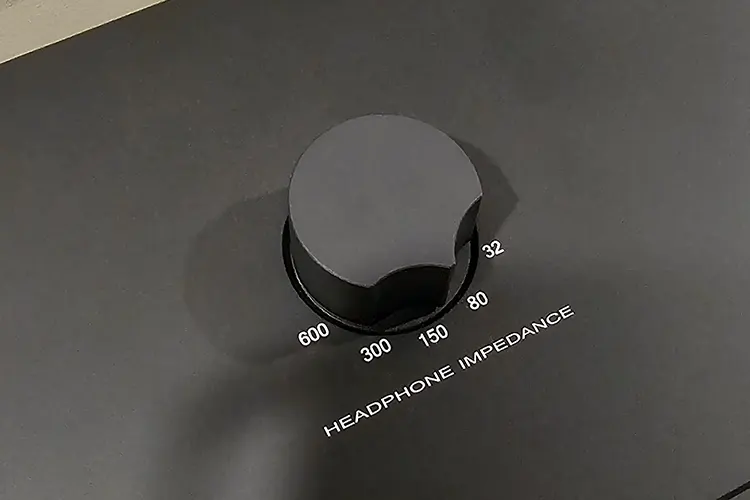
This is a key and tangible feature of the Headonia 300B, with its elegant pressure-based rotary dial neatly integrated into the transformer chassis at the rear of the main housing.
With 5 values ranging from 32Ω up to 600Ω, you can control the Vrms output from 15Vrms to 65Vrms, making it a welcoming headphone amplifier for low-impedance planar and high-impedance dynamic driver options.
If that is not enough power and flexibility for you, then the Headonia 300B also offers a 2-stage gain control system. A feature that Auris Audio has used before on their lower-end HA-2SF desktop tube amplifier.
All of the above is underpinned by some heavy-duty amorphous double C core output transformers and a very low ripple PSU (claimed 100 times lower than standard PSU options).
Tube Configuration
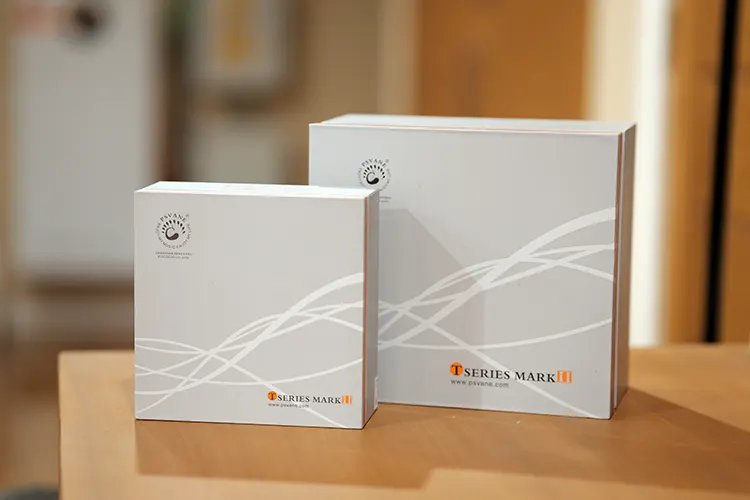
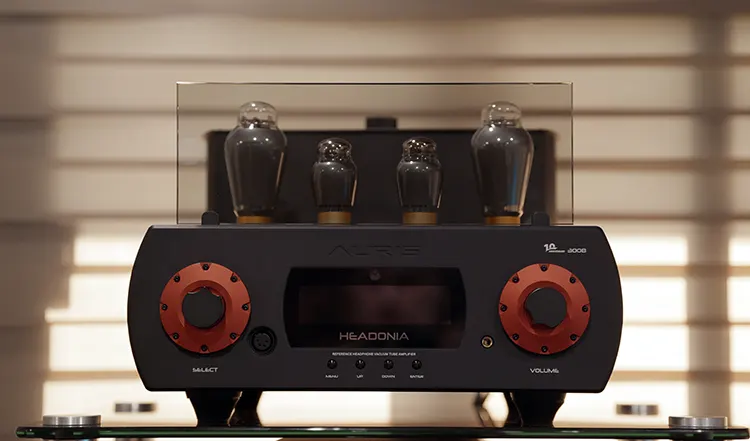
The Headonia 300B is equipped with a pair of matched filamentary triode PSVANE 300B-TII power tubes and a pair of dual triode PSVANE ART TII CV181-TII driver tubes (6SN7).
The PSVANE ART TII CV181-TII driver tubes are used for the pre-amp stage, and the 300B covers the Headonia 300B’s output stage.
These are not cheap tubes with the CV181-TII going for as much as €200 for a matched pair, and the 300B-TII close to €500 a pair.
There are more expensive 300B tubes out there; however, PSVANE varieties are well-respected and known for their punchy, technically resolving performance, especially when they are combined with a solid-state rectifier.
Design
From my review of the HA-2SE+, I felt the switch from a classic wood design to a more ‘industrial-looking’ black aluminum chassis was a little polarizing among long-time fans.
However, with the Headonia 300B, that same approach looks far more refined. I am guessing that with a higher bill of materials, the Auris team did not have to make any compromises.
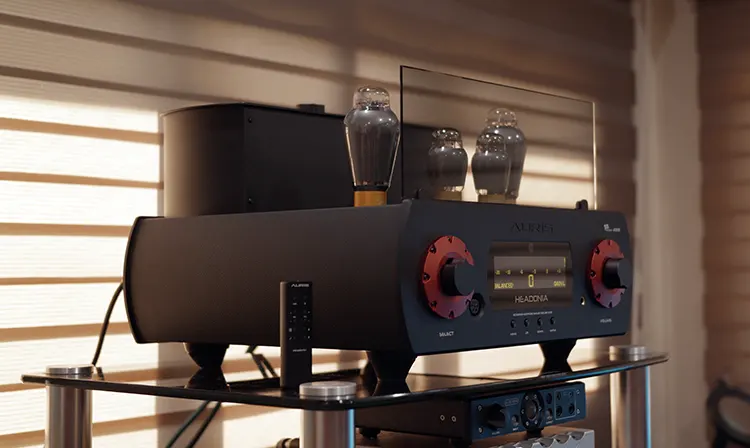
The amp has a beautiful finish of black leather (side panels) and milled aluminum plates with a very bright and legible LCD screen in the middle of two knobs with pronounced red ring plates.
Everything about the Headonia 300B’s construction feels wonderfully smooth to the touch with zero sharp corners courtesy of an exquisitely chamfered finish on all of the chassis’s edges.
It is still a somewhat racy aesthetic, at odds perhaps with the stereotypical ‘laid back’ retro-look some equate tube amplifiers with. Nevertheless, I much prefer this evolved design over the flatter-looking HA-2SE+ visuals.
And what a beast of an amplifier it is. Never mind the looks, cop a load of the size of this thing. It will devour your audio landscape, especially if you place it on a narrow rack or surround it with typically flat and more discreet components.
At 460 x 440 x 310 mm, the Headonia 300B is built to grab attention, and perhaps shelter you from a storm or two in the process. Weighing in at 23kg, you will need a sturdy set of legs on any shelf to hold the amplifier steady.
A lot of the weight is from those hefty output transformers, combined with up to 8-10mm thickness for the aluminum panels. I am glad to see heavy-duty rubber feet at the base of the amplifier to keep it steady on smooth surfaces.
I/O
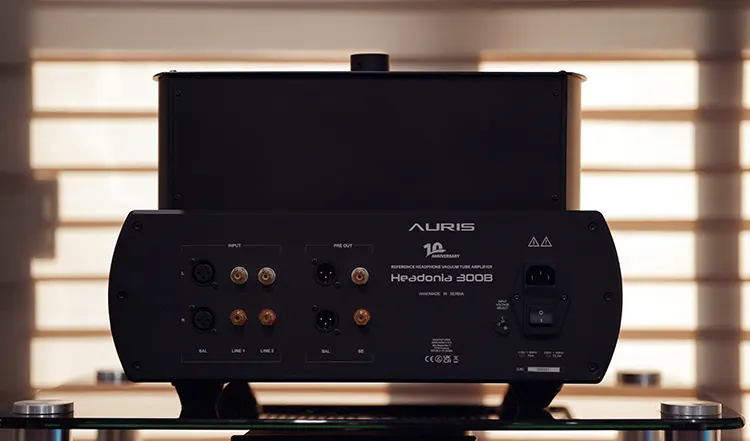
The rear panel format is a fairly typical Auris layout with provision for 3 line-level inputs and two pre-out connections. One of each will receive a 3-pin XLR connection designated as ‘balanced’ with a 1.6Vrms rating and connected to those Lundahl transformers.
The Headonia 300B features a ‘universal circuit’ design, which includes a dual input voltage selector located near the power socket, enabling the unit to operate at either 240V or 110V.
Since it is a large unit, there is ample space on the rear panel with excellent labeling legibility. You will not have to worry too much about connecting large cables or bulky connector plugs into the back of the Headonia 300B.
For the PO on the front panel, you get a single 4-pin XLR and a 6.35mm connection, and no 4.4mm option.
I suspect Auris are not hugely focused on IEM users, but given that quite a lot of headphones now have stock cables with 4.4mm connections, it would have been nice to have seen that provided in such a high-end unit.
Controls
The options to control the Headonia 300B are excellent. You have a huge and highly legible LCD screen with a decent list of menu options and some interesting data on the life of not just the total running time of the amplifier in hours, but also of each tube.
You can also select between the pre-out and headphone output, and it will show the active mode on the main screen. All onscreen options are accessed by some well-labeled and clearly spaced buttons just below the screen.
The left dial operates as a multifunctional dial with rotation and pressure-based options to choose between the inputs from the rear panel (there are three of them) and the gain stage level you want to operate in.
The ALPS potentiometer on the far right is very smooth and with a nice level of resistance, and is fairly accurate. It also automatically attenuates when you switch gain levels, which is rather cool to watch.
On the very top of the chassis is the impedance selector, exquisitely curved to allow for a very easy, unsighted grip.
This allows you to quickly motor through the five impedance values to best suit your listening preferences. It’s not a rule that you must match the impedance value to the headphone’s rating, but I generally find that something close will produce optimal results.
Lastly, we have the remote control. Small, cute, built like a tank from machined aluminum, USB-C chargeable, and offering a ton of useful options to access the Headonia 300B’s menu system, switch the gain, and mute, to name but a few.
Packaging & Accessories
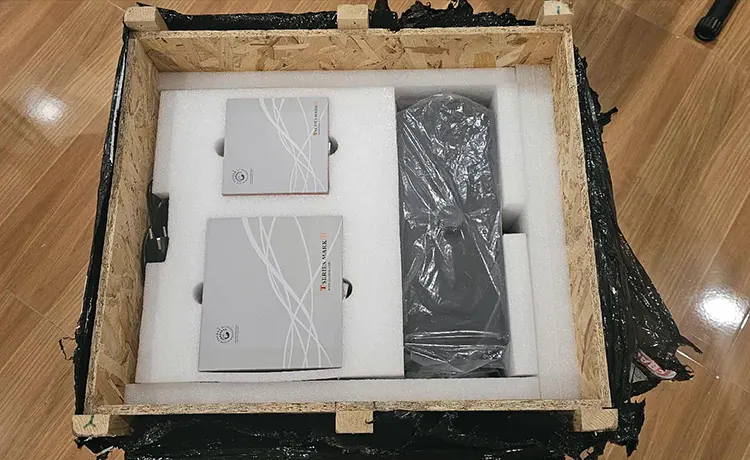
This is not so much about packaging and more about uncrating. A big tube amplifier needs a huge container, and one that will protect those precious vacuum tubes for whatever journey awaits it.
If you fancy air shipping this crate, then you might be in for a nasty surprise at the price. I had mine sent via sea, and it took about 2.5 months to go around the Cape Point from the UK to Singapore, and then Manila, and then finally to our remote island.
If you think sea cargo is a risk for such an expensive item, then you should have no fears, as it arrived in perfect condition. Auris did an excellent job in packaging the amplifier and the tubes with multiple layers of foam inside the crate to protect glass and metal from bumping, cracking, moisture, and dust.
Accessories-wise, the Headonia 300B comes with the USB-C remote control, the tubes in their respective PSVANE boxes, the detachable glass tube protector panel, power cord, and a warranty card/manual.
Just remember to set the correct input voltage on the back panel of the Headonia 300B, and you are good to go.
Click on page 2 below for my sound impressions and recommended pairings.
