

Selected Comparisons
The following comparisons to the ABYSS JOAL were completed using a mix of the Chord Electronics Alto and Ferrum OOR with the Ferrum WANDLA GSE as my main DAC.
ABYSS Diana MR
The Abyss Diana MR was launched in 2023 and is the most affordable entry in the company’s long-running DIANA series.
Technical
Both headphones are open-back planar designs, and yes, the custom-tuned 63mm driver is of a similar nature, at least on paper.
ABYSS generally does not go into huge detail regarding the precise changes in the driver, but what I can say is that the impedance is unchanged, with both headphones rated at 30Ω.
The DIANA MR driver sits below the ultra-low mass AB-1266 Phi CC and TC diagrams used in their flagship Phi, TC, and DZ models. It has a thicker diaphragm and a longer excursion, a trait I presume is hard by both the JOAL and the DIANA MR.
There is also no difference in the sensitivity rating, with the JOAL rated the same 93 dB/m rating as the DIANA MR, so I presume the new model’s driver has gone through the same optimization work as the MR version.
Design
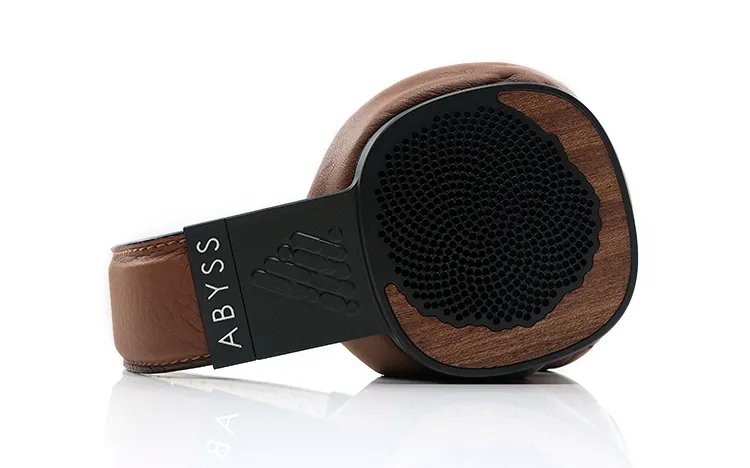
The design language is relatively unchanged IMHO, but there are production tweaks that may or may not be noticeable (depending on your fussiness) when moving from the DIANA MR to the JOAL.
The switch from ceramic to a powdered coating is not something too many will notice unless you run your finger on the aluminum chassis of these two headphones.
The powdered coating is a little more textured to the touch than the smoother DIANA MR finish, but that is about it.
Even the new plastic slider enclosures feel solid and nicely integrated. They do not look cheap or lightweight, nor do they feel like a weak link on the JOAL’s frame.
My current MR sample does not have the pressure strap, so, compared to the JOAL, it is far less comfortable, even with the aftermarket Sennheiser wraps.
That is not something you need to worry about, as all current ABYSS DIANA series models come with the pressure strap, ensuring the fit and comfort levels are the same.
The DIANA MR has more options, though in terms of finishing. I love the retro-tan and Sapele wood finish of the MR model I have here, but you can get them in several other finishes.
The headband strap is also of a slightly higher quality material and, from what I can see, still has some perforation, a feature not present on the JOAL headband.
You can also get the stock cable in varying lengths and terminations. Still, I might prefer the design of the JOAL cable over the older and heavier DIANA series cables.
I can see the DIANA series cables working better in a professional environment, but for everyday use, the new lighter JOAL cable design handles better. The cheaper pig-tail conversion cables also provide more flexibility for amplifier and DAP connections.
Performance
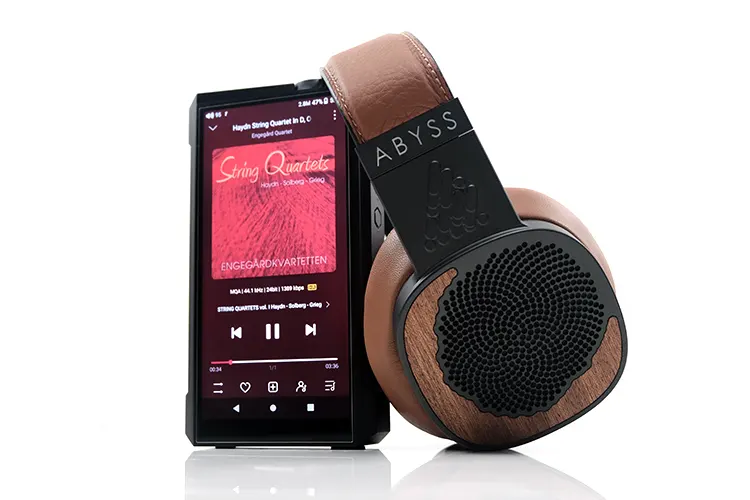
Of the two headphones, the DIANA MR is tonally the most accurate, whereas the JOAL is the most ‘musical’.
And just to be sure, I switched both to the vegan suede Pillow Top pads as they tend to deliver a slightly softer, smoother sound than the more energetic and higher-contrast tone of the leather alternatives.
Many of the differences seem to be more focused on the mids to highs tuning, where the DIANA MR pulls back a bit in the mids around 2-4k but adds more emphasis on the highs than the JOAL from 7k-10k.
That creates a more spacious, laid-back vocal image on the DIANA MR, but one with a slightly stronger upper-order harmonic presence, creating more contrast and clarity through the mids and highs.
The JOAL is all about the vocal imaging. It has about 2-3 dB more gain in this region, pushing the vocal much further forward than the DIANA MR.
In tandem, the treble is more subdued, particularly from 7k onwards, so the harmonic balance is more even-centered, creating a softer, warmer, almost rounded tonal quality. It is not quite as sparkling, slightly less sibilant for sure, but it is super-easy on the ear and a joy for vocal lovers.
For those who prefer a more reference-like approach or find the vocal dominance too distracting, then the more balanced tuning of the DIANA MR is a safer bet.
The additional treble reach enhances staging height and the perception of clarity, with more space afforded to backing instrument notes.
Both have a slight sub-bass roll off, but the additional warmth of the JOAL mid-bass disguises it a bit more. The DIANA MR sounded tighter on the lows, with better separation and slightly less sub-bass roll-off.
Meze Audio POET
The Meze Audio POET was launched in early 2025 and has a similar price point to the JOAL.
Technical
Another circumaural headphone featuring an open-back planar magnetic design, steeped in a constant evolution.
The POET’s driver is an ovoid-shaped Rinaro Parus MZ6 Isodynamic Hybrid Array, a synthesis of the older Parus MZ3SE from the Elite and the more compact Rinaro Isoplanar MZ4 found inside the Liric II.
Like the JOAL 63mm planar driver, it’s not something entirely new but rather the evolution of earlier implementations to achieve a more cost-effective offering.
And, like the JOAL/DIANA driver’s relationship to the AB-1266 offerings, the POET driver’s 92 mm x 63 mm size is smaller than the Elite or Empyrean II.
Unlike the JOAL driver implementation, which is 100% in-house, MEZE has deployed a 3rd party acoustical tuning solution to fine-tune the POET, called AMTS from Dan Clark Audio.
From what I know, the AMTS focus is on the POET’s treble performance by acting as a quarter-wavelength resonator mask to produce an easier listening quality in this region.
The POET is rated at 55Ω impedance with an SPL of 101 dB SPL/mW at 1 kHz, so it’s more sensitive than the JOAL. Though the load is higher, I find the POET the easier of the two headphones to drive from most amps.
Design
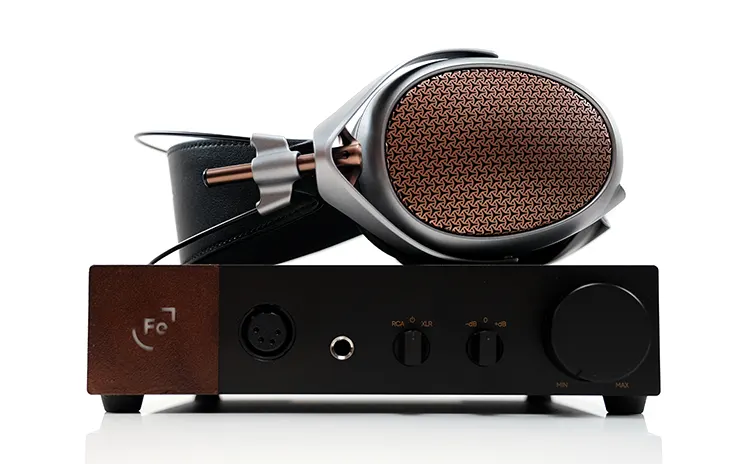
If there is one company that does designs on par with the JOAL/DIANA, it is Meze. If there is one company that can make a headphone equally as comfortable, if not more so, then again, it is Meze.
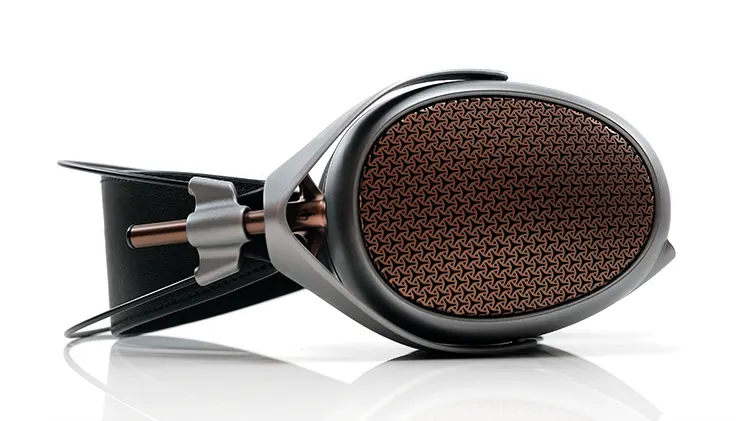
The POET is no exception to this rule, with exquisite lines that have been constantly evolving since the launch of the Empyrean. The two-tone matte silver and bronze grill with a broad pressure strap and ovoid cups make this a supremely easy-on-the-eye visual and a very comfortable headphone to wear.
The JOAL is a little more compact and slightly lighter in weight by about 20g when compared to the POET. I also happen to think it has a more durable construction and can probably take more of a beating than the POET’s more plasticky material choices.
To its credit, the new pressure strap and Pillow Top vegan suede pads make it almost as comfortable to wear. Just a slight roughness in terms of overall shape and ergonomics, but it’s not a deal breaker by any means.
Though both are open-back, you will find the POET does not feel quite as open as the JOAL. Without audio, the JOAL sounded more exposed to the outside world, whereas the POET felt a little more walled-in.
I would say the JOAL cable system is more thorough than POET’s choice of stock cable. Meze has included the excellent premium braided Furukawa PCUHD copper cable with better finishing than JOAL’s new 16-core braided OFC cable.
However, the POET cable only comes with a curious 6.35mm Single-ended termination, which feels a bit dated compared to the default 4.4mm plug on the JOAL cable. The POET also lacks JOAL’s pig-tail adaptor choices.
Performance
Both headphones are aiming for a smooth and agreeable modern sound; however, the POET is even more vocal-centric compared to the JOAL.
That means a bit more midrange gain and arguably more upper-mids and lower-treble fill from 4- 6k, pushing vocals much further forward and tucking instruments in behind.
Now, as mentioned in the design section, the passive isolation effect was stronger from the POET than from the more open JOAL, and this is reflected in the staging qualities of each headphone.
The POET is narrower and more intimate with the 1-4k imaging right in front of the listener’s position. The JOAL sounds more spacious and open in its mids and highs. It does not quite have the same treble sparkle, but it still comes across as airier and less enclosed in its delivery.
There will be some debate about the levels of resolution between these two. I think the more condensed POET staging does quite well, teasing out very good levels of clarity.
However, the imaging is too close and not as 3-dimensional as the JOAL presentation, which, while maybe a bit more rounded sounding, creates more space for instruments to shine.
Both of these headphones have a bit of roll-off sub-50Hz, but it’s more noticeable on the POET, which opts for a little more mid-to-upper bass presence.
There is some additional upper-harmonic contrast on the POET bass that helps with layering. The more compact staging quality of the POET also pushes the bass response closer to your ear.
Dan Clark Audio NOIRE XO
The Dan Clark Audio NOIRE XO was also launched earlier this year and is the open-back version of the NOIRE X. It is priced slightly lower than the JOAL.
Technical
Like the JOAL, the NOIRE XO is a mid-tier planar headphone with an open-back acoustic design. It also incorporates DCA’s AMTS technology on a more dramatic scale than POET’s version.
The drivers are quite different in their implementation and sizing. The NOIRE XO uses an ovoid-shaped 62mm x 34mm single-ended planar magnetic driver with the latest iteration of DCA’s V-Planar Technology, as opposed to the more rounded 63mm driver inside the JOAL.
The NOIRE XO also uses DCA’s Acoustic Metamaterial Tuning System, or AMTS technology, to achieve a tuning response as close as possible to the Harman Target Curve.
Both headphones have similar sensitivity levels, with the NOIRE XO rated at 94 dB/mW and the JOAL at 93 dB/mW. The NOIRE XO has a slightly lighter load at 16Ω compared to the JOAL’s 30Ω impedance rating, but it’s an insignificant difference.
I find both are optimal with decent desktop setups from around 1-3W of nominal output power and decent current, but they can still sound quite good on weaker portable gear.
Design
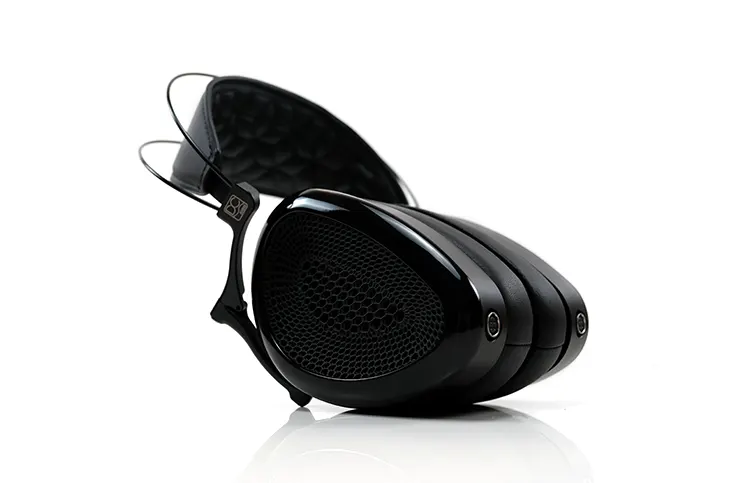
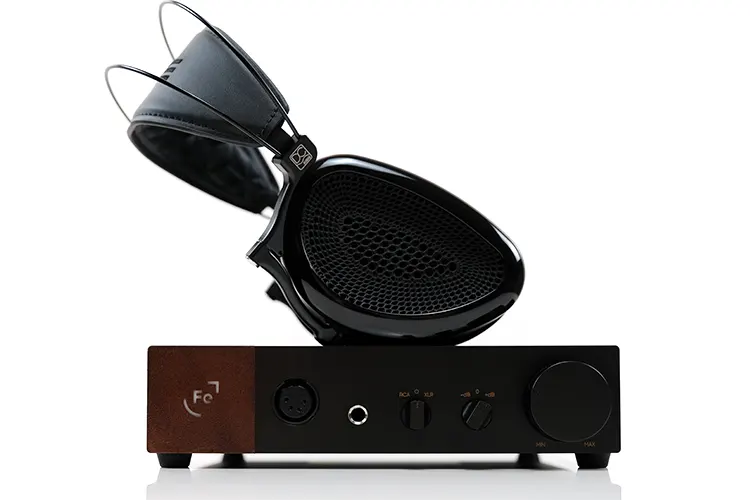
Again, another striking yet different set of designs. Both are black, and both use pressure straps for additional weight balancing, so I consider both of these headphones fairly comfortable on the head.
The NOIRE XO is both bigger and smaller than the JOAL, courtesy of that striking folding mechanism built into its frame. When folded out and ready to use, it’s bigger than the JOAL, but once folded up, it’s one of the smallest planar headphones for portability.
I would rate JOAL’s materials as more solid. It has very few articulating parts, with a flexible aluminum frame and detachable pads that are compatible with the DIANA series of pads.
You can change the NOIRE XO pads, but it’s a slightly destructive process with the sticky 3M-like adhesive labels underneath. You also only get one choice of pads for the XO, albeit a very comfortable and cheaper synthetic leather option.
In many ways, the comfort differences between the NOIRE XO and the JOAL mimic the observed differences in the POET comparison.
This is an OVOID fitting versus a more rounded headphone cup; there is the same sense of partial passive isolation from the NOIRE XO and a more open acoustical environment from the JOAL’s cups.
I would also describe the lateral clamping as a bit stronger on the NOIRE XO compared to the more evenly balanced pressure dissipation from the JOAL.
Both headphones come with stock 4.4mm terminated cables. The NOIRE XO is not as flashy as the JOAL version, nor does it have cheap multiple adaptor alternatives, but you can buy the cable in multiple lengths and default terminations.
Performance
The NOIRE XO is the more dynamic and aggressive-sounding headphone, whereas the JOAL is smoother, more laid-back, and at times slightly more spacious-sounding.
No question, the NOIRE XO is more Harman-sensitive in its tuning, the gain from 1- 6k is bang on the curve, with some slight overreach around 2-3k; a bump that propels the vocal imaging further forward than the JOAL’s equivalent region, which is slightly lower in its dB elevation.
The NOIRE XO 3-5k range also stays relatively elevated, producing more treble fill and sharpening the upper-harmonic order presence in note timbre.
Neither has an overly pushed treble region, but because of the stronger upper-mids presence on the NOIRE XO, it will pick up more treble coloration in its tuning, creating a slightly more neutral, higher-contrast sound to its vocals and percussion timbre.
The JOAL’s 3-5k dip keeps treble influences in check, producing a more rounded note coloration, which also contributes to its more laid-back staging quality for vocal imaging.
The NOIRE XO bass tuning is more elevated towards the sub-bass region and cooler through the upper-bass and lower-mids. Instruments have a stronger fundamental but are not as rich or as warm-sounding as JOAL’s equivalent range.
Because of the forward vocal imaging, the NOIRE XO is tall, deep, but not that wide, and not quite as spacious-sounding as the JOAL through the mids.
The NOIRE XO generally delivers a cleaner, snappier sound, but arguably drier and brighter, especially in the upper-mids. Whereas the JOAL tuning is wider, smoother-sounding, and more forgiving for longer listening sessions.
My Verdict
The ABYSS JOAL price point and smooth ‘musical’ sound signature fill a notable gap in the company’s headphone lineup.
They now have a more affordable headphone with a tuning that should appeal to a much wider audience than previously possible. Other companies have been exploring this approach for a few years now, so it seems logical that ABYSS should also join the party.
Purists might still reach for the more reference-level DZ or even the DIANA MR, both of which offer more detail and a greater emphasis on tonal accuracy.
However, for all-out enjoyment with a modern tuning that pairs well with a wide range of sources, the attractive-looking and well-built JOAL will present some serious competition at this price point.
ABYSS JOAL Technical Specifications
- Speakers: ABYSS custom JOAL 63 mm Planar Magnetic Transducer
- Impedance: 30Ω
- Sensitivity: 93 dB/mW
- Frequency response: 5Hz – 55 KHz
- Distortion: Average 0.03% THD
- Weight: 390 g (with stock ear pads) / 327 g (without)
- Recommended Amplifier power: Minimum 250 mW, 1-3 watts optimal for the dynamic capabilities of this headphone
