


Kurt reviews the XENNS Mangird Top Pro, a new hybrid dual dynamic and 8 balanced armature driver universal in-ear monitor priced at $499.00.
Disclaimer: This sample was sent to me in exchange for my honest opinion. Headfonics is an independent website with no affiliate links or status. I thank Linsoul for their support.
Click here to learn more about the XENNS Mangird products we have previously reviewed on Headfonics.
This post follows our scoring guidelines, which you can read in more detail here.

XENNS Mangird has long cemented its place in the audio community, with standout releases like the original Tea defining its sound philosophy.
Its follow-up, the Tea2, furthered this identity by refining its tuning and elevating build quality while keeping the core listening experience intact.
Now comes the XENNS Mangird Top Pro, their most premium IEM offering to date, positioned as the direct upgrade to the original Top.
With the addition of a second dynamic driver, can the Top Pro maintain the same market-disrupting performance that XENNS Mangird has consistently delivered across its lineup?
And how does it perform compared to competing offerings, such as the Softears Studio 4 and the MOONDROP METEOR? I find out in more detail in my full review below.

Features
The XENNS Mangird Top Pro uses a 10-driver hybrid configuration with a 4-way electronic crossover. Each group is split across low, mid, treble, and ultra-high frequencies through discrete driver assignments.
Two custom dynamic drivers are used for the low-end and are built with neodymium iron boron (NdFeB) magnets. These are reinforced by internal circuit revisions that modify magnetic flow and diaphragm responsiveness.
For the midrange, two Knowles balanced armature drivers are implemented. These are positioned to operate independently from the bass and treble drivers, reducing potential interference across regions.
The treble is handled by four balanced armature drivers, consisting of two Sonion E50D composite units and two Knowles super tweeters.
The E50Ds cover the lower treble region while the Knowles units are assigned to the upper and air frequencies, allowing clear separation across the top end.
Design
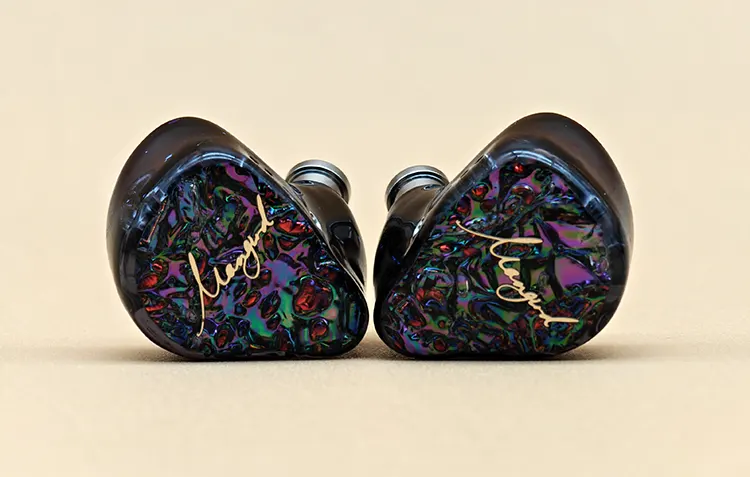
The faceplate of the XENNS Mangird Top Pro features a swirling resin finish with multi-colored, abalone-like patterns unique to each unit. Overlaying this is the Mangird script logo in gold, offering a sharp contrast that complements the chaotic yet vibrant visual texture.
The shell is crafted from dark resin with a semi-translucent finish, resembling black stained glass. Inside, the internal wiring and drivers are visible, highlighted by scattered blue and violet flakes that shimmer under direct light.
Markings are printed below the nozzle, with “Top Pro” at the top, the model number in the center, and either “L” or “R” at the bottom for channel identification. These are subtly integrated into the shell, keeping the overall aesthetic clean without sacrificing functionality.
There is a single vent located just below the 0.78mm 2-pin connector, distinguished by a metal ring embedded around its opening. The two adjacent holes are part of the connector housing and not additional vents.
The connectors themselves are recessed 0.78mm 2-pin ports, securely embedded into the resin body. The nozzles are made of polished metal and finished with a uniform mesh filter, rounding out the build with a sturdy and consistent profile.

Comfort & Isolation
The XENNS Mangird Top Pro manages its 10-driver configuration without becoming uncomfortably large. While the shell is on the bigger side, it avoids awkwardness in fit and settles into the ear without causing pressure or discomfort.
Its contoured shape contributes to a secure seal, allowing it to sit stably during longer listening sessions. There is a slight outward protrusion from the ear, though it doesn’t affect balance or add noticeable weight to the ear canal.
Isolation performance is average, mainly due to the open venting near the connector. This design allows a moderate amount of external sound to pass through, limiting its suitability for loud environments or commuting.
It works best in quiet indoor settings where isolation is not critical. Outdoor use or sleeping with them on isn’t ideal due to the shell’s size and the amount of sound leakage allowed by the vent.

Ear Tips
The XENNS Mangird Top Pro includes three sets of ear tips: a wide-bore silicone set, a balanced silicone set, and a set of foam tips. Each comes in a labeled plastic case, offering a good variety in choices.
The wide bore silicone tips in white provide the most open presentation, letting the sound breathe with minimal blockage or coloration. However, comfort takes a hit as the flanges tend to feel scratchy or irritating with prolonged use.
The black balanced tips offer a more ergonomic feel while still maintaining a spacious sound. Their more rounded and softer flange design prevents the discomfort seen with the wide bore option.
The included foam tips are of notably higher quality than most generic ones. They compress and mold easily into the ear canal and bounce back quickly after removal, although they noticeably reduce both treble and bass presence when used.

Stock Cable
The stock cable of the XENNS Mangird Top Pro features a 196-core structure made from a hybrid of single-crystal copper and silver. It is braided into four strands with a clean, glossy silver finish that complements the IEM’s design.
Build quality is excellent, with no visible flaws in the braiding or connectors. The cable feels lightweight but durable enough for daily use, with just enough flexibility to avoid tangling.
A modular screw-in system allows easy switching between 3.5mm and 4.4mm terminations. The threaded mechanism locks each plug securely into place, avoiding accidental disconnection during movement or handling.
The connectors use a standard 0.78mm 2-pin layout and are color-coded for orientation. The right side has both an “R” print and a red ring accent, while the left side uses a plain “L” marking without color.
The cable includes a Y-split and chin slider in matte black hardware with no branding or prints. A Velcro strap is also included for easier storage and cable management.
Packaging & Accessories
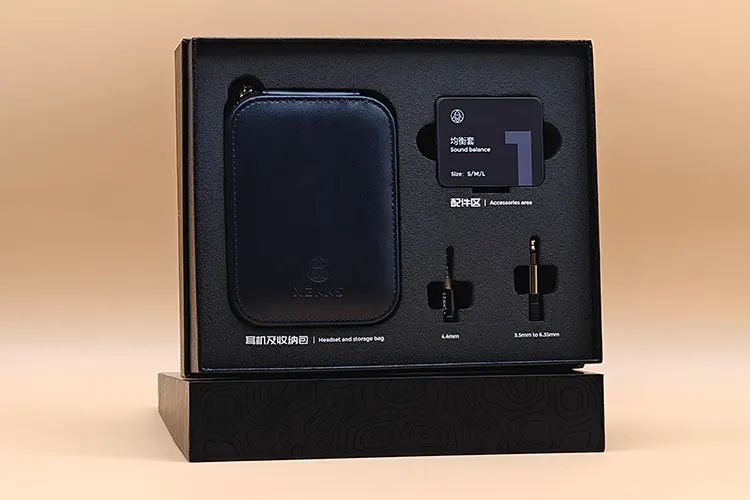
The XENNS Mangird Top Pro arrives in a large matte black box with a textured visual pattern across its surface.
Removing the sleeve reveals the main box, which features a topographic contour design etched into the surface. It continues the black-on-black theme with a central logo and the Top Pro name printed at the bottom in a metallic silver finish.
Inside the upper tray, a zipped leather storage case is positioned on the left, with a box of ear tips on the right. Below those are a 4.4mm balanced plug and a 3.5mm to 6.35mm adapter, with the latter intended for use with desktop amplifiers or studio gear that accept larger plugs.
The ear tip sets come in three stacked plastic boxes, each labeled with a different use case. Box 1 contains wide-bore tips for a more open sound, Box 2 offers tips tuned for low-frequency emphasis, and Box 3 includes memory foam tips for noise reduction and insulation.
Opening the carry case reveals the IEMs pre-attached to the cable, sealed inside plastic pouches. Also, inside is a grey felt pouch that contains a cable clip and a cleaning brush stored in its front compartment.
The inner case is structured with a center support ridge and soft velvet lining on both sides. It closes securely with a gold zipper and includes a mesh pocket for organizing smaller accessories.
Sound Impressions
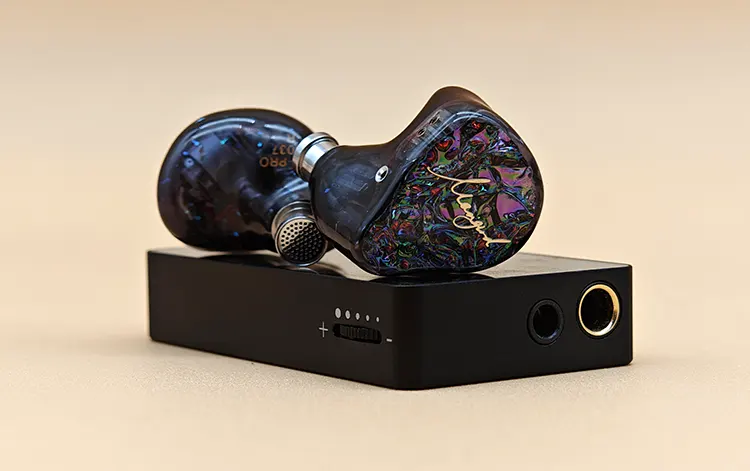
The following sound impressions of the XENNS Mangird Top Pro were completed using a mix of the Colorfly CDA-M2 and Heartfield R1 dongle DACs.
Bass
The entire low-end is superbly clean, with no smearing, muddiness, or looseness, showing the incredible bass refinement of the XENNS Mangird Top Pro. It stays precise and fast throughout, keeping its grip even in busier tracks where some IEMs would lose control.
This isn’t the kind of bass that leans into boom or weight just for impact, and at times it can come off slightly light in the midbass.
Instead, it feels like the low-end has been tuned with the same precision as the treble, flowing with a surprising level of detail that rarely shows up in this region.
Subbass and midbass both carry impressive clarity that uncovers subtle textures and small shifts in pressure. You feel every rumble and vibration with accuracy, each one mapped out cleanly under the rest of the mix without clouding anything.
Drums sound impressively realistic, not just in weight but in their physical response and texture. You can tell when the sticks hit soft or hard, and the bass drum especially trails off with a vibration that feels lifelike and satisfying.
Bass guitars have a sense of movement and expression that gives them a standout role in the mix. Every pluck of the string comes through with clarity and body, making the basslines feel both energetic and well-defined.
There’s plenty of low-end weight to keep things grounded, but it never forces itself into the spotlight. The Top Pro always knows when to hold back, keeping the rhythm alive without ever dragging the rest of the tuning down.
Mids
The midrange is simply exceptional, as the vocals with the XENNS Mangird Top Pro deliver excellent realism and intimacy. Every word feels textured and present, making voices sound natural and fully grounded.
Details in the midrange are revealed with clarity, exposing subtle vocal nuances like soft breaths or tonal shifts. These small moments bring out a sense of authenticity that makes the listening experience more immersive.
There’s a strong emotional presence in how vocals are presented, with each phrase carrying weight and direction. It doesn’t sound distant or filtered, and instead feels grounded and organic.
Male vocals have proper body and warmth, allowing the depth of lower tones to come through clearly. It feels properly weighted without being too thick or sluggish.
Female vocals are handled beautifully, sounding smooth, open, and slightly ethereal in their delivery. There’s a charming, lifelike quality to their tone that never comes off as artificial or overly softened.
Instruments sit naturally in the mix with no plasticky edges or unnatural glare. Stringed instruments especially benefit from a tone and timbre that keep them grounded, giving them a believable and lifelike presence.

Treble
A near-effortless sense of extension and refinement defines the treble of the XENNS Mangird Top Pro. It captures tiny details and nuances with ease, offering excellent retrieval without ever sounding sharp or exaggerated.
There’s a careful balance between brightness and smoothness that gives just enough sparkle to feel lively without being overdone. It avoids both excessive energy and dullness, always staying composed.
Microdetails surface naturally, exposing fine textures that are usually lost in the background. It’s like switching from a standard 1080p screen to a sharp 4k display, where familiar details suddenly become clearer, crisper, and exposed.
The resolution is genuinely impressive, delivering a sense of definition that confidently rises above its price point. It maintains an airy and open presentation, letting instruments breathe without thinning them out.
Cymbals and high hats have a natural metallic shimmer, with a soft trailing splash that feels accurate and unforced. Snare drums hit with an organic snap, and while vocals and instruments may carry extra bite, it never crosses into actual sibilance.
Even with this level of detail, it remains easy on the ears and avoids fatigue. The tuning leans neutral in its delivery, offering clarity without resorting to artificial boosts.
Staging & Dynamics
Everything gets enough breathing room with the wide, spacious, and immersive soundstage of the XENNS Mangird Top Pro. There’s a proper sense of height and depth, making the overall experience feel holographic at times.
Imaging ties everything together with impressive precision and focus. Even with drums, you can tell exactly where the toms and snare are being struck and how far off-center each hit lands.
Live recordings become even more engaging as sounds pan in and out with excellent accuracy. Certain elements rise or drop vertically, creating a more dimensional and immersive field.
While not the deepest in layering, there’s still a gentle push forward or back for some sounds. It adds subtle depth without making things feel artificially stretched.
Separation is excellent, as the open space allows instruments, vocals, and effects to spread out naturally. Even in complex or dense passages, everything stays organized and clear.
Dynamics are well controlled, with each sound carrying the right amount of weight and impact. There’s never any overlapping or overpowering, keeping balance intact even during louder or busier moments.
Click on page 2 below for my recommended pairings and selected comparisons.
