

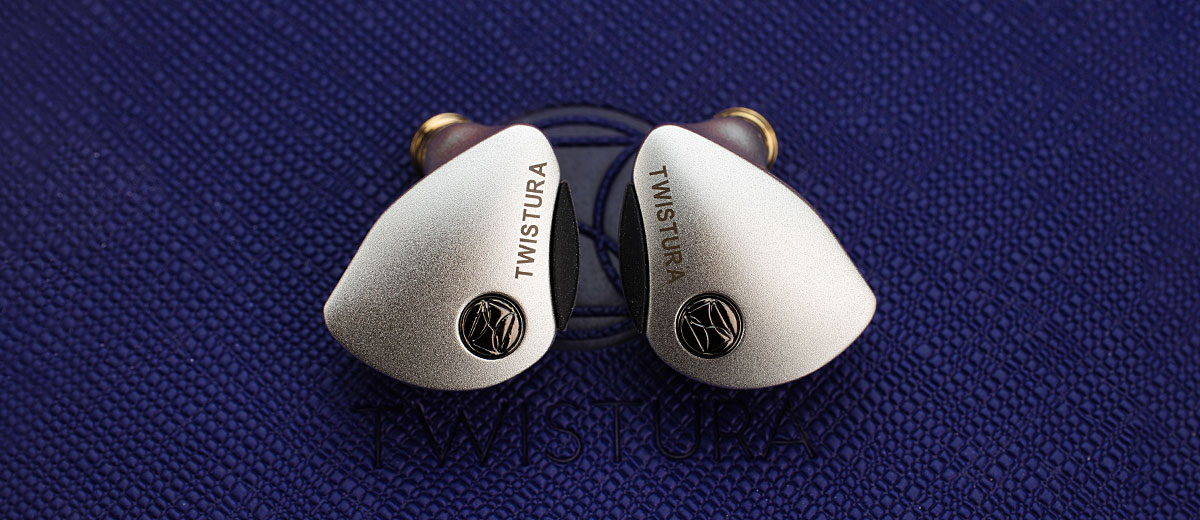
Marcelo reviews the TWISTURA Woodnote, a new flagship wood diaphragm 10mm single dynamic driver IEM with a customizable sound signature. It is currently priced at $179.
Disclaimer: This is a sample in exchange for my honest opinion. Headfonics is an independent website with no affiliate links or status. I thank Linsoul for this opportunity.
Click here to read more about Linsoul-supplied products previously reviewed on Headfonics.
This article follows our latest scoring guidelines, which you can read in more detail here.
A unique and unusual brand name; the first TWISTURA product to be reviewed here at Headfonics, but TWISTURA is not a stranger to me, as I have their first IEM model, the D-Major.
TWISTURA is a relatively new brand, having been established in 2024. The Woodnote is their fourth IEM product. This means they do not release new IEMS every month, making each release more special.
What’s special about the TWISTURA Woodnote is the use of a pressed wood fiber dome and a flexible suspension edge for its diaphragm, which is supposed to give a clear yet non-fatiguing natural sound.
As of writing this introduction, I haven’t heard the TWISTURA Woodnote yet, and I’m wondering how it compares to popular single dynamic driver IEMs that dominate the $175 to $225 price bracket, including the DUNU Falcon Ultra Ti, SIMGOT EA1000, and the recently released Hidizs MK12 Turris.
So let’s dive into this and find out together in the review below.
Features
The main feature of the TWISTURA Woodnote is the use of a selected wood fiber composite pressed into a dome shape and then suspended by a flexible suspension of undisclosed material, presumably silicone, as the diaphragm.
This diaphragm type should reduce the breakup mode at around 8 to 12 kHz in most 10mm single dynamic drivers.
It uses a 10mm dual-magnetic system, which gives it a powerful motor system for high efficiency and dynamics. It also has a dual-chamber structure, which optimizes airflow to minimize diaphragm resonance.
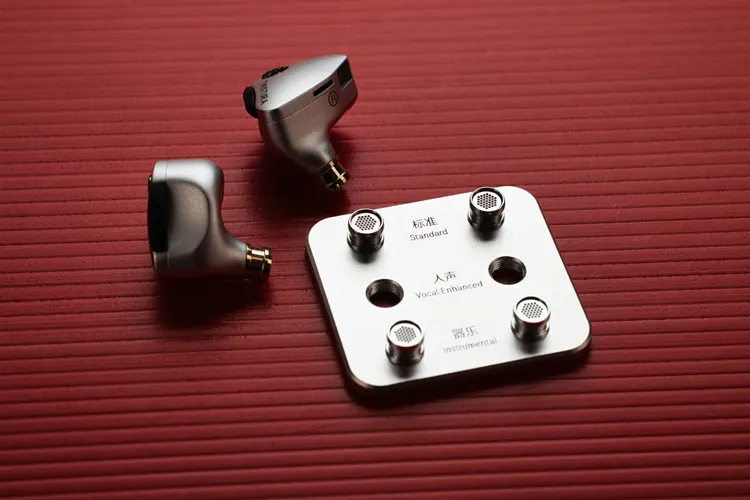
A switchable nozzle system allows changing between the standard, vocals, and instruments. There are noticeable differences in sound between these tuning nozzles. And as can be seen in the measured graph, there are differences.
Its shells are made of CNC-machined aluminum alloy for durability, and it has a guided ventilation system for sound tuning and air pressure release.
Design
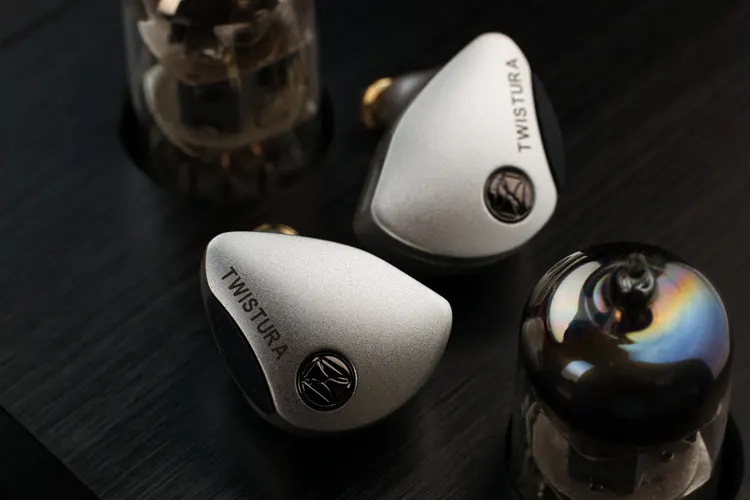
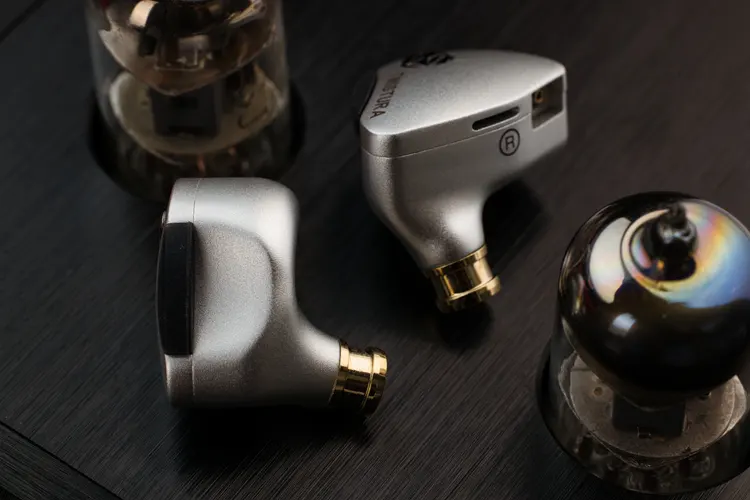
The TWISTURA Woodnote has an ergonomically shaped aluminum alloy shell with a silver anodized finish, and it feels light and comfortable to wear, even during long listening sessions.
Its faceplate aesthetics are clean, with only a small emblem and lettering adorning it. A small circular vent for pressure release is beside the nozzle, and another slotted vent is near the 2-pin connectors.
I love the simple design and the comfort of wearing the TWISTURA Woodnote, but I’m wary about the black rubber part on the side of the faceplate, as it might rot over time.
But on the other hand, it might rot years after the Woodnote is obsolete, and it doesn’t seem to affect the shell’s integrity even if it is removed.
Cable
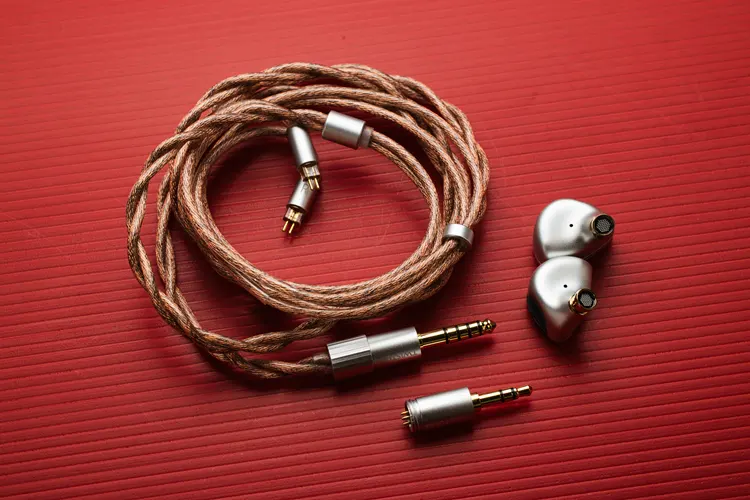
The Woodnote Stock cable is a beauty. It is a 2-core cable with matte silver all-metal hard parts and a modular plug that doesn’t look like a modular plug due to its standard size. It is terminated with 2-pin connectors on the IEM side.
The transparent wire skin allows the copper conductors to be seen and adds warmth to the set’s overall aesthetic.
Comfort & Isolation
In my experience, a pressure-release vent for the ear canal is essential for comfort. Not all IEMs have that feature, but the Woodnote does. It prevents an uncomfortable pressure buildup in the ear canal that can cause nausea.
Its ergonomically shaped shells are medium in weight and size. They fit perfectly in my ears without any pressure hot spots.
The Woodnote feels very comfortable to wear, without any pressure build-up, and has a smooth sound, making the TWISTURA Woodnote an excellent IEM for long listening sessions.
Packaging & Accessories
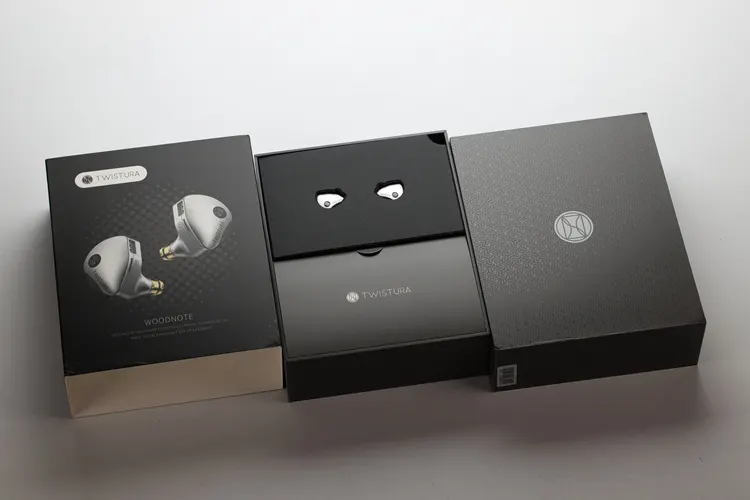
The TWISTURA Woodnote packaging has a simple design. It comes in a grey rigid box with a black sleeve, photos of the IEMs on the front, and some specifications on the back.
The packaging is efficient in its use of materials, and I like the fact that it is not wasteful. You’ll find the pair of IEMs on display when you open the box.
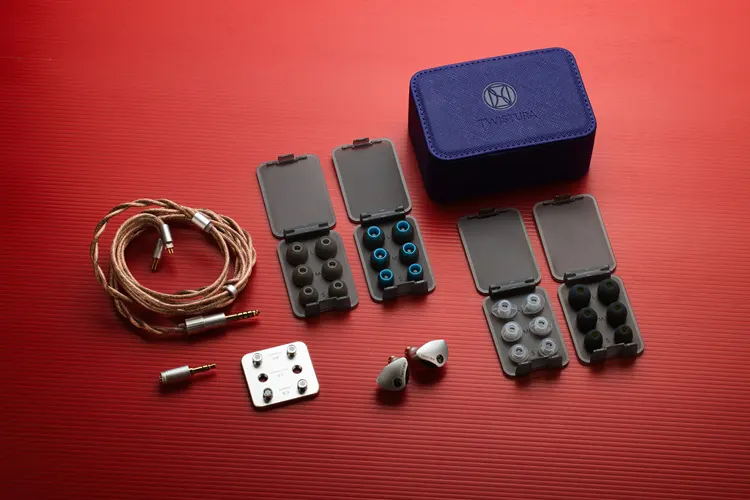
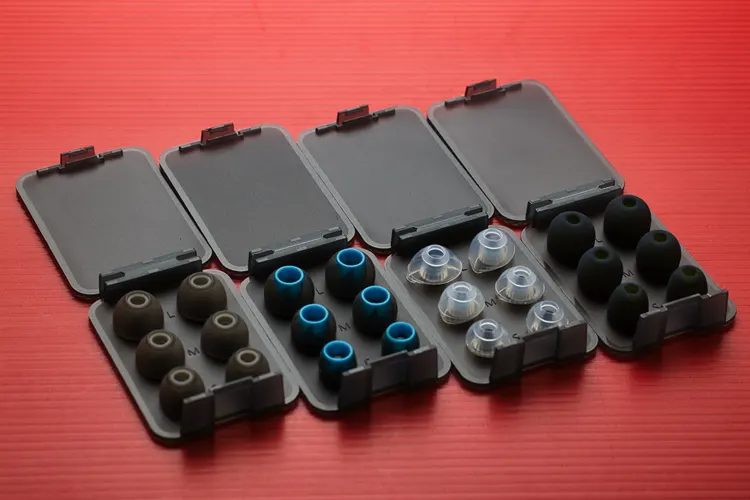
For accessories, you get a modular cable set, twelve ear tip pairs, two tuning nozzles, a user manual, an adorable deep purple carrying case, and a pair of IEMs with nozzles installed.
Overall, a nicely accessorized package with up-to-date accessories.
Sound Impressions
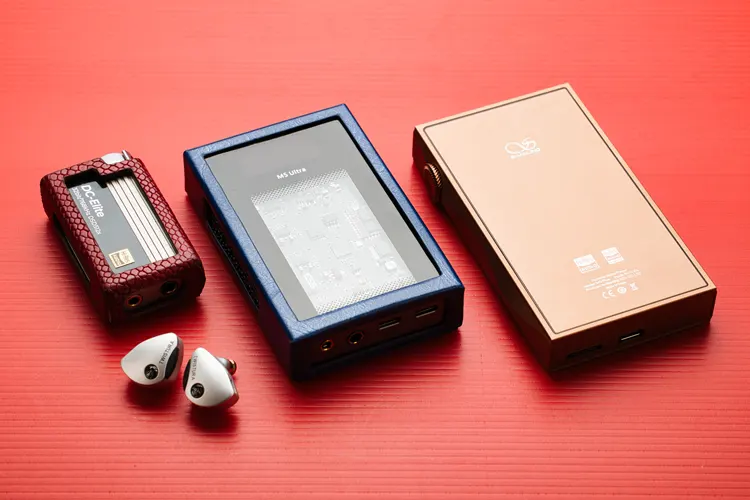
I used the iBasso DC Elite dongle DAC, MUSE HiFi M5 Ultra DAC/amplifier, and the Shanling M3 Plus digital audio player (DAP) for this review. I chose these sources because of their differing sound signatures.
I used the standard nozzle, the most refined and smoothest of the three included nozzles. The vocal-enhanced and instrumental nozzles have too much upper midrange and treble. I also used the lime-colored sleeve ear tips, which sounded the most balanced.
Before seriously listening to the TWISTURA Woodnote, at least 24 hours of playtime were done.
Summary
Two things stand out when I listen to the TWISTURA Woodnote. The first one is the excellently balanced tonality. Its sound signature is warm-neutral, with a boost in the bass.
Due to that added boost, it sounds delightfully engaging and energetic while maintaining neutrality in presentation so that every instrument can be heard equally.
Because of its warm-neutral and smooth sound, Woodnote is a versatile and forgiving IEM that can be used with any source and music genre without any drawbacks.
It tends to emphasize the positive qualities of the associated gear and the type of music instead of exposing their flaws, making Woodnote pleasant to listen to with just about anything.
The second thing I notice about the Woodnote is the naturalness of the sound. Still, please don’t misunderstand. The Woodnote is not trying to sound analog or organic, which sacrifices some technical performance, such as resolution, separation, and micro-details.
It simply sounds natural and has good technical performance. It has good resolution, instrument separation, macro and micro-detail rendition, and air. It is above average and could compete in the higher price bracket.
The vocal performance is excellent with both male and female. It is clear with many details yet full-bodied and never thin and shouty. It has a lush-sounding midrange with natural instrument decay and note weight.
Coloration
The Woodnote does not have a conspicuous coloration, but the warm tonal balance and slightly boosted bass are noticeable at first listen, especially when coming from a neutral-sounding IEM.
However, our brains easily adjust to them, leaving us with a clean and non-fatiguing sound.
Soundstage
The Woodnote may not have the grandest soundstage presentation I’ve heard, but it is certainly big. The soundstage shape is wider than deep and has good width, depth, and height, making it feel like you are in a spacious place while listening.
The instruments have excellent lateral spread and panning and good front-to-back placement. The main vocalist is planted in the center with good stability, while the background instruments are placed at the back.
I wouldn’t say it is the most holographic imaging I’ve heard, but it has a good holographic projection of images that are separated from each other.
Synergy
The Woodnote is quite sensitive, but it never picked up any noise from any of the sources mentioned here, or any clicking and popping sound when engaging or disengaging the sources.
This is an easy-to-drive IEM. With a modest volume setting, it goes loud and never poses any difficulty to the sources, including lower-powered ones. It is a very versatile IEM.
Pairings
As mentioned, the TWISTURA Woodnote is a versatile IEM; it is not fuzzy and sounds great with just about any source pairing.
Its forgiving sound characteristics tend to highlight the source’s positive traits and not expose its flaws; I speculate this is due to the use of the pressed wood fiber composite dome diaphragm, which could be excellent in controlling breakup modes and resonance, which can be triggered with the source’s sound coloration.
To give an example. Paired with the Shanling M3 Plus DAP, a neutral-sounding DAP with a flat perceived frequency response that has tight bass and a very detailed and extended treble.
The tightness in the bass could cause other IEMs to sound lean, but the slightly warm tone of the Woodnote avoids it, and the upper treble extension and details of the M3 Plus shine through the Woodnote with excellent transparency.
Another example is the Muse HiFi M5 Ultra DAC/amplifier. It is an analog-sounding battery-powered DAC/amplifier with a good soundstage and warmth, especially in its vacuum tube mode.
All the beautiful characteristics of the M5 Ultra shine through without drawbacks like a lack of dynamics and smoothening of the transients, like with other IEMs. This pairing sounds musically engaging.
Lastly, the iBasso DC Elite’s sound signature is slightly U-shaped, which could sound thin and lack bass weight with some IEM pairings.
But with the Woodnote, the bass is warm and powerful, with nice weight and impact. All the positive traits of the DC Elite, like its outstanding transparency, soundstage, and imaging, shine through the Woodnote.
As I have been saying, the TWISTURA Woodnote is forgiving of the source’s flaws, yet resolved enough to present their positive traits in a revealing and transparent way.
