

Synergy
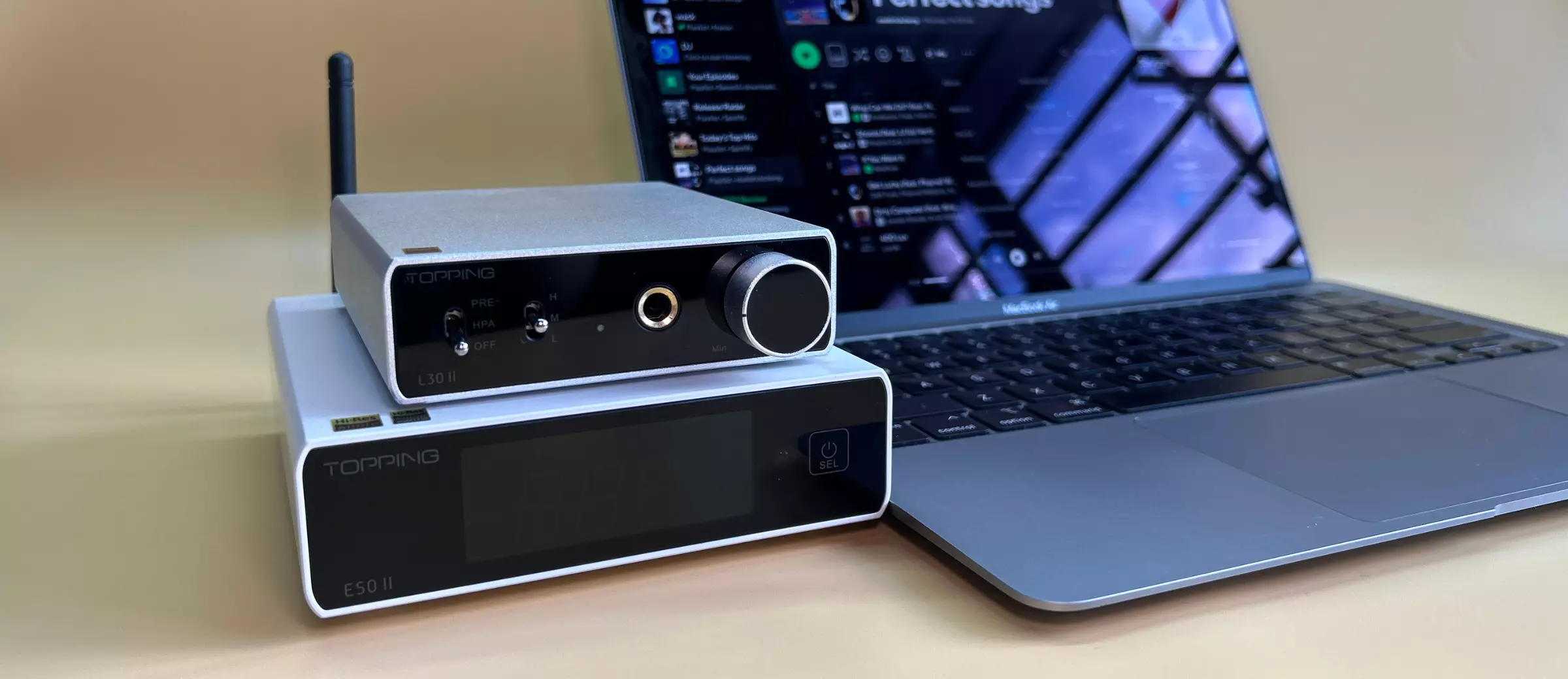
Given the E50 II’s neutral, transparent tonal balance, I found it to be quite versatile. For headphones like the HD 600, it paired well with warmer amps like the xDuoo MT-602. The Argon Mk3 also paired well with the Topping L30 II.
The Topping L30 II proved an excellent amplifier match, as both components share a similar philosophy of neutrality and technical excellence.
This pairing created a supremely transparent, detailed presentation that served as an ideal reference for evaluating headphones and recordings.
For headphones, the Sennheiser HD 600 worked beautifully with the E50 II. The HD 600’s slightly warm, natural tonal balance complemented the E50 II’s neutrality perfectly, resulting in a balanced, engaging presentation with excellent vocal reproduction and natural timbre.
On the IEM front, the neutral-leaning MOONDROP Blessing 3 paired exceptionally well. The Blessing 3’s technical prowess was fully realized by the E50 II’s clean signal path, resulting in strong detail retrieval and spatial presentation.
The V-shaped Yanyin Canon II also worked well, as the E50 II’s neutral presentation helped tame the Canon II’s elevated bass and treble, creating a more balanced overall sound.
Selected Comparisons
Fosi ZD3
Technical
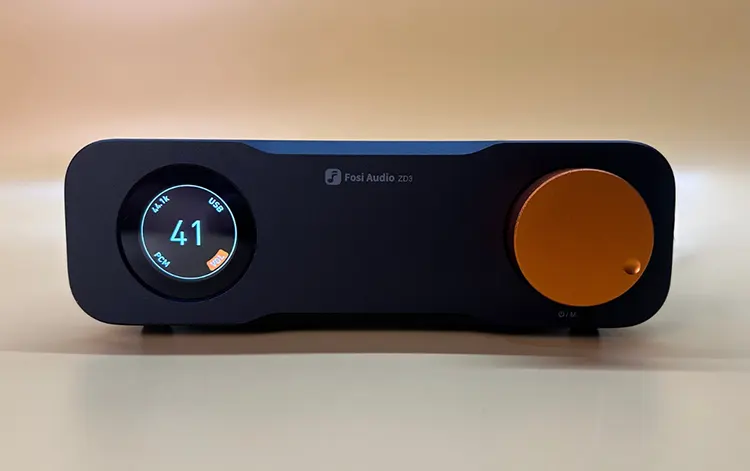
The Topping E50 II and Fosi ZD3 represent different approaches to DAC implementation despite similar price points.
The E50 II features the AKM AK4497S DAC chip supporting PCM up to 32-bit/768kHz and native DSD512, while the ZD3 uses the ESS ES9039Q2M supporting identical codec capabilities.
Both achieve excellent measured performance, though the E50 II edges ahead with 131dB dynamic range versus the ZD3’s 126dB.
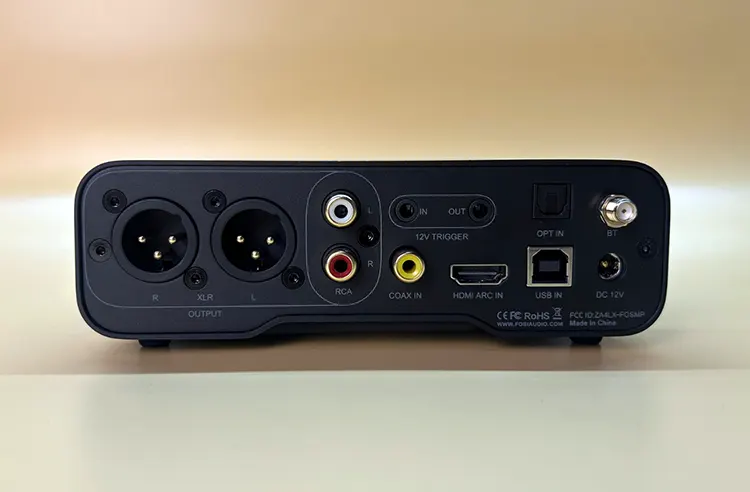
Connectivity differs significantly. The E50 II offers USB-C, optical (dual S/PDIF/ADAT), coaxial, and Bluetooth 5.4 with LDAC/aptX Adaptive.
The ZD3 provides USB-B, HDMI ARC, optical, coaxial, and Bluetooth 5.0 with aptX HD. The ZD3’s HDMI ARC input is unique at this price point and particularly useful for TV integration, while the E50 II’s ADAT capability targets studio users.
Feature-wise, both include displays and infrared remote controls. The E50 II’s 10-band parametric EQ accessible via smartphone and desktop apps represents a significant advantage over the ZD3’s lack of EQ functionality.
However, the ZD3 counters with a 12V trigger in/out for system automation, features the E50 II lacks entirely.
Design
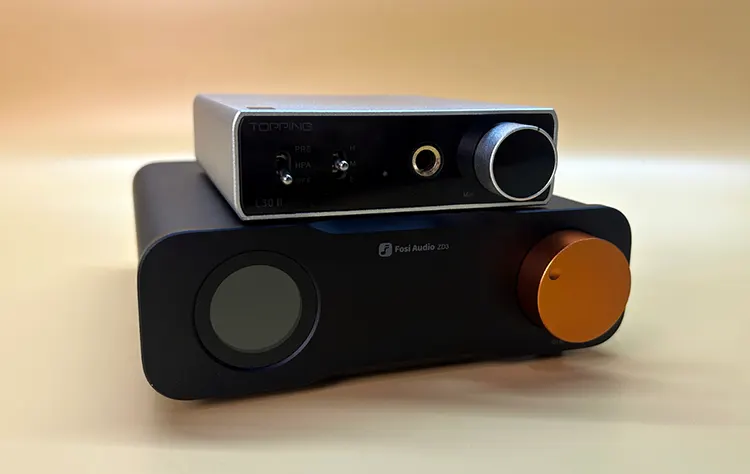
Both DACs embrace minimalist aesthetics with CNC-machined aluminum chassis. The E50 II is more compact in every dimension; however, neither presents issues in typical desktop setups, though the E50 II’s lighter weight makes it slightly easier to reposition.
The E50 II’s front panel features a monochrome display and a capacitive touch button for control. The ZD3 employs a circular OLED display and a physical volume knob that doubles as a multifunction button.
The ZD3’s physical controls provide more tactile feedback and immediate volume adjustment, while the E50 II’s touch controls offer a cleaner aesthetic at the cost of tactile confirmation.
Build quality is excellent on both units, with professional fit and finish that belies their modest pricing. The E50 II’s slightly more compact footprint may appeal to users with severely space-constrained desks.
Performance
Despite both DACs delivering excellent technical performance, they take different approaches to their sonic presentations.
The E50 II sounds neutral, transparent, and highly analytical with minimal coloration. Bass hits are tight and controlled with excellent sub-bass extension, maintaining superb texture and accuracy without added warmth. The presentation favors precision and speed.
The ZD3 delivers a warmer, more musical presentation with enhanced mid-bass body and natural midrange timbre. Its sound signature prioritizes listenability and organic character over clinical accuracy, creating a more forgiving sound with less-than-perfect recordings.
In the treble region, the E50 II provides superior extension and detail with excellent sparkle that enhances perceived resolution. The ZD3’s treble rolls off more gently, creating a relaxed, smooth top-end that avoids any hint of harshness but sacrifices some air and micro-detail.
For well-recorded material, the E50 II extracts more information. For bright or poorly recorded tracks, the ZD3’s forgiving character proves more pleasant for extended listening.
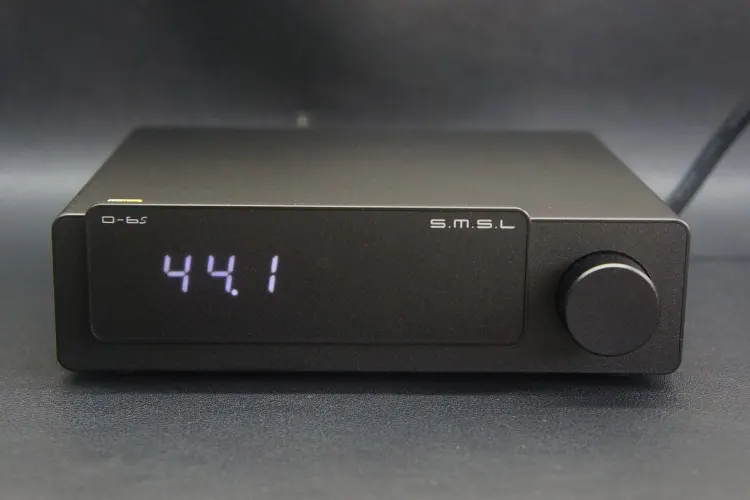
SMSL D-6S
Technical
The E50 II features the AKM AK4497S DAC chip supporting PCM up to 32-bit/768kHz and native DSD512, while the D-6S uses the ESS ES9039Q2M supporting identical codec capabilities up to 32-bit/768kHz PCM via USB and native DSD512 playback.
However, the D-6S includes MQA decoding and MQA-CD unfolding, features completely absent on the E50 II. For users invested in the MQA ecosystem or who frequently play MQA-encoded CDs, this represents a significant advantage.
Connectivity differs meaningfully. The E50 II offers USB-C, optical (dual S/PDIF/ADAT), coaxial, and Bluetooth 5.4 with LDAC/aptX Adaptive support. The D-6S provides USB-C, optical, coaxial, and Bluetooth 5.1 with LDAC/aptX HD support but lacks the E50 II’s ADAT functionality.
Output configurations are similar. The E50 II provides selectable output voltages up to 11.3Vrms balanced and 5.6Vrms RCA, giving it greater flexibility for matching various amplifier input sensitivities. The D-6S uses fixed output voltages.
Feature-wise, both include displays and infrared remote controls for convenient operation. The E50 II’s comprehensive 10-band parametric EQ with app control (via Topping Home and Topping Tune) represents a major advantage over the D-6S’s lack of any EQ functionality.
Design
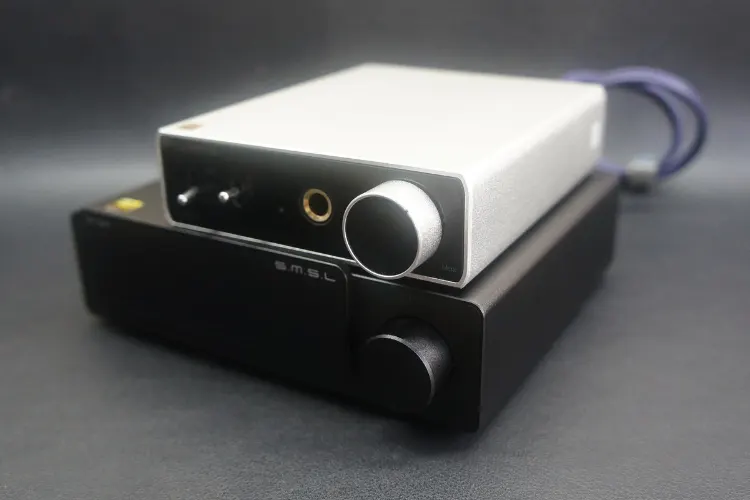
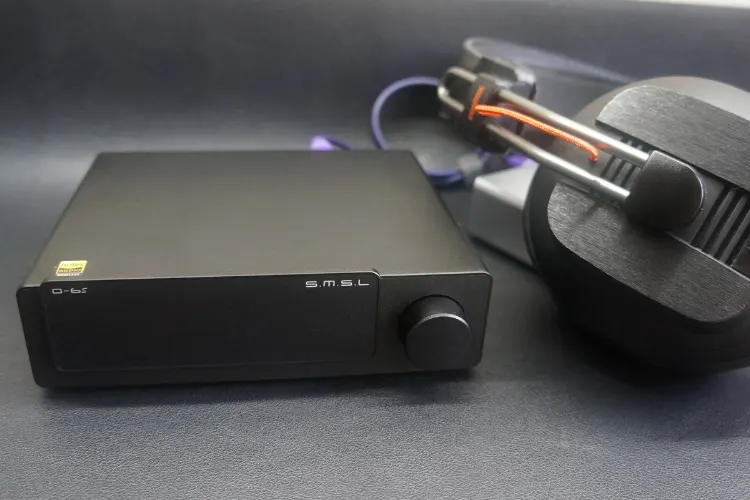
Both DACs embrace minimalist aesthetics with CNC-machined aluminum chassis. The E50 II measures longer than the D-6s; the D-6s is wider and taller. Neither presents space concerns in typical desktop setups, though the D-6S is noticeably heavier.
The D-6S features a frosted glass front panel that resists fingerprints better than glossy finishes, with a 7-segment LED display that becomes nearly invisible when powered off.
The front panel protrudes slightly, creating a floating effect that adds visual interest. The E50 II’s monochrome display and capacitive touch button create a more contemporary appearance with a fully visible display even when inactive.
Both units use electronic controls. The D-6S has a physical volume knob/button on the front panel, while the E50 II uses a capacitive touch button.
The D-6S’s physical control provides more tactile feedback. Build quality is excellent on both, with tight tolerances and professional fit and finish. The D-6S’s heavier weight provides better stability with heavy cables attached.
Performance
Despite using different DAC chips, the E50 II and D-6S both deliver neutral, transparent sound signatures with minimal coloration. However, subtle differences emerge upon careful comparison.
The E50 II sounds marginally more dynamic and engaging, with slightly better micro-detail retrieval and a touch more air in the treble region. Cymbal crashes and high-frequency details are rendered with excellent extension and sparkle on the E50 II.
The D-6S delivers similarly excellent treble extension but with a slightly more relaxed character that some users may find less fatiguing during extended listening sessions.
In extended listening sessions, the differences between these two DACs proved subtle enough that most listeners would struggle to identify them in blind testing.
FIIO K13 R2R
Technical
The Topping E50 II and FiiO K13 R2R represent fundamentally different design philosophies. The E50 II uses the AKM AK4497S delta-sigma DAC chip supporting PCM 32-bit/768kHz and DSD512.
The K13 R2R employs a proprietary 24-bit R2R resistor ladder DAC with 192 precision thin-film resistors, supporting PCM 24-bit/384kHz and DSD256. The K13 R2R includes both NOS (non-oversampling) and OS (oversampling) modes for different sonic presentations.
The K13 R2R is a DAC/headphone amplifier combo delivering up to 2400mW at 32Ω balanced and 600mW single-ended, with both 4.4mm balanced and 6.35mm single-ended headphone outputs.
The E50 II is a pure DAC/preamp with no headphone amplification, requiring external amplification for headphone use.
Connectivity differs significantly. The E50 II offers USB-C, optical (dual S/PDIF/ADAT), coaxial, and Bluetooth 5.4 with LDAC/aptX Adaptive.
The K13 R2R provides dual USB-C inputs, optical, coaxial, and Bluetooth 5.4 with LDAC, along with balanced XLR and dual RCA line outputs for maximum flexibility.
The K13 R2R notably includes both AC and DC power input options, allowing users to connect external linear power supplies for potentially improved performance.
Both feature displays and include remote controls. The E50 II’s 10-band parametric EQ via app control matches the K13 R2R’s similar EQ implementation.
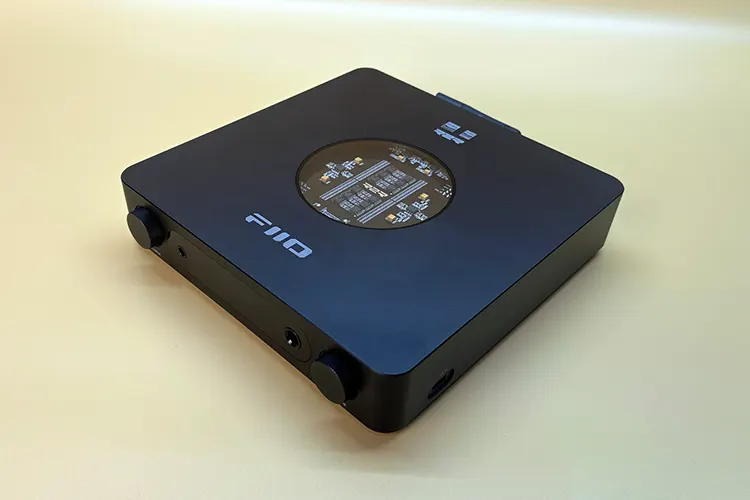
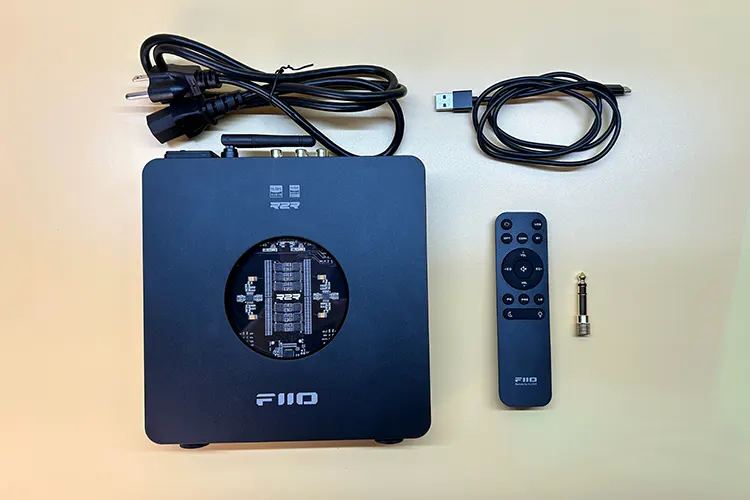
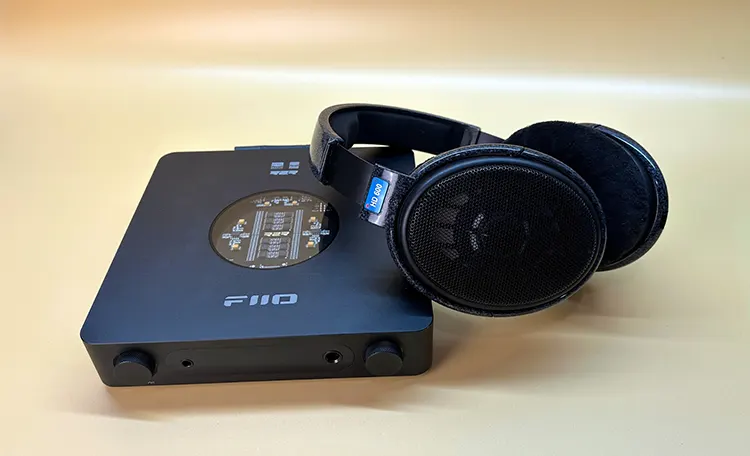
The K13 R2R’s distinctive skylight design window, showcasing the R2R resistor array, provides visual interest lacking in the E50 II’s more conventional appearance.
Price-wise, the K13 R2R at $319.99 costs significantly more than the E50 II’s $199, reflecting its integrated amplification and more complex R2R implementation.
Design
The K13 R2R measures 210 x 188 x 42mm and weighs approximately 980g, substantially larger and heavier than the E50 II’s 150 x 130 x 41mm and 445g footprint.
Both use aluminum chassis with modern aesthetics, though they take different design approaches. The K13 R2R features dual aluminum knobs flanking a monochrome display, plus the distinctive circular glass window revealing the internal R2R resistor array.
RGB lighting indicates sample rate with customizable colors. The E50 II’s single capacitive touch button and display create a cleaner, more minimalist appearance without the visual flair of the K13 R2R’s exposed components.
Build quality is excellent on both units, with solid construction and quality connectors throughout. The K13 R2R’s significantly greater weight (980g vs 445g) provides better stability but makes it less portable.
The E50 II’s more compact size suits smaller desks better, while the K13 R2R’s larger footprint may be problematic in space-constrained setups.
Performance
These DACs represent fundamentally different design philosophies that manifest in their sonic presentations.
The K13 R2R’s resistor ladder architecture, particularly in NOS mode, delivers an organic, analog-like presentation with natural timbre and smooth note transitions. The sound has a warmer character with fuller midrange body and particularly lush vocal presentation.
The E50 II’s delta-sigma implementation provides a more traditionally neutral, transparent character with slightly better technical precision.
While the K13 R2R leans toward the organic side, the E50 II maintains clinical accuracy with excellent detail retrieval and superior treble extension.
When the K13 R2R operates in OS mode, it moves closer to the E50 II’s neutral presentation, though it retains slightly more midrange warmth.
The treble presentation differs notably; the K13 R2R’s top end is smooth and organic with gentle roll-off, while the E50 II’s treble maintains more extension and energy with excellent air and sparkle.
The bass character varies between the two. The E50 II emphasizes accuracy and control with tight, articulate bass, while the K13 R2R in NOS mode delivers slightly fuller, more organic bass with better textural richness.
My Verdict
At $199, the Topping E50 II delivers great value by combining strong sonic performance with comprehensive connectivity options.
Its neutral, transparent sound signature makes it an ideal reference source for critical listening, mixing, and mastering work, while its extensive EQ capabilities allow users to tailor the sound to their preferences or compensate for downstream components.
It’s not perfect. The neutral sound won’t satisfy those seeking warmth or tonal richness. The capacitive touch controls lack the satisfying feedback of physical buttons or knobs.
But for those building their first serious desktop audio system or upgrading from built-in audio, the E50 II provides an excellent foundation.
Its technical excellence ensures it won’t become a bottleneck as you upgrade other components, while its comprehensive EQ capabilities provide room for experimentation and optimization.
Topping E50 II Technical Specifications
- DAC Chip: AKM AK4497S (VELVET SOUND)
- USB Processor: XMOS XU316
- Bluetooth Chip: Qualcomm QCC5125
- PCM Support: USB up to 32-bit/768kHz; Optical/Coaxial up to 24-bit/192kHz
- DSD Support: Native DSD512 via USB
- ADAT Support: Up to 8 channels at 48kHz, 4 channels at 96kHz
- Inputs: USB-C, Optical (dual S/PDIF/ADAT), Coaxial, Bluetooth 5.4
- Outputs: TRS Balanced (selectable 2.6Vrms or 11.3Vrms), RCA (selectable 2.6Vrms or 5.6Vrms)
