

Select Comparisons
Elysian Acoustic Labs APOSTLE
Technical
The APOSTLE features a 5-driver tribrid IEM setup, including one custom dynamic driver, one Knowles, and one Sonion balanced armature driver, and two new-generation Sonion electrostatic drivers.
The custom-tuned Liquid Silicone Rubber (LSR) dynamic driver helps in delivering a deep, controlled bass with minimal distortion. Additionally, a newly designed 4-way crossover ensures quick and precise frequency distribution among the drivers.
APOSTLE has an impedance of 10 Ω @ 1 kHz and a sensitivity rating of 97 dB/Vrms. It does not require extra power and can be comfortably driven by low-power sources such as dongles and smartphones. It takes a similar level of power as the Valhalla.
On my Lotoo PAW Gold Touch, both the APOSTLE and Valhalla take a volume level of just above 30. Both the IEMs are quite stable with some additional power and show some scalability.
Notably, the APOSTLE does not have a background static hiss when paired with the Questyle CMA18P.
Design
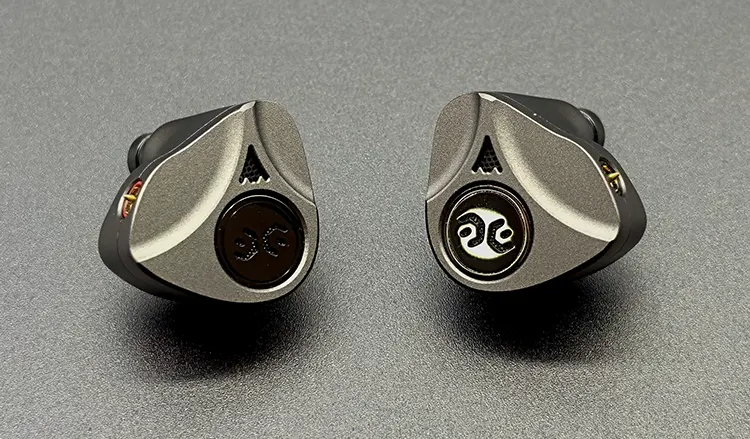
APOSTLE’s design features an unconventional mechanical approach, deviating from traditional metal shell IEMs.
The shells are built from aluminum alloy and feel very robust while maintaining a lightweight feel. The face of the IEM is designed in a tri-cornered structure with a circular black accent at one end.
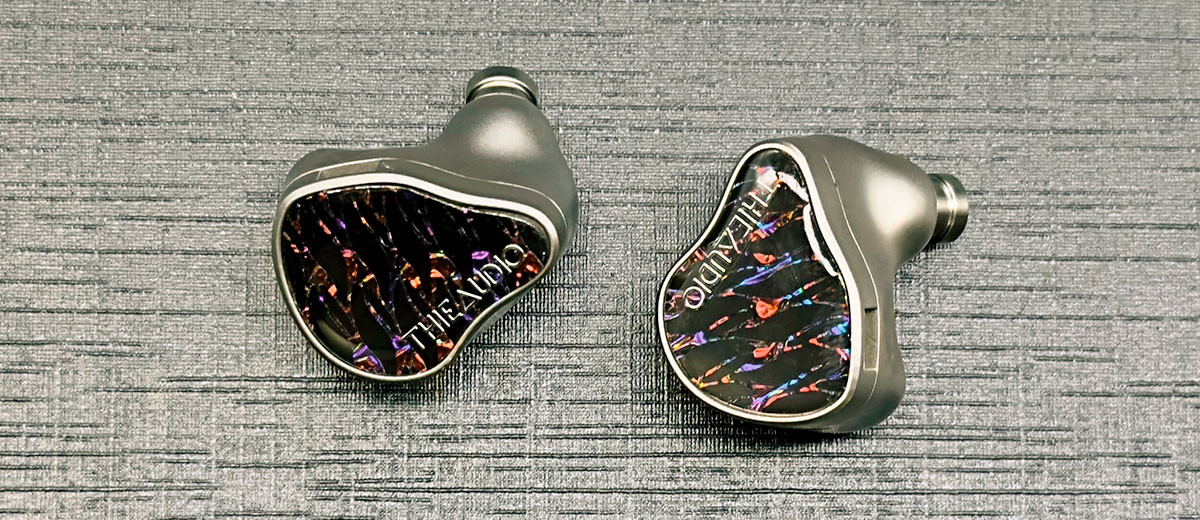
Between the two, I would give more points to Valhalla for its simplistic design, combining titanium shells and a vibrant, colorful faceplate.
Let’s say the look feels more familiar, too. For me, both IEMs have a similar fit and level of comfort. The ASPOTLE, being slightly smaller in size, has a better comfort factor. The nozzle is relatively wide on both IEMs, so the same set of ear tips works well on both.
Valhalla connects via a 2-pin, 0.78mm socket, while the APOSTLE connects via a Pentaconn system, which I do find more reliable and convenient. However, due to a wider availability of 2-pin cables, it’s convenient to swap cables.
Both the stock cables are thicker and less pliable, but have a robust build. For my preferences, I find APOSTLE’s cable to be a bit better built and to have better handling, too.
APOSTLE and Valhalla have a similar unboxing experience with a simplistic and minimal footprint. The arrangement on APOSTLE is a bit more thoughtful and premium.
The APOSTLE is equipped with better accessories, such as the DIVINUS Velvet ear tips and small IEM protection pouches.
Performance
Valhalla and APOSTLE have very similar sub-bass and mid-bass responses, but Valhalla maintains a slightly higher level throughout the bass range. Valhalla sounds a touch more authoritative and warmer in the bass, with a slightly fuller presence.
Both the IEMs have a clean and controlled low end, which keeps itself separated from the higher frequencies. The bass texture and details are conveyed a bit better on the Valhalla.
Both follow a generally neutral lower midrange, but the APOSTLE dips slightly more in the lower midrange, giving a cleaner and less warm character.
Valhalla sounds a bit warmer, with a slightly fuller note weight in the lower midrange. Valhalla has a more musical midrange with better resolution and detail.
APOSTLE can come off a bit dry in the midrange. The upper midrange remains nearly the same on both the IEMs; however, APOSTLE presents vocals and some instruments with more forwardness due to a stronger upper midrange lift.
Valhalla maintains a smoother treble transition but shows strong peaks in the mid-treble and upper-treble regions, which adds some sharpness. APOSTLE’s treble avoids such peaks, making it the smoother of the two.
In the upper treble region, Valhalla has noticeably more energy, making it a bit brighter and airier compared to APOSTLE. APOSTLE sounds more controlled in the upper treble but lacks some of the air and sparkle.
Valhalla leads ahead in the soundstage depth, while the width is nearly similar on both. Valhalla feels more immersive of the two, presenting a more holographic stage.
Valhalla has more precise imaging and also has better instrument separation and placement across the stage. A better resolution on Valhalla allows subtle nuances to come through more clearly.
Overall, I find the Valhalla to be technically the more competent of the two IEMs.
LETSHUOER Cadenza 12 2024 Version
Technical
The new LETSHUOER Cadenza 12 (2024 version) is a universal in-ear monitor featuring an impressive 12-driver setup, including one dynamic driver and 11 balanced armatures, with a mix of Sonion and Knowles drivers and a 6-way crossover.
The Cadenza 12 has an impedance of 16 Ω @ 1 kHz and a sensitivity rating of 110 dB/Vrms. Even if the Cadenza 12 does not demand additional power, it does benefit from a powerful source.
The Cadenza 12 exhibits some marginal scaling properties and may not be as stable at higher power. With the Questyle CMA18P, I get some static noise in the background. On my LPGT, Cadenza 12 takes a similar level of volume clicks as the Valhalla.
Design
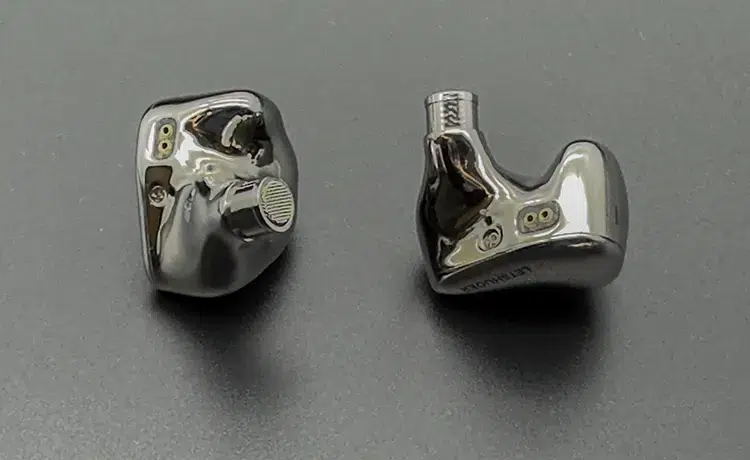
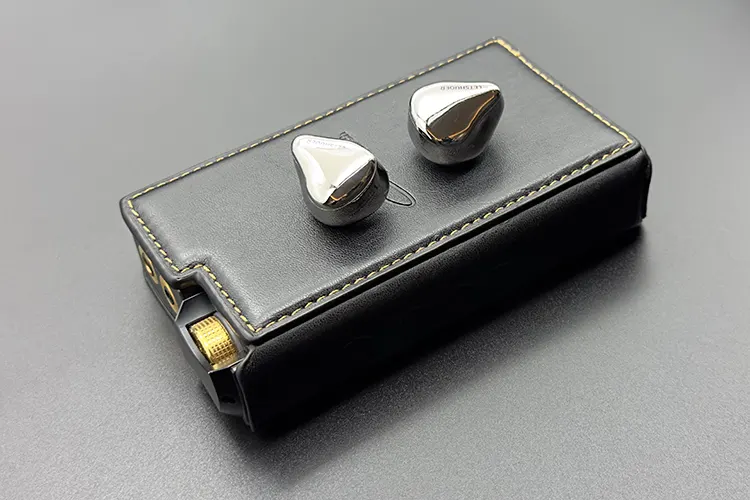
It’s a battle of titanium shells, and we have a tie here. The shells of both IEMs are made from titanium alloy. Cadenza 12’s shells are highly polished, almost having a mirror-like finish, but are prone to scratches.
Valhalla’s shells have a matte finish, so they demand less maintenance. It’s hard to decide which design I prefer, as on one hand we have highly finished shells of Cadenza 12 and on the other we have vibrant faceplates on the Valhalla.
The unboxing experience of Cadenza 12 is better than that of Valhalla. It arrives in a larger box and includes more accessories. I prefer the more robust and durable carry case of the Cadenza 12. However, similar to the Valhalla’s carry case, it lacks space.
The ear tips included with the Cadenza 12 do not feel premium, and I had to instantly swap to aftermarket ones.
Like the Valhalla, the Cadenza 12 connects via a 2-pin system. I find the cable on both the IEMs to be nicely built and functional. The stock cable on the Cadenza 12 is modular, so that’s an advantage. I find the build and handling of this cable a bit better.
Performance
Valhalla sounds deeper, punchier, and more powerful in the low end, with more slams and strong rumbles. Valhalla shows a noticeably higher sub-bass and mid-bass elevation.
Cadenza 12 sounds leaner and more neutral in the bass, with less warmth and weight. Even with a restrained and flatter bass, the details and texture remain top-notch. Valhalla’s bass can be overwhelming on a few tracks.
Both IEMs have similar lower midrange presence, but Valhalla’s stronger bass adds more warmth and body. Valhalla sounds fuller and richer due to this extra warmth, but the overall clarity is very similar on both IEMs.
Valhalla stands out with a more musical and engaging midrange. Both male and female vocals are richer and more prominent.
Cadenza 12, in comparison, is a touch drier and more neutral, maintaining excellent clarity but with less emotional factor. Valhalla also feels more detailed in the upper midrange, adding some openness and forwardness to instruments and vocals.
Cadenza 12 is smoother and more even in the treble region, providing a high level of detail and clarity without excessive harshness.
Valhalla feels brighter and airier because of more upper-treble energy and sparkles. While Valhalla is livelier and more detailed, it can potentially be a bit fatiguing for sensitive ears.
It’s challenging to pick the technically better IEM of the two. Between the two, Valhalla has a more immersive soundstage, which leads in depth and height. The width of the soundstage remains nearly the same on both.
Both IEMs have strong imaging. The level of resolution on both Cadenza 12 and Valhalla is nearly the same. The instruments feel better separated on the Valhalla.
Kinera ThorKing
Technical
The Kinera ThorKing is a flagship tribrid IEM that features 1 dynamic driver, 6 Knowles balanced armature drivers, and 4 Sonion electrostatic drivers. It implements a four-way crossover that ensures precise frequency distribution among the drivers.
ThorKing has an impedance of 10 Ω @ 1 kHz and a sensitivity rating of 105 dB/Vrms. The IEM can be comfortably driven by sources with fewer power specifications, such as dongles and smartphones.
Both ThorKing and Valhalla are quite stable on powerful sources. Even on the Questyle CMA18P, a source that has background hiss with a lot of IEMs, the ThorKing does not have any. On my LPGT, both the IEMs take a similar level of volume.
Design
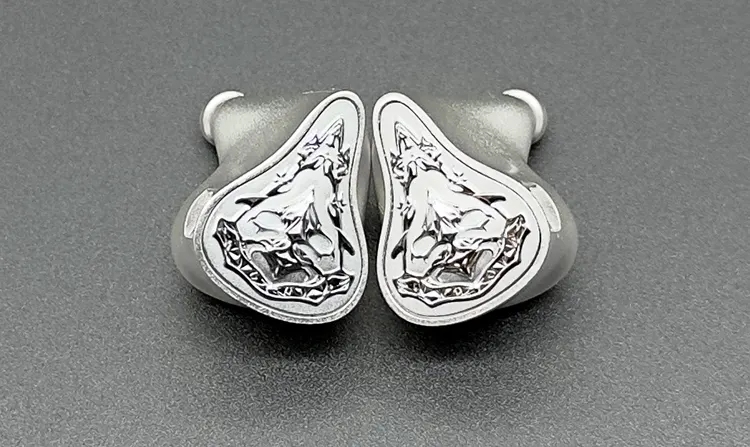
ThorKing boasts a very premium design with an intricate faceplate build. The unit I have is built with matte brass shells, and there is a polished silver version available as well.
I prefer the matte one, as it is less prone to scratches. The faceplate design is inspired by Norse mythology, depicting the legendary battle between Thor and Jörmungandr.
Valhalla, with its matte titanium shells, feels a lot similar except for the faceplate, which is colorful on the Valhalla.
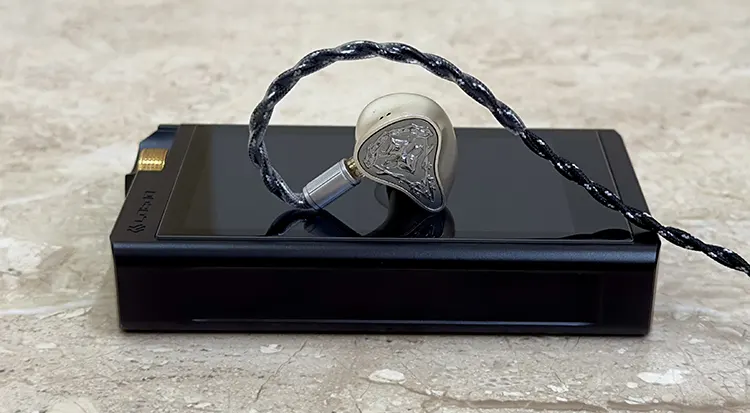
The shells of the ThorKing are surprisingly lightweight and have a very ergonomic design; thus, the fit is easy and comfortable. Valhalla has larger shells, and even with the lightweight, they are not as comfortable as the ThorKing.
Both IEMs connect via a 2-pin, 0.78mm socket. I prefer the stock cable on ThorKing, as it’s lightweight and easier to handle. Valhalla’s cable does not feel premium.
Kinera, with its grand packaging, does not leave any scope for comparison. Valhalla’s packaging feels very simplistic and minimal. Kinera also packs a few extra accessories, so that’s an added benefit.
Performance
Valhalla delivers a solid low end with deeper sub-bass and punchier mid-bass that bring a strong sense of physical impact.
ThorKing takes a more subtle approach, offering a bass that is leaner in comparison. Here, the low end stays just supportive but maintains its quality.
ThorKing’s bass notes are tighter but lack reverberations. ThorKing is ideal for those who prioritize a clean and uncolored low end.
A stronger bass profile on the Valhalla helps the lower midrange with a better sense of richness and body to vocals and instruments. Also, some additional warmth in Valhalla makes the midrange very engaging.
ThorKing offers a leaner, more analytic midrange with minimal coloration from the bass. Of the two, ThorKing’s tonality is less intimate but reveals more micro-details.
It has a more neutral midrange, resulting in a clearer, more transparent, and cleaner presentation. Even with such a clean timbre, it does not appear dry or lacking emotion.
In the treble region, Valhalla keeps things smoother and more reserved. On ThorKing, the treble is more energetic, open, and detailed, which improves openness and resolution.
Thankfully, this seemingly brighter treble profile on ThorKing does not bring in any sharpness or harshness. Even in long sessions, ThorKing does not seem fatiguing. Valhalla’s treble draws some attention in the upper treble region, pushing excessive air, which feels sharp at times.
Technically, ThorKing is the stronger of the two. Its soundstage spans wider, and it offers impressive depth with sharper and more precise imaging. Instrument separation is notably better, and it resolves finer details with better clarity compared to Valhalla.
Overall, ThorKing delivers a more technically refined listening experience than the Valhalla, which is the more musical of the two.
My Verdict
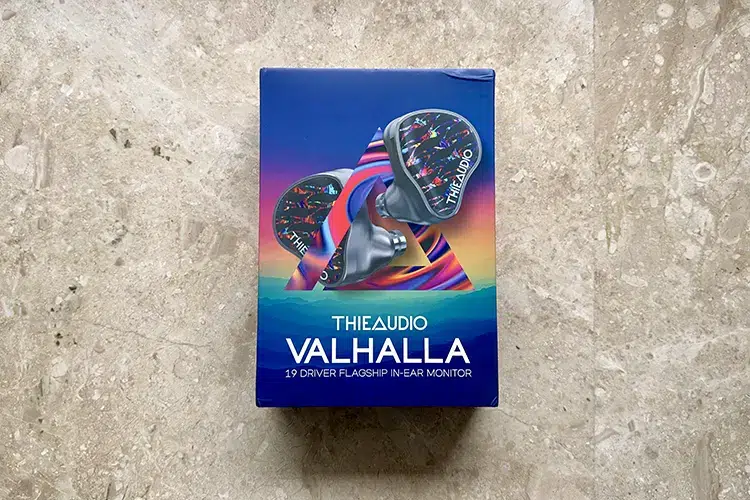
Valhalla truly showcases the culmination of all the work THIEAUDIO has done so far. Was the staggering 19 drivers per side necessary when many brands try to get the most out of fewer drivers?
In the end, the number of drivers doesn’t matter if the sound hits a sweet spot, and that’s where the number of drivers on the Valhalla truly does justice.
THIEAUDIO saved the best for their flagship and delivered a set that deserves its premium price tag. It features endgame tuning with tasteful bass response, a sweet and clean midrange, and treble that feels airy and highly detailed.
The immersive soundstage, precise imaging, and solid layering take things even further, putting the Valhalla right among the best offerings in its price range.
The build, though robust, can pose a fit challenge due to the large shells. I also request that the team at THIEAUDIO consider packaging their IEMs differently, as most of them have a similar look and feel.
Other than these points, I don’t have any other complaints, and these are mostly because, at a high price point, we cannot overlook such facts.
If you’re in the market for a premium IEM, the Valhalla should not be overlooked. I enjoyed my time with the Valhalla and recommend it highly.
THIEAUDIO Valhalla Specifications
- Driver Configurations: 19 Balanced Armatures
- 4 Sonion 38D1XJ subwoofers
- 10 Sonion E50DA Dual Mid BAs
- 4 Knowles RDE-33729 High BAs
- 1 Knowles WBFK-30095 Ultra-high BA
- Frequency Response: 10 Hz – 44 kHz
- Impedance: 9 Ω ± 1 Ω
- Sensitivity: 103 dB (± 1 dB) @ 1 kHz
- Cable: THIEAUDIO EliteNoir Cable (3.5mm single-ended and 4.4mm balanced)
