

Synergy
Efficiency
The Tangzu Zetian Wu Legend has a sensitivity of 106.5 dB at 1kHz and an impedance of 12.5Ω, making it easy to drive with almost any device. Its low impedance and high sensitivity ensure you can achieve high volume levels without extra amplification.
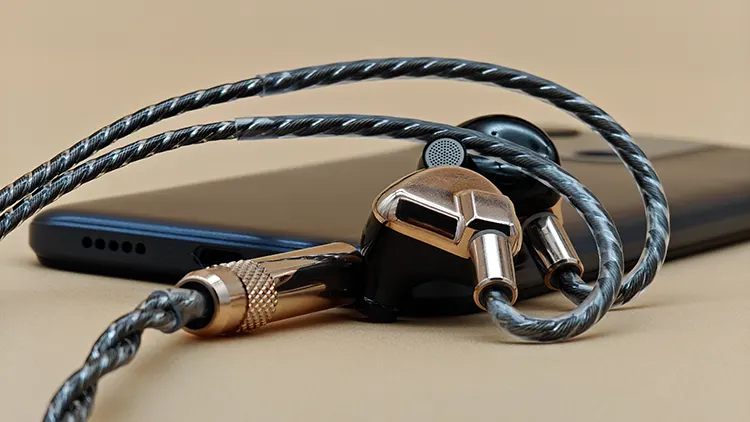
The stock cable is a shielded, balanced 4.4mm cable, so issues like distortion or static are virtually nonexistent. It provides consistent performance across various sources and volume settings.
At lower volumes, the bass nearly vanishes as both midbass and subbass drop off. Without strong low-end support, the midrange and treble take over completely, resulting in a dry and dull listening experience.
At higher volumes, the bass returns with more presence, but the sound grows noticeably brighter and more sibilant. Vocals become slightly shouty, though detail retrieval improves significantly across the board.
Pairings
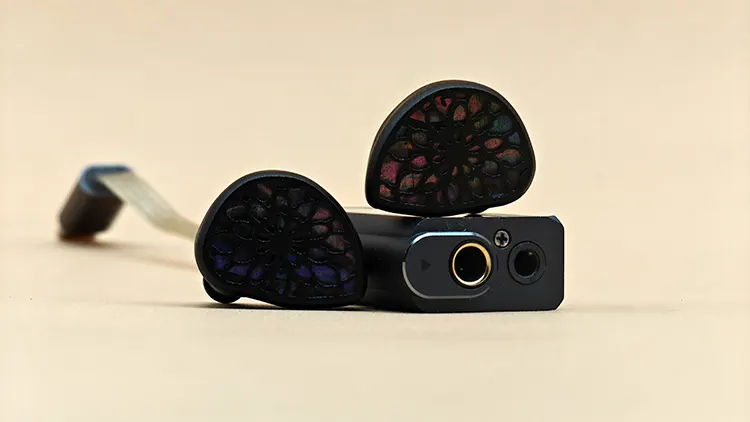
During my testing, I found that the Tangzu Zetian Wu Legend’s sound can be quite source-dependent. Different DACs, R2R systems, and portable dongles give noticeably different listening experiences.
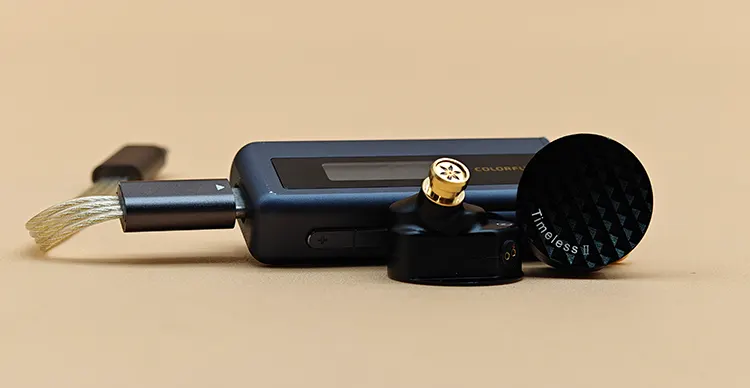
My daily driver, the Colorfly CDA-M2 with a Cirrus Logic CS43198 chip, produces an analytical and brighter sound signature. However, it can be overly sharp and sometimes sibilant despite its impressive detail retrieval.
When paired with the HeartField R1, an R2R DAC-circuit device, the sound shifts to a warmer and more intimate presentation. The midbass becomes punchier, and vocals lose some sharpness, though the treble clarity takes a slight hit.
Using the FiiO JA11, a portable dongle DAC connected to my phone, the experience is similar to the Colorfly setup. The main difference is that the bass is even weaker, and the vocals are pushed more forward in the mix.
Selected Comparisons
7Hz Timeless II
Technical
The 7Hz Timeless II features a new 14.5mm planar magnetic driver, a clear upgrade from the original Timeless’s 14.2mm unit. It is also the first planar IEM to incorporate dual-sided silver alloy-coated diaphragms, setting it apart from other planars.
This advanced diaphragm is paired with dual-sided N52 magnet arrays that deliver a more powerful and consistent magnetic field.
According to 7Hz, this combination significantly boosts responsiveness, representing a major leap forward in their planar technology.
Design
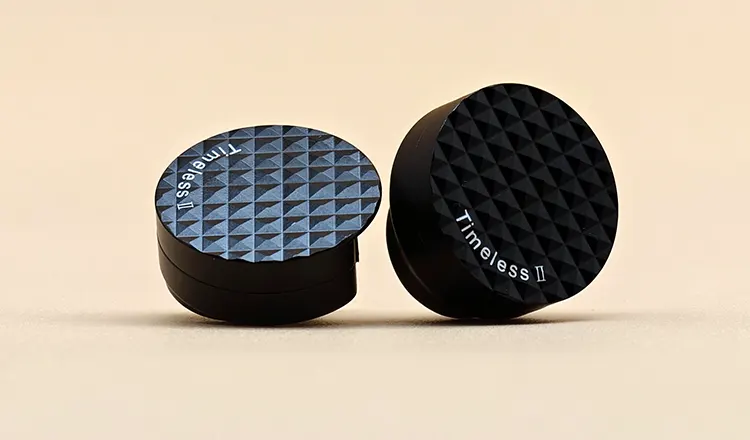
The 7Hz Timeless II retains the classic design of its predecessor with a lightweight black circular shell and faceplate that keeps its iconic look intact.
The updated faceplate now features a shiny geometric pattern, and the branding is streamlined to “Timeless II” for a cleaner appearance.
New design updates include four interchangeable nozzles and a switch from MMCX to 0.78mm 2-pin connectors, making cable customization easier. Multiple vents on the shell effectively manage pressure, ensuring comfort during extended use.
Performance
The Tangzu Zetian Wu Legend and 7Hz Timeless II continue the legacy of their predecessors, delivering a planar sound that closely mimics dynamic driver timbre while maintaining excellent treble extension. Both remain standout choices in the planar IEM market, each excelling in different areas.
The Timeless II delivers a deep, rumbling subbass with a strong midbass punch, making its low end feel more engaging and livelier. The Zetian Wu Legend, on the other hand, follows the typical planar bass presentation, maintaining similar quality but lacking the same weight and impact.
In the mids, the Zetian Wu Legend excels in note definition and vocal clarity, making details stand out more. However, this comes at the cost of warmth, as the Timeless II presents vocals more smoothly and naturally.
The Zetian Wu Legend’s timbre leans slightly metallic, making vocals sound sharper and thinner than they should. Meanwhile, the Timeless II avoids this issue, maintaining a natural tone that keeps instruments and voices more lifelike.
Treble is where the Zetian Wu Legend gains an edge, offering superior extension, microdetail retrieval, and extra sparkle from its additional 6mm driver. Yet, this added energy introduces some brightness and sibilance, while the Timeless II keeps its treble smooth and fatigue-free.
Both IEMs showcase strong imaging, but the Timeless II benefits from better stage height, adding depth to its presentation. This results in a more immersive experience, whereas the Zetian Wu Legend keeps everything mostly in the head.
LETSHUOER S12 2024 Edition
Technical
The LETSHUOER S12 2024 Edition comes equipped with a newly developed 14.8mm custom planar magnetic driver.
While it shares similarities with the S12 Pro’s driver, it incorporates new materials that LETSHUOER claims improve the soundstage and resolution.
This release serves as a refined refresh of the S12 Pro, featuring an upgraded driver, enhanced materials, and improved accessories. It builds upon the well-received tuning of its predecessor, offering a more polished and engaging listening experience.
Design
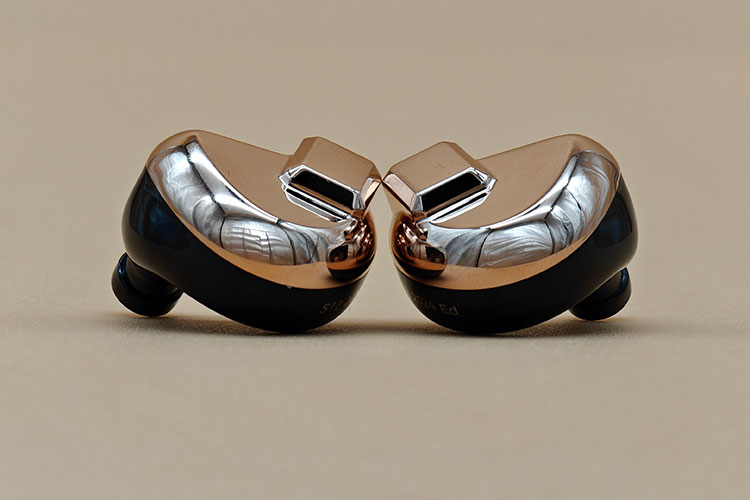
The LETSHUOER S12 2024 Edition combines a gold-plated faceplate with a solid black shell, creating a refined look. Its titanium-alloy construction, enhanced by high-precision CNC milling, ensures durability and a premium feel of the shell.
While its shape remains unchanged from the original S12, this edition merges previous color options of the S12 series into one striking design. Each unit is uniquely numbered on the faceplate, marking its limited run of 2,024 pieces.
Performance
The LETSHUOER S12 2024 Edition and Tangzu Zetian Wu Legend continue the legacy of their predecessors as some of the best planar IEMs available. Both feature large planar drivers and deliver excellent treble extension with few drawbacks.
Their subbass performances are similar, providing enough energy to prevent dryness without adding bloat. The S12 2024 edges ahead with a slightly stronger and longer-lasting rumble, giving it a bit more low-end presence.
Midbass follows the same trend, with both offering a clean and controlled punch that avoids bleeding into the mids. Neither is tuned for bassheads, as they lack the weight and slam needed for a more engaging and lively low-end experience.
Their differences become clearer in the midrange, where the S12 2024 refines its timbre for a more natural vocal presentation. The Zetian Wu Legend, while more forward and engaging, introduces a metallic edge that makes vocals sound sharper and less organic.
Treble extension is where the Zetian Wu Legend takes the lead, revealing finer details and adding a layer of sparkle that the S12 2024 lacks. However, that extra energy comes at the cost of sibilance and an artificial timbre, while the S12 2024 keeps things smooth and fatigue-free.
Soundstage width slightly favors the Zetian Wu Legend, but neither IEM offers a particularly expansive stage. Imaging is strong on both, making effective use of their limited depth and height to place sounds with precision.
My Verdict
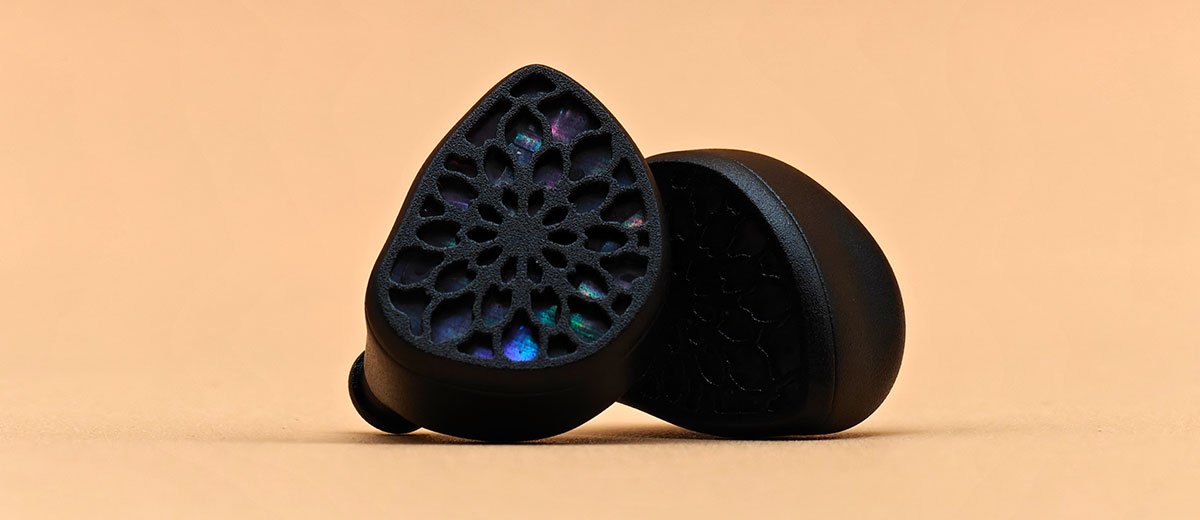
Tangzu refines its planar technology with the Zetian Wu Legend, introducing a dual-driver setup that enhances treble extension and microdetail retrieval. Its colorful abalone-like faceplate adds a unique aesthetic, giving it a standout look among planar IEMs.
It comes with a high-quality 4.4mm balanced cable and Sancai ear tips, ensuring both versatility and comfort. Offering top-notch treble extension and exceptional detail retrieval, the Tangzu Zetian Wu Legend stands out as the next step to better planar technology.
Tangzu Zetian Wu Legend Technical Specifications
- Driver Type: One (1x) 14.2mm planar driver and one (1x) 6mm flat diaphragm planar driver
- Plug: 4.4mm balanced 0.78mm 2-pin
- Frequency Response: 20Hz – 20kHz
- Impedance: 12.5-ohms
- Sensitivity: 106.5 at 1KHz
