

Select Comparisons
THIEAUDIO Oracle MKIII
Technical
The THIEAUDIO Oracle MKIII is a tri-brid IEM featuring two dynamic drivers, two Knowles balanced armature drivers, and two Sonion EST ultra-treble tweeters.
It also incorporates the IMPACT2 technology found in the Hype series IEMs and the Monarch MKIII. A 4-way crossover system is implemented.
The Oracle MKIII has an impedance of 13Ω @ 1kHz and a sensitivity rating of 99 dB/Vrms. It can be comfortably driven by weaker sources such as dongles and smartphones, but sounds much fuller and richer when paired with sources that provide decent power.
The EST drivers suggest the IEM benefits from additional power, which it does. It is also more stable and scales up when paired with more powerful sources.
Design
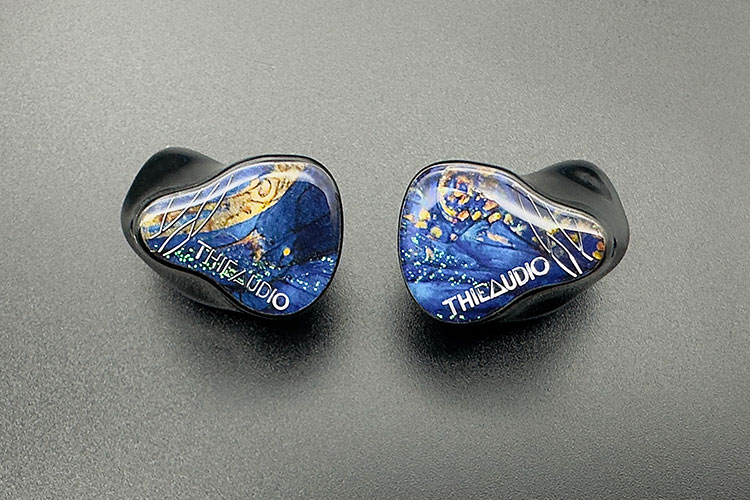
The Oracle MKIII has a very easily recognizable THIEAUDIO design language, built with black shells and an artistic, glossy faceplate. The faceplate features a blue base accented by light brown patterns.
The RSV-MKII has an all-black design with no additional colors, so if you ask me, I prefer the colors any day and find the Oracle MKIII a better-designed IEM.
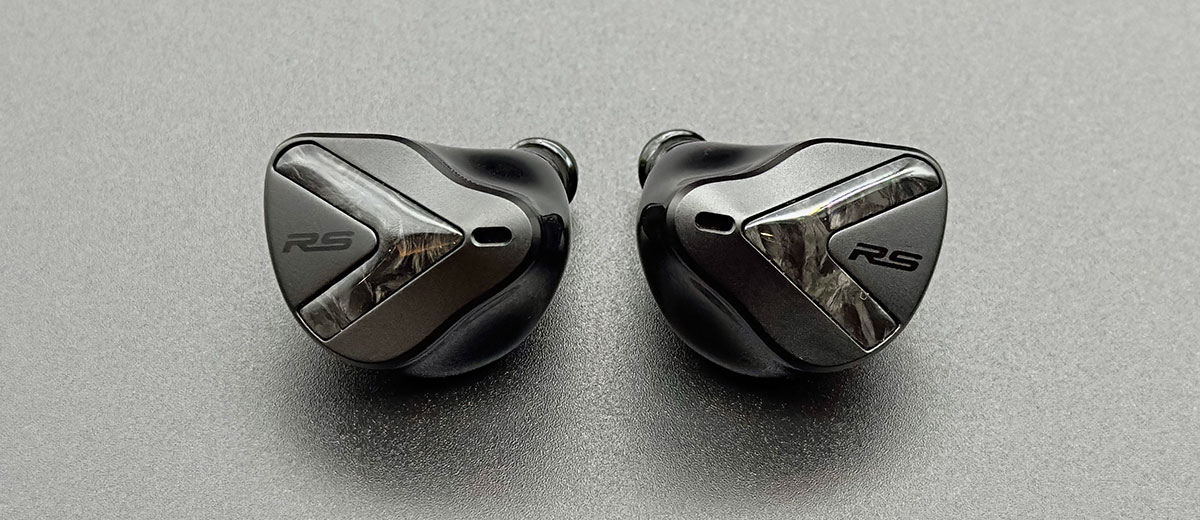
Both IEMs feature similar resin shells and have a nearly comparable size. In terms of fit, I get a comfortable one with both.
The Oracle MKIII has a slightly better fit owing to its smaller shells. The Oracle MKIII also features metallic nozzles with a protective mesh on top, while the RSV-MKII’s nozzles are part of the body itself rather than a separately integrated piece.
Both IEMs use a 0.78mm 2-pin connector. The Oracle MKIII offers a modular cable with interchangeable terminations, including 4.4mm, 3.5mm, and 2.5mm options.
The RSV-MKII includes a separate 3.5mm to 4.4mm adapter, covering a wider range of devices, along with the stock 4.4mm terminated cable. I prefer the build of Softears’ cable, as the hardware feels more robustly constructed.
As for accessories, Softears includes a better set overall. I also prefer the carry case provided with the RSV-MKII, though it lacks enough space.

Performance
The Softears RSV-MKII leans toward a heavier, more mid-bass-centric presentation. Its low end is thick and punchy and adds warmth to the entire sound.
While the bass is enjoyable with a lot of genres, the trade-off is that it can creep onto the stage, filling space and making the presentation feel denser.
The Oracle MKIII takes a more restrained approach. The low frequencies are presented with notable tightness and clarity, striking a careful balance between sub-bass depth and mid-bass impact, so the rest of the spectrum stays in clearer view. The bass has enough quantity on Oracle MKIII.
The RSV-MKII pushes its midrange forward, with vocals and instruments taking center stage in richness and fullness. The Oracle MKIII keeps its midrange cleaner and more neutral in body.
Vocals lack fullness on the Oracle MKIII, but instead of this richness, you get better clarity, separation, and instruments getting more breathing space around them.
On the RSV-MKII, the midrange is focused more on warmth and musicality rather than precision. You are treated with a natural timbre and tonal authenticity, though sometimes it can feel overly full or congested in busy mixes.
Higher up, the RSV-MKII rolls the treble off gently, staying smooth and non-fatiguing. Oracle MKIII delivers greater treble energy, offering more sparkle and articulation, which results in a more detailed and revealing treble.
The notes resolve better and carry more energy, adding excitement and air, which feels subdued on the RSV-MKII. The flip side is that the Oracle MKIII can occasionally sound sharper.
The Oracle MKIII is technically superior, providing better imaging and resolution. RSV-MKII offers better depth and height, while width is slightly better on Oracle MKIII.
Even during intense passages, especially metal and rock, the Oracle MKIII excels with its layering and separation.
Yanyin Carmen
Technical
The Carmen is an all-balanced armature driver IEM with ten balanced armature drivers. Carmen employs four Sonion drivers for the low end, while in the midrange, it uses two Sonion drivers, and for the high frequencies, there is another pair of full-sized Sonion drivers.
Additionally, a custom dual driver is specifically dedicated to the ultra-high frequencies. The drivers are arranged in a 4-way crossover system with four independent sound bores to precisely manage frequency distribution.
Carmen has an impedance of 10Ω @ 1 kHz and a sensitivity rating of 109 dB/Vrms. As with the RSV-MKII, the Carmen can be comfortably driven by sources with lower power output, such as dongles and smartphones.
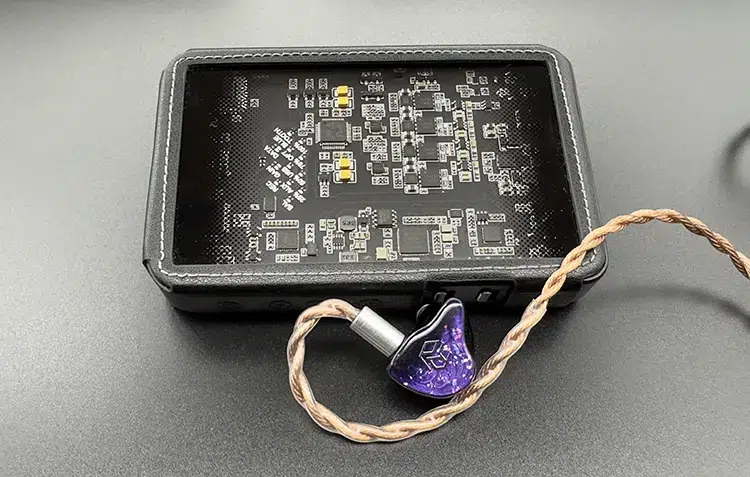
Carmen doesn’t require any additional power to shine. On my PAW Gold Touch DAP, both IEMs take a volume level of less than 30 to reach a comfortable level of hearing. The Carmen, however, can take a few more clicks and remains stable with more powerful sources.
Design
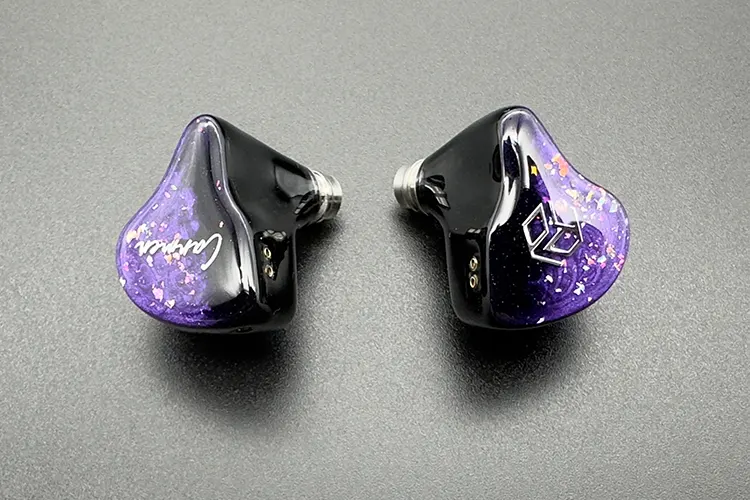
As with the RSV-MKII, the Carmen also features resin shells. The Carmen has a more artistic design, with a deep shimmering purple color and reflective glittering fragments scattered throughout. The RSV-MKII, with its all-black look, carries an understated, minimal design.
While both IEMs are comfortable to wear, the Carmen offers a better fit due to its smaller shells. For me, the shells on the RSV-MKII are not too large either and do not cause any fitting issues.
Both IEMs use a 0.78mm 2-pin connector and come with high-purity copper cables. The Carmen is available with either 3.5mm or 4.4mm terminated cables, which can be chosen at the time of purchase, and its cable feels more robustly built. I find the build of Carmen’s stock cable to be slightly better.
In terms of packaging, both IEMs come in compact boxes, but Softears provides a more complete set of accessories.
Even at a higher price point, the Carmen has minimalistic packaging and does not include a carry case, cleaning cloth, cleaning tool, or different varieties of ear tips.
Performance
The RSV-MKII leans toward a fuller, more mid-bass–driven character. You get a thick, punchy low end that just slaps hard and has a good impact.
The downside is, sometimes the bass goes a little overboard and just crowds the whole mix and adds extra warmth. Carmen keeps the bass tight and snappy, not letting it spill all over the place.
You lose some of the RSV-MKII’s slam, but you gain separation and a clearer picture of the whole track.
The Carmen has a leaner upper bass and lower midrange compared to the RSV-MKII. Instruments and male vocals don’t get the same thickness or body as on RSV.
Instead, they sound a bit cleaner but also lighter, thus a more balanced midrange. Carmen’s midrange is not exactly timbre-accurate but still very musical.
The RSV-MKII has more mid-bass warmth and smoother midrange and delivers a presentation that’s lush and rich. The timbre on the RSV-MKII feels more natural and true-to-life. There are times when this richness feels a bit over the top, especially on more complex tracks.
The RSV-MKII’s treble sits comfortably in the background, ensuring the listening experience stays smooth and fatigue-free. There is some air and sparkle, but it’s subtle, prioritizing musicality over analytical detail.
On the other hand, Carmen injects more energy into the treble, giving instruments extra clarity and excitement. This extra energy is great for resolution and never veers into sharp territory.
The Carmen offers a more holographic and wider soundstage with better imaging. The depth in stage is better on the RSV-MKII.
Carmen offers better resolution and detailing, painting a cleaner, sharper musical image. Instruments get more space among them, and Carmen can also handle busier tracks with more ease.
LETSHUOER Mystic 8
Technical
The LETSHUOER Mystic 8 has an all-balanced armature driver setup, featuring eight balanced armature drivers, four each from Sonion and Knowles.
The Mystic 8 also incorporates a low-pass filter module to enhance bass performance and employs a three-way crossover circuit along with a four-way acoustic tube configuration to precisely divide frequencies among the drivers.
With a sensitivity rating of 107 dB/Vrms and an impedance of 18 Ω @ 1 kHz, the Mystic 8 is effortless to drive and doesn’t require as much power as the RSV-MKII.
It is also more stable with additional power and offers better dynamics with more powerful sources.
On the CMA18P, the Mystic 8 has a clean background, while RSV-MKII has some mild static or hissing noise. On the Lotoo PAW Gold Touch, the Mystic 8 takes a few volume clicks more than the RSV-MKII.
Design
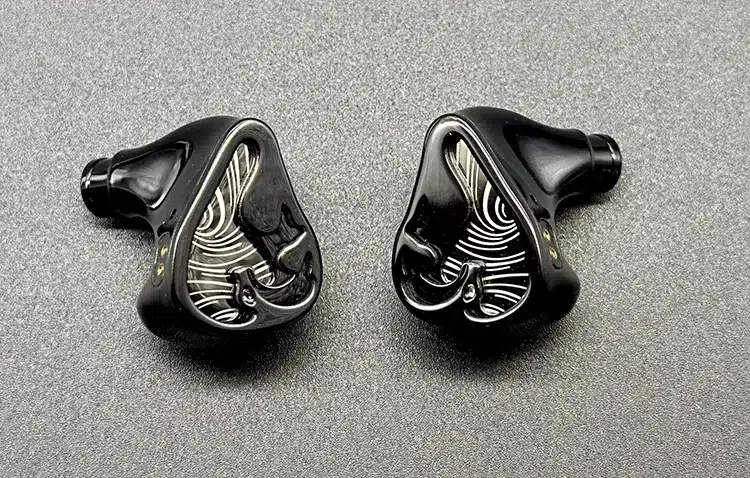
The shells of the Mystic 8 are all black and made of CNC-machined titanium alloy, which is strong and corrosion-resistant, offering excellent durability.
The faceplate of the IEMs features a cutout depicting a cat, with the cat’s eyes made of faux diamond. The RSV-MKII, which is built in resin, keeps a minimal design in an all-black color scheme.
The shells of the Mystic 8 are smaller in size, and owing to the ergonomic shape, they have a very snug fit. The RSV-MKII’s resin shells are bigger in size but remain very lightweight, thus offering an equally comfortable fit. If you have smaller ears, the Mystic 8 will fit you better.
The Mystic 8, being a premium offering from LETSHUOER, provides a very elegant unboxing experience. It includes quality accessories, but the RSV-MKII does not miss any accessories either, even if the packaging is compact.
Both IEMs use a 0.78mm 2-pin connector to connect to the cable. I prefer the build of the RSV-MKII’s cable, as the Mystic 8’s stock cable is ultra-thin and tangles very easily.
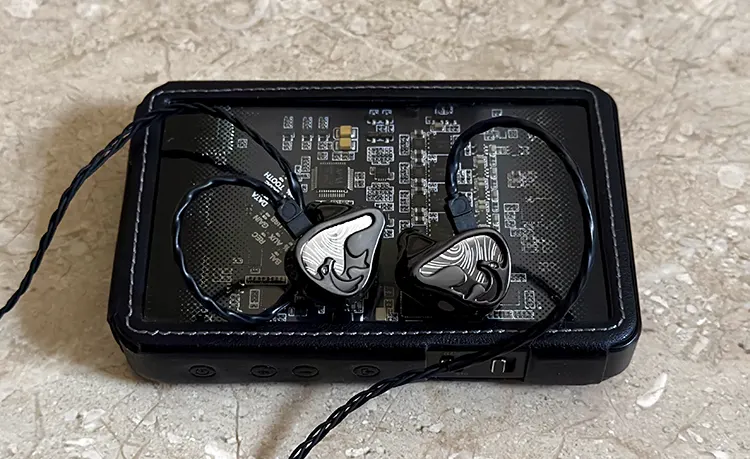
The carry case included with the Mystic 8 is unique, being a round puck-style case made of shiny aluminum with a thick black silicone cover as a lid.
Performance
On the RSV-MKII, bass strikes with weight and authority, the kind that fills the sound with punches and warmth. It has a solid punch from its mid-bass that sometimes spills into the mix and adds a layer of thickness with added warmth.
The Mystic 8 plays it differently, with a bass that feels taut and measured, never overstaying its welcome. It remains lean but does not compromise on quality, and it draws out texture and details, letting you follow individual notes rather than just the sheer impact.
The RSV-MKII pushes its midrange closer, draping vocals and instruments in a richer coat of warmth. Instruments strike with more fullness, and the vocals have forward presence, which makes it intimate and musical.
The Mystic 8 has a lighter, cleaner take. Vocals and instruments don’t carry the same thickness, but they gain separation and sit in a roomier stage.
The upper midrange on the Mystic 8 takes more space, giving sharper edges to instruments and vocals, which helps pick up layering and nuance better. Both IEMs nail the midrange timbre and tonality; it’s the Mystic 8 that is the cleaner of the two.
Treble on the RSV-MKII stays polite, rounding off sharp edges and keeping the sound fatigue-free. It sprinkles in shimmer and sparkle but never tries to dominate the picture.
The Mystic 8 instead leans into energy where cymbals crack with more bite, strings shine with brilliance, and the added air stretches the stage wider and makes it a bit more open. It’s more revealing and livelier, though a touch less forgiving with bright recordings.
The Mystic 8 offers a better level of resolution and detail. It also has more accurate imaging with a wider soundstage, but the depth is better on the RSV-MKII.

My Verdict
I think Softears has done a really good job with the RSV-MKII. I don’t have the earlier RSV on hand to compare directly, but this new release feels like it has its own character and one that I think will appeal to a wider group of listeners.
For an all-BA setup, the bass is genuinely impressive; it sounds full, punchy, and fun. It does tilt a little heavy on certain tracks, so you have to be mindful with pairing and volume, but when it’s in check, it adds a lot of energy and drive to the music.
The midrange, as I’ve come to expect from Softears, is where things feel most natural. Vocals and instruments have that timbral accuracy that just sounds “right,” and it blends in a lot of musicality without ever feeling clinical.
The treble rounds things off nicely, sounding smooth, never sharp, and yet with enough air and sparkle to keep the sound open and engaging. It’s supportive rather than dominant, but that works well with the overall balance here.
If you’re someone who enjoys a lively, bass-shelved sound that doesn’t sacrifice midrange richness or overall musicality, the RSV-MKII will feel like a great fit.
Despite a few quirks, the tuning is one of those that immediately clicks and leaves a strong impression. Add to that a very complete accessory set, and Softears has put together a package that feels thoughtful and premium at its price.
The RSV-MKII is an easy recommendation, and if you get the chance, it’s definitely one you should try for yourself.
Softears RSV-MKII Specifications
- Driver Configurations: 5 Balanced Armatures
- Frequency Response: 20 Hz – 20 kHz
- Impedance: 7 Ω (+/- 15%)
- Sensitivity: 122 dB @ 1 kHz
- Cable: 6N Oxygen-free Copper (4.4mm balanced) + 4.4 mm to 3.5mm adapter cable
