

Synergy
Given the D1’s slightly warm mid-bass emphasis, I generally preferred pairing it with more neutral amplifiers and headphone/IEM combinations to avoid overdoing the warmth.
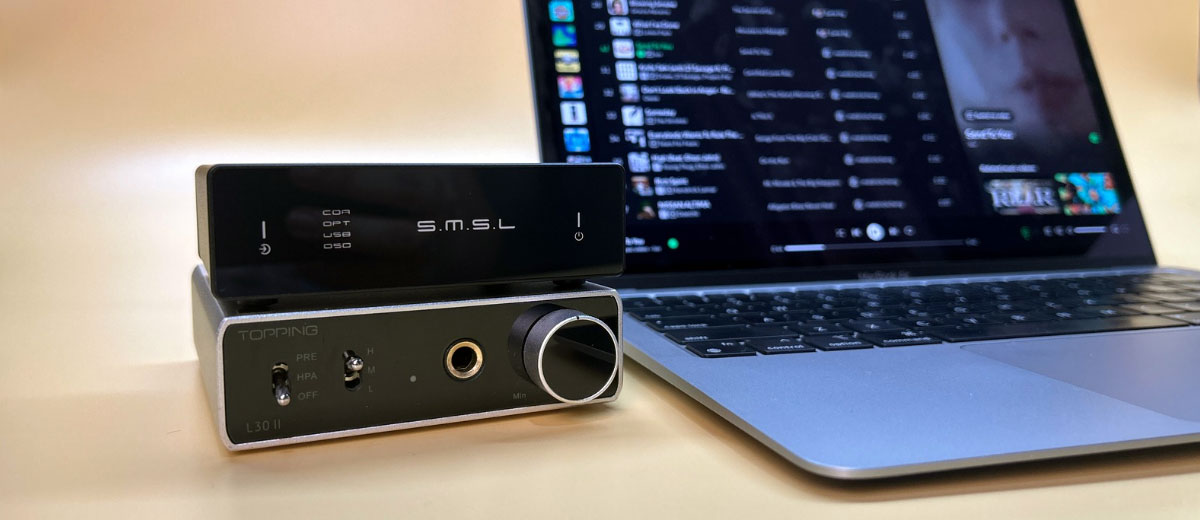
In my testing, the clean and analytical character of the Topping L30 II proved to be a good match. It preserved the D1’s pleasing mid-bass weight while keeping the treble from becoming overly sharp or sibilant.
My primary headphone pairing was the Sennheiser HD 600. The D1’s warmth complemented the HD 600’s naturally flat and slightly forward midrange, adding a touch of weight and expanding the soundstage without sacrificing balance.
Unfortunately, I did not enjoy the D1 with the HD 660S. Since the HD 660S already carries a notable bass emphasis, the pairing tipped the tonal balance too far, making the midrange sound a bit muffled and congested.
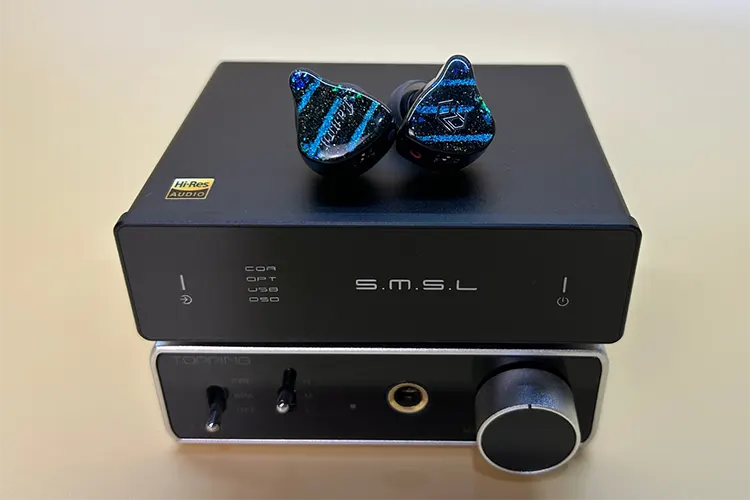
For IEMs, the neutral-leaning MOONDROP Blessing 3 paired beautifully with the D1. The D1’s warmth added body without masking detail, resulting in a pleasing sound signature.
On the other hand, the U-shaped Yanyin Canon II proved less ideal. The D1’s additional warmth and slightly forward treble pushed the Canon II’s already elevated bass and treble into fatiguing territory, making me lean toward more neutral DACs for that particular IEM.
Select Comparisons
SMSL SU-1
Technical
The SMSL D1 features the ROHM BD34352EKV DAC chip, a part specifically engineered for high-end audio applications, capable of decoding PCM up to 32-bit/768kHz and native DSD512.
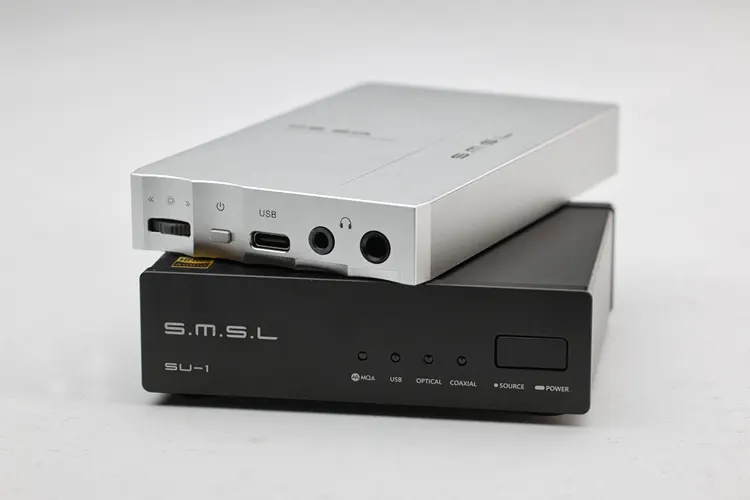
The SU-1 uses the AKM AK4493S DAC, also supporting PCM 32-bit/768kHz and DSD512, while additionally offering MQA decoding—something the D1 does not provide.
In terms of inputs, the D1 has an advantage in versatility, offering dual USB-C ports (one for power, one for data), coaxial, and optical inputs.
The SU-1 matches it with coaxial, optical, and USB-B, but lacks the D1’s separated USB power/data arrangement, which can help reduce noise in certain setups.
Both units are bus-powered, though the D1 can operate entirely from its USB data port without the “Power” port connected in many configurations.
Design
Both the D1 and SU-1 share SMSL’s minimalist aesthetic, with compact CNC-machined aluminum housings and small footprints that make them easy to integrate into any desktop or Hi-Fi system.
The SU-1 sports a matte anodized metal front plate, giving it a more fingerprint-resistant surface. The D1, by contrast, uses a glossy, mirror-like panel to accommodate its soft-touch capacitive buttons.
This is an approach that looks sleek but tends to collect fingerprints quickly. While both units blend unobtrusively into a system, the D1’s touch controls make for a more modern, streamlined interface, whereas the SU-1’s physical buttons offer more tactile feedback.
Performance
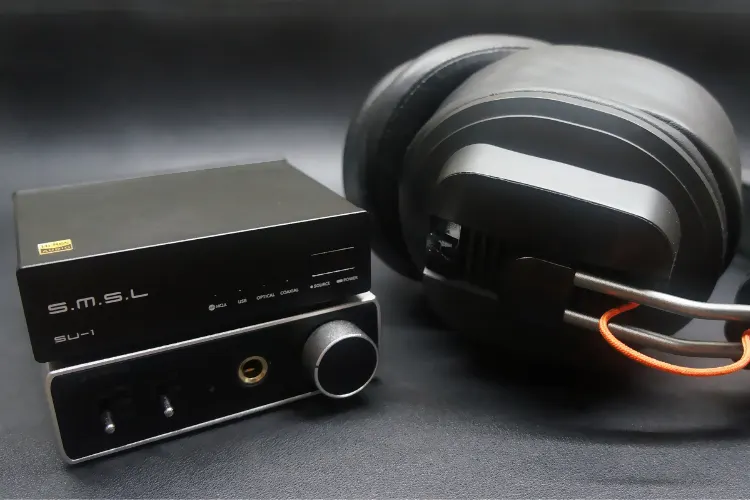
The SMSL D1 and SMSL SU-1 take different approaches to their sonic presentation. The D1 leans into stronger sub-bass emphasis, adding weight and depth to low-end notes, which gives atmospheric genres like trip-hop a more immersive and relaxed quality.
This fuller low-end also lends body and warmth to the overall presentation without overshadowing the midrange.
The SU-1 puts more focus on the upper mids and lower treble, bringing snare drums forward with greater snap and giving female vocals extra energy and delicacy.
This emphasis lends the SU-1 a livelier and more immediate sound, particularly in vocal-centric tracks or genres that thrive on treble sparkle and midrange clarity.
Both DACs perform similarly in terms of detail retrieval and dynamic range, so the choice comes down to tonal preference: the D1’s mid-bass weight and sub-bass presence for a bolder, more atmospheric presentation, or the SU-1’s upper-mid energy and treble lift for a cleaner, more energetic sound signature.

SMSL SU-6
Technical
The SMSL D1 features the ROHM BD34352EKV DAC chip, capable of decoding PCM up to 32-bit/768 kHz and native DSD512. It uses separate USB-C ports for data and power, alongside coaxial and optical digital inputs.
The SU-6 employs the ESS ES9038Q2M DAC, also supporting PCM 32-bit/768 kHz and DSD512, but adds Bluetooth 5.0 with LDAC, aptX HD, AAC, and SBC support for high-quality wireless streaming.
Both units offer multiple digital inputs, but the SU-6 has a slight edge in convenience thanks to its built-in Bluetooth receiver and included remote control, which makes it more flexible for living-room or multi-source setups.
The D1, while simpler, benefits from its separated power/data USB design, which allows it to be powered directly from the USB data port in many configurations.
Design
The D1 maintains a minimalist aesthetic with a CNC-machined aluminum chassis and a glossy, mirror-like acrylic front panel housing soft-touch capacitive buttons.
While sleek, the finish easily collects fingerprints, something less of an issue on the SU-6’s matte glass front panel.
The SU-6’s small OLED display and traditional button controls give it a more functional, feature-rich feel, while the D1’s stripped-back interface prioritizes simplicity over versatility.
Both are compact enough to disappear into a desktop or Hi-Fi setup, but the significantly smaller D1 has more flexibility, fitting in small shelves or small dorm desk setups.
Performance
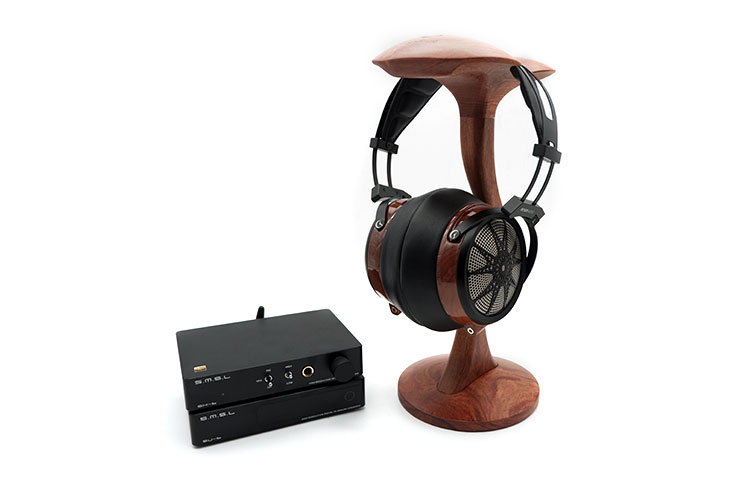
The SMSL D-6S and D1 diverge mainly in tonality and technical edge. The D-6S is neutral, clean, and dynamically lively, with better detail retrieval and dynamics overall.
Bass is tight with strong impact yet no extra warmth; midrange articulation is crisp and textured; treble is detailed with a touch of sparkle but avoids sibilance. Imaging is more pinpoint, so complex mixes stay organized and easy to parse.
The D1 trades clinical precision for atmosphere and body. Its mid-bass carries extra weight and natural-sounding decay, lending instruments and lower-register vocals a fuller presence.
The stage feels wider and more enveloping, great for ambient, live, and trip-hop, though positional focus isn’t as razor-sharp as the D-6S.
Up top, the D1’s treble is less airy and resolving and can ride the edge of sibilance on some tracks, prioritizing boldness over micro-detail.
The D-6s is also better suited to users who want wireless connectivity and remote control, whereas the D1 is aimed at those seeking a pure, no-nonsense DAC experience.
FiiO K11
Technical
The SMSL D1 houses the ROHM BD34352EKV DAC chip, decoding PCM up to 32-bit/768 kHz and native DSD512. It offers three digital inputs—USB-C (data), USB-C (power), coaxial, and optical, along with analog RCA outputs.
Its split USB-C design allows for power isolation, potentially lowering noise, and in some setups, it can run entirely off the USB data port without an external power feed.
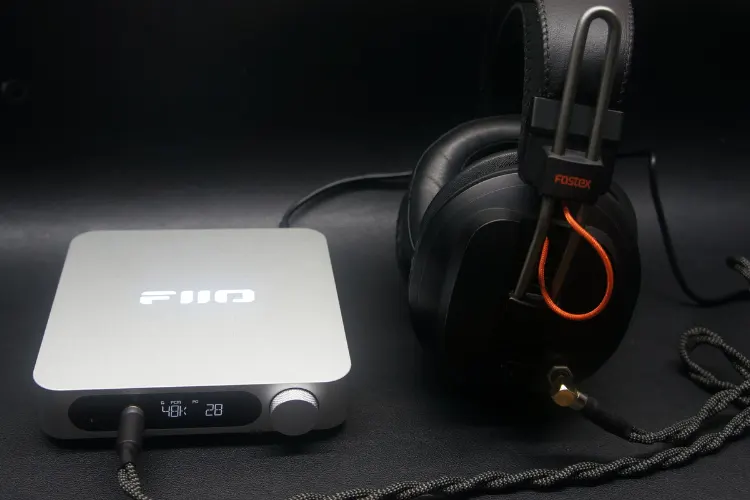
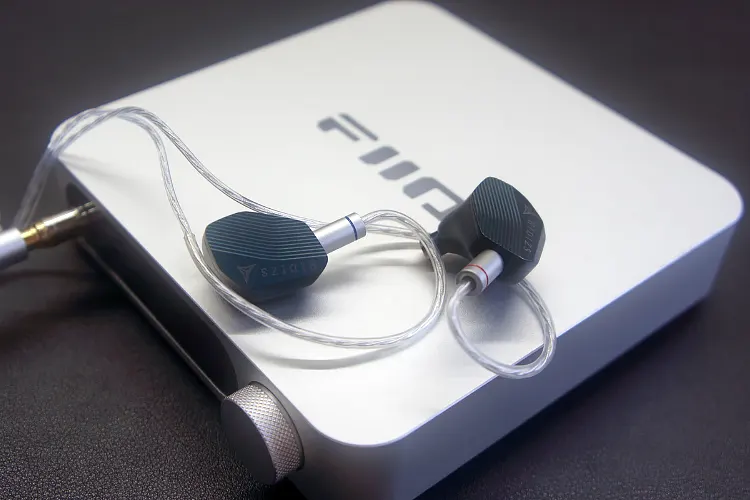
The FiiO K11 uses a CS43198 DAC, supporting PCM 32-bit/284 kHz and DSD512, but integrates a powerful headphone amplifier section alongside its DAC functionality.
This gives the K11 balanced 4.4 mm and single-ended 6.35 mm headphone outputs in addition to line outs, making it a true DAC/amp combo rather than a DAC-only unit like the D1.
Design
The D1 has a minimalist CNC-machined aluminum chassis with a glossy acrylic front panel and touch-sensitive controls, but its mirror finish attracts fingerprints that can detract from its clean look.
The K11 opts for a larger, more functional design with a high-resolution display, a physical volume knob, and a more traditional interface, prioritizing usability over ultra-compact form factor.
The D1 excels in systems where a pure DAC is desired and space is at a premium, while the K11 caters to those wanting an all-in-one desktop solution with both DAC and amp capabilities, plus more physical controls for everyday use.
Performance
The D1 delivers stronger low-end reverb, giving bass guitar strums and mid-bass instruments more body and note weight, while also roaring synths and organ swells emerge earlier in the mix.
It offers a wider, more atmospheric stage with natural-sounding decay and organic harmonics, particularly benefiting string instruments and lower-register vocals, which gain warmth and heft.
The K11 presents a cleaner, more delicate treble with better resolution and shimmer, lending higher-pitched female vocals and chimes more air and refinement.
While the K11’s treble is smoother and less prone to sibilance, it also delivers deeper, harder-hitting sub-bass compared to the D1.
The D1’s treble can sound slightly harsher and ride the edge of sibilance on certain recordings, with less top-end detail, yet it feels more forward in energy.
This emphasis, combined with its fuller mid-bass and warmer tone, gives the D1 a more relaxing and atmospheric sound. The K11 leans toward a more balanced and refined presentation with stronger sub-bass punch and greater treble finesse.

My Verdict
Coming in at under $100, the SMSL D1 desktop DAC provides solid value with a typically higher-end ROHM BD34352EKV decoding chipset, good dynamics, and a sleek form factor.
It is by no means perfect; its touch-sensitive controls and glossy front panel may attract fingerprints, and those sensitive to treble may find it to be a little sibilant.
But at $79.99, the D1 is a decent little DAC for those building their first Hi-Fi setup or those who just want a compact yet capable DAC.
SMSL D1 Technical Specifications
- DAC Chip: ROHM BD34352EKV
- PCM Support: USB up to 32‑bit/768 kHz.
- DSD Support: Native DSD512 via USB
- Inputs: Dual USB-C (data and power), coaxial, optical
- Controls: Capacitive touch buttons for input and power, LED indicators
- Size/Weight: 101 × 33 × 90 mm / ~200 g
