

Synergy
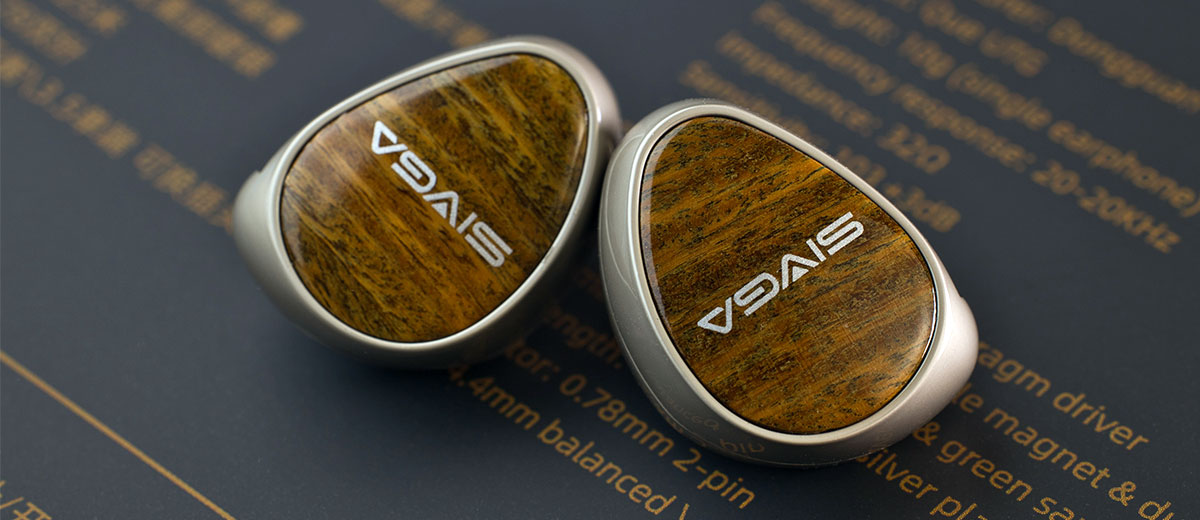
I love how easy to drive the SIVGA Que UTG is, with only a modest amount of power from the source, it can go very loud, even the low-powered, small, tail-styled dongle DACs don’t strain driving it loud.
It is suitable for a broad range of sources, whether the small dongle-type DAC with less than 30mW or the monster battery-powered DACs or DAPs with 1,200mW output power, with only a slight difference in dynamics on everyday listening volume levels.
I would recommend it with just about any sources, as far as power requirements are concerned, it is versatile and easy to drive.
Despite its sensitivity, I hear no RF interference pick-up or clicking and popping noise when operating the source. It is not sensitive enough to pick up those noises.
Pairings
Elevated treble-tuned IEMs could pose a problem regarding source pairing. This could be due to the distortions at the treble frequencies, where the peak occurs, exacerbated by the bright, leaning treble coloration of the DAC chip and/or amplifier combination.
Amazingly, the Que UTG does not have this pairing problem due to its ultra-clean treble and easy drivability. It only reveals the tonality of the source without adding apparent distortion of its own.
Case in point, when used with the LETSHUOER DT03, the Que UTG sounds bassy with the sparkly treble and big soundstage.
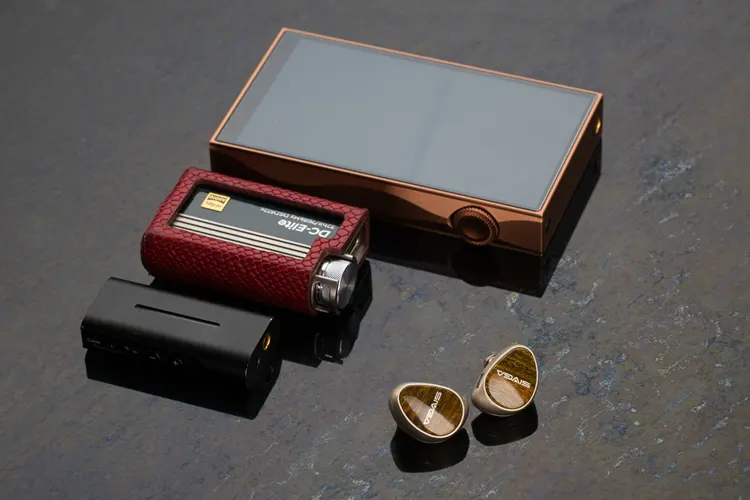
When I switched to the iBasso DC-Elite dongle DAC, an ultra-high-perceived-resolution DAC, the sound is ultra-detailed. Despite its elevated tuning, the treble comes at me as musical information, not just noise or unintelligible hiss. It sounds super resolved.
When used with the Shanling M3 Plus, a neutral-sounding DAP with tight bass and flat, extended treble, the Que UTG is revealing without distortion or added peakiness to the upper midrange and treble. The M3 Plus sounds as it should.
The biggest problem facing the SIVGA Que UTG is not the source pairing, but the kind of music that you play. It could sound too bright and glassy with poorly recorded songs, regardless of genre.
For that, the Que UTG is not the most versatile IEM. Fortunately, there are very few poorly recorded songs in my collection.
Select Comparisons
DUNU Titan S2
Technical & Design
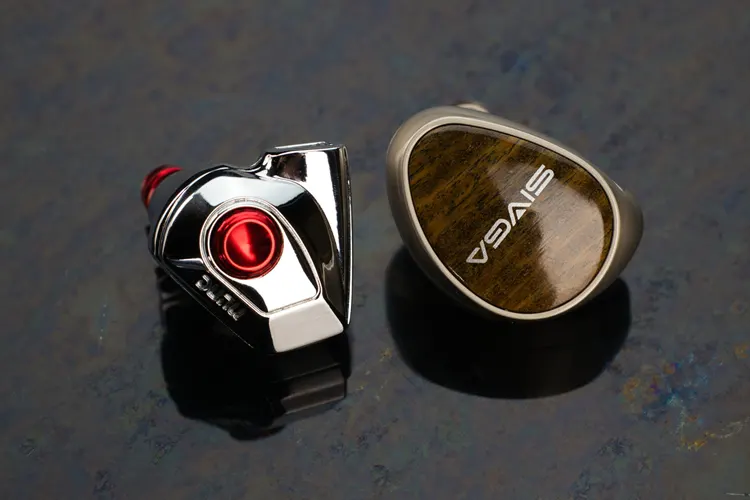
The DUNU Titan S2 is priced at $79, but is sold at a lower price during the sale. It’s a single dynamic driver IEM that uses a rigid dome diaphragm of undisclosed composite material with an impedance of 16 Ohms and a sensitivity of 107 dB.
It has a beautiful, futuristic design with a shiny chrome finish. The grey cable has a cloth sleeve and a modular plug, which matches the IEMs’ aesthetics well.
Performance
They have a similar tonality, with the Titan S2 having slightly more subbass and the Que UTG having a somewhat more treble extension and air. The vocals and instruments’ note weight is similar, but the Titan S2 has slightly more lower-treble energy.
Regarding technicalities, the Que UTG is ahead; this is where the ultra-thin glass diaphragm shows its prowess.
The SIVGA has much better instrument and vocal separation, the resolution is higher, the background decay is cleaner, airier, with a bigger soundstage.
Still, the Titan S2 is not far behind in sound staging; they are similar in imaging performance.
MOONDROP Starfield 2
Technical
The MOONDROP Starfield 2 is a pricier single dynamic driver IEM. It was released 2 years ago on July 19, 2023; I still consider it a viable competitor as the price difference is not significant, and it is still a current product from Moondrop.
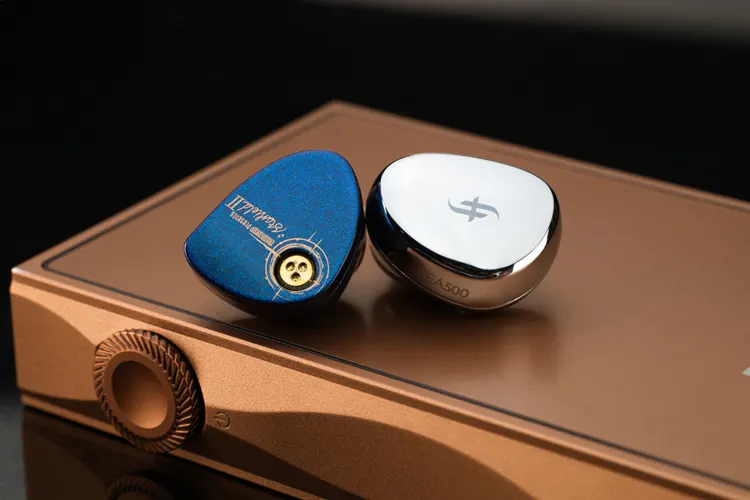
The Starfield 2 is rated at 15Ω impedance and 122 dB sensitivity, and uses a 10mm Mg-Li-Alloy dome composite diaphragm driver. The design is a beautiful blue and gold-themed shell, matched by a blue and gold-themed cable, and the set looks attractive.
Performance
The Starfield 2 has a moderate V-shape sound signature, while the Que UTG has a neutral and slightly elevated treble sound. The Starfield 2 is more balanced regarding bass and treble energy, with more bass than the Que UTG and a midrange that is more recessed or laid-back sounding.
The Que UTG has a more extended upper treble, while the Starfield 2 has more elevation in the lower treble region.
Soundstage-wise, the Que UTG has the edge, as it has a bigger soundstage; the Starfield 2 has a more forward music presentation. Regarding imaging performance, the Starfield 2 takes the cake; it has more defined and precise imaging.
Simgot EA500
Technical
The EA500 was released more than 2 years ago, around February 2023, and is now discontinued, as it was superseded by the EA500LM.
This is a single dynamic driver IEM using a fourth-generation DLC composite diaphragm, with 16Ω impedance and a 123 dB SPL rating.
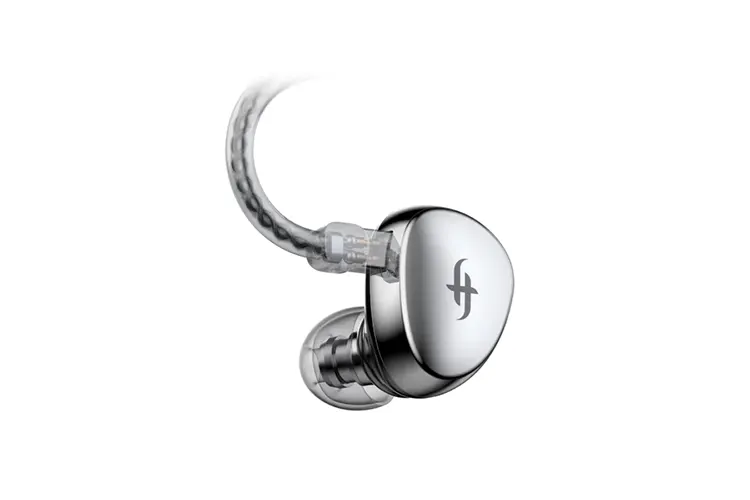
The SIMGOT EA500 has a simple design, a full metal shell with a shiny chrome finish. The silver-colored cable is slightly thin and has a plastic 2-pin plug and a fixed, non-modular input plug.
Performance
When used with the black ringed silver nozzle, the EA500 sound is slightly V-shaped with a more elevated treble than the bass. But even so, the EA500 still has a warmer midbass sound.
The EA500 is more laid-back in the midrange, but the upper midrange is more forward-sounding. The Que UTG has more upper treble extension, while the EA500 has a higher lower-treble elevation.
The EA500 has a wide but flat-shaped soundstage, like a wall of sound in front, while the Que UTG has a more distant and bigger soundstage presentation.
The SIMGOT has a more defined imaging, but the Que UTG has more depth and dimensionality. In terms of separation and resolution, both are good, but the Que UTG is better.
My Verdict
What a great time it is to be in this hobby. Innovation after innovation comes out from manufacturers, with products that push the sound value for money higher and higher, and the SIVGA Que UTG is one of those.
The SIVGA Que UTG delivers impressive clarity and accuracy in the highs and a competitive bass speed and punch for a single dynamic driver IEM in this price range.
However, I wish it had more bass. A small 1.5 to 2 dB elevation, to better balance the sound without changing the original tuning too much, as I find it bright-sounding with poorly recorded songs.
Many innovations are coming out from manufacturers lately to improve the sound quality and/or increase the sound value for the money. The Que UTG has both, with good sound quality and a very low price for the kind of performance that you get.
SIVGA Que UTG Technical Specifications
- Impedance: 32Ω.
- Frequency Response: 20Hz~20kHz.
- Sensitivity: 103 ±3 dB.
- Termination Plugs: 4.4 mm+3.5 mm.
- Connector Type: 0.78mm 2-Pin Connectors.
