

Synergy
On my days listening to the Nightingale PRO, whether during a walking exercise, going to the mall, sitting at a café, or listening at home, I’m happy to report that Nightingale PRO never suffered from audible source hiss.
The cable picked up no radio frequency interferences, and the Nightingale PRO is not sensitive enough for me to hear the noise floor of the sources being used.
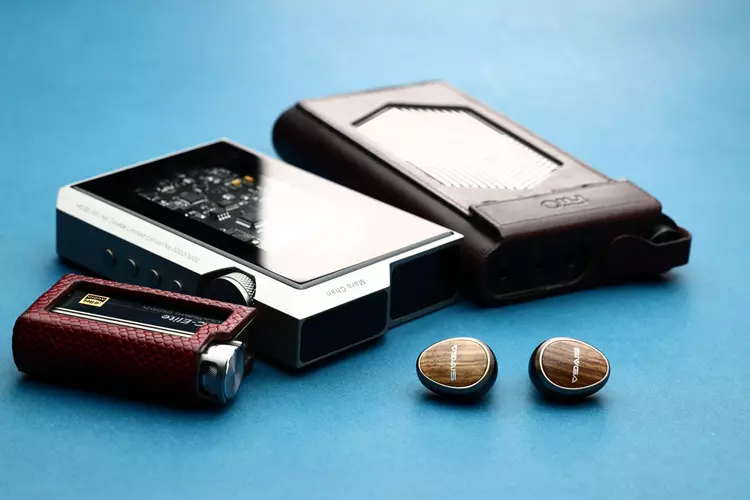
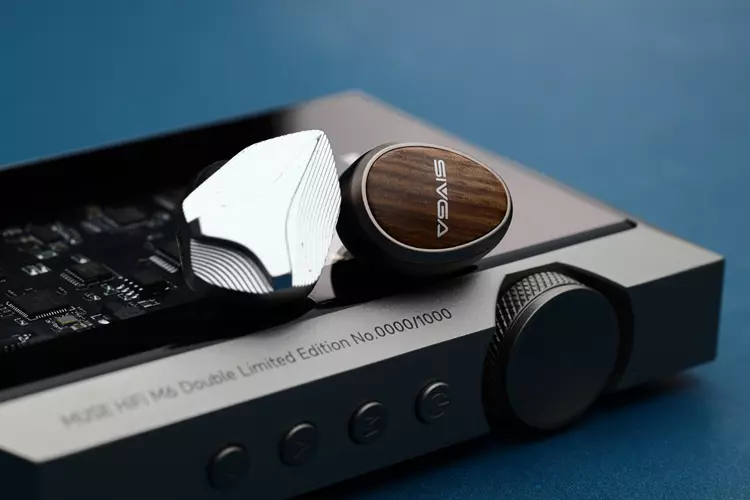
Despite its lower-than-average impedance of 16Ω, Nightingale PRO never had difficulty with any of my sources, including the tube output of the MUSE HIFI M6 Double. I hear effortlessly clean sound from all of them.
Thanks to the Nightingale PRO’s good sensitivity, I never have to crank the volume high to get satisfying levels.
Pairings
That said, Nightingale PRO’s easy drivability and good sensitivity help a lot in finding a good source pairing.
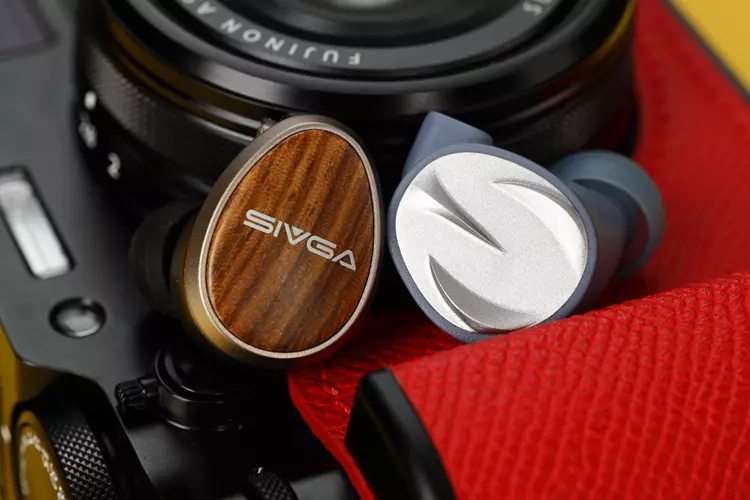
The Nightingale PRO pairs very nicely with any sources I’ve tried, including those small dongle DACs not in this review, making the concern about power a non-issue for normal music listening volume.
As a planar IEM, the Nightingale PRO has a flat impedance curve across the frequency range, which presents an even load for any source and prevents frequency-response variation across sources.
This factor becomes evident when I switch between sources: I hear no discernible changes in frequency response, making the Nightingale PRO easy to pair with just about any source in practice.
I do, however, hear the subtle differences of the inherent sound signatures of each source, for example, the iBasso DC-Elite, which has a slight energy boost in the sub-bass and upper treble, is easily heard with the Nightingale PRO.
When I switched to the FiiO M15S, I immediately noticed how tight yet powerful the bass was, and the flatness in the upper treble compared to the iBasso DC-Elite is also clearly evident.
Finally, with the MUSE HIFI M6 Double in vacuum tube mode. I hear the tube sound characterized by rendering everything with a slight gentleness and diffuseness, yet, with the M6 Double and not all tube sources, the upper treble is apparently never rolled off.
Selected Comparisons
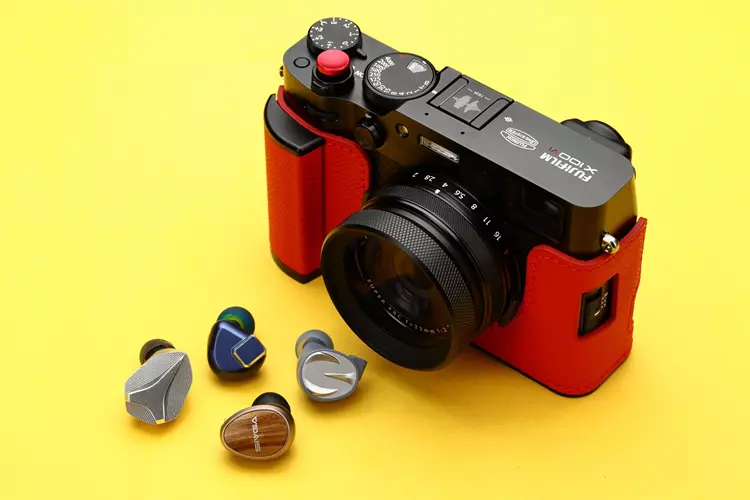
The following selected comparisons to the SIVGA Nightingale PRO were completed using a mix of the iBasso DC-Elite, MUSE HiFi’s M6 Double, and the FiiO M15s.
Hidizs MP145
The Hidizs MP145, released in 2023, is one of the most popular planar IEMs released. It is so popular that it put the Hidizs brand on the map.
The MP145 is a landmark planar IEM. I like it so much that I bought my own set after hearing a review sample from a friend during an audio meetup.
Technical & Design
The MP145 features a custom 14.5mm Ultra-large Planar Magnetic Driver with seven pairs of neodymium magnet bars, forming a Fully Symmetrical Magnetic Circuit. It is encased in a fully aluminum CNC-machined shell. MP145 has an impedance of 30Ω and a sensitivity of 104 dB/mW.
Its design was inspired by whales, as evidenced by the machined face plate that forms the whale’s tail. It includes three pairs of tuning nozzles to let the user tune the MP145 closer to their tastes.
MP145 features a 2-pin connector and consists of a four-core, 99.9999% high-purity, single-crystal, oxygen-free copper, silver-plated wire cable terminated with a 3.5mm plug.
Performance
Listening to the MP145 again reminds me of how I liked it the first time I heard it, which made it difficult to compare it to the Nightingale PRO, as I also like it.
The main difference between them is the tonality; MP145 offers a warm sound signature with boosted midbass and upper treble, while the Nightingale PRO has a neutral bass and midrange with a slight boost in the upper treble.
Both sound very airy and detailed in the treble and have a similar midrange presentation, but the MP145 has a boomy midbass that adds warmth to the overall sound.
In contrast, the Nightingale PRO has a flat bass that sounds tigher. MP145 suffers from the so-called planar bass sound, in which the bass is not as thick or dense as that of dynamic drivers.
The Nightingale PRO bass sounds more even across subbass and midbass, and doesn’t seem to have the planar bass issue.
They both have equally big soundstages, but the MP145 has a deeper soundstage while the Nightingale PRO has a wider soundstage. In terms of imaging performance, they are also equal, with images showing slight diffusion and less defined edges than the best in this regard.
Dynamically, both sound very alive, whether at low or high volume; they are equally energetic from bass to upper treble and are musically engaging.
LETSHUOER S15
The LETSHUOER S15, released in late 2023, is their highest-rated budget planar IEM at this time of writing. I consider it a direct competitor to the Nightingale PRO.
Technical & Design
The S15 features a Third Generation 14.8mm Planar Driver + 6mm R-Sonic Passive Filtering Module, housed in an elaborate shell that contains Dual Acoustic Tubes with Filter Crossover. The S15 has an impedance of 30Ω and a sensitivity of 106 dB/mW.
I like the way LETSHUOER made the smart choice to use a 3D-printed front cavity to support the elaborate acoustic design and reduce weight. The front panel is made out of CNC-machined anodized aluminum.
The S15 features a flush-mounted 2-pin connector and includes a very nice two-core, 216-strand, Silver-plated Monocrystalline Copper Cable, terminated with Detachable 2.5mm, 3.5mm, and 4.4mm 90-degree Angle Connectors.
Performance
Hearing the S15 again reminds me why it’s one of my favorite IEMs. The sound is very neutral, with a slight hint of a W-shaped sound signature characterized by a mild midbass, midrange, and treble boost that prevents it from sounding flat, lifeless, or boring.
By comparison, Nightingale PRO has almost ruler-flat bass, a more extended subbass, a flat midrange with slight relaxation in the upper midrange, and a boosted, sparkly, and airy treble.
Even though the S15 has more boosted bass, the sound is not as deep or as tight as the Nightingale PRO’s. I must say that S15 still has the planar bass sound, like the one I discussed in the MP145 comparison above, but to a much lesser degree.
The Nightingale PRO may have an apparently wider, more open soundstage, but the S15’s soundstage, while not as big, is more spherical and delivers more defined, holographic imaging.
Both are dynamic-sounding, but the S15 has a more mature and relaxed presentation due to its more neutral tonality. At the same time, the Nightingale PRO sounds more energetic and lively due to its treble sparkle and air.
LETSHUOER S12 Pro
The S12 Pro belongs to the earlier generation of planar IEM releases. Released in 2023, it is the successor to the popular S12, which was released in 2022. The S12 Pro has a different tuning style and technical performance compared to the recently released Planar IEMs.
Technical & Design
The S12 Pro utilizes a custom 14.8mm large-diaphragm driver, fully housed in CNC-machined anodized aluminum shells. S12 Pro has a low impedance of 16Ω and a sensitivity of 102 dB/mW.
I like the color on my S12 Pro, which is achieved through a blue anodization process, resulting in a very durable finish that won’t flake over time. I also like the shell’s compact design, which makes the IEM feel lightweight in the ears.
The S12 Pro features a fluh-mounted 2-pin connectors and includes a nice two-core cable made of 4 x 98-strands silver-plated monocrystalline copper wires. The input plug is swapable and includes 2.5mm, 3.5mm, and 4.4mm straight plugs.
Performance
Hearing the S12 Pro again brings back memories of the early days of the planar IEM market, since it is based on the older S12 model with a different tuning. The S12 Pro has the so-called planar timbre, with a treble peak and some dryness to the sound.
The S12 Pro has a V-shaped sound signature characterized by a boost in midbass, a slight dip in midrange, and a boost in treble. In contrast, the Nightingale PRO has a flat bass and midrange and a boosted, more extended upper treble, with more air, sparkle, and microdetails.
Due to the dryness in sound, the soundstaging of the S12 Pro is not as big as the Nightingale PRO’s. The instrument and vocal decay are not as clean or prolonged as the Nightingale PRO’s, resulting in a lack of air and spaciousness.
There is also the planar bass issue with the S12 Pro, similar to earlier planar IEMs, where the bass might be boosted, but the sound lacks the density of dynamic-driver IEMs.
In terms of imaging performance, they are about equal. I do, however, find the S12 Pro to have a slight advantage in definition, placement, and holography.
Due to the boosted bass and V-shaped tuning, I find the S12 Pro to sound more dynamic and punchy. But both are lively sounding and never boring.
My Verdict
Manufacturers have been hard at work developing and improving planar IEM technology since the first planar IEM was released years ago.
I remember the early planar IEMs not receiving a stellar reception from the audio community due to some quirks in their sound or measured response. Fortunately, all the issues with past planar IEMs have been resolved in the Nightingale PRO.
I noticed that Nightingale PRO’s use of newer technology and tuning techniques has improved over the older planar IEMs, both in subjective sound quality and in technical performance in some areas.
I can confidently say these latest planar IEM offerings offer true improvement over the previous generations of planar IEMs.
I like how Nightingale PRO presents the music with realistic sound rather than a neutral, boring tone. I love the clarity, the see-through transparency, the sparkle, the treble air, and the crisp yet natural-sounding transients, which resemble what I’m hearing in real-life musical performances.
I also like how the Nighthingale PRO’s ability to transport the listener to the realm where the music occurred, with a little imagination and closed eyes. Making for a very musically engaging listen.
However, Nightingale PRO is not perfect and has some minor shortcomings that prevent me from scoring it higher.
There are some areas where Nightingale PRO excels, like the soundstage, air, transients, and realism. It is the slightly diffused imaging, lacking the edge definition of the best I’ve heard, which I can only rate as good. And also, the upper treble presentation could be too much for treble-sensitive people.
With all that said, for me, the SIVGA Nightingale PRO’s pros outweigh its cons by a wide margin and thus, met my high expectations.
SIVGA Nightingale PRO Technical Specifications
- Driver Type: Planar Magnetic
- Driver Size: 14.5mm
- Frequency Response: 20Hz–40kHz
- Impedance: 16Ω (±15%)
- Sensitivity: 107 dB (±3dB)
- Cable Length: 1.25m (±0.2m)
- Connector: 4.4mm Balanced
- Weight: 8.7 grams each
- Nozzle diameter: 6.6mm
