

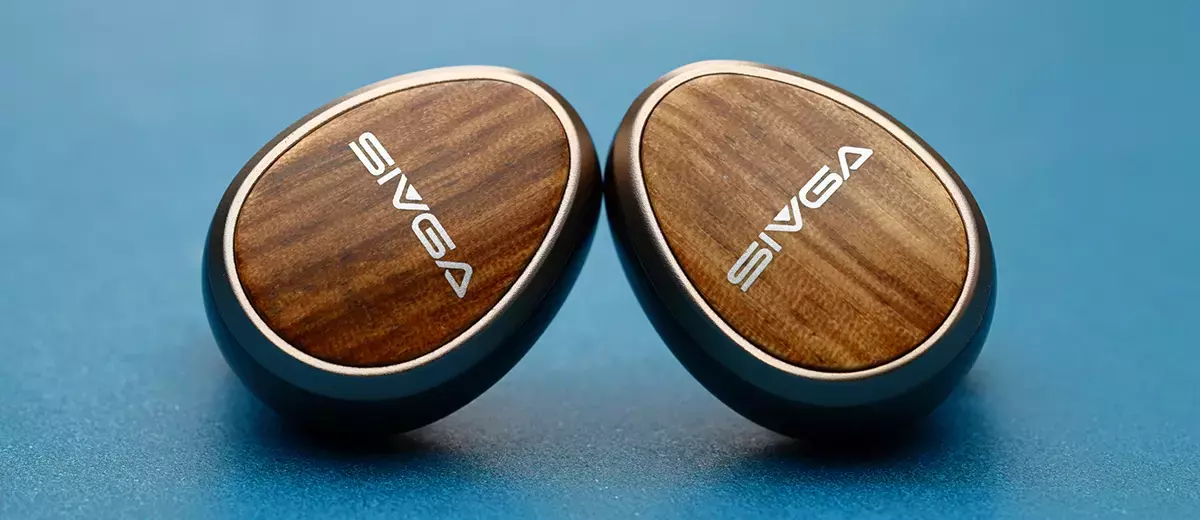
Marcelo reviews the SIVGA Nightingale PRO, a new universal IEM with a proprietary 14.5mm multi-magnetic driver, currently priced at $296.00.
Disclaimer: This sample was sent to me in exchange for my honest opinion. Headfonics is an independent website with no affiliate links or status. I thank SIVGA for their support.
Click here to learn more about SIVGA products previously reviewed on Headfonics.
This article follows our latest scoring guidelines, which you can read in more detail here.
I’ve been wondering when I would get to review another SIVGA product again, as I was impressed by the SIVGA Que UTG IEM I previously reviewed, and have been using it frequently for its sheer clarity.
I’m now glad to have the opportunity to review another SIVGA product: the SIVGA Nightingale PRO, the successor to the SIVGA Nightingale, which was released two years ago.
The Nightingale PRO promises fast, clean transients, as well as extended frequency response, treble clarity, and excellent micro details, thanks to its use of new planar drivers with an ultra-thin diaphragm and an aluminum ribbon conductor circuit.
I have been eagerly awaiting its arrival at my doorstep for review, and based on my experience with the SIVGA Que UTG, my expectations for the Nightingale PRO are quite high.
Will the Nightingale PRO live up to my high expectations? And how does it compare to other highly regarded planar IEMs, such as the LETSHUOER S15 and the Hidiz MP145? Find out in my review below.

Features
SIVGA has been very active in driver innovation, and the driver in the Nightingale PRO is no exception.
The Nightingale PRO features a newly designed planar driver with an ultra-thin composite diaphragm structure, paired with a freshly developed 0.008 mm composite diaphragm and a 0.006 mm aluminum ribbon conductor. It is rated at 16Ω for impedance with an SPL of 107 dB/mW @1kHz.
The Nightingale PRO features aircraft-grade aluminum, magnesium shells created through a 5-axis CNC machine.
This aluminum-magnesium combination, together with the 5-axis CNC machining, provides a robust yet lightweight construction, weighing only 8.7 grams each, which is light for an all-metal IEM, as well as optimizing airflow and minimizing unwanted resonance, which colors the sound.
The Nightingale PRO also features a very effective pressure-release system that prevents pressure buildup in the ear canal, which can cause headache, nausea, and ear pain during walking and running.
Design
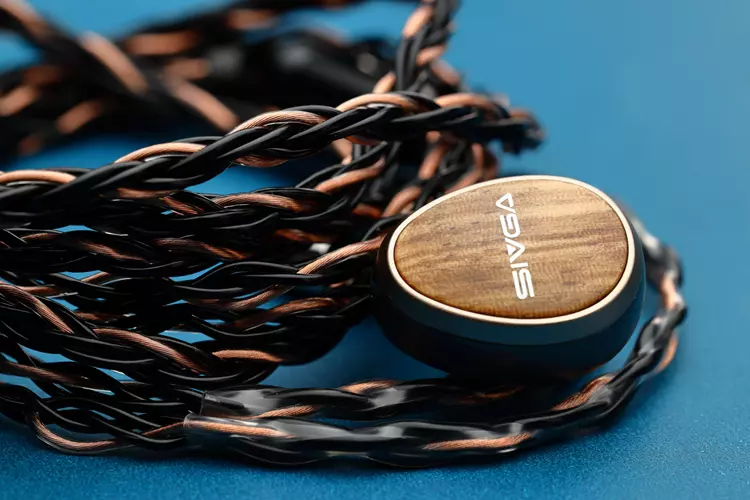
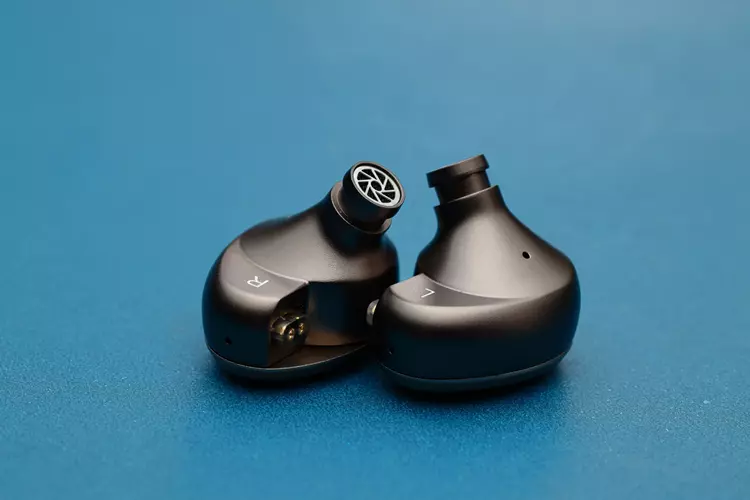
I adore the shape and colorway of the Nightingale PRO, which combines perfectly machined metal parts with a wooden faceplate cover, mixing dark and silver tones with brown wood, suggesting an advanced design with a natural feel.
Nightingale PRO features a turbine-shaped metal nozzle cover with a small vent hole near it, which serves as the pressure relief. There is another vent hole near the faceplate and the QDC style 2-pin connector.
The QDC connection is originally reverse-polarity compared to the popular 0.78mm 2-pin connection.
Fortunately, the Nightingale PRO follows the polarity of the 0.78 mm 2-pin connector, which I measured myself on the cable using a digital multimeter, making cable replacement a non-issue because it wouldn’t reverse the signal phase.
Stock Cable
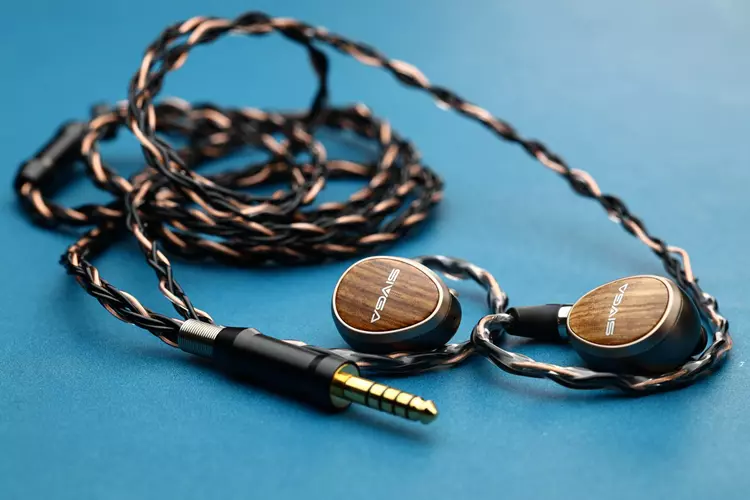
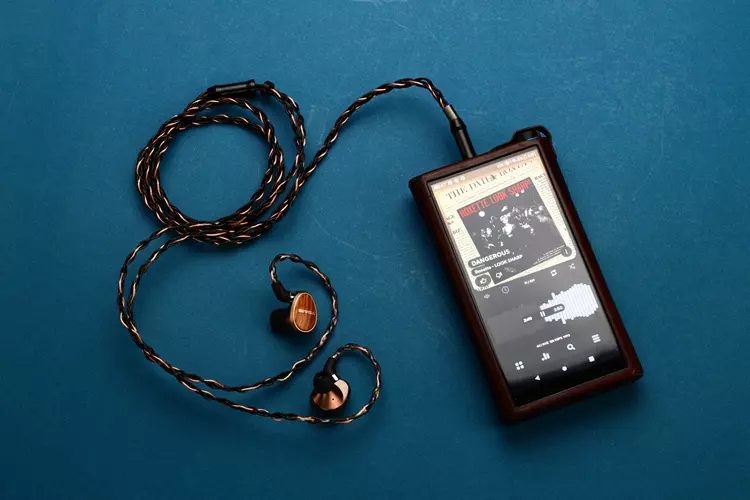
The Nightingale PRO includes a very nice-looking, premium-feeling 8-core LITZ cable combining single-crystal copper and silver-plated single-crystal copper wires.
The metal 4.4mm plug has a spring on its back that acts as a strain relief for the wires, preventing early damage from cable bending. The cable separator and the nech cinch are made of metal, while the 2-pin connectors are made of plastic and metal.
Comfort & Isolation
I noticed the Nightingale PRO nozzle is neither too long nor too short, which makes it fit perfectly in my ears. Despite the medium size of the shells, they sit flush in my ears.
The 8.7 grams per shell, which is average, and the 6.6mm nozzle diameter, despite being on the larger side, in combination with the stock ear tips, feel very comfortable to me. I can wear it for a very long time without discomfort.
Isolation average and is the same as with any IEMs with a pressure relief system; some sound gets in, but the music easily masks it at a moderate volume.
Packaging & Accessories
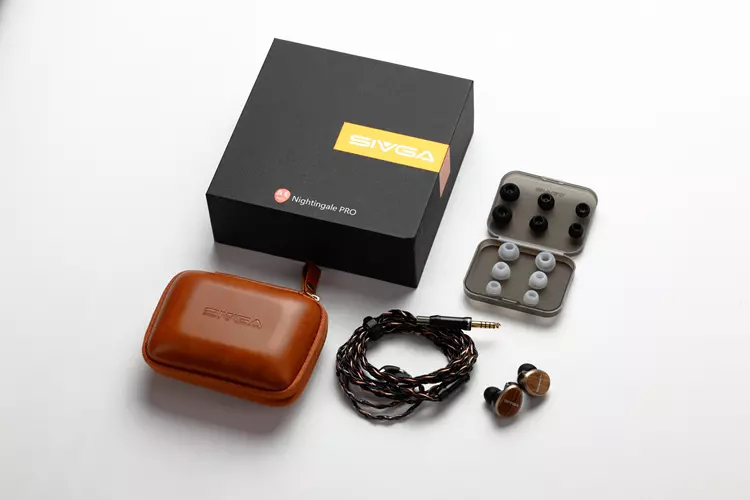
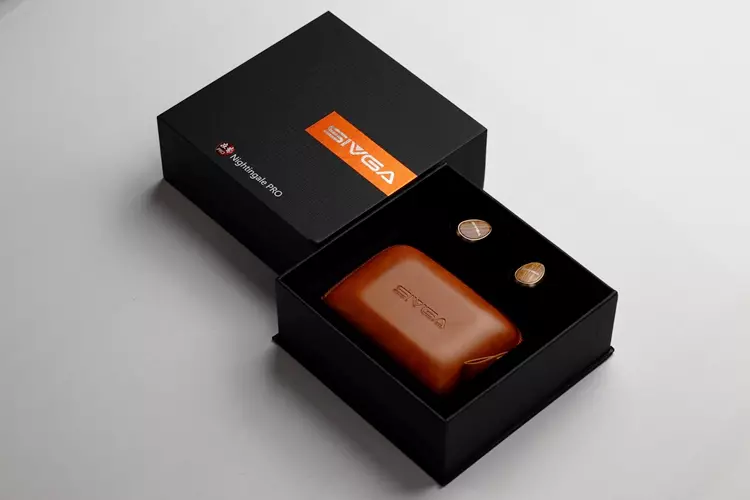
The packaging is simple, efficient, and easy to open. The bottom part has an extension that makes it easy for the fingers to grab and open the box.
The unassuming textured black box, which measures 146 x 142 x 58 mm, features SIVGA logos at the top and some text at the bottom.
Inside the box are one pair of Nightingale PRO Earphones, one Real Leather Case, two Pairs of S Ear Tips, two Pairs of M Ear Tips, two Pairs of L Ear Tips, and one User Manual.
Sound Impressions
I did my standard 24-hour burn-in routine for IEM reviewing by letting it play continuously with a DAP at moderate volume while checking in once in a while.
I have concluded that the Nightingale PRO doesn’t need a long burn-in period. Perhaps a 2-hour burn-in would suffice, as I haven’t heard any changes in sound after that. I noticed a very small improvement in midrange clarity and body, and treble smoothness after the burn-in.
For the sources, I used my iBasso DC-Elite and the MUSE HiFi M6 Double DAC amplifiers, with my OnePlus 13 Android phone and Sony DAP as the music transports. I also use the FiiO M15S DAP, using either UAPP or Poweramp music player Apps.
Among the included ear tips. I used the factory-installed black silicone ear tips because I find them the most open-sounding and offer the best soundstaging. I used the stock cable.
Measurements
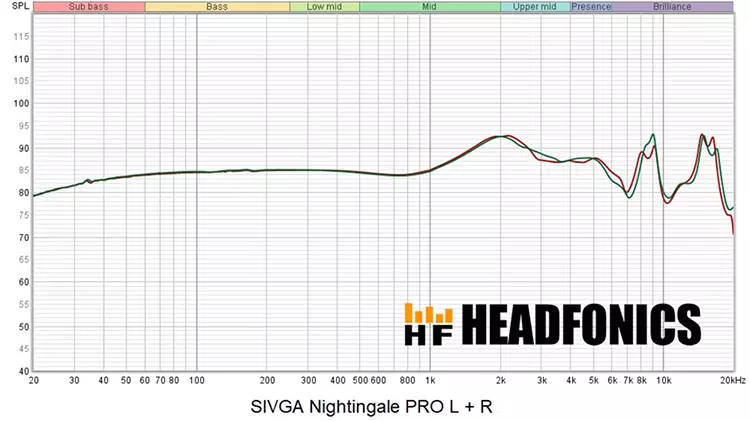
My measurement reveals an excellent left and right channel matching, indicating a high level of manufacturing quality. There is a mild, natural roll-off in the subbass, and the midbass is not boosted, making the Nightingale PRO’s bass sound neutral.
Midrange output is not recessed or dipped, and the pinna gain at 2kHz is nicely tuned, with only 8 db of boost, making it just right for good image presence and non-shouty presentation.
There is a noticeable boost at 8kHz, adding a nice brilliance to the sound, and a boost above 10 kHz, which adds air and micro detail clarity to the sound.
Summary
That said, the Nightingale PRO presents a very realistic and transparent sound that, when listened to with eyes open, makes the venue or concert hall feel like it’s in your room, but when listened to with eyes closed, you are transported to the venue or concert hall with a little stretch of the imagination.
I’m a little addicted to listening to the Nightingale PRO, so I have dug into my old favorite songs in my library to hear how it presents them.
When I was listening to “Don’t Start Giving Up” by Mike Francis on the Live in Manila Album. With eyes closed, I was transported to the concert hall, and I heard every nuance of the crowd, the see-through transparency of the sound, and the ambiance, atmosphere, and air.
The sheer transparency and clarity of the sounds allow me to easily hear the minute vibrato of the voices that I don’t often hear with lesser IEMs, especially the female vocals.
Male vocals are rendered equally well with a neutral, non-artificially thickened presentation or without added warmth.
Despite the mild measured subbass rolloff, the Nightingale PRO delivers subbass when the track demands it.
The bass is not anaemic; it is energetic, fast, and has a very clean transient response; there is absolutely no boominess, yet the overall bass is not thin, just neutral.
SIVGA nailed it when it comes to tuning the peak in pinna gain, which the Nightigale PRO has a very median peak of 8dB at 2kHz.
As I said in the measurement section, it is just right, giving me good image presence while avoiding upper midrange shoutiness, which can cause listener fatigue. I also like how the treble is airy yet non-fatiguing.
Coloration
The Nightingale PRO is subjectively a very natural and realistic-sounding IEM. It renders the sound with a lifelike presentation.
Especially the cymbals and hi-hats, with a crisp bite and fast transients, making it sound very realistic, unlike the seemingly forced details and extension of most IEMs. In terms of subjective realism and naturalness of the sound, Nightingale PRO is among the best I’ve heard.
Although the Nightingale PRO has a realistic and natural sound, it is not the most objectively accurate or neutral, as there is an apparent boost in the upper treble on first listen; however, listeners quickly adjust to the boost, leaving a very clear sound on prolonged listening.
The increase in the treble doesn’t seem to introduce unwanted coloration but rather to be a welcome addition that makes the sound more lifelike, as if it were not there.
Despite having very good sound clarity, technical performance, and transparency, my overall impression of the Nightingale PRO sound is that it is a musically fulfilling sound experience.
It allows the listener to enjoy the music rather than having an analytical or clinical sound presentation, where the brain keeps analyzing the sound instead of letting the soul have its fill of musical bliss.
Additionally, I didn’t hear the issue plaguing planar IEMs in the past: a lack of subbass density compared to dynamic driver IEMs, due to planar drivers having a lighter, thinner diaphragm.
And also the planar timbre that many complained about, which colors the sound with dry textures and treble peakiness. The Nightingale PRO doesn’t have this issue.
Soundstage
The soundstage is huge, open-sounding, natural, airy, and atmospheric, which helps a lot in giving the Nightingale PRO its realistic and natural sound.
It is wide, deep, and high at the same time, making for a natural-sounding soundscape, or at least an optimized high-end stereo or surround-sound setup kind of enveloping sound.
That said, depending on the recording, the Nightingale PRO provides me with nice imaging, where the instruments or vocals seem to emanate from their own places. I also hear a good presence of the ambient sound all around me.
However, the imaging is not the most accurate or technically the best I’ve heard; I hear a slightly diffused image that lacks the most definition in the edges, compared to the best I’ve listened to in this regard.
The Nightingale PRO’s imaging performance may not be the best, but it certainly is above average, with good separation between the instrument and the layering, which is rendered well.
I hear a strong main vocal presence, with the backup vocals and instruments emanating from the back and being easily identifiable.
Dynamics
There is never a dull moment with the Nightingale PRO. It sounds energetic from subbass to the ultra-high frequencies. Even at lower volume, the Nightingale PRO sounds alive.
I also noticed that Nightingale PRO can take a lot of power without distorting, compressing, or losing composure. I tried listening at higher volumes, and my hearing seems to be the one to give up, not the Nightingale PRO.
Click on page 2 below for my recommended pairings and selected comparisons.
