


Synergy
I’m happy to report that Martini never caused any noise in all the sources I paired it with; the cable picked up no radio frequency interference, and Martini is not sensitive enough for me to hear the noise floor of the sources being used.
Although not sensitive enough to pick up the noise floor of the source, the Martini is average in sensitivity and easy to drive.
That means that most of the volume range of the sources corresponds appropriately to the power handling and loudness range of the Martini.
Pairings
Thanks to Martini’s easy drivability and power sensitivity, there is little to worry about when it comes to the power output limitations of most low- and medium-powered sources available today, as long as you don’t overdrive the volumes.
What matters most with the Martini is how well resolved the source is, as I find that its potential is wasted on sources with medium or low perceived resolution.
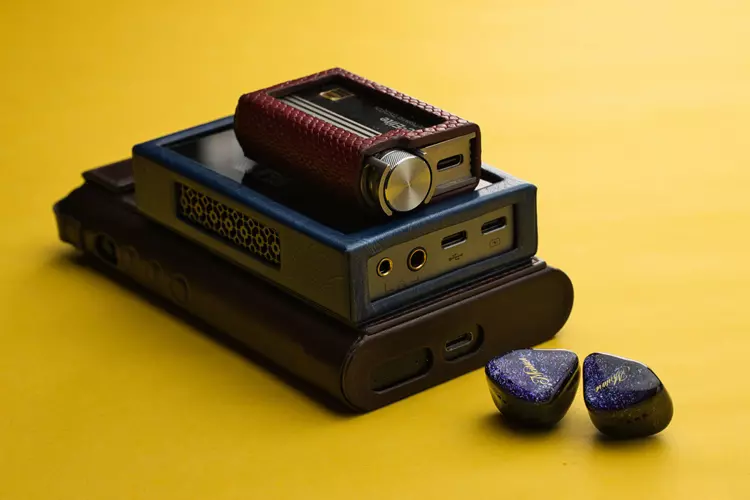
For example, I paired it with the beautiful-sounding MUSE HiFi M5 Ultra in Vacuum tube mode. This pairing produces a beautiful, mellow sound, but I still feel that the perceived resolution could be improved with more resolving sources.
When paired with the FiiO M15S DAP, there is noticeable improvement in clarity and resolution, as well as better bass tightness. I noticed even better perceived resolution with the iBasso DC-Elite pairing.
Selected Comparisons
Kinera NOTT Phantom
Technical & Design
The Kinera NOTT Phantom is a hybrid IEM consisting of 1 + 4 drivers.
It features an 8mm polymer fiber composite dynamic driver, two Knowles balanced armature drivers for the midrange, and two Sonion balanced armature drivers for the highs and ultra highs.
It has a relatively high impedance of 54Ω and a sensitivity of 105 dB/mW.
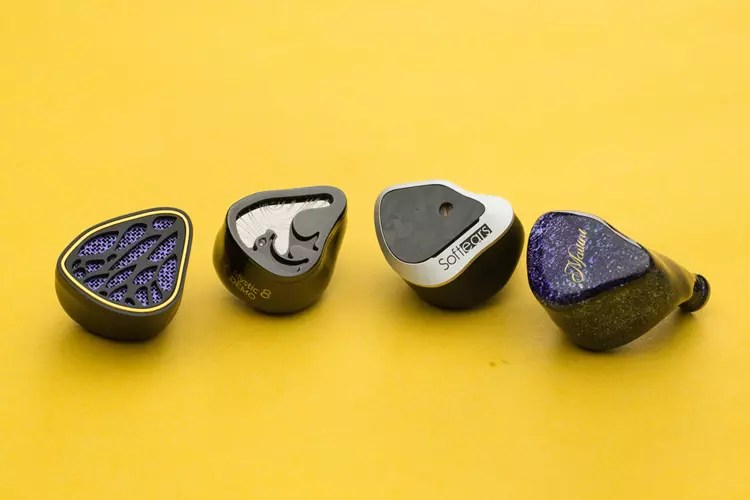
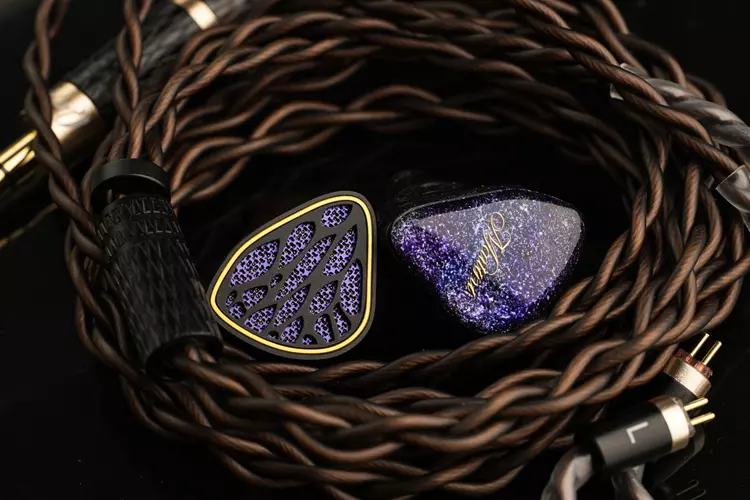
The NOTT Phantom has a beautiful, lightweight metal shell with an intricate faceplate design composed of three layers of differently shaped materials.
The thick stock 4-core cotton sleeved cable is designed to match the black, gold, and purple color scheme of the shell, making the whole set look aesthetically cohesive.
Performance
Both the Martini and NOTT Phantom follow a similar tuning, but the Martini has a bit more bass boost and midrange resonance, giving it a more contrasty sound than the NOTT Phantom. Resolution-wise, I find them to be equally resolving.
They have similar soundstage size, which is a big and spacious feeling, but I find the Martini has a spherical shape and a more natural surround sound soundstage.
This makes the imaging in the Martini more holographic, where the images emanate from anywhere in the soundstage.
I find both to be equally dynamic-sounding and musically engaging, with the Martini having a slightly more dynamic contrast.
LETSHUOER Mystic 8
Technical & Design
The Mystic 8 is an all-balanced armature driver set featuring eight balanced armature drivers from Knowles and Sonion with a way electrical and four-way acoustical crossover.
It has a low impedance of 18Ω and a sensitivity of 107 dB/mW.
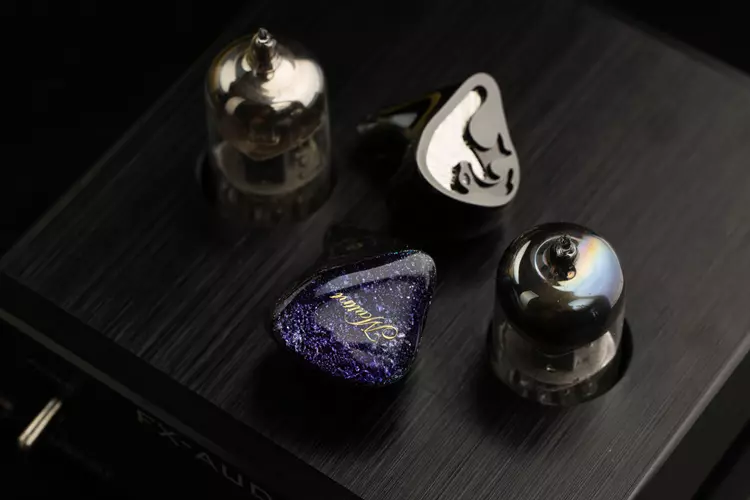
The Mystic 8 features a black CNC-machined shell with a forest animal carving in the faceplate with a glass inlay, making the design of the faceplate look complex and beautiful.
As lovely as the shell may be, I’m not a fan of its thin, black colored stock cable that is easily tangled and has plastic 2-pin connectors, making it look cheap.
Performance
The Mystic 8 does not have a pressure relief system, which can cause pressure buildup in the ear canal, leading to discomfort, nausea, and headaches, especially when walking while listening.
The Mystic 8 has a leaner tonality, which makes the instrument sound lacking in note weight, and the vocals seem to lack body.
The overall tonal balance is treble-biased; it lacks bass in relation to its elevated upper midrange and treble. Making the sound forward and clear, but lacking in bass weight and presence.
Martini is more balanced in the bass, midrange, and treble, and has a slight warmth to its sound, balancing the upper midrange and treble, preventing fatigue from a lean and bright sound.
In terms of perceived resolution, they are about equal, but the Mystic 8 has a more forward presentation of details.
I find the Martini more dynamic-sounding due to its balanced bass and treble presentation compared to the treble-biased tuning with lean bass of the Mystic 8.
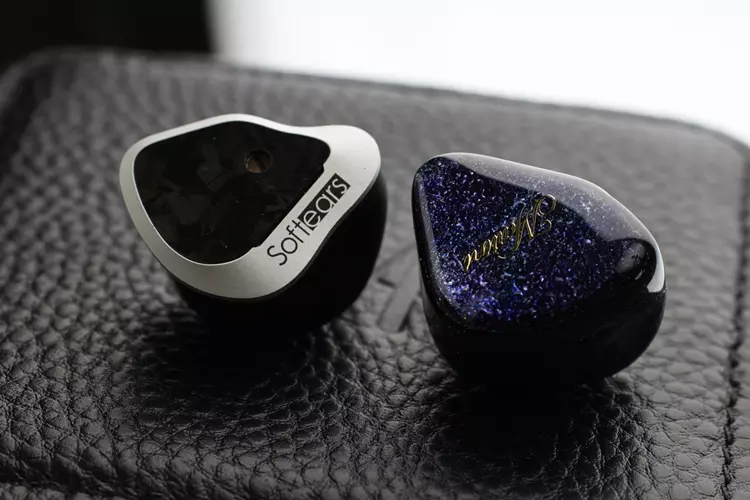
Softears Volume S
Technical & Design
The Softears Volume S is a hybrid IEM featuring a 10mm silicone diaphragm dynamic driver, a 6mm wool paper diaphragm passive dynamic driver, and two balanced armature drivers.
It features a tuning switch that alters the sound and adjusts the impedance between 31.2 and 9.8 Ohms, as well as the sensitivity between 114 and 124 dB/mW.
The Volume S features a 3D-printed shell with an aluminum and carbon fiber faceplate. There is a rounded hole in the faceplate that allows for the adjustment of the rotary tuning switch. I prefer the sound in its low-impedance position.
The Volume S includes a thick, black cloth-sleeved, changeable 2-pin cable with 3.5mm and 4.4mm plugs.
Performance
Both are near-neutral-tuned IEMs, with the Volume S more so. The Volume S has more upper midrange elevation, while Martini is more relaxed in that region, with more upper treble extension. I find the bass to be similar in both.
The Volume S has a flatter sound stage that is wider than deep, while the Martini is more balanced in every direction, in terms of imaging. I find the Martini more Holographic, while Volume S has a more forward image presentation.
Both are equally dynamic-sounding, can accept a lot of power from the source, and go very loud.

My Verdict
The QoA Martini is a well-balanced, finely tuned IEM that is suitable for critical listening due to its high technical capabilities. And for fun listening due to its well-balanced, energetic, slightly V-shaped tuning. There is never a dull moment with the Martini.
It is hard for me to find faults with the Martini, considering its price, which is not out of reach for most audio enthusiasts.
Still, if I must nitpick, I would like the whole midrange to be slightly more elevated, perhaps by about 1 dB more, and this is based on personal taste. But as it is, there is nothing to complain about.
I especially like its warm and moderately bassy lows and mids, which I associate with its exemplary implementation of bone conduction drivers, as well as the sheer technicality of the upper mids and highs, with its use of balanced armature drivers.
With all these different drivers seamlessly blended, the overall sound is coherent, letting me easily forget that I’m listening to an electromechanical device and letting me get lost in the music.
That said, I recommend the QoA Martini for music lovers looking for a highly detailed and musically communicative IEM in its price range.
QoA Martini Technical Specifications
- Model: Martini
- Impedance: 14 Ω
- Sensitivity: 105 dB ± 2 dB
- Wearing Type: In-Ear
- Plug Type: 4.4 mm Balanced
- Cable Length: 1.2 m (detachable)
- Driver Configuration: 1 DD + 4 BA + 1 BC
- Frequency Response: 20 Hz–20 kHz
- Weight: 5.7 g
- Nozzle Diameter: 6.4 mm
