

Select Comparisons
PLUSSOUND SONORA SE
Technical
The SONORA SE is VOLTA SE’s elder brother and packs eight drivers per side.
You get two 10mm dynamic drivers for the low end, four balanced armatures covering the mid-lows through the mid-highs, and two electrostatic drivers handling the top end. The low frequencies are built around a dual dynamic setup in an isobaric arrangement.
Both IEMs employ a 6-way crossover network and share some similar internals. No surprise, they are both very technical sets and share some commonalities in the tuning styles.
The SONORA SE has an impedance of 10Ω at 1 kHz and a sensitivity rating of 110 dB/Vrms. This is nearly the same as the readings from the VOLTA SE. They ask for a similar level of power and have a similar drivability.
Design
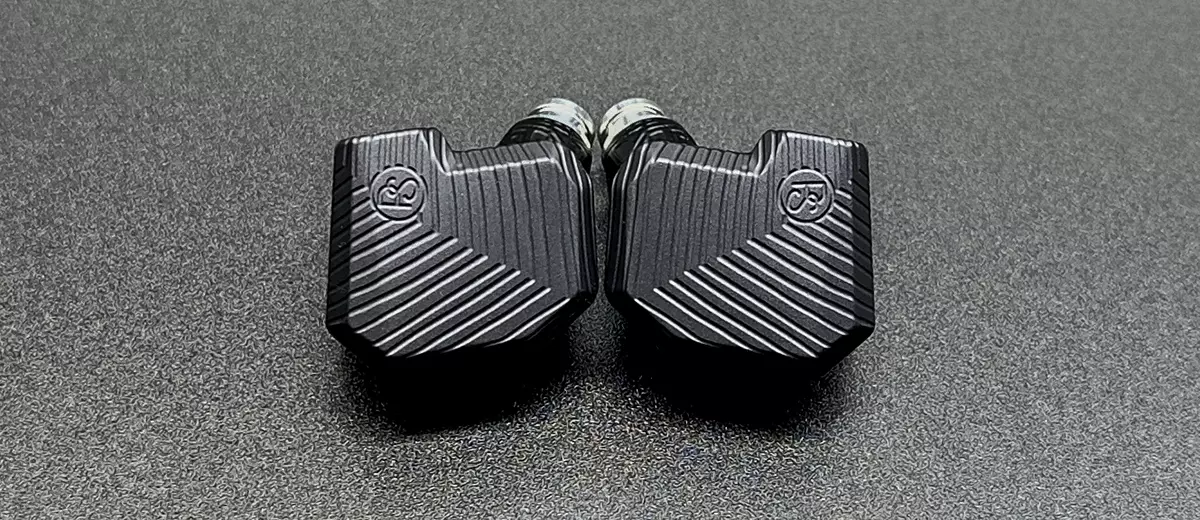
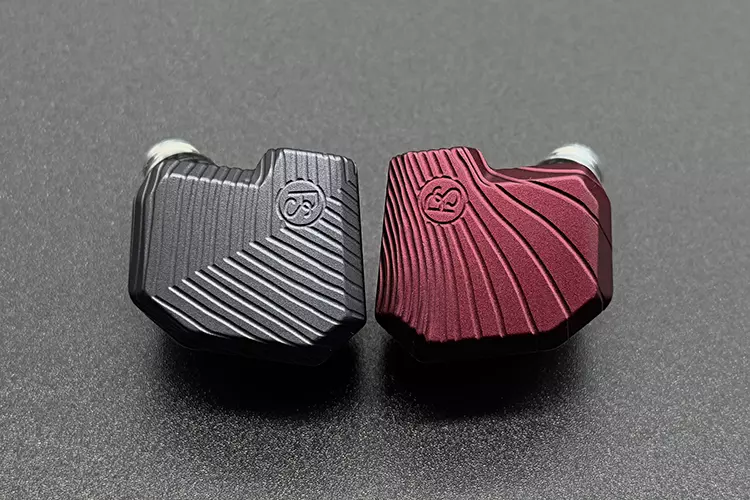
Same shape, same size, same weight. From a distance, it is honestly hard to tell which one is which.
The main giveaway is the faceplate’s color and the pattern. On SONORA SE, it is more of a smooth, wavy flow, while on VOLTA SE, the lines meet at sharper angles. The inner side of the shells has a different texture too, but it’s not something you notice unless you look closely.
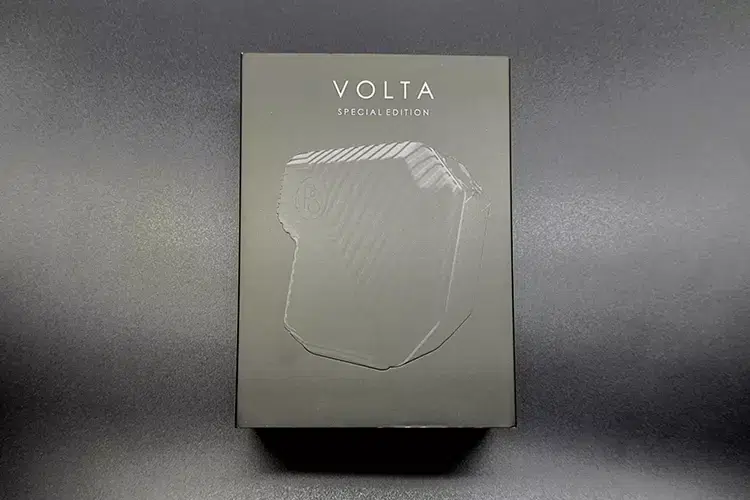
Everything else is basically shared. The packaging is the same, and the accessory set is identical. It does not feel like PLUSSOUND tried to separate the two as “big flagship” and “cheaper sibling.”
Presentation-wise, they are treated at the same level, even though there is a $500 gap between them.
Performance
VOLTA SE comes across as the fuller, more confident low-end listen. It carries extra weight, so bass notes have more body behind the initial hit. The rumble is easier to notice.
SONORA SE, in comparison, feels tighter and a touch more disciplined. It is less about sheer mass and more about control, cleanliness, and separation.
If you like bass that shows up, stays planted, and adds momentum, VOLTA SE leans your way. SONORA SE feels more “reference-correct,” though it hits with full authority too.
This is where VOLTA SE’s personality pops. It feels more open and forward, with a sweeter, more musical tilt. There is a sense of proximity and presence, which tends to make vocals sound more emotionally engaging rather than purely accurate.
SONORA SE keeps things cleaner and a bit more matter-of-fact. It reads as more neutral and less warm in presentation. VOLTA SE trades a bit of that strictness for charm. It sounds more inviting, more “singing,” and it flatters vocals with a smoother glow.
SONORA SE comes off as the more incisive and contrasty top-end tuning. It has a marginally sharper sense of bite on leading edges. That also gives it a bit more perceived detail, especially on busy tracks where you want to “see” the edges of sounds clearly.
VOLTA SE keeps the treble feeling cleaner and airier, but with a smoother touch. You still get the sense of openness and lift, but it does not push that “sparkle” as assertively.
VOLTA SE feels a touch more intimate and slightly closed in. Layering remains clean, imaging stays precise, and the stage is quite spacious.
SONORA SE pushes the technical side a bit further. It sounds more layered overall, outlines images with a sharper edge, and opens the presentation up with a more spacious stage.
Kinera ThorKing
Technical
The Kinera ThorKing is a flagship tribrid IEM that features 1 dynamic driver, 6 Knowles balanced armature drivers, and 4 Sonion electrostatic drivers. It implements a four-way crossover that ensures precise frequency distribution among the drivers.
ThorKing has an impedance of 10 Ω @ 1 kHz and a sensitivity rating of 105 dB/Vrms. The IEM can be comfortably driven by sources with fewer power specifications, such as dongles and smartphones. A powerful source improves the ThorKing’s dynamics noticeably.
Like the VOLTA SE, it remains stable on powerful sources. On my Lotoo PAW Gold Touch, both the IEMs take a similar level of volume.
Design
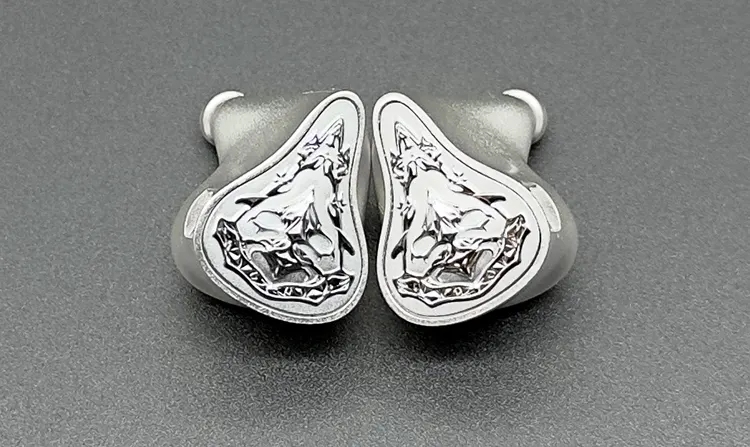
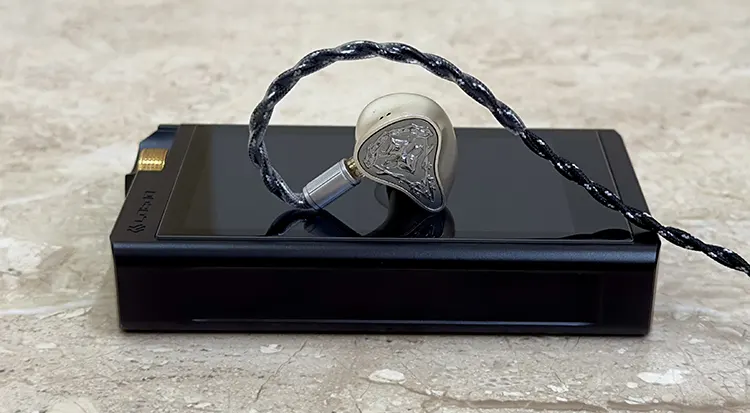
ThorKing boasts a very premium design with an intricate faceplate build. The unit I have is built with matte brass shells, and there is a polished silver version available as well.
The matte one requires less maintenance and is less prone to scratches. The faceplate design is inspired by Norse mythology, depicting the legendary battle between Thor and Jörmungandr.
VOLTA SE has a very different design language and deviates a lot from regular IEM designs with its block shells and square faceplates.
Over time, I have adjusted quite well to PLUSSOUND’s design and find the IEMs comfortable enough. However, the ThorKing has a more ergonomic design, which offers an easier fit.
Both IEMs connect via a 2-pin, 0.78mm socket. The stock cable on VOLTA SE is my preferred one, as it has a better build, with a performance that is a step up from ThorKing’s stock cable.
ThorKing arrives in very grand packaging, but if you consider the set of accessories, they are much better provided with the VOLTA SE, though in a very compact way.
Performance
VOLTA SE is clearly the bassier and more “fun-leaning” listen. It has more weight and more physicality behind bass notes, so the low end feels like it is driving the track rather than just supporting it.
ThorKing is not bass-light in an anaemic way; it is just leaner by design. The bass hits are tight, quick, and well-controlled, but the overall quantity is trimmed back, so it feels cleaner and more reference tilted.
VOLTA SE’s midrange is more intimate and more emotionally “there.” Vocals feel closer and more natural in tone, and the midrange carries a bit more warmth and body because the whole mix has a richer foundation.
ThorKing is the clearer, more neutral, and more “spotlighted” one. It feels more open and airier but also leans more analytical. The good thing is that ThorKing still keeps a bit of warmth, which avoids the midrange turning too dry.
ThorKing sounds airier and more treble-present overall, with more shimmer and sparkle and a stronger sense of highlight on fine details. VOLTA SE still has extension and cleanliness, but it is smoother and more rounded in how it delivers treble. It feels less “lit up” and more blended into the mix.
ThorKing is the set that feels more revealing and more treble-forward. VOLTA SE is the one that keeps the treble in check, so the listening experience stays richer and more relaxed.
ThorKing stages wider and feels more spaced out, with slightly stronger separation between instruments. That open layout makes it easier to pick apart busy arrangements, and it adds to the perception of detail.
VOLTA SE feels more closed-in comparatively, but it counters with a more noticeable sense of depth and height, so it still creates a convincing space. Imaging is solid on both, with good placement and stability.
Alpha Omega Omega
Technical
The Omega is a flagship nine-driver hybrid universal IEM, featuring a dynamic driver, Sonion balanced armatures, and Sonion electrostatic drivers.
The precise configuration includes a single dynamic driver, one Sonion BA driver handling the lows, and three BA drivers for the mids. Two Sonion electrostatic drivers are dedicated to the highs, with two more covering the ultra-highs, all tied together through a 6-way passive crossover.
The Omega is also equipped with three tuning switches, offering a total of eight different sound signatures. My preferred option is the UDD setting, where the bass gets a slight boost while the rest of the frequency range remains close to the default tuning.
The Omega is rated at 43Ω at 1 kHz with an 86 dB SPL sensitivity. It asks for a good amount of power to really open up. On my Lotoo PAW Touch Gold, it easily touches a volume level of 45, which is quite a lot. VOLTA SE is easier to drive, though it also pairs well with powerful sources.
Design
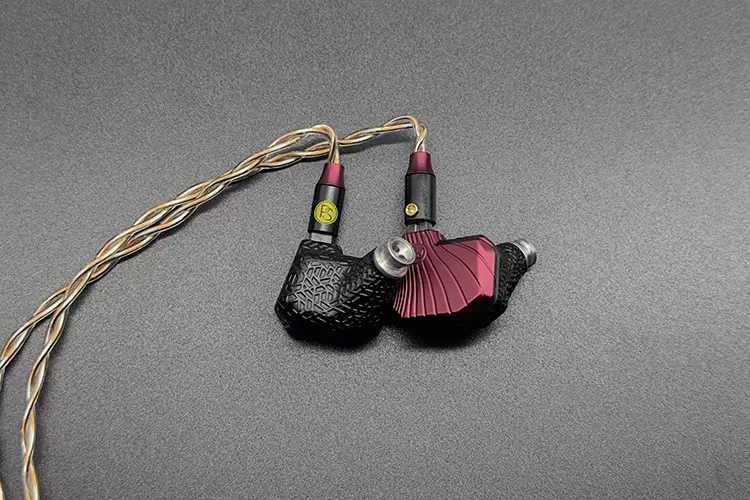
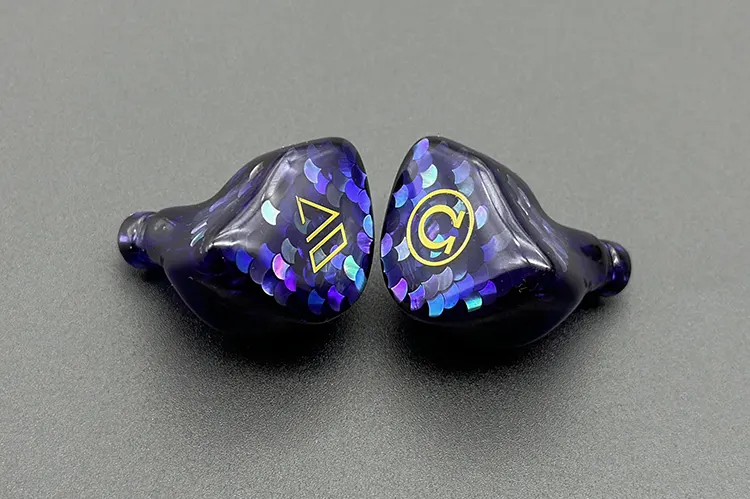
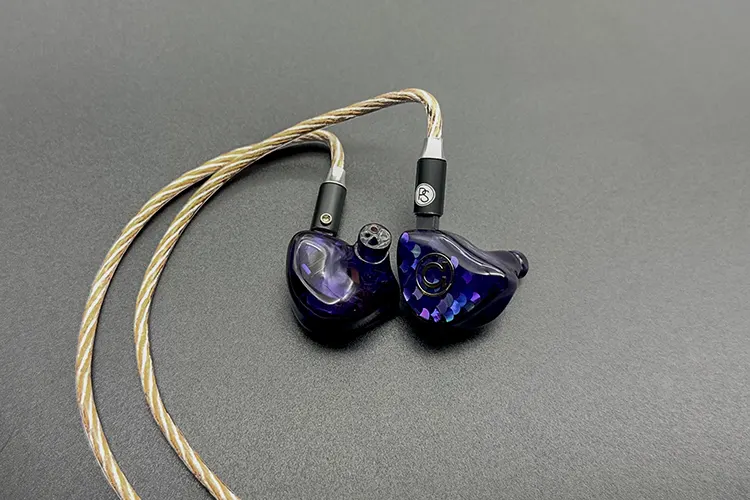
Omega uses resin shells, and they do not feel cheap at all. The build looks premium in the hand. The purple theme, plus that shiny fish-scale-type faceplate, gives it a classy, almost “dressy” look.
It catches light well, and when it does, you can see the insides glint a bit, like a piece of jewelry. Resin also gives brands more room to play with designs, and Omega uses that advantage instead of keeping it plain.
The shells are big, for sure, but they are not bigger than VOLTA SE. The main difference is shape. Omega feels more normally designed and more ergonomic, so it sits in the ear more naturally.
The nozzle is on the larger side, and that can be a problem if you have smaller ear canals. I usually pair it with tips that have a smaller stem and a wide bore. The shells are light, and there are no nasty pressure points, so long sessions are still easy.
VOLTA SE is the offbeat-looking one, but it is still easy to wear. It is light, it stays put, and I can go for hours without feeling ear fatigue.
Both use standard 0.78 mm 2-pin connectors. Omega comes with an Astral Acoustics stock cable, and it matches the tuning well. But if we are talking about build quality and overall performance, VOLTA SE’s included cable is clearly a step ahead.
Performance
VOLTA SE comes in with more sheer weight and presence. It fills the room more, with a big low-end feel.
Omega’s bass is the tighter and more controlled one. It leans more into a deep, sub-bass kind of pull that feels like it reaches down and grabs you, more throat-hit than brain-rattle. It stays controlled, detailed, and clean, so the bass hits land and then move out of the way.
VOLTA SE is the more intimate, more forward midrange of the two. Vocals sit closer, with a sweeter glow that makes it feel more emotional and musical.
Omega’s midrange is warmer, but it lays things out wider across the stage, so the midrange feels more relaxed and less up-front. Tone-wise, Omega comes across as a touch more natural to me.
Omega has a little more bite and liveliness around the vocal edge and leading harmonics, so it can feel a touch more awake in that zone.
Neither of these is a treble show-off set. Both go for smoothness and listenability first, and they avoid that pushed, sharp, hyper-detailed treble style.
VOLTA SE keeps cymbal strikes and shimmer natural, a bit more detailed and well separated, with notes that feel full rather than thin. Omega plays the same game; the finish is slightly more open and spacious, but not as detailed.
VOLTA SE feels taller and deeper. Even when it is not the widest, it creates a nice sense of front-to-back space. Omega spreads wider across the stage, so placement feels more left-right expansive.
The separation between instruments is the same for both, but Omega’s stage feels a bit more naturally arranged. Micro-detail is also a tad better on Omega, as it pulls out small cues a bit more easily.
My Verdict
SONORA SE had already caught me off guard so hard that I was still riding that high, still stuck in that “wait, PLUSSOUND can tune like this?” mindset.
Then VOLTA SE showed up, and it did not feel like a side grade or a watered-down sibling. It came in with a different swagger, and honestly, it is a swagger I like even more.
VOLTA SE has its own voice. It relaxes the presentation a bit. It is more musical, more emotional, and it is not shy about the bass. You get a heavier dose of low-end fun, the kind that makes tracks feel physical and alive.
Then the midrange comes forward and holds your attention. Vocals have presence, instruments have body, and it has that sweet, slightly warm pull that keeps you locked in without feeling forced or shouty.
Technically, it is not a step down so much as a different attitude; VOLTA SE is just a different mood. Personally, in terms of overall capability, I would put it very close to the SONORA SE.
Picking a “better” one is honestly tough because it depends on what kind of listener you are on a given day. The bigger point is you cannot really go wrong with either. PLUSSOUND keeps the packaging equally premium on both, so your choice can be based purely on the tuning.
VOLTA SE sits comfortably among strong peers in the bracket and does not come off as if it is cutting corners. Bottom line: it’s a solid release and an easy one to recommend.
PLUSSOUND VOLTA SE Specifications
- Driver Configurations: Two 10mm Dynamic Drivers, Two Balanced Armatures, Two Electrostatic Drivers
- Impedance: 10Ω @ 1 kHz @ 1 mW
- Sensitivity: 109 dB at 1 kHz
- Frequency Response: 10 Hz – 40 kHz
- Cable: In-house, limited SPC XL cable
