

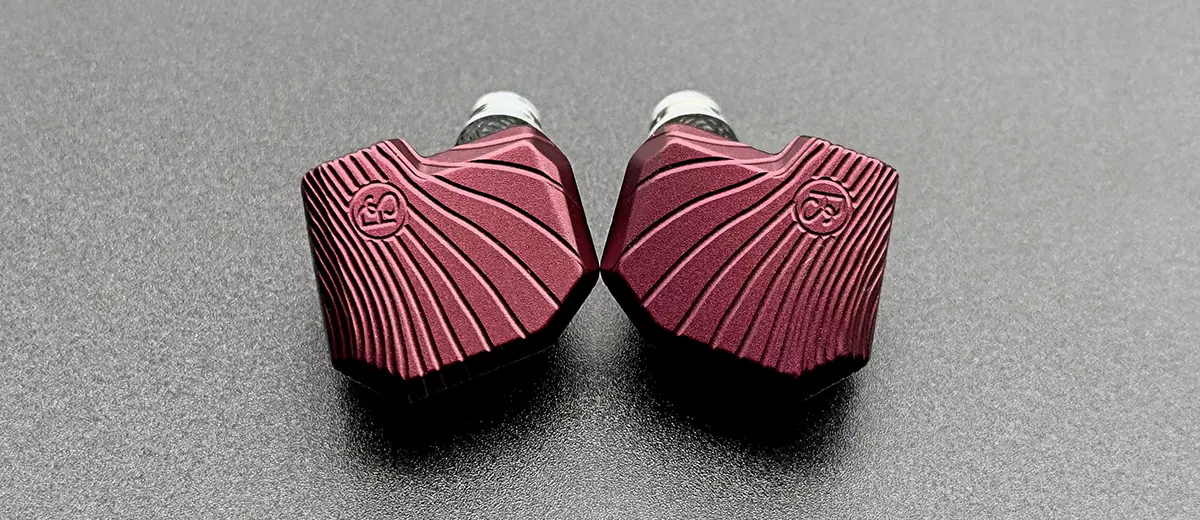
Sound Impressions
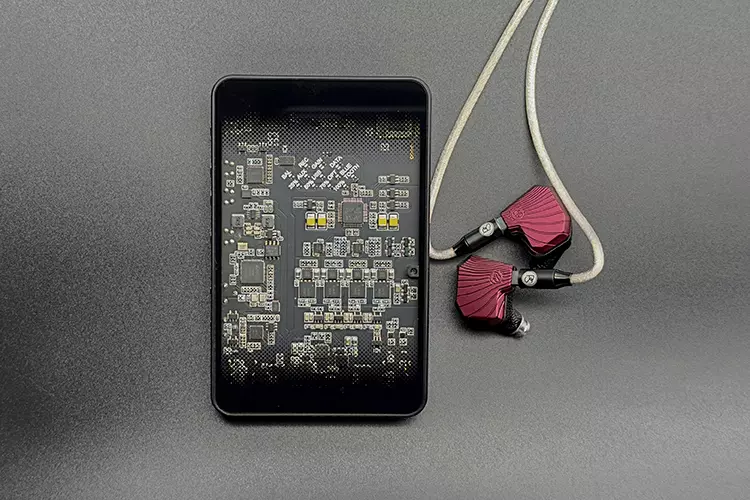
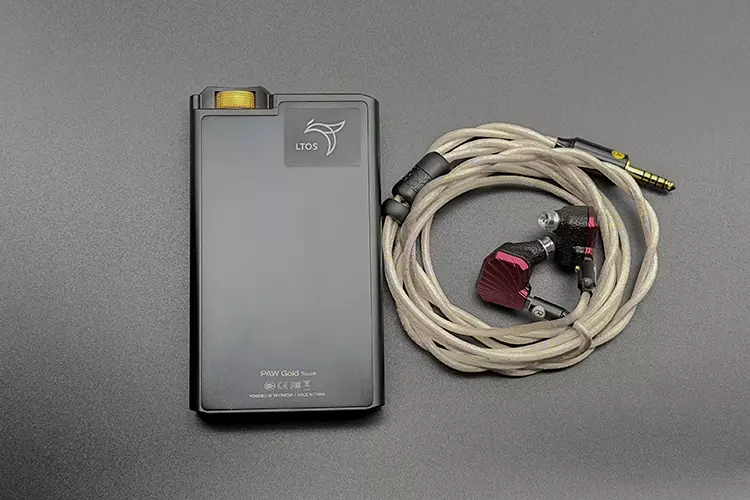
The following sound impressions of the PLUSSOUND SONORA SE were completed using a mixture of my main source, the Lotoo PAW Gold Touch, and the Questyle CMA18P DAC/Amp.
For the review, I paired the IEMs with the stock cable and Nostalgia XWB ear tips, size L.
Summary
To be honest, I was not sure what to expect from the SONORA SE, primarily because I had never had a taste of PLUSSOUND IEMs.
And now the sound ended up being more than a surprise for me. The SONORA SE packs a sound you would expect from a flagship release, where there is hardly any scope for error.
Bass grabs you first. This bass is exotic, to put it in the simplest words. It has a very welcoming presence, filling the sound with fun and excitement with solid impact, especially what the sub-bass delivers.
The midrange is a velvet couch: plush, welcoming, and on the right side of warm. The tonality leans reference-style but is pleasing rather than hyper-natural or dry.
The treble finishes the Sonora’s signature with light and lift, keeping the whole picture open, breathable, and easy to live with.
Technically, the set never breaks a sweat. The delivery feels effortless, clean, and organized, like it is never working hard, even when the track is complex or busy.
You get the resolution, separation, and dynamic contrast you expect at this level, but it is presented with a calm grip and a natural flow. PLUSSOUND wasn’t bluffing with this special release; this one’s the real deal.
Bass
The bass on the SONORA SE is straight-up addictive. It’s rich, engaging, and perfectly balanced without ever tipping into excess.
Right from the start, the sub-bass digs deep enough to give you that proper chest rumble and physical slam. Think of big electronic kicks or those low organ notes in classical pieces that you feel in your body.
However, it never goes overboard into endless, boomy territory that leaves everything sounding mushy and fatiguing after ten minutes. It’s tight, controlled, and packs real impact without wearing you out.
Then the mid-bass steps in with a serious punch, following the same swagger. Kick drums hit hard, electric bass lines have weight and snap, and nothing ever feels skinny or polite.
The coolest part? Sub-bass and mid-bass live together perfectly. You get the tactile slam and the warm body in one coherent wave instead of two stacked bass layers fighting for space.
What really hooked me is how clean and separated everything stays. Busy mixes stay readable. On complex tracks, I can follow each bass element without effort. Nothing smears together or bloats into one big blob. Every note stays defined.
Texture is another highlight. There is a natural grit and nuance to every note, be it the string buzz on a bass guitar or the vibrations on a drum. Decay is natural: the bass notes linger just long enough to let their presence be known, then step off the stage before the next line arrives.
Crucially, the low-end stays disciplined. It never leaks upward. Midrange stays clean, and highs stay airy, so the extra weight never trades away clarity. You get the fun of a bass-head signature and the precision of a reference monitor in the same breath.
Midrange
The midrange of SONORA SE walks the line between warmth and clarity without wobbling. It carries a mild U-shaped contour. It eases down from the upper bass into the lower mids, then sits at its most relaxed point through the core of the midband.
This tuning choice keeps vocals and instruments from jumping out too aggressively. The midrange feels placed a step or two behind the bass foundation and comes across slightly set back rather than upfront. At the same time, it never falls into that hollow, scooped-out territory.
Lower mids have real body. There is enough energy packed in the region to keep things warm, full, and intact. Bass guitar lines feel fleshed out instead of stringy, and cello carries weight with texture still intact.
Male vocals land with a convincing tone, and the small nuances come through easily: huskiness, throat texture, little breaths between phrases, and those tiny dynamic shifts that make vocals feel alive. Resolution is strong, so clarity comes without stripping the note or bleaching timbre.
As the midrange climbs into the upper midrange, presence and definition return in a controlled way. The region keeps the lights on but the glare off.
Vocals sharpen in outline, and articulation becomes cleaner and more obvious, without turning shouty. Female vocals sound clear and well-drawn, guitars have clean string snap, and piano attacks carry crisp edges. Micro-detail is plentiful, with an easy presence rather than a forensic one.
It is not a gooey, ultra-organic midrange, but it gets close to natural, with warmth in the foundation and a tidy, clear picture throughout.
What you get instead is an inviting, reference-leaning midrange that stays friendly to mediocre recordings while still rewarding the great ones.
Treble
Honestly, the treble is one of the easier parts of SONORA SE’s tuning to live with long-term. It’s very detailed and offers plenty of sparkles when the music calls for it, and the rest of the time, it stays polite and musical.
This treble has a detail-forward tilt, but it stays well-managed and lively without ever turning harsh. Right after the upper midrange presence, there is a deliberate relaxation in the lower treble that takes glare off the table.
That region avoids a lot of crunchiness and splash creeping in. Sibilance stays in check, cymbals avoid that brittle edge, and hot recordings do not turn into a sword fight.
Higher up, the extension is solid but controlled. It rolls off smoothly without any nasty peaks that would make sibilance annoying or turn bright tracks fatiguing.
Hi-hats carry crisp leading edges and a clean metallic sheen. Cymbals have definition and sparkle without collapsing into white-noise fizz.
You also get a satisfying sense of treble decay and reverb tails, which adds polish to the presentation and helps with separation. No weird bumps or dips that I can hear; everything feels even and enjoyable.
Net result is a treble that shows you the sparkle when the recording has it, steps back when it doesn’t, and never screams for attention. You can spin bright prog or hot modern pop for hours without fatigue.
This is the kind of treble that tries to “win” the tuning without shouting for attention. It does not scream detail or come off as a treble-first presentation.
More importantly, nothing feels missing. Detail retrieval stays right up there with what people call great treble on other flagships, just delivered in a calmer, more integrated way.
Staging & Dynamics
Soundstage leans more into depth and height than a super-wide, stretched-out presentation. It builds a realistic sense of “front row to back row” distance, so elements do not feel pasted on a flat line.
The stage has this generous vertical lift, which helps with orchestral pieces and layered electronic tracks. Overall, it comes off holographic and believable rather than artificially wide and flat for the sake of effect.
Imaging is sharp and confident, with very clear spatial positioning. Instruments snap into place with clean boundaries, and the center image stays stable instead of drifting.
Clean treble and an uncluttered midrange give each transient a sharp leading edge, so your ears can triangulate without second-guessing.
Layering is equally tidy. The stage feels arranged in tiers, so you get obvious cues of what is closer, what is behind, and what sits off to the sides.
Nothing feels crammed, and instruments get their own breathing room without blurring into each other. Even dense prog passages keep their rows; nothing elbows its way forward.
The tuning lets dynamic swings come through naturally, making tracks feel alive and forceful when they need to be. Bass impacts land with weight, and big piano strikes or drum hits have proper slam and scale.
The jump from quiet to loud feels immediate and satisfying, not rounded off or softened. Microdynamics are strong too, so subtle vocal inflections, soft trailing decays, and low-level texture stay intact and expressive.
Overall, the technical performance feels confident and complete, and it is genuinely hard for me to nitpick negatives here.
Everything adds up in a way that makes the SONORA SE come across as highly technical without screaming about it, and is presented with a calm grip and a natural flow, so nothing feels missing and nothing feels overplayed either.
Synergy
Efficiency
The SONORA SE has an impedance of 10Ω at 1 kHz and a sensitivity rating of 110 dB/Vrms. It is easy to drive from most sources, from small dongles and smartphones to compact DAPs.
That said, it also scales nicely and can take more power without getting shouty. A stronger source improves the dynamics further. I also paired the SONORA SE with one of my desktop amps, and it did not stutter. The sound stays stable and confident on more powerful sources.
On my Lotoo PAW Gold Touch, it takes more than 35 volume steps to reach a comfortable listening level. At times, I push it up to 40 when I want a bit more kick from the bass.
Because of its tuning style, it remains highly transparent to the source you feed it. I found it pairs better with a warm-leaning source than a bright one. I would not enjoy a source that pushes the treble further forward with the SONORA SE.
Source Pairings
LPGT pairs quite well with the SONORA SE. It feels like the power is just enough to let the dynamics shine.
There is hardly any area where I find myself asking for more. The bass hits with authority. It is incredibly deep, punches land hard, and I am sure any more bass would be overwhelming.
The midrange and treble stay as clean as they possibly can. The lower midrange has enough meat in it. Vocals are one of the strongest aspects here. It sounds clean and transparent, almost fluid in nature, without extra coloration or unwanted warmth.
The treble pushes enough detail into the mix. Notes resolve well and carry the right decay and energy. There is plenty of air and sparkle on offer. I do feel the stage width could be a bit better, but depth and height remain well extended.
On the Questyle CMA18P, the pairing stays close to what I get on the LPGT. The CMA18P does not match the same level of engagement as the LPGT’s natural midrange, but the extra power it offers helps with slightly better dynamics.
The treble also gets a bit of extra energy. It is not as controlled as on the LPGT, but it remains free of harshness and sibilance.
I do not find the SONORA SE getting much justice from a dongle or basic sources. For casual listening, it serves the purpose, but it is not ideal when you want to fully push the SONORA SE’s performance.
On the Campfire Relay, which offers enough power to drive most IEMs, the stage did not open up as much as it did on other sources.
The dynamics also did not feel as engaging. The bass remained solid, and the treble offered limited air and sparkles, while some micro-details felt slightly muted.
