

Selected Comparisons
PW Audio Century Series – 1950s 4-wired with Shielding
Technical
The 1950s is a high-end cable from PWAudio, a brand widely appreciated for its copper-only flagship cables. The 1950s used premium-grade single-crystal copper as the conductor, with the entire copper composed of one grain.
There is a total of eight conductors in the four-pair wire, and each conductor is attached to an independent shielding, with OCC used as the shield layer. This “one conductor, one shielding” design improves performance and allows the background to be quieter and more detailed.
The cable uses 26 AWG for conductors and close to 24 AWG for shielding. The cable I have uses a Pentaconn OFC 4.4mm for its termination adapter and can be ordered in 2.5mm, 3.5mm, or 4.4mm ends.
Design
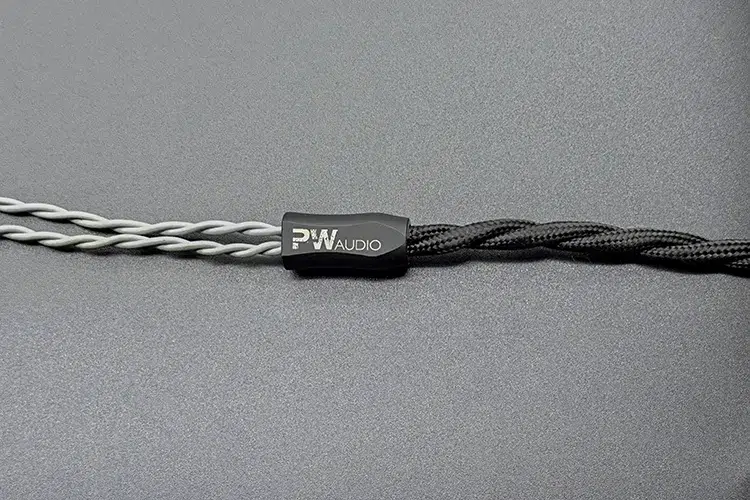
Most of PW Audio’s premium cables have a similar look and feel, with a minimal all-black theme, at least from the termination adapter to the splitter.
Here, the wires above the splitter to the 2-pin connectors are without any external sleeve, making them feel a bit rubbery and less sturdy.
The outer black layer of the cable is made of soft PE. The cable is on the stiffer side and takes up more space when coiled. The hardware, such as the Pentaconn OFC 4.4 mm plug, splitter, and 2-pin connectors, is well-built and durable.
Compared to the Palladium Fusion Hybrid, this PWA cable feels quite minimal in design, but the build is solid and very durable. Palladium Fusion Hybrid plays tricks with the conductors, showing off through the transparent sleeve and the vibrant color of its hardware.
Performance
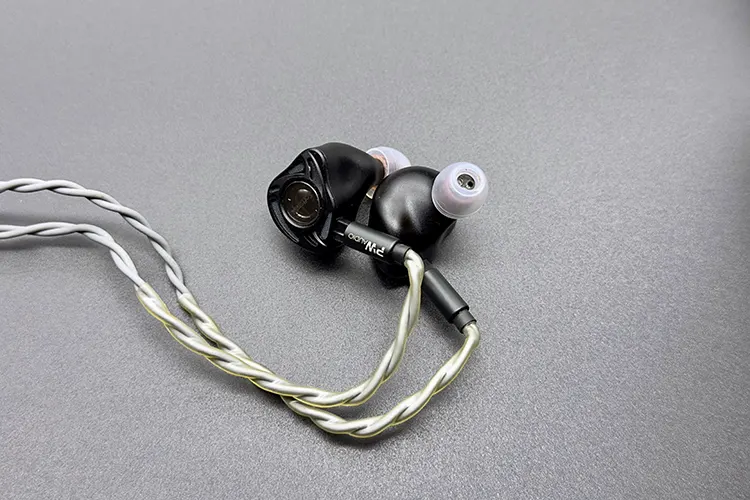
PWA 1950S has this dark, silent background thing as its secret sauce, and it pulls details out almost effortlessly. It is a copper-only cable, but it does not behave like the usual warm-and-thick copper stereotype.
Palladium Fusion Hybrid is the more aggressive one. It pushes resolution and definition harder, and it is not shy about adding energy where it can.
In the low end, the 1950s adds a lot of texture and makes the bass feel more “felt” and more physical. Palladium Fusion Hybrid is the opposite tool.
If your IEM runs heavy in bass and you want to declutter the mix without killing the punch, Palladium Fusion Hybrid is the easy pick. It feels more controlled, tighter, and cleaner, and it stops bass from bleeding into everything else.
Midrange is where the difference becomes more about taste. The 1950S gives you clarity, but it keeps the midrange more emotional. Vocals and instruments stay smoother and calmer, with a natural tone that does not feel overly lit up.
The Palladium Fusion Hybrid goes for definition and detail first, and yeah, it can sacrifice some naturalness in the process.
Treble follows the same pattern. The 1950S still lifts the top end, but it is more controlled and less aggressive than Palladium Fusion Hybrid.
It does not throw as much air or sparkle, and it does not have that ultra-crisp, boundary-pushing treble energy. The Palladium Fusion Hybrid lights up the top end more, for better or worse.
Staging is interesting because neither one is “small”; they just emphasize different dimensions. The 1950S gives you better stage height, that tall and open vertical stretch.
The Palladium Fusion Hybrid, though, wins on depth and front-to-back layering. It opens the stage further and sharpens the picture at the same time. Imaging is stronger on Palladium Fusion Hybrid, while the layering goes to the 1950s.
PLUSSOUND Hybrid XL
Technical
The PLUSSOUND Hybrid XL was released last year. It uses a 7-group, quad-layer coaxial Litz layout, with densely packed bundles arranged in a symmetrical ring.
Inside the 7-group bundles, they’ve braided three UP-OCC pure copper bundles and four UP-OCC pure silver bundles.
Each strand is enamel-coated to keep electrical anomalies and oxidation at bay. PLUSSOUND uses its proprietary PS Insulation on the outer sleeve. Like the Palladium Fusion Hybrid, this one is also cryogenically treated to stabilize long-term performance and improve durability.
Design
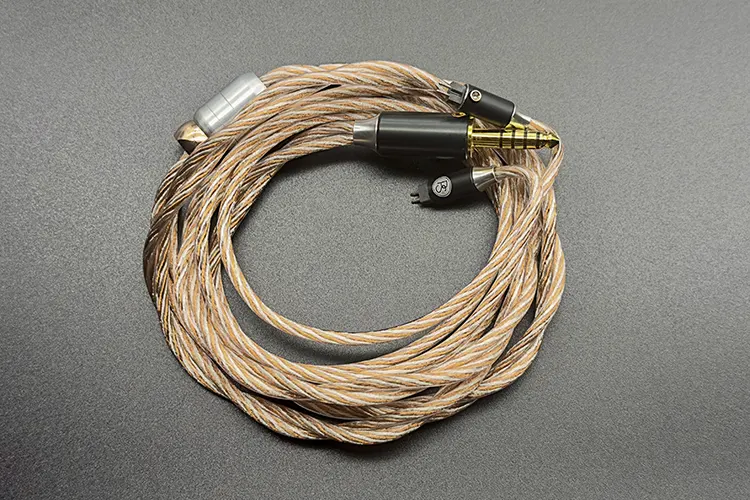
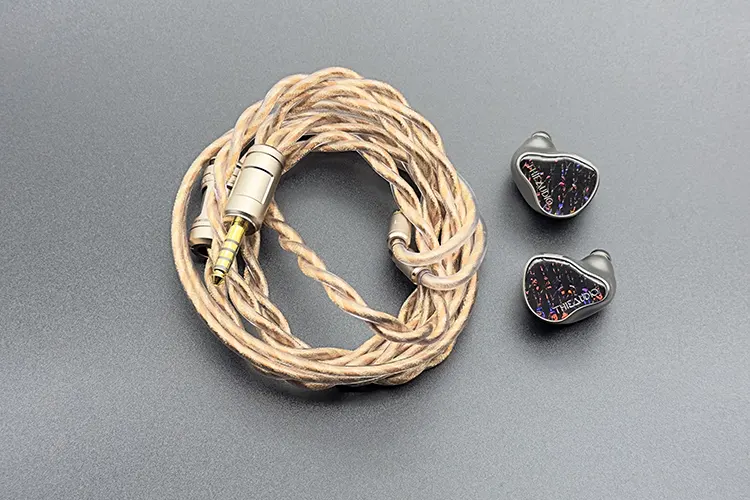
The outer sleeve is transparent, so the conductors show off. You can see the copper-and-silver twist inside, with a softer glow instead of the shinier look of the Palladium Fusion. The hardware is similar on both cables, just silver collars on the ends here instead of the burgundy on the Palladium Fusion.
The Y-split is simpler on the Hybrid XL, too, just a basic metal piece without much finish. The chin slider is similar as well.
Hybrid XL is thicker and a bit less effortless to handle, though I still find it manageable overall. It does take up more space in storage. The packaging is basically the same, and Palladium Fusion does not get any special treatment there.
Performance
Hybrid XL feels like it polishes the presentation with a bit of warmth and ease, while Palladium Fusion Hybrid is more like turning on a brighter light in the room as it chases resolution and separation first.
In the low end, Hybrid XL adds a bit of body and gives bass notes a slightly richer feel, but it does not have that ultra-clean, hyper-detailed bass treatment Palladium Fusion Hybrid delivers.
Texture becomes easier to read, bass lines separate better, and the low-end stops crowding the mix. If you want just a pinch of warmth and a bit more fullness in the lows, Hybrid XL makes more sense.
In the midrange, Hybrid XL makes vocals and instruments feel lusher and a bit more relaxed. There’s a sweetness to the tone, so the musicality is not lost.
The Palladium Fusion Hybrid, on the other hand, is more neutral and more energetic. It sounds cleaner, sharper, and more transparent, almost a bit etched in comparison.
Treble also has an obvious difference. Palladium Fusion Hybrid brings more sparkle and more air, and it can feel a bit over the top if your IEM already runs bright or has a hot treble. It does not really relax the top end; it highlights it.
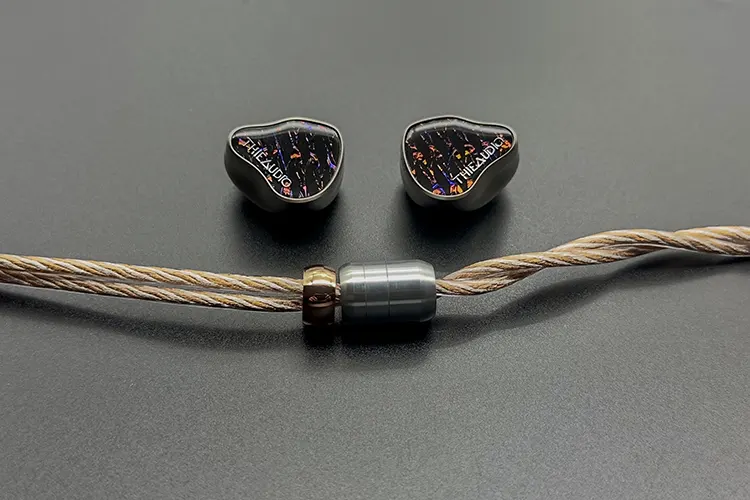
The Hybrid XL feels safer here, and for sets like THIEAUDIO Valhalla, I would personally choose Hybrid XL because it adds a touch of musicality to a neutral midrange and slightly takes the edge off a spicy treble.
Hybrid XL does not compete with what Palladium Fusion Hybrid does on the stageing especially in depth. Palladium Fusion Hybrid brings a more noticeable change in how the space opens up and how sound projects.
Imaging and layering also feel stronger and more precise on Palladium Fusion Hybrid, with instruments getting clearer placement and more breathing room around them.
Effect Audio Fusion 1 2025
Technical
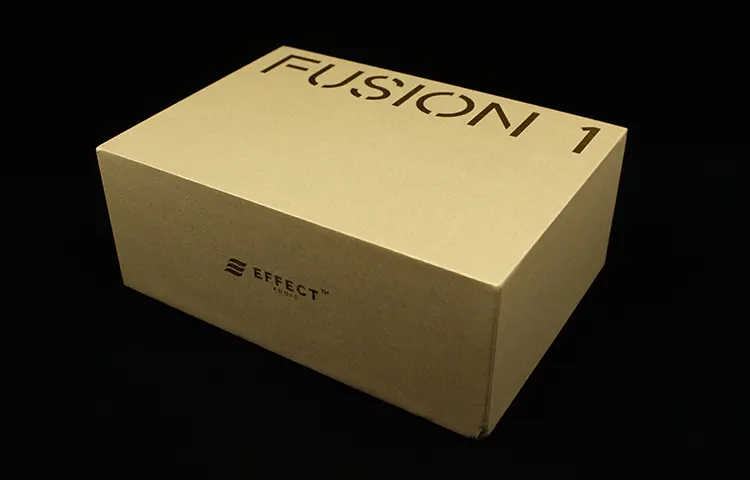
Fusion 1 2025, released towards the end of 2025, sits at the top of the recently launched Horizon Series lineup from Effect Audio. It uses a 21 AWG gauge in a 2-wire configuration.
The build mixes Gold-Plated Silver, Pure Silver, and a few copper variants around a central solid copper core. The internal geometry, called Tri-Strata Layering, uses 40 multi-sized core bundles with a Solid Core Design.
Design
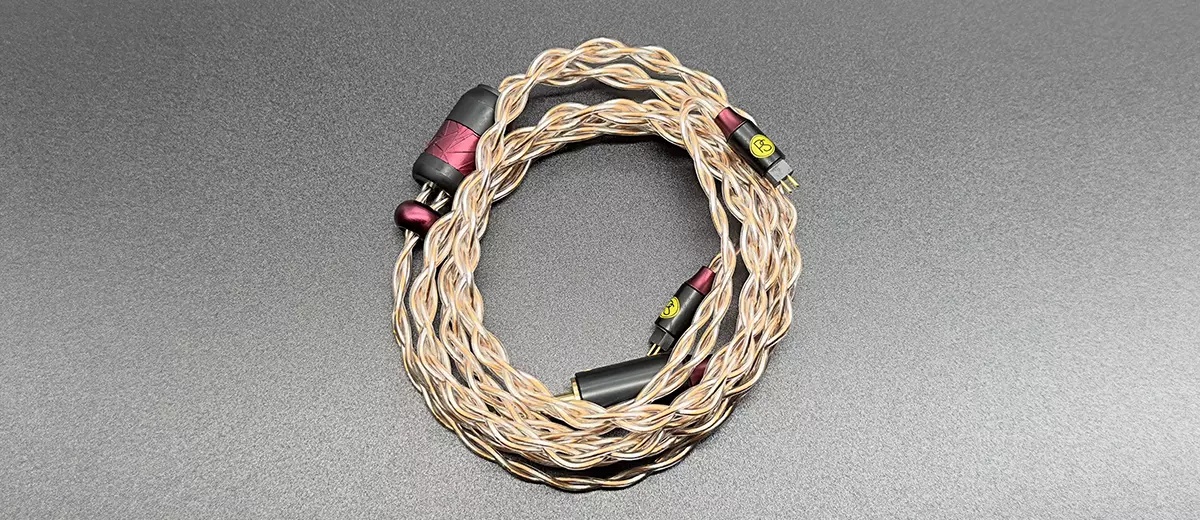
The conductor arrangement gives off similar color vibes as on the Palladium Fusion Hybrid. Fusion 1 2025 is a two-wire design, but it has a thicker build and a stiffer feel. It uses Effect Audio’s EA UltraFlexi™ insulation on the outside, which feels more rugged but also noticeably less flexible.
The braiding is tighter and does not relax easily, so day-to-day handling ends up being more comfortable with the Palladium Fusion cable.
The hardware on Fusion 1 2025 is more blingy and leans into that luxurious vibe. Palladium Fusion’s hardware feels simpler and more toned down, but it still looks elegant.
Fusion 1 2025 also comes with Effect Audio’s ConX and TermX systems, so you can swap connectors and terminations and use the cable with more IEMs and sources.
PLUSSOUND, on the other hand, gives you a lot of customization when you place the order, but those choices are fixed once the cable is built.
Performance
Both cables share a similar “clean-up” intent, but they take different routes to get there. Fusion 1 feels like it tidies the presentation while keeping a bit of natural tone intact.
The Palladium Fusion Hybrid pushes harder, especially on resolution and energy. It is the more intense, more “high contrast” cable of the two.
In the low end, Fusion 1 tightens things up but also adds body, so the bass feels a little more filled-in and supported.
The Palladium Fusion Hybrid, on the other hand, can feel like it trims the bass shelf a touch. You might even feel the hit is slightly less padded, but the payoff is the cleanliness. The low end becomes more controlled, more separated, and less likely to smear into the rest of the mix.
Midrange is where they start sounding closer in intent. Both cables add clarity, and both can shave off a bit of lushness and richness in the process.
The Palladium Fusion Hybrid pushes more energy into the mix, making notes feel sharper and more upfront. Fusion 1 still feels a touch more natural, like it cleans things up but does not lean as hard into that etched, ultra-revealing vibe.
Treble is where the gap opens again. Both cables add energy, clarity, and that extra sparkle and air, but Palladium Fusion Hybrid takes it further.
It has that ultra-crisp, boundary-pushing treble style where notes feel taller, sharper, and more “highlighted.”
On the right IEM, it is addictive, but if your set already runs bright, Palladium Fusion Hybrid can push things toward fatigue.
Fusion 1 gives you more width and a more spacious feel overall, so the presentation comes off clean and well laid out. But Palladium Fusion Hybrid is the one that makes you sit up and go, “wait, the stage got even bigger.” Especially in depth, it stretches the space more noticeably.
My Verdict
PLUSSOUND cables are not gimmicks or fancy showpieces, and I think we can all agree on that. From what I have seen across their lineup, they have always had options that are not crazy expensive, yet the performance is consistently top-notch.
This time, though, they have pushed the game further. Palladium Fusion Hybrid is an excellent mix of design and performance, and it genuinely earns that premium tag. Nothing less.
The Palladium Fusion Hybrid is not a gentle seasoning cable. It is one of the most detail-forward cables I have used lately, and yeah, this is where the price starts making sense.
It does not try to charm you with warmth or thickness. It tries to show you more. It tightens the low end, cleans up warmth bleed, pulls the midrange into higher definition, and then lights up the treble with air and shimmer.
It feels built for people who want maximum resolution and a pure “show me everything” presentation. It is not here to make your IEM smoother or more laid back. It makes it clearer, sharper, and more revealing, and with the right pairing, it is honestly ridiculous.
The other big change is what it does to the soundstage. It pushes it wider and deeper, so if you thought your IEM’s stage was already wonderful, try this cable and surprise yourself.
The price can be a concern, sure, but considering what it delivers and how effortlessly it does it, it is hard not to respect it.
I genuinely wonder what the 8-wire version would be capable of; I’m pretty sure it would peel the paint off the music. If you are a cable enthusiast, put this on your to-try list, even if it is just to see what a seemingly easy-going cable can do.
PLUSSOUND Palladium Fusion Hybrid
- Spec: 25 AWg
- Materials: Palladium/Copper Alloy + Palladium/Silver Alloy
- Sleeve: Proprietary PS Insulation
- Plug: 4.4mm Balance
- Connector: 2-pin (Default)
