

Marcelo reviews the ONIX XM2, a new, non-Android, fully balanced compact digital audio player capable of up to 800 mW of output power. It is currently priced at $449.00.
Disclaimer: This sample was sent to me in exchange for my honest opinion. Headfonics is an independent website with no affiliate links or status. I thank ONIX and Shanling for their support.
Click here to learn more about the ONIX products previously discussed on Headfonics.
Note that this article follows our current scoring guidelines, which you can read here.
I never knew ONIX has been around since 1979, founded in England, but has changed ownership throughout the years. I only became aware of ONIX when they released the ONIX Overture XM5 and Waltz XM10 Ltd in mid-2024 and early-2025, respectively.
I’ve always held ONIX DAPs in high regard. I’ve read good reviews, and especially after hearing both the Overture XM5 and the Waltz XM10 Ltd in audio stores during a trip to Japan, my expectations are high for the Tocata XM2, which sells for $439.
The specs of the XM2 wowed me when I checked the product page, saying it features a new flagship DAC chip, an OLED touchscreen, and a whopping 800 mW of power output in a compact form factor.
Will the new DAC chip and high output power translate into improved sound over the competition, including the Shanling M3 Plus and the HiBy R3Pro II? Let’s find out.
Features
The ONIX XM2 or Tocata XM2 is a compact, non-Android DAP that uses an Ingenic X2000 system-on-a-chip with an in-house-developed Linux-based operating system.
The XM2 has the latest flagship DAC decoder chip, a powerful amplifier designed to drive demanding loads including headphones, a clear OLED touchscreen, and more.
DAC
The XM2 utilizes the latest DAC chip from CIRRUS LOGIC, the flagship CS4308P, a next-generation 8-channel DAC enabling a fully balanced circuit design.
This promises a major leap in resolution, dynamic range, and tonal accuracy compared to the company’s previous chips. It can decode Hi-Res Audio up to PCM 32-bit768kHz and native DSD512.
I don’t believe any manufacturer’s promises right away; whether the new DAC chip really improves resolution, dynamics, and tonal accuracy is for the ears to confirm.
Amplification
After the CS4308P, the audio signal goes through current-to-voltage (I/V) conversion using ONIX’s own circuit called the “Brighton” I/V conversion architecture.
This architecture is based around two OPA2211s, which are low-noise, low-power-consumption, precision, wide-bandwidth dual-channel op-amps manufactured by Texas Instruments.
For the final stage, the signal goes to two SGM8262-2 op-amps, which are ultra-low-noise, high-current dual op-amps for balanced amplification to drive IEMs for headphones.
The XM2 is capable of up to 204 mW in SE mode with a 32Ω load, and up to 800 mW balanced under the same load.
Design
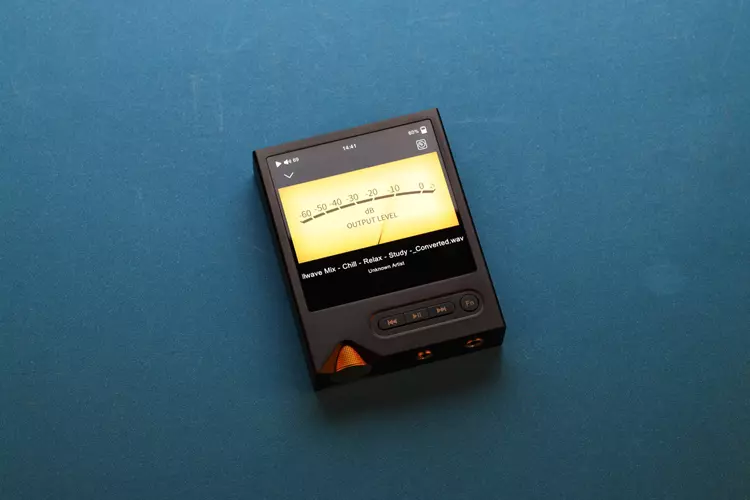
The XM2 is a delightfully compact DAP that fits comfortably in my hand. I like the black, squarish, rectangular, one-piece, full-CNC-machined aluminum alloy body with slightly radiused sides to prevent them from digging into my palm.
It has a glass-metal-glass sandwich design, with a glass back cover and a 3-inch OLED Touch Screen on the front.
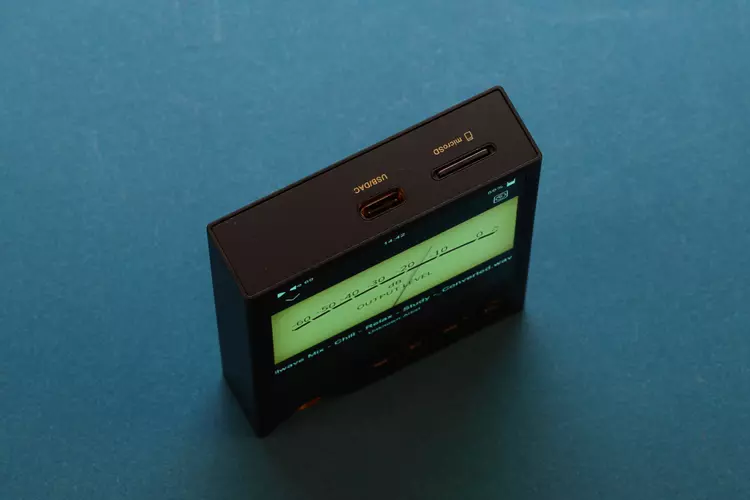
The front also includes four buttons. The left and right sides are plain and blank. On top are the USB-C data and charging button, and the microSD memory card slot.
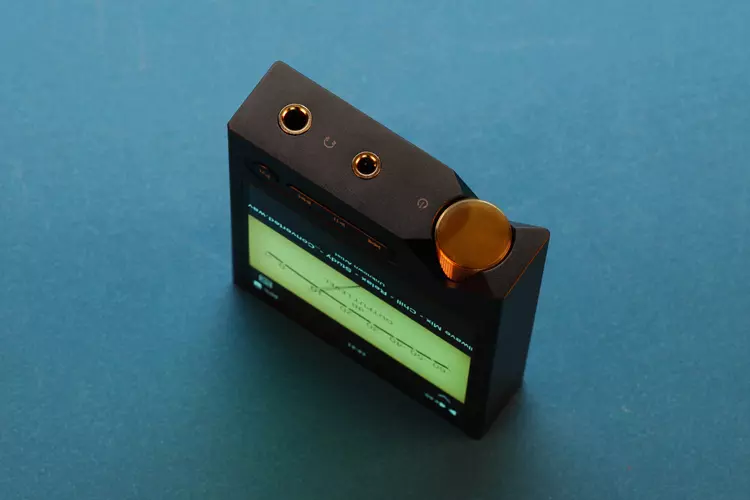
At the bottom are the 3.5mm and 4.4mm output jacks, and the classy-looking gold-plated power and volume knob. This design is beautiful and unique looking in today’s market of look-alike DAPs.
The XM2 is a small, palm-sized DAP measuring 82 × 65 × 18 mm and weighing 140 grams. It is very pocketable and perfect for daily use. Still, I wish it were thinner.
One of the things I like about the XM2 is its 3-inch OLED screen, which is unusual in today’s DAPs, most of which use IPS LCD screens. As you know, OLED screens offer excellent contrast, black levels, color, and viewing angles.
I/O
The XM2’s USB-C port at the top can act as either a USB DAC or a USB Digital Output, in addition to serving as the charging and data port.
While the 3.5- and 4.4-mm headphone output jacks can act as line outputs to drive external amplifiers, they are not truly dedicated line outputs; rather, they are fixed-volume outputs connected to the same circuit as the headphone outputs.
Controls
Having only four metal buttons at the front, which are the back, play/pause, forward, and the function button, and the power and volume knob at the bottom.
The XM2 is very easy to use. Controlling the XM2 is very refreshing, as it’s controlled at the front, where you can see which button your finger lands on, unlike the side buttons on most DAPs.
Additionally, there is no rattling from the buttons when I shake the XM2, indicating precision in its design and manufacturing.
The gold-plated volume control knob also acts as the power button when long-pressed, and the screen on/off button when short-pressed. I like that when turning the knob to adjust the volume, I can feel mild dents as I turn the knob.
Battery Life
The XM2 uses a 3000 mAh battery, rated to last 8.5 hours per charge.
I did my own test, and I got from 100 percent battery to 29 percent in about 5.5 hours using the Punch Audio Portazo IEM in balance mode, low gain, and at 50 percent volume, which is my normal listening volume and loud in this setup.
That said, I could tell the battery life rating is true. Charging is reasonably fast. In my test, I got from 19 percent to 80 percent in one hour, so I estimate that charging from 0 to 100 percent should take about 2 hours or less.
Packaging & Accessories
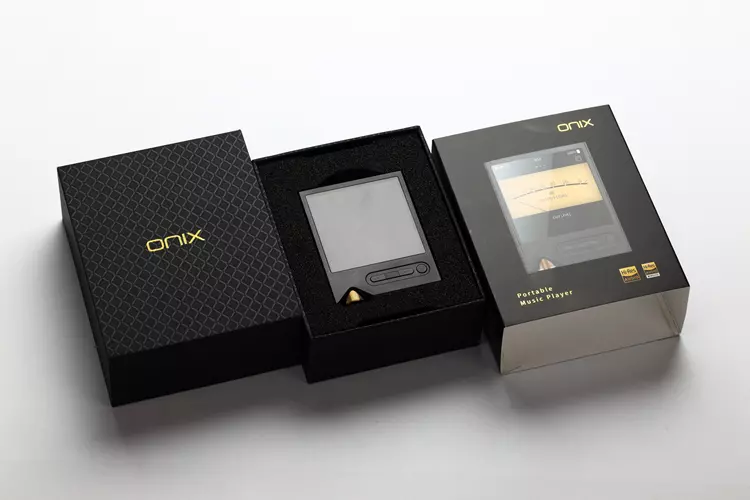
The XM2 ships in a cute-looking box that, from a distance, appears to be an IEM box, measuring only 138 x 115 x 54 mm. The packaging design is simple and practical, yet it offers good shock protection for the XM2 by incorporating foams and cardboard dividers.
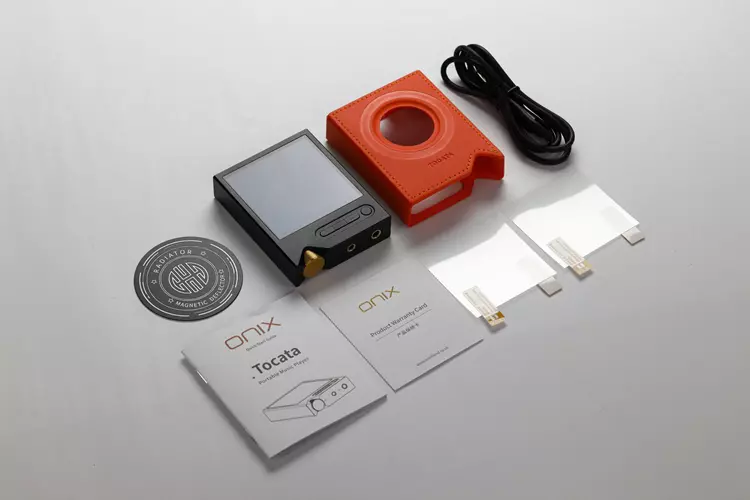
The Package includes the XM2, a user manual, a warranty card, a 1-meter USB-A-to-C cable, and two screen protector films.
Protective Case
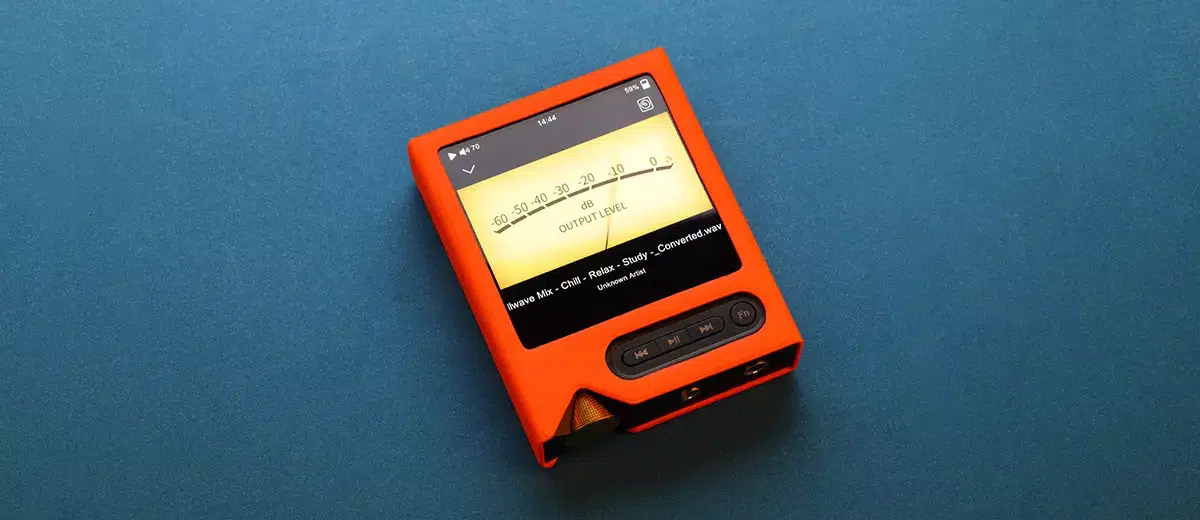
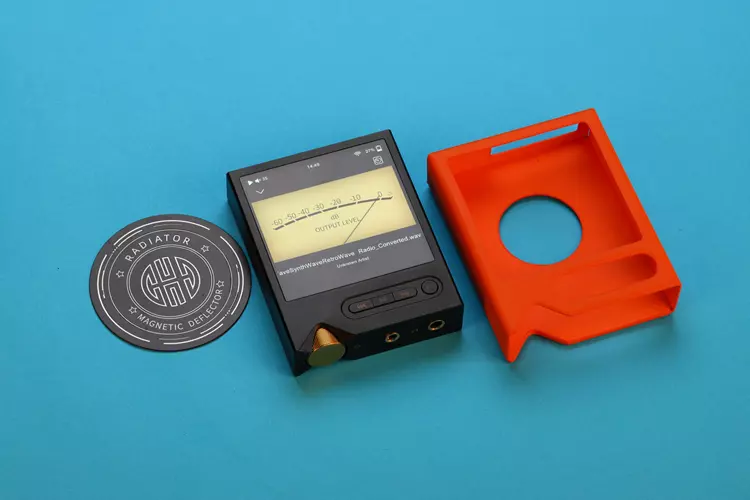
My review sample came with an attractive-looking orange leather case and a thin, circular metal plate with decorative print reading “radiator” and “magnetic deflector,” which magnetically sticks to the back of the case, presumably to radiate more heat.
The leather case is a separate purchase, available in orange, cyan, and black, and sells for $28.
Software
The Ingenic X2000 platform that powers the XM2 runs a highly optimized in-house music operating system focused purely on sound performance.
Free of smartphone-style distractions, it promises a responsive user interface, stable playback, and uninterrupted sound. Music can be played locally from MicroSD cards, streamed via Tidal, or accessed through DLNA and AirPlay for a seamless listening experience.
I am currently running firmware version 1.13, which is the latest at the time of writing.
Navigation
Push and hold the volume knob for about three seconds to turn on the XM2. It then boots for about eight seconds, totaling 11 seconds to start using the XM2, which is faster than the average Android-based DAPs.
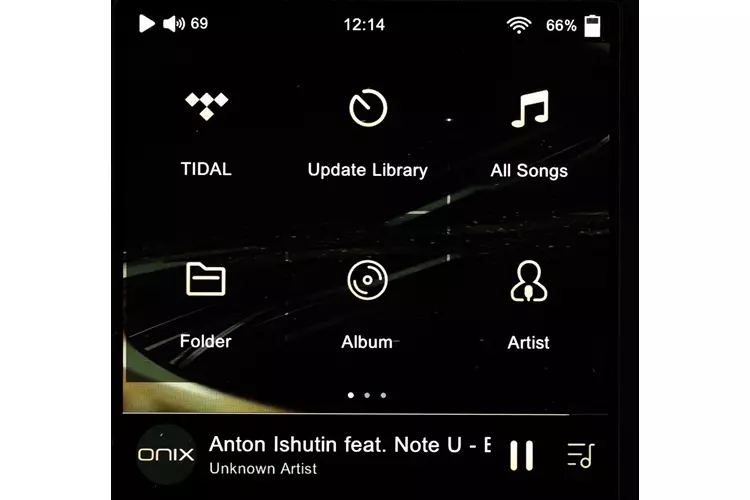
XM2’s UI is easy and intuitive, so I never have to consult the manual to enjoy it fully. After inserting a MicroSD card that’s loaded with music, I only have to click the update the library icon on the first page of the menu, then go to the ‘all songs’ icon next to it to enjoy the music.
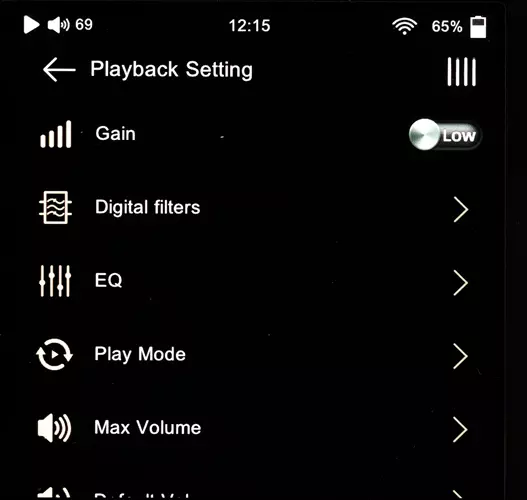
On the third page of the menu, there is a playback setting icon, where you can adjust the gain (lo/hi), which is also available in the drop-down shortcut menu.
There are also four digital filters to choose from, and a customizable 10-band graphic EQ with three custom settings and eight presets.
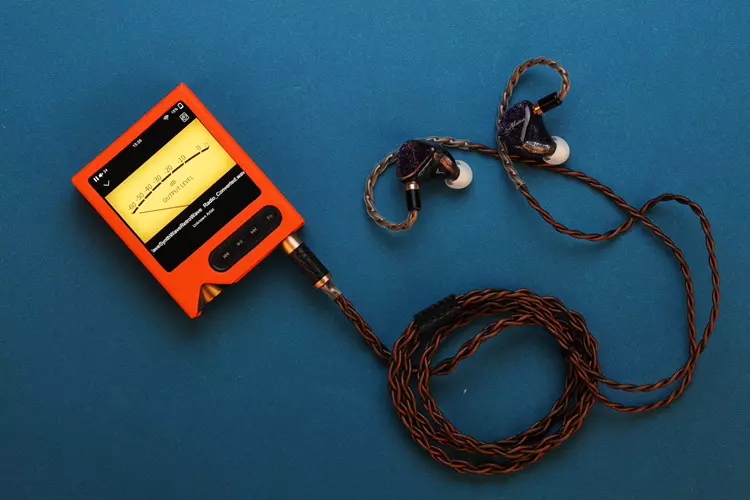
In the music player UI, there is an option to display an analog VU meter for output level. However, it is not an accurate VU meter because it is independent of volume level, and the needle is too slow-acting to accurately represent the music.
Navigation is generally fast, and the touchscreen is responsive. However, during my initial use of the XM2, I experienced occasional lag and touchscreen freezing.
This issue was completely resolved after I performed a factory reset, following Marcus, the owner and editor-in-chief of Headfonics, who advised me to do so.
I did, however, notice a slight insensitivity to touch control when my finger was dry, due to spending too long in a room with AC and having callosities, which never happened on my phones.
I found a solution by lightly wetting my finger; the touch control then became responsive.

Third-Party Music Players
Being a proprietary operating system, installing a third-party music player app is unfortunately not possible. This is the main downside of non-Android DAPs.
I’m not saying the default music player is bad; it is actually good, but I like the PowerAmp music player app better, with its moving, movable waveform-type music progress indicator that can be manipulated more accurately, especially on very long music mix tracks.
Streaming
The Tidal streaming app is built into the XM2. Unfortunately, it is not available in my country, the Philippines.
Because it runs a non-Android operating system, I am unable to install my favorite music streaming apps, such as YouTube Music and Spotify.
Sound Impressions
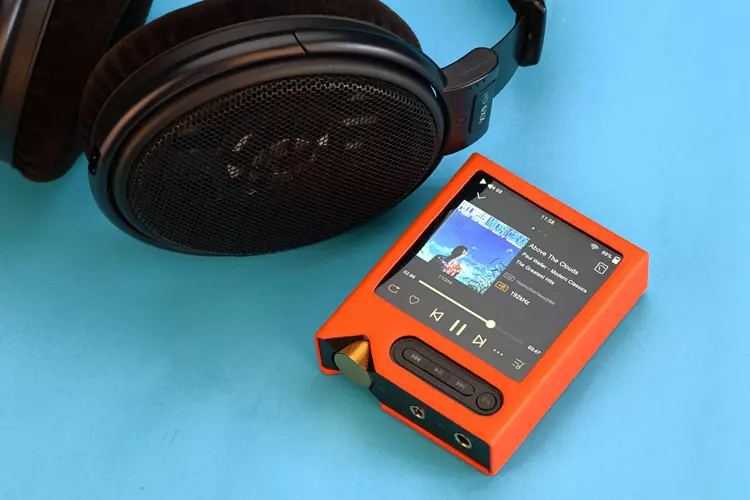
For the sound evaluation, I used a wide variety of ear speakers, including the Tipsy M5, Binary Audio EP321 MEMS, QoA Martini IEMs, Sennheiser HD 6XX, FiiO JT3, FiiO JT7, and Moondrop Horizon headphones.
Instead of doing my standard 24-hour burn-in, I did more than 50 hours of burn-in as I was busy with other reviews and could not review the XM2 right away. And also to test the battery life and charging times.
As for the sound settings, everything is in the default mode: the filters are set to linear phase/slow roll-off (the default), the equalizer is turned off, and the gain is set to low for IEMs and high for headphones.

Summary
I’ve heard many DAPs in a price range similar to the XM2, and most of them have some kind of issue, including a dry sound, a flat soundstage, being too warm, low perceived resolution, and coloration.
Fortunately, the XM2 uses a new DAC chip that I’ve never heard of before, and from what I’m listening right now, it offers a different sound from older chips.
The first thing I noticed about the XM2 was that the sound is clear, clean, and powerful, which is noticeably clearer and cleaner than most DAPs in its price range.
The XM2 has powerful, energetic bass, a neutral, uncolored lower and upper midrange, and a clean, uncolored treble with a subtly relaxed upper treble.
The bass is punchy, deep, detailed, and well-controlled. The lower and upper midrange is neutral and free of coloration; the treble is highly resolving yet smooth-sounding and airy, though I noticed a subtle relaxation in the upper treble.
I tried other digital filters in the settings to see if they change the upper treble, but they don’t.
I like how natural the sound is coming from the XM2, as I don’t hear the energy bump in the lower treble that some DAPs with older ESS Sabre DAC chips exhibit.
The overt warmth of some DAPS with AKM DAC chips; XM2 also doesn’t have the slightly dry sound I often hear from DAPs with CS43198 chips, or the perceived lack of resolution I often hear from DAPs with CS43131 chips.
I hear very detailed, high perceived resolution, and there is practically no coloration, as XM2 sounds very transparent and natural.
The XM2 is not super analytical-sounding, as it does not offer as forward or dry a presentation of details. Yet I cannot call it an analog-sounding DAP either, as the sound is very neutral and too detailed for that; it is in between.
Timbre
The XM2 has a very natural timbre; the instruments and vocals sound transparent with no added brittleness, softening, nasality, or any coloration.
But if I have to nitpick, the transient responses aren’t as crisp or as fast as the best I’ve heard. This is due to the subtle relaxation in energy in the upper treble that I mentioned above.
Staging & Dynamics
Although the XM2 doesn’t have the biggest or grandest soundstage I’ve heard, it is definitely good and spacious enough that it doesn’t leave me wanting more. The XM2 has a soundstage that, if I were not critiquing it, I wouldn’t even think about, enjoy, or get lost in.
The soundstage is as wide as it is deep, with good height. There is good layering and separation of the vocals and instruments with plenty of spaces in between.
I also hear good background cleanliness, allowing the vocals and instruments to decay cleanly with long reverbs and echoes.
XM2 has no problem powering all my IEMs and headphones, including the difficult-to-drive ones, making dynamic headroom a non-issue thanks to its 800mW power output.
The XM2 sounds energetic, especially in the bass, even at low volumes, without being annoyingly so.
I never heard the XM2 clip its output; the sound is always clean, even at higher volumes. It’s always the IEMs, headphones, or my ears that would surrender first.
Click on page 2 below for my recommended pairings and selected comparisons.
