

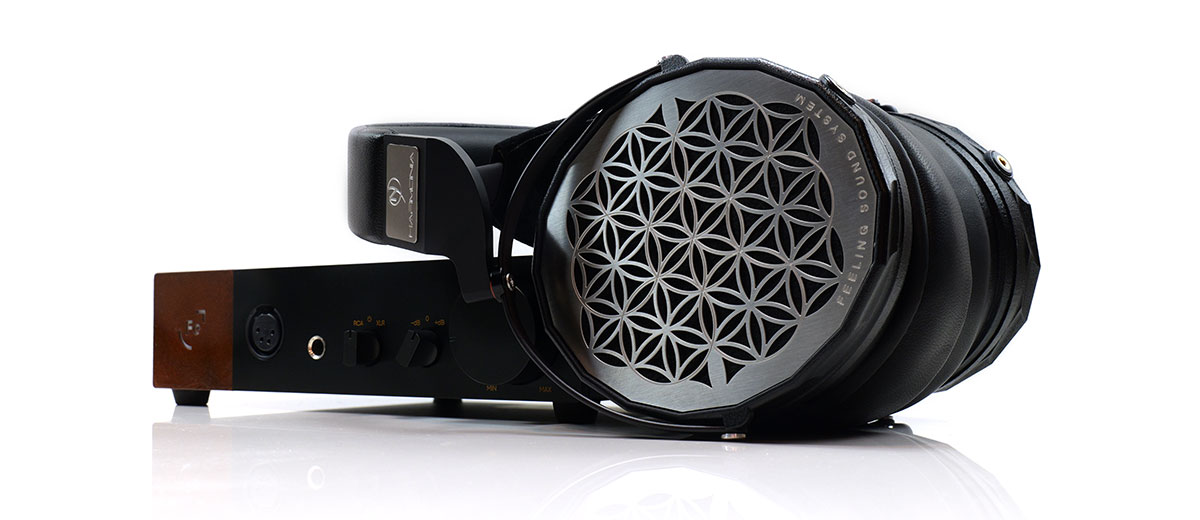
Marcus reviews the Nur Harmonia, a set of flagship-level open-back Planar magnetic driver headphones with Feeling Sound System technology. It is currently priced at €3161.00.
Disclaimer: This sample was sent in exchange for my honest opinion. Headfonics is an independent website with no affiliate links or status. I want to thank Nur Headphones for their support.
Click here to read more on the Planar headphones we have previously reviewed on Headfonics.
This article follows our current scoring guidelines, which you can read in more detail here.
Italian boutique manufacturer Nur Headphones are a new brand to me, and it seems they are relatively fresh on the audiophile market, having launched their product lineup just last year.
The Nur Harmonia is their debut release. This is a flagship-grade planar magnetic headphone, priced at €3,161, featuring a proprietary filter system called ‘Feeling Sound’ that promises a level of flexibility in terms of preferred sound signature.
This is an ambitious price point to pitch your first set of headphones. It’s mixing with established planar headphones at similar prices, such as the ZMF Headphones Caldera, the Dan Clark Audio EXPANSE, and the Audeze LCD-4z.
And yes, I chose those 3 brands because I remember when all 3 companies were starting with their first set of boutique-level headphones, and now look where they are.
Is the Nur Harmonia set to push the company on a similar path, or a case of too much too soon? I will provide more details in my full review below.
Features
The Nur Harmonia is a set of open-back circumaural-sized planar magnetic headphones.
Inside is a fairly large 105mm driver housed in an aluminum frame with a dual N52 magnet array and a ‘Uniforce’ double-sided 3-micron thick PEEK (Polyetheretherketone) diaphragm, meaning the voice coil is printed on both sides of the diaphragm, providing a uniform electromagnetic force across the entire surface.
The Harmonia is rated at 48Ω for impedance with an SPL 107 dB/mW (+/- 1.5 dB) @1kHz (179mV, 10mm).
This is broadly in line with more efficient modern planar headphone performances. A good amplifier will make it sing, but it will not collapse like a deck of cards on more moderate levels of power.
The unique differentiator for the Harmonia is the accompanying ‘Feeling Sound’ felt filter system, comprised of 4 different pairs of felt tips designed to effect a change in the sound signature of the headphones when inserted under the detachable pads.
This methodology reminds me of how Dan Cark Audio approached sound tweaking with insertable felt pads before switching to their more modern AMTS 3D-printed technology.
It is not without substance, one which I will speak more about in more detail in my sound impressions on page 2 of this review.
Design
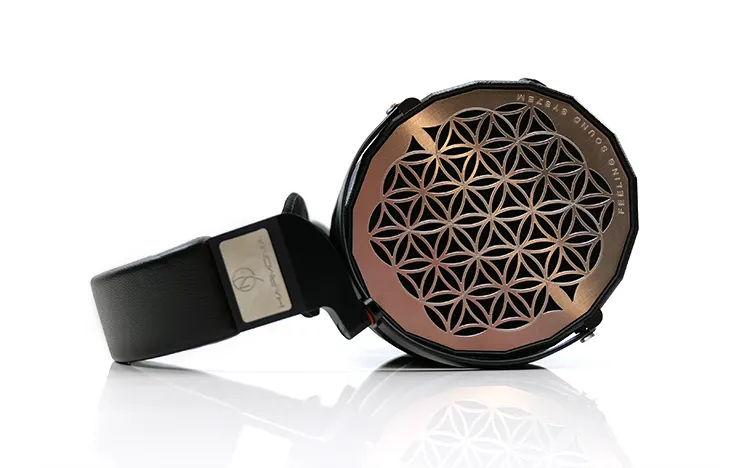
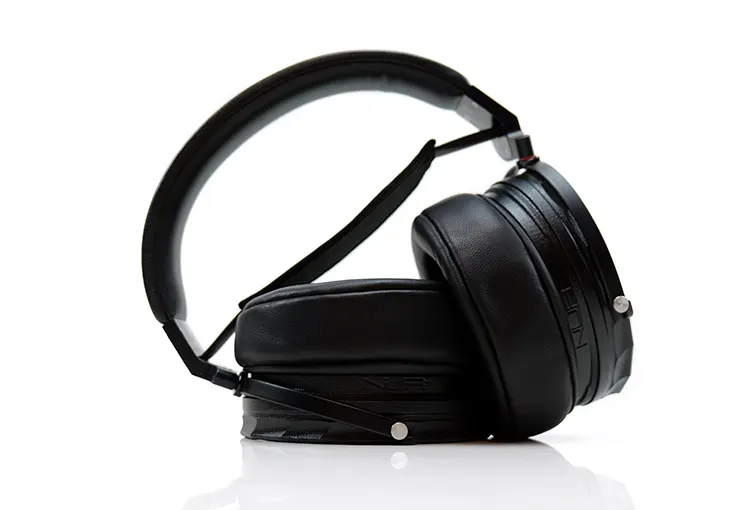
The Harmonia is a big headphone, a classic planar design in every sense. It is not without style; the patterned raw 301 stainless steel grill and matching pivot-branded plates are subjective standouts that give it a unique aesthetic.
At 630g, the Harmonia is considered a heavy headphone with a classic round-cup architecture not too dissimilar to the older LCD series from Audeze. In fact, there is some visual overlap with the 180-degree articulating yokes fixed in place with some silver-topped screws.
I do see some weight reduction efforts with a Carbonylon frame, which is a fairly strong but lightweight material finished via 3D printing to create the Harmonia cups.
The quality of the 3D printing is decent, albeit slightly raw in parts, but not something that would stand out to my eye as being overtly DIY in nature. The small ‘NUA’ motif etched into the side of the cup molds does help with personalization efforts.
The one negative critique I have is the leather headband, which feels a bit off-the-shelf and slightly at odds visually with the more rustic elements of the cup finishing.
That being said, the additional suede-finished pressure strap is a clever move, as headbands of this type with headphones of this weight are from the last decade in terms of comfort.
Comfort
Many people will look at the weight of the Harmonia first and dismiss it as an uncomfortable headphone. The truth or the actual wearing experience is somewhat different in my experience.
The inclusion of an elasticated pressure dissipation strap that self-adjusts according to your head size, along with some very thick and luxurious angled protein leather pads similar to the classic Audeze LCD pads, mitigates many of the potential fitting problems with the Harmonia.
In short, it’s very comfortable, with no uneven pressure hotspots, and the clamping is not too obvious on the lateral areas. It’s also very gentle on the roof of my scalp.
There is a small amount of movement when jerking my head around, as you might expect from the momentum a 630g headphone might generate. Otherwise, its pressure balance is excellent.
Given the headphones’ open nature and the deep inner cavities of these pads, very little of the pad walls came near my ears that would cause physical discomfort.
However, the detachable leather pads are not porous in nature and will generate a little heat and sweat over longer listening sessions.
Stock Cable
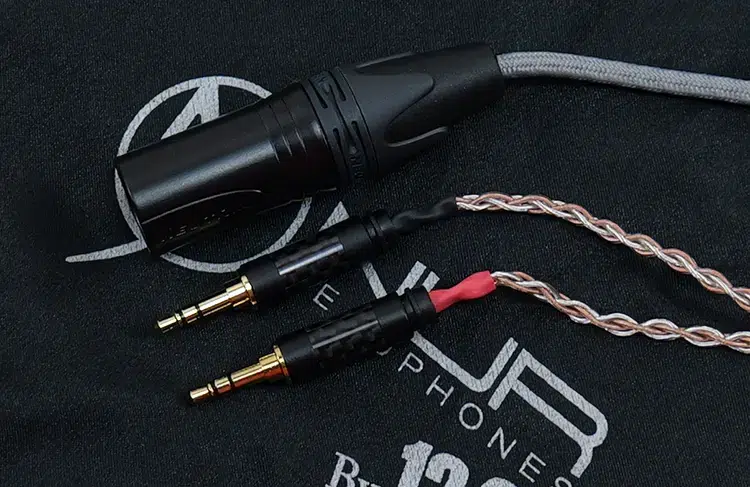
The Harmonia stock cable was designed in partnership with 1221hifilab and is one of those classic ‘split’ designs with a cloth jacket up to a carbon-fiber printed aluminum splitter and then braided translucent PVC jackets beyond and up to the 3.5mm connectors.
Aesthetically, it creates a two-tone effect with the grey cloth below and a mix of silver and copper above. It also has a slight contrast in handling with braided PVC wiring, significantly lighter and more flexible than the cloth jacketed wiring below.
I see several advantages there, as you really do not want a stiff and heavy cable anywhere near your cups and head for movement purposes. At the same time, you want the cable to remain tidy towards the bottom when connecting to an amplifier.
The wire inside is a mix of 6N OFC 8-core and 4-core copper with a 4-core 1-micron-thick silver-plated copper cable.
It comes in two length options, 2.2m and 1.5m, depending on your requirements, and can be bought separately on the website for around €200 should you wish to have both lengths.
The default termination is 4-pin XLR balanced, but you can opt for 4.4mm, 6.35mm, or 3.5mm depending on your needs. All cable options are terminated with 3.5mm plugs and black carbon-fiber printed barrels for the connectors.
Feeling Sound System
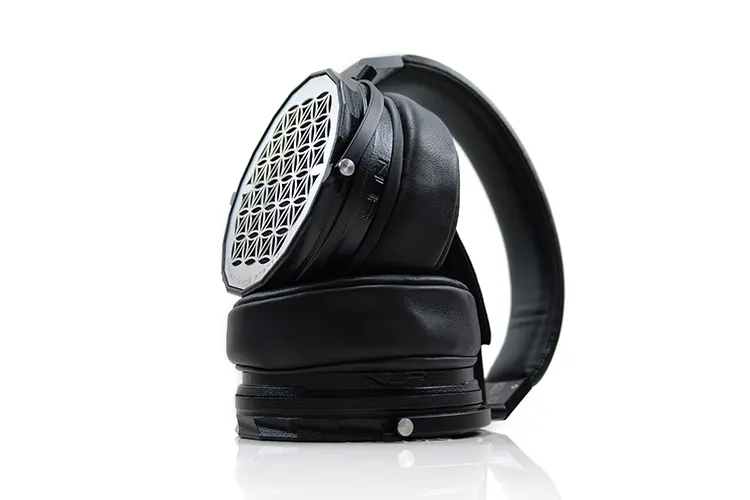
With detachable pads, fitting the Harmonia Feeling Sound System felt filters is quite easy.
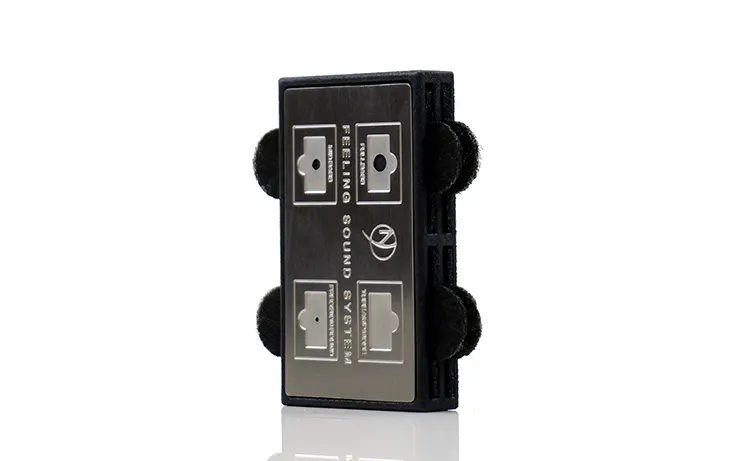
There are a total of 4 filters provided (2 pairs x 4) with no filters inserted as the default setting for the Harmonia headphones fresh out of the box.
Each one has a different effect on the tuning, ranging from flat or “precision”, varying levels of bass from “Full” to “Mid-bass”, and an interesting ‘Tube amp mode’ filter designed to work best with tube amplifiers.
Each filter has a hole that varies in size, with the full bass filter having the largest hole, down to the smallest hole for the precision filter. The only exception is the Tube amp filter, which has no hole for a 100% damping effect on the driver.
To apply them, you detach the pads and look for a similar-looking tray slot on the side of each cup above an integrated venting port. Simply slide the filter into each cup, taking care that the filters match, then put the pads back on.
The only critique I have is to watch out for the filters when you unbox the headphones, as the little organizing tray slots are not that effective in keeping them in place during shipping. I had to dig around to find mine and place them back in the tray.
Based on that experience, I wonder if a few spares or the ability to buy them online would be a good idea.
Packaging & Accessories
The Nur Harmonia packaging is about the same level as an Abyss DIANA DZ or JOAL retail box.
It’s not that flashy, but it gets the job done with a patterned and branded white retail box holding the headphones inside its accompanying carry case and various accessories just underneath.
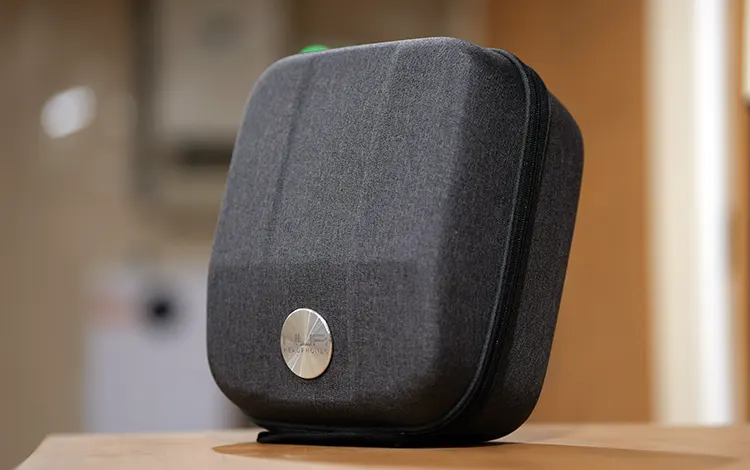
The Carry case is a Geekria OEM. I know this type of case as I have about 20 of them here, and generally order about 1-2 every quarter. They can cost as low as $20 up to $50, depending on complexity and size, direct from China, but can cost more on Amazon.
This Geekria zippered fabric case version is on the large side, with excellent protection, and has been branded with an aluminum NUR logo disc, so there is a degree of personalization.
Whilst I would have preferred not to see Geekria-branded pouches inside a NUR-branded case, I can understand why the company went for this to house the Harmonia. I use them for headphones of a similar size and value, and they do a great job.
Aside from that, you get two pouches housing the cable and the Feeling Sound system tray, as well as a lovely, thick, and genuinely useful coffee table-style booklet that includes the individual FR measurements for each filter when applied to the Harmonia.
Click on page 2 below for my sound impressions and recommended pairings.
