

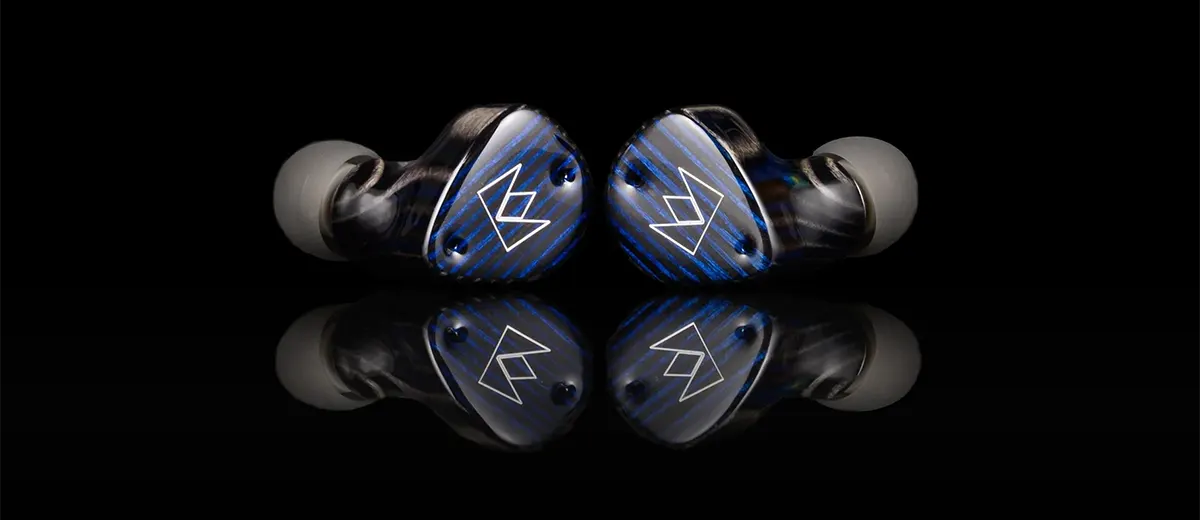
Lynn reviews the Noble FoKus Prestige Encore, a new ANC and LDAC-capable flagship TWS with a hybrid dynamic, planar, and BA driver design. It is currently priced at $699.00.
Disclaimer: This sample was sent to me in exchange for my honest opinion. Headfonics is an independent website with no affiliate links or status. I thank Noble Audio for their support.
Click here to read more about the Noble Audio products previously featured on Headfonics.
This article follows our latest scoring guidelines, which you can read in more detail here.

There is no doubt that Noble is known for producing top-tier or boutique IEMs, with many of their custom wares worn on stage across the planet and enjoyed by users alike, me included.
While I no longer own a dedicated IEM set, when I reviewed the Noble FoKus Apollo wireless headphone, I felt it moved right to the top tier in that segment.
With a build quality that puts many “high-end” wireless headphones to shame, and the sound qualities to back it up, the Apollo is a wonderful headphone.
Marcus also thought highly of the FoKus Rex5 TWS, giving high marks for a “dynamic & resolving sound,” along with good comfort. After all, what good is a wonderful listening device if the comfort does not complement that sound?
The Encore version of the Prestige TWS is a refinement of the OG model, building on its strengths, with 10 hours of performance with ANC off, and 7 hours on, along with up to 35 hours of charging capabilities from the case.
10 minutes will give you two hours, so there really is no excuse for not making long listening sessions possible, which I did, of course.
Features
An 8 mm dynamic driver covers the low end, supported by dual Knowles balanced armatures for the midrange. A new 6 mm planar magnetic driver is responsible for the high frequencies.
This purportedly allows for extra speed and delicacy of the music we hear. The result aims for greater separation and spatial definition, without the sharpness often associated with such tuning.
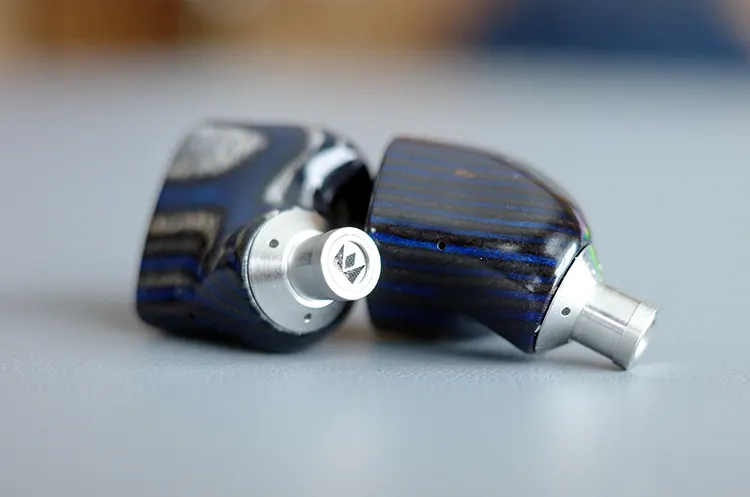
A redesigned triple-vented metal nozzle quietly improves bass consistency by managing airflow and seal behavior.
As I understand it, great care was taken in developing, building, and placement of the sound tubes and nozzles, resulting in less fluctuation of sound quality from one end to the other.
The Encore runs Qualcomm’s QCC3091 chipset, supporting aptX Lossless, aptX Adaptive, LDAC, AAC, and SBC, promoting high-resolution streaming where available.
Bluetooth 5.4 with multipoint pairing, and TrueWireless Mirroring is used across devices, while dual-microphone cVc noise suppression helps maintain a clean, natural vocal tone during calls.
Design
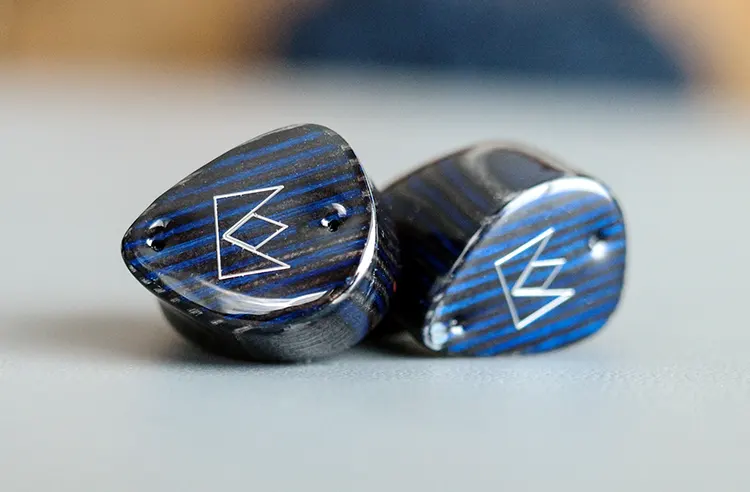
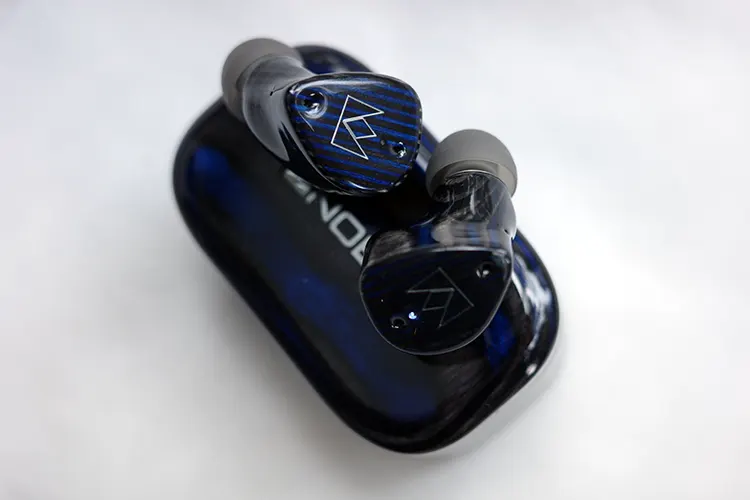
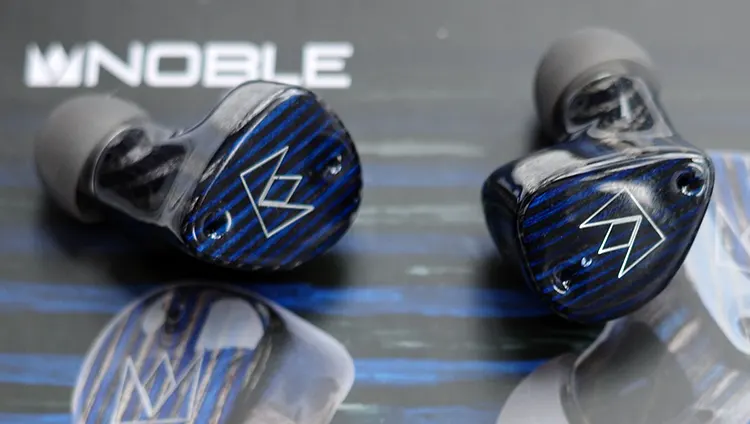
The shell housings and charging case are CNC-machined entirely from solid wood, for a full wooden construction. Each piece displays its own natural wood grain, ensuring that no two Encores look the same.
There is color added, differentiating each layer or “tree ring,” which also changes color when you move the TWS or case, much like the metallic color on a car would. This is a gorgeous TWS.
Made with a smaller, lighter shell, this makes for a premium finish and a stable, fatigue-free fit during long sessions. I was able to wear the Encore for a session from 100% to 0% (or charge needed) at least twice, without issue. Each time, I used different included tips to gauge comfort.
The nature of the protective layer covering the wood does mean fingerprints show a bit. But due to the dark color of each layer, this is a minor problem. I do wish for a bit larger concha bump, which would have given me a slightly better fit.
The Encore looks stunning, without being garish or drawing attention to itself, which seemingly fits the part Noble plays in much of their work.
Cradle
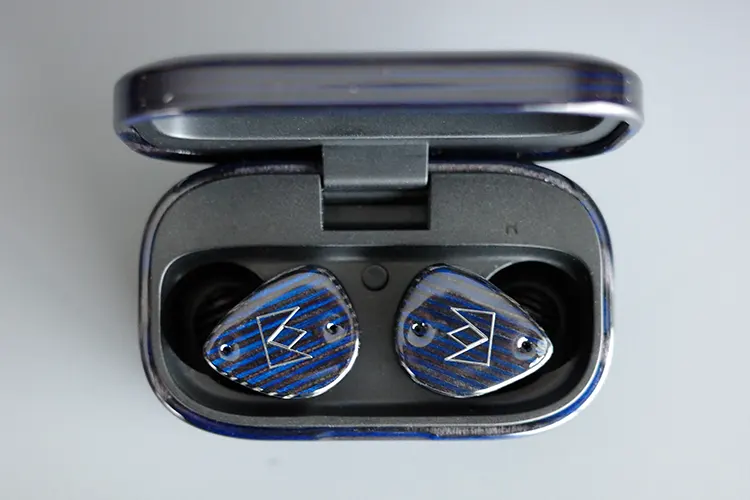
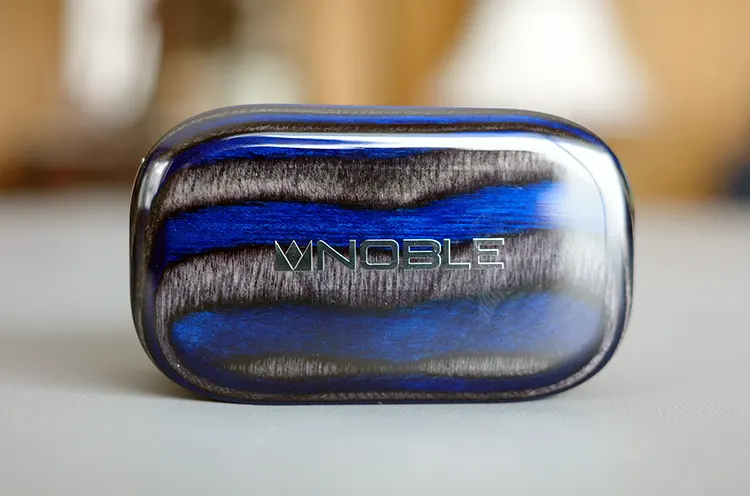
The case (cradle) is made from a single block of wood, with the necessary implements inside. The bottom has a plastic insert for protective duties, but I wish it were a bit stickier, like rubber, which would have made the case slide a bit less.
The case itself is also a bit slick, but it never slipped out of my hands. The button inside, used for pairing purposes, is a bit small, and I constantly bumped the earbuds while trying to pair the Encore. But pairing can be done from the earbuds themselves, without issue.
There are four blue LEDs on the front letting you know if each bud is charging, and how much battery life is left in the case. The USB-C port is on the back, so you can still read the front without issue.
Just like the earbuds, the cradle is stunning in looks, to me, with excellent ergonomics and build quality, and it can be used with wireless charging bases as well.
Battery Life
The earbuds contain a 65mAh battery, giving up to 10 hours of play time without ANC, and 7 hours with ANC on.
The case comes with a 500 mAh wireless-charging case, giving the user a potential total of up to 35 hours. A quick 10-minute charge provides about 2 hours of playback.
Through long, dedicated listening sessions, I was able to verify both the ANC off and ANC on times of 10 and 7 hours, respectively. The majority of my listening was done with ANC on, and I could consistently get close to the seven hours (or a bit more twice) run time.
I put in well over 75 hours of listening, including three long listening sessions without charging, and feel the listed numbers are accurate across the board.
I even let the unit run “dry,” and charge for exactly ten minutes after that. I achieved very close to the two hours mentioned, coming in at 1:53 hours for the single time I tried.
So, if you should forget to charge the unit, and remember right before the end of your day, a quick 10-minute charge will indeed get you a decent run of time.
Comfort & Isolation
Through the long listening sessions mentioned above, comfort never became an issue until the end of my time. Twice, I literally wore the units for 8-10 hours without removal.
Only near the end of each session did I feel a slight discomfort. And yes, I did take them out briefly occasionally.
Tip choice did not make much of a difference regarding fit or isolation. All sizes were excellent. The mounted medium tips were my tip of choice, and I was astounded at the non-active isolation. I could barely hear the tele or the waves crashing against our shore.
Once the music started, and I added ANC on, the external sound was nonexistent.
Ear Tips
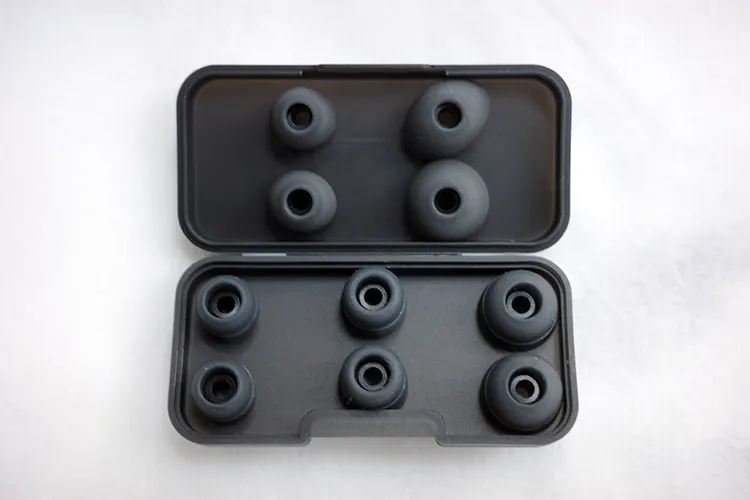
The tips included are of a high quality, and I was able to settle on the medium-sized, smaller-bore silicon types without issue. Six sets are included in small, medium, and large sizes with a narrow and wide bore (double flange, XS, S, & M in size).
The narrow bore enhanced the low end, without losing detail levels, while the wider bore opened up the midrange and treble, as expected. But I did note better isolation while using the single-bore tips, especially with the smaller two-sized tips.
That was one of the reasons I preferred the single bore, with the other due to my preferred sound signature. And, while the large single-bore tips worked, with excellent isolation and bass levels, I found the size was a smidge too big for long-term comfort.
I did not have any of my preferred aftermarket tips handy for comparison’s sake, but I really found no need.
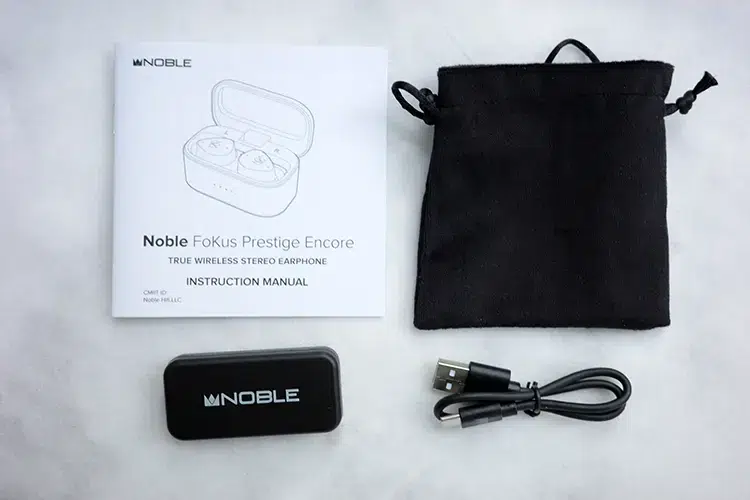
The case and ear tip case can be carried together in a properly sized cloth bag, as can the charging cable, and your other tips, should you desire.
Controls
Upon first opening the cradle, the Encore will automatically enter pairing mode. Finding the Noble was as easy as opening BT on the devices I used.
To pair with a new device, you must disconnect or forget the connected device, with the lid open, and the Encore will then automatically enter pairing mode.
Both ways, you will hear “connected” from the buds. You can then connect again to the other device if you choose.
Going between the two is automatic, such as listening to music from your computer, then answering a phone call from your smartphone. To reject the call, you press either earbud for two seconds.
Pressing the right bud for three seconds connects you to whatever voice assistant you have, while pressing the same on the left bud switches ambient modes.
A single click on either will play/pause the current music, while a double tap lowers the volume on the left bud and rewinds on the right bud. Triple-tapping the left will raise the volume, while the same on the right fast forwards to the next song.
While not entirely instinctive, I found the pattern easy to remember with multiple uses of the Encore.
Noble FoKus App
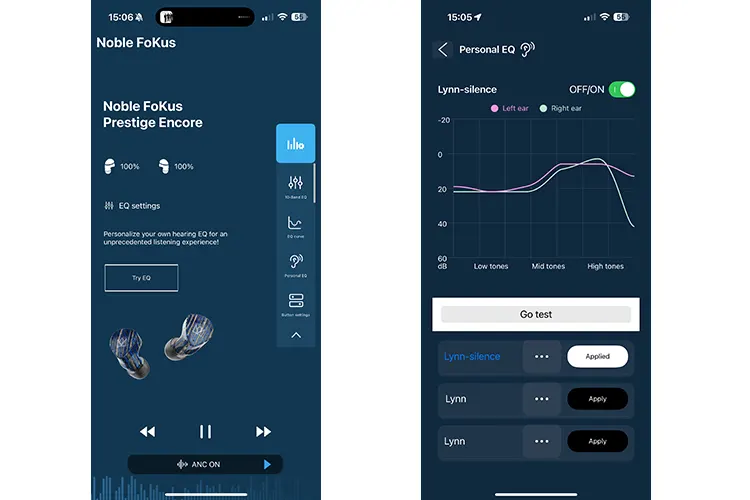
The same app I used for the FoKus Apollo is used for the Encore. It is a very competent app, with adjustments for personal EQ’ing, or the “stock” included.
While there is no PEQ, you can customize the equalizer using three “buttons” that can be lifted or lowered, AND moved around each respective region (bass, mids, treble).
You can also “lean” on the signature to present a Heavier to Brighter sound, which correspondingly shifts towards a low-end emphasis (Heavier) or high-end (Brighter) emphasis.
Shifting the buttons laterally will “stretch” the effect across each respective band range. Shifting each button vertically will, of course, raise or lower that “region” surrounding the area of the button. An interesting twist on personalizing equalization, and one I actually played around with.
An interesting addition, and one I used almost exclusively for the long sessions (but not the critical defining of sound below), is the inclusion of Audiodo Personal Sound, like the Rex5 and Amadeus included.
Calibration
The Encore offers refined per-ear calibration with on-device profile storage.
After a one-time test (I did it multiple times under differing situations), personalized frequency adjustments are written into the IEMs themselves, meaning your profile follows you across all devices.
In other words, you do not rely upon the app dependency once it’s set. Each time I did it, the results were slightly different, but I accounted for the discrepancies by not completely following their directions and doing the test in a quiet area.
The one labeled “Lynn-silence” is the one done in a still, quiet environment, and the most accurate. Yes, I have high-end hearing loss, but I have also “trained” myself to hear discrepancies in other regions to help account for this.
I did this while surveying birds in remote areas while younger, and this technique was used for audio hearing. I can also clearly note differences in the three tests, along with neutral.
You can also change each bud’s button settings within the app for more personalized use. I did not change any of the options permanently, but did so to denote a change. All worked as expected.
Packaging & Accessories
The Noble FoKus Prestige Encore comes in a square, black box, with printed images of the Encore on the front, along with “Wizard,” denoting its heritage.
The back of the slide-off sleeve denotes pertinent information surrounding the Encore, while the bottom has a lined drawing of the buds in the case, with more information.
The sleeve matches the blue and black color scheme of the case and buds for a subdued, tasteful look.
The included accessories are sucked beneath the soft foam inserts, which protect the ear buds and case, including a cloth velour-like pouch, a short USB-A to USB-C charging cable, and the plastic snap-lidded container for the extra tips.
A smart setup that does not really lack anything. I do wish the charging cable were longer, but since we all have extras lying around and the cradle is wireless compatible, this is really a moot point.
Click on page 2 below to read my sound and wireless performance impressions.
