

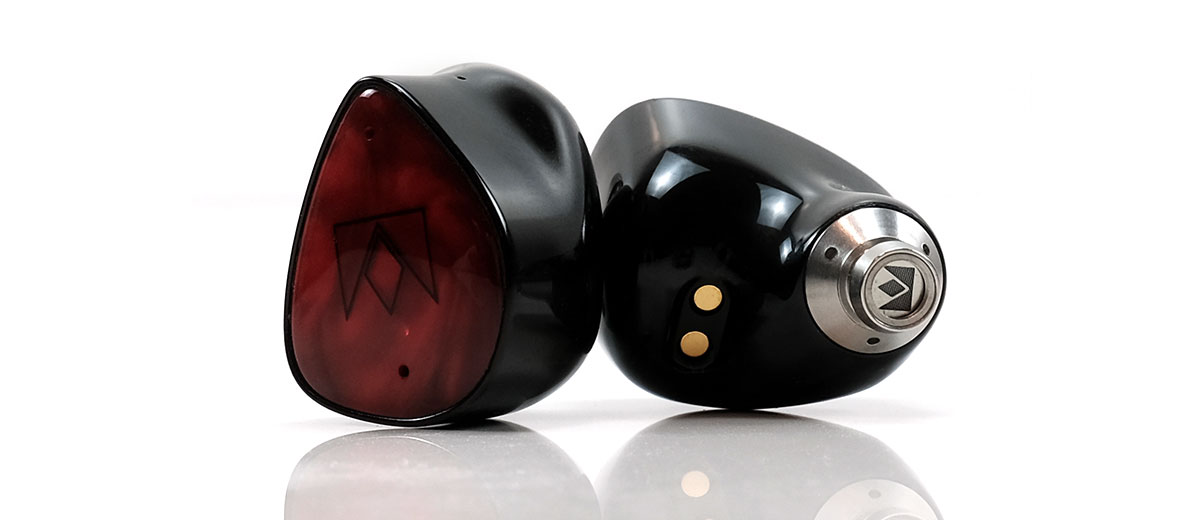
Sound Impressions
The following sound impressions of the Noble FoKus Amadeus were completed using a Samsung S23 Ultra in LDAC mode and a Vivo X90 Pro Plus Smartphone (Android) in aptX Adaptive mode.
Summary
If the Rex5 is the master of detail and precision in the Noble Audio TWS range, then the Amadeus, in its stock tuning, is the ’emotional’ king, and the choice for long listening enjoyment.
The Amadeus delivers a full-bodied, ‘juicy’ sound signature with good vocal presence, and a delicate rather than forceful set of highs that create a delicate shimmer over an otherwise smooth and creamy set of mids.
It works wonderfully well with modern rhythm-centric pop and R’n’B, higher-pitched edgy vocal recordings, and percussion-heavy tracks where you need a bit of low-end feedback or wish to avoid a more neutral-to-bright attack-heavy sound that can fatigue over extended periods of listening.
As a single dynamic driver TWS, the speed and articulation of Amadeus will be perceived as a step behind the Rex5, hence my opening statement about it being the master of detail. However, the timbre is very consistent throughout, one of the benefits of single driver tuning.
What I have noticed, at least when compared to the larger dynamic driver inside the Huawei Freebuds Pro 2, is the slightly subdued sub-bass heft.
It sounds more in line with the mid-bass response with an elongated bass shelf and a reduced dip in the lower mids, providing much of the perceived warmth in the Amadeus midrange tuning.
Staging is impressive, at least for width and headroom, making the older Mystique and FoKus Pro sound relatively narrow or compressed in comparison. The benefits of LDAC in the newer models is very obvious at this point.
Vocal imaging is just a shade back from the upfront and more aggressive presence of the equivalent Rex5 midrange performance. I would still class it as having some gain, but more in line with some of Noble’s more relaxed wired models’ tuning.
Frequency Response
The Amadeus bass shelf is most prominent around 80-150Hz with a slow dive into the mids, and not as flat as the equivalent Rex5 upper-bass and lower-mids range.
Combined with the slower, more natural decay of its single dynamic driver, the Amadeus exudes a fuller, warmer tone, with an impressive note fundamental but a slightly softer attack and a more languid pace compared to the flagship.
There is a 1-4k ear gain boost, but it’s not as prominent as the Rex5, with the mid-bass peak sitting on par or slightly above the highest gain point of the mids. Thus, at times, the bass bloom can compete a little with the mids, dulling the clarity and sharpness.
For some, this will be a good thing. There is no doubt that the lack of harsh peaking in the 4-8k range, combined with the mid-bass bloom, creates a set midrange instrumental and vocal timbre that is devoid of harmonic dissonance and nasty sibilance.
For others, the EQ option is there to dial down the bloom and perhaps increase the lower-treble intensity to inject a bit more contrast into that almost lush-sounding midrange performance.
The surprise for me is the treble tuning. I know Noble likes a lift here to add some contrast and excitement to percussion passages. However, that is not the case with the Amadeus at all, save for a subtle 8-10k lift in the upper treble to enhance the perceived headroom.
As a result, the highs on the Amadeus sound nicely extended without being overly pushed and harsh-sounding. It’s the type of treble tuning I tend to enjoy in TWS, especially on long travel runs where I want to chill out for a few hours in one spot.
Staging & Dynamics
A big-sounding TWS with excellent width and impressive headroom. The depth is technically superior to the Rex5, but it’s not the weightiest TWS I have heard for sub-bass presence.
I would rate the rumble as moderate to good, providing a good fundamental to most lower-register instruments and vocals. It’s more the mid-to-upper bass lift combined with a full-sounding lower-mids performance that will grab your attention.
Vocal presence is moderately forward, though not as vivid-sounding as the Rex5 vocal imaging. That slightly softer note tone combined with the heightened mid-bass bloom can present a slight barrier to vocal clarity.
Again, some moderate EQ from the FoKus app can change that balance considerably (see below for more details). That being said, sparser recordings with plenty of space between instruments sound excellent on the Amadeus.
Soulection-esque funk, dancehall-tinged electronic dance music, and rock-infused Afrobeats sound exquisite with this open tuning style. Upper-register female vocals offer more presence than lower-range male vocals.
Headroom is good, better if LDAC is activated, and optimal with ANC switched off. ANC softens some of the instrumental detail and character compared to the non-ANC performance, but it’s subtle rather than overt.
Noble FoKus App
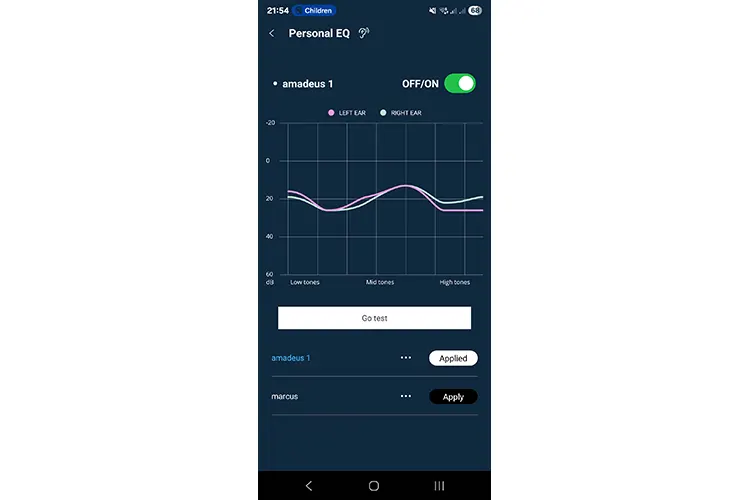
What a difference the Personal EQ (Audiodo’s custom sound personalization) brought to the Amadeus’s performance. Do not ignore this feature.
If you activate the Personal EQ, then you can safely ignore everything you just read in my sound impressions. That’s the stock sound; that is what you get if you are an EQ-agnostic audiophile.
Any quibbles I had with the stock tuning seem to have been addressed post-personal EQ application.
I got a significant lift in the bass impact and separation with what seems like a sharper post mid-bass drop as well as an enhanced upper-mids tuning that introduced some additional contrast and clarity.
It’s not as creamy or warm-sounding as before. Now I have a dynamic, weightier, and generally more exciting sound signature. It’s a welcome alternative to the stock ‘chilled’ tuning, giving me a choice of two presentations with a single click.
Wireless Performance
For the following tests, I used a mix of the Samsung S23 Ultra and a Vivo X90 Pro Plus for pairing and stability/range testing using the FoKus Amadeus in LDAC and aptX Adaptive mode.
For latency testing, I used the GitHub Sound latency checker, an open-source project that is free to use.
Pairing Ease
As with the Rex5, there are two components to the pairing handshake between your phone and the Amadeus.
You have the basic pairing process that any phone or DAP can provide, and that gives you immediate playback capability as well as the option to switch your codec rates, ranging from SBC up to LDAC, depending on your phone’s capability.
Both the Samsung S23 Ultra and Vivo X90 Plus Pro (aptX Adaptive maximum only) had no issues finding and pairing with the Amadeus. From there, dip into the menu and turn on LDAC if available, and you are good to go for general BT playback from your device.
You want to initiate that process first with Amadeus before being able to move to the second stage.
The next stage is opening up the FoKus app and ensuring the Amadeus drivers are recognized and show up in the graphic overlay. This opens up a wide range of options, including ANC and Ambient modes, control configuration, EQ, and the personal EQ service.
Similar to the Rex5, the Amadeus is multi-point, so you can connect to multiple sources and control some aspects of playback from the app.
For example, if I started playing via the X90, I could control some of the playback via my smartphone FoKus app. If I stopped playback on the X90, I could initiate playback on the S23 and also control playback from the Fokus App.
Stability & Range
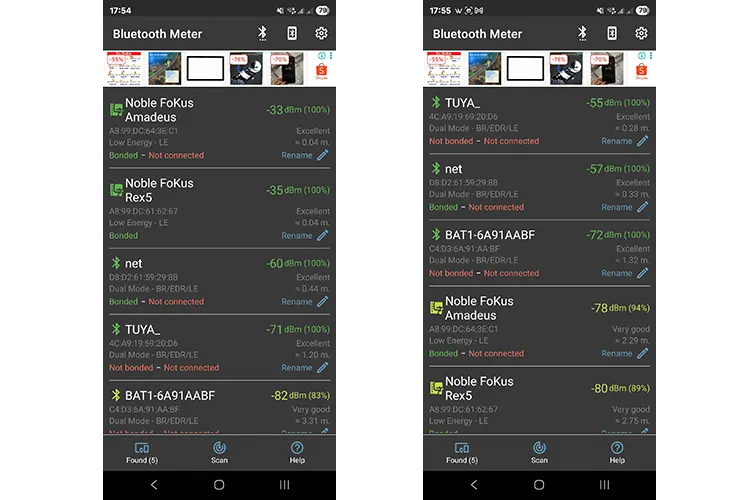
I honestly couldn’t tell if there was any significant difference in the stability and range performance of the Amadeus when compared to the Rex5.
Both devices appear to emit a signal with a dBm strength comparable to that of the other, spanning ranges from less than 1m to approximately 3-4 meters and beyond. This suggests that the BT chipsets in both are optimized, and the shell materials, despite their differences, have no discernible negative impact on signal performance.
I tested in LDAC with the Samsung S23 Ultra and aptX Adaptive (maximum rating) on the Vivo X90 Pro Plus and in both instances, the Amadeus was able to perform without stutter or signal drop out at up to 20m in line of sight and with a wall between it and the source at around 19m.
Latency
I ran the GitHub latency test four times to get a mean set of parameters, i.e., lowest and highest numbers, with the Amadeus scoring between 360ms and 365ms of latency on a 120BPM test track via my Samsung S23 Ultra.
I found no significant difference between the latency performance of the Amadeus and the Rex5 using LDAC mode.
For aptX Adaptive, the scoring was a bit more volatile during each test run, ranging from as low as 344ms to 410ms, though one could argue it was within similar parameters as the Samsung LDAC test, just not as narrow in the parameters.
Either setup will be fine for most casual gaming, video, and voice calls with the Amadeus.
