

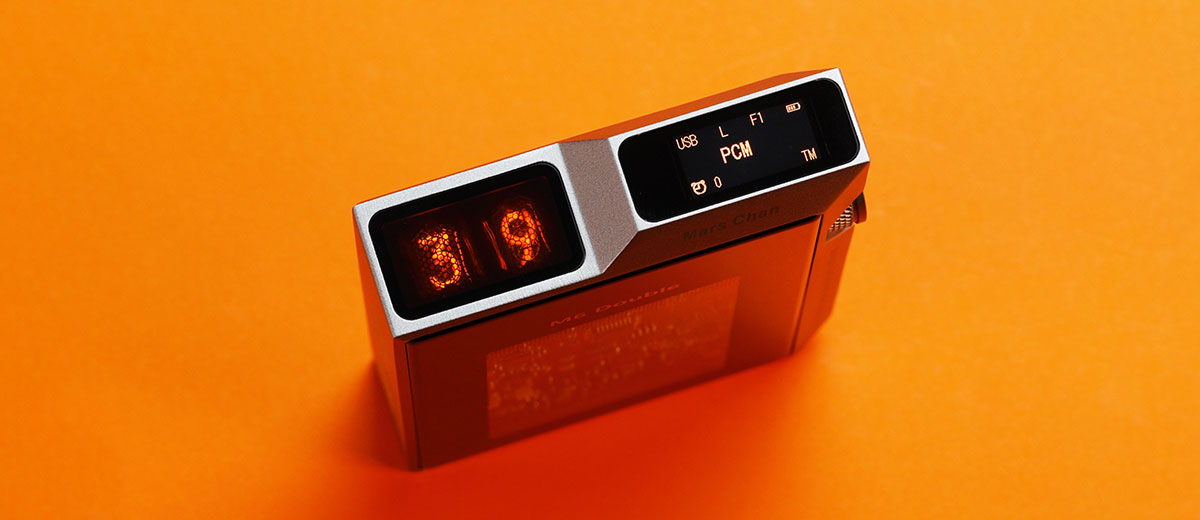
Connectivity
Bluetooth
M6 Double can only act as a Bluetooth audio receiver, and I managed to connect it to my OnePlus 13 Android Phone, PC, DAPs, and MacBook Pro laptop using AAC, aptX, aptX HD, LDAC, and SBC codecs.
The initial pairing is straightforward. It only involves switching the M6 Double to BT mode, searching for the M6 Double on the Phone, PC, or Laptop, and then pairing it. I didn’t experience any difficulties in the initial pairing.
Subsequent Bluetooth connection is fast and fuss-free. I never experienced any circumstance where it didn’t connect, and the connection time is quick.
Signal reception is excellent. Using the LDAC codec, I managed to be 10 meters away from the source, walking around my house with the usual obstructions like concrete walls, tables, and other objects, without experiencing any signal dropout or sound degradation.
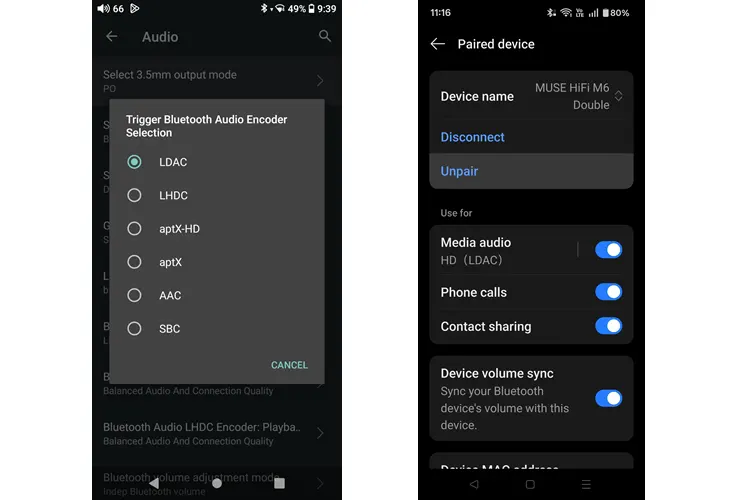
USB-DAC
The M6 Double connects quickly without fuss to all my digital audio players and my Android phone, without the need to install any apps.
It also connects fuss-free with my Win 11 PC and MacBook Pro laptop, automatically routing audio to the M6 Double when plugged and back to the speaker audio when unplugged, without any special drivers installed.
I never experienced any difficulty connecting via USB. The M6 Double connects every time. There is no sequence of connection that I must follow, like I must turn on the M6 Double first before plugging into the source or anything like that. The M6 Double works any which way I connect it.
Synergy
I’m happy to report that while using the M6 Double with my phone on top and data and WiFi turned on, I never heard it pick up any radio frequency interference noise.
I never detected its noise floor with my headphones and IEMs, even at full volume without music playing. M6 Double is a clean machine.
Additionally, M6 Double effortlessly drives all my headphones and IEMs to loud volumes with effortless and detailed sound character.
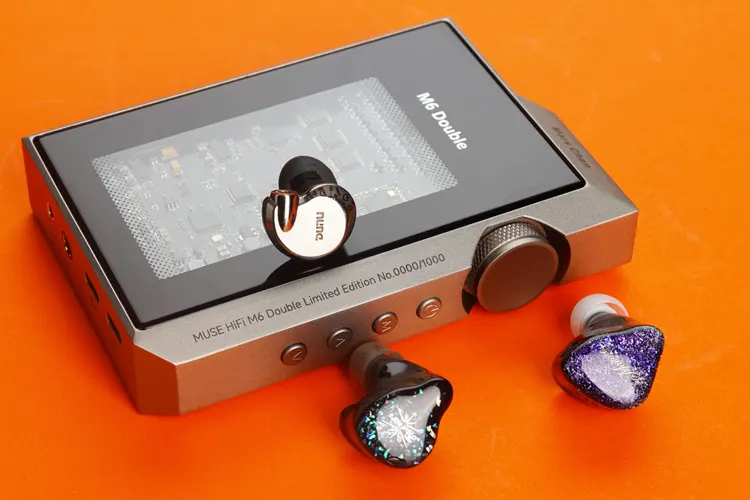
IEM Pairings
I hear an excellent neutrality with the DUNU Falcon Ultra Ti; there is a big soundstage and effortless macro dynamics.
Switching to the Kiwi Ears Astral, I hear a mild U-shaped sound signature, featuring a neutral overall sound with boosted sub-bass and upper treble. I heard increased details compared to the Falcon Ultra. There is also a big soundstage and excellent dynamics.
I hear an improved smoothness, details, and bass with the QoA Martini Pairing, along with the big soundstage and effortless dynamics.
I must say, the M6 Double pairs very well with my IEM, thanks to its neutrality and power.
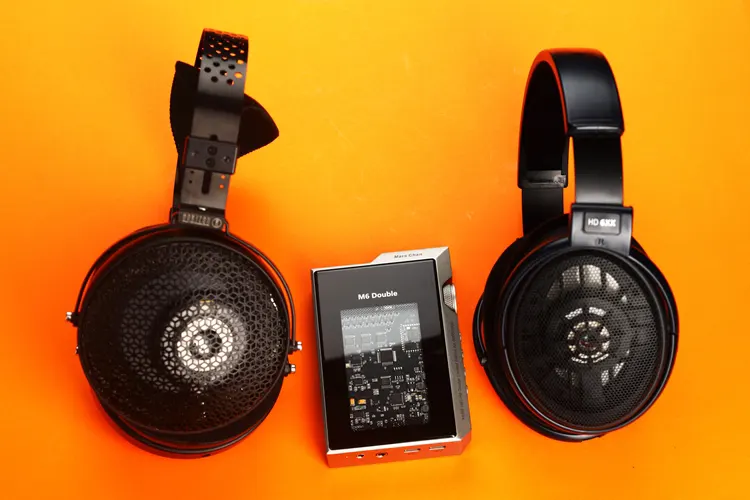
Headphone Pairings
I used the following headphones for their differences in impedance and sensitivity: the MOONDROP Horizon, with a 32Ω impedance and high sensitivity; the FiiO JT3, with an impedance of 80Ω and moderate sensitivity; and the Sennheiser HD 6XX, with a 300Ω impedance and low sensitivity.
M6 Double easily drives the MOONDROP Horizon to high volumes with good bass extension and tightness, lush midrange, smooth, extended, and detailed treble.
The soundstage is big, and images are well defined. I heard a similar performance with the FiiO JadeAudio JT3, and the 80 ohm impedance didn’t seem to bother the M6 Double.
Finally, with the Sennheiser HD 6XX, I have to set the volume near maximum for reasonable loudness.
However, the sound quality is good, with tight and extended bass, clear midrange, extended and detailed treble, a big soundstage, and good imaging.
However, I couldn’t say that M6 Double and HD 6XX are an ideal pairing. I’ve heard the HD 6XX sounds better in a desktop setup, but for an emergency or if no good desktop source is available, this pairing can work.
Selected Comparisons
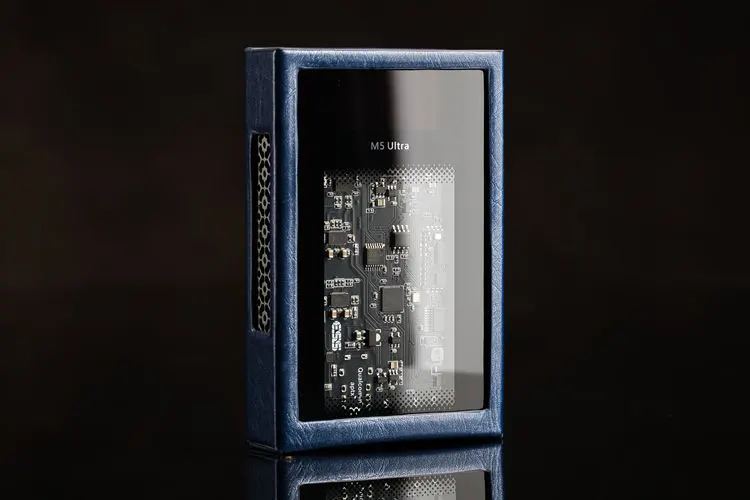
Muse HiFi M5 Ultra
Technical
The M5 Ultra is a Bluetooth DAC/amplifier with a selectable vacuum tube output stage using a pair of JAN6418 tubes.
An ES9038Q2M DAC chip converts the digital audio signal to analog, and a Qualcomm QCC5125 Bluetooth Chipset for Bluetooth connection, with about 400 mW of output power per channel and a 3000mAh battery capacity for 10 plus hours of battery life.
Design
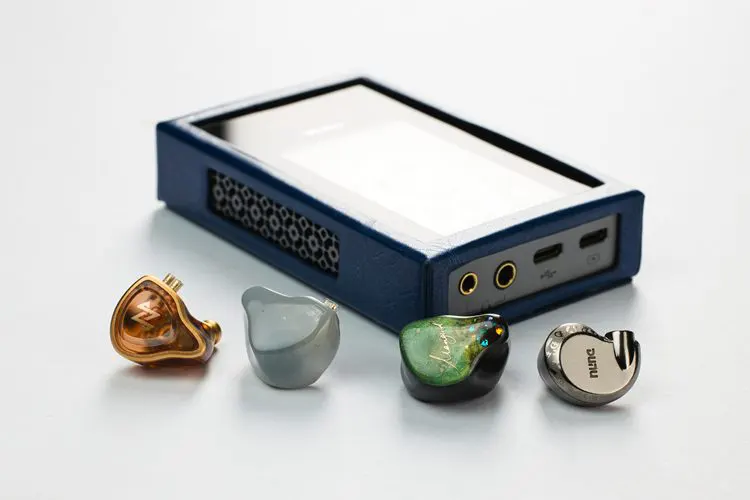
The M5 Ultra features a solid aluminum alloy chassis sandwiched by two tempered glass panels on the front and back.
With vents for the tubes on the left, I/O at the bottom, and all the controls on the right. A window on the front shows a small display screen near the top and the circuit board below.
Performance
Right from the outset, I noticed a slight increase in resolution and a noticeable increase in power output with the M6 Double.
M6 Double has deeper, tighter, more controlled bass, flatter perceived frequency response, slightly more detailed, and more extended treble. Regarding staging, they are about the same.
The M5 Ultra sounds warmer than the M6 Double, whether in transistor or vacuum tube mode.
Except for the increase in output power, I wouldn’t automatically say the M6 Double is an upgrade to the M5 Ultra, as each has its own charm in terms of sound.
xDuoo XD05 Basic2
Technical
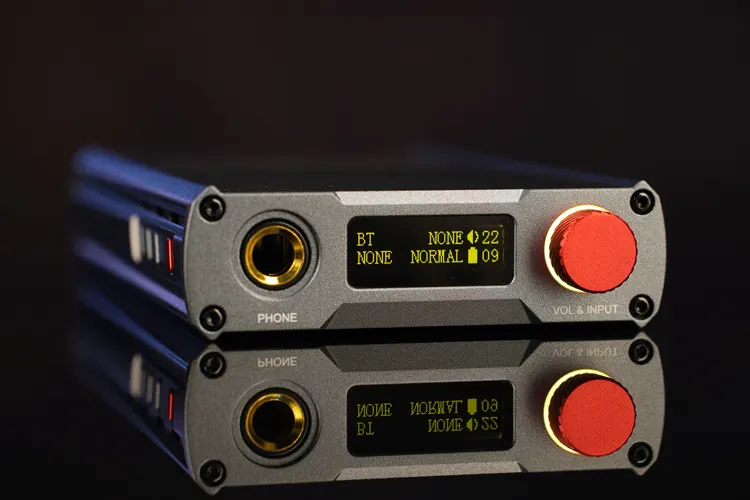
The XD05 Basic2 features a Cirrus Logic CS43131 converter chip, which feeds the replaceable opamp amplifier section with a transistor output buffer. It has an output of 750mW @32Ω, Bluetooth 5.4, a battery capacity of 3000mAh, and a battery life of 11 hours.
Design
The XD05 Basic2 has a full metal chassis with a utilitarian design and a retro look on the front, while the rest of the chassis has a science fiction space-age appearance. The red knob and the OLED screen look gorgeous.
Performance
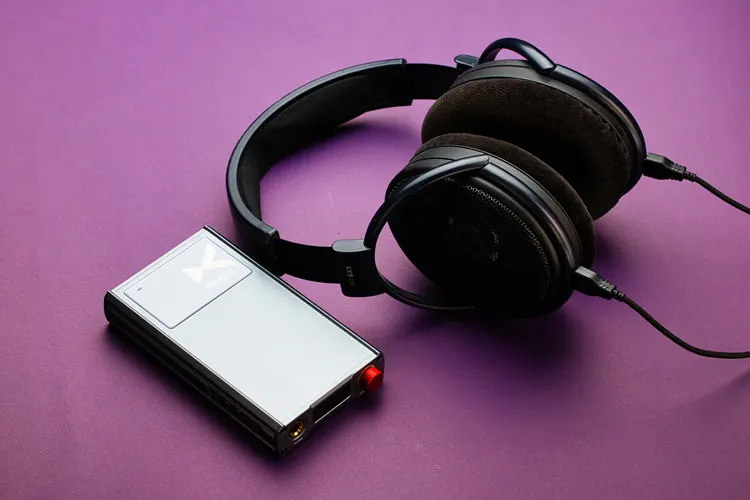
Both the Basic2 and the M6 Double feature analog-style sound tuning. However, the M6 Double sounds warmer, while the Basic2 has a slightly more pronounced upper midrange and treble energy, resulting in a greater perceived dynamic range. I also noticed the Basic2 goes louder than the M6 Double.
Regarding staging, both have a similarly sized soundstage, but I noticed a more defined imaging with the Basic2, due to its brighter sound signature.
I cannot say which one is better, as both have different sounds and each has its own charm in terms of music reproduction.
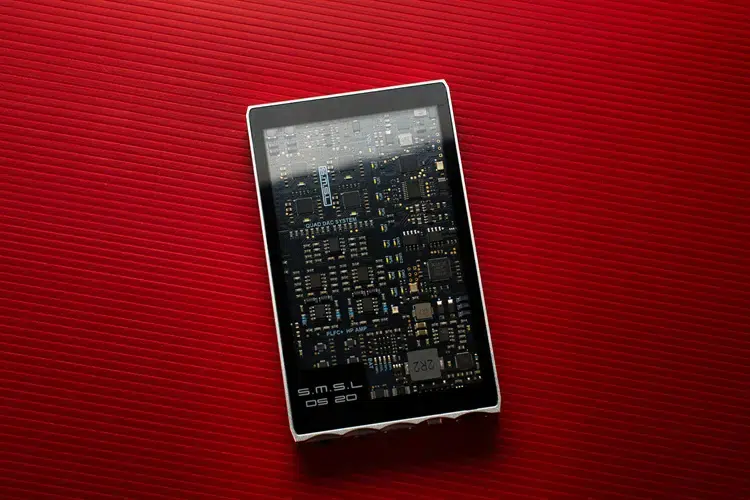
SMSL DS20
Technical
The DS20 is a DAC/amplifier that uses 4 x CS43131 DAC chips. It features a fully balanced ear amplifier circuit design with up to 500 mW of output power per channel and includes a 6000 mAh battery for over 10 hours of battery life per charge.
Design
A clean-looking, solid piece of machined aluminum alloy with a clear tempered glass front panel, allowing us to see the circuit board, with all the I/O and controls at the bottom.
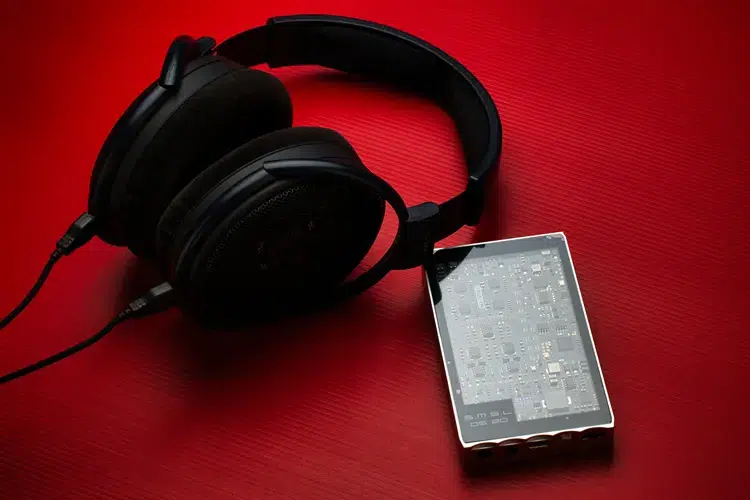
Performance
The DS20 has brighter, more forward sound and a somewhat digital sound signature characterized by punchy, tight bass, slightly forward upper midrange and treble, and dynamic sound.
Compared to M6 Double’s analog style sound, which features somewhat boomy bass, less forward midrange and treble, and somewhat relaxed presentation.
They have similarly sized soundstages: the M6 Double is deeper, while the DS20 is wider and shallower. In terms of imaging, the DS20 offers more image definition due to its brighter and more forward sound presentation.
My Verdict
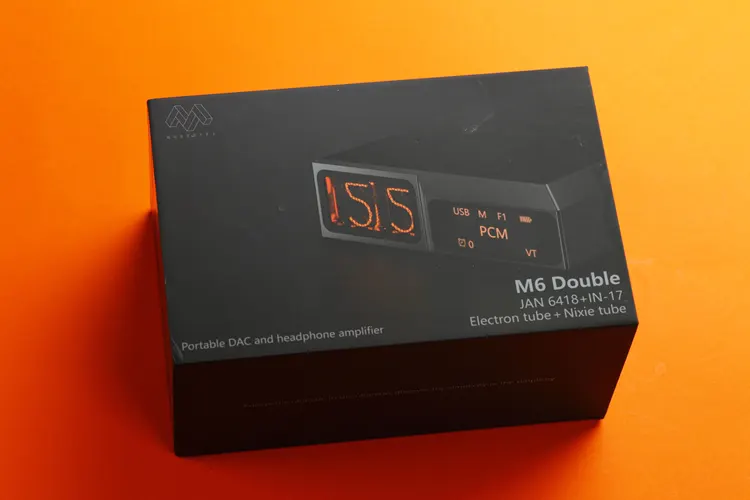
After using it for days, I can see that MUSE HiFi has put a lot of effort into making the M6 Double a truly special, limited edition DAC/Amp.
I highly appreciate the design and the way they incorporate the IN-17 vintage pixie display tube and the JAN 6418 audio tube to work flawlessly in one chassis.
MUSE Hifi even included a brochure for reviewers, suggesting they could have priced the M6 Double at $999, based on the R&D and effort put into its creation, if they had calculated traditionally. Still, they ultimately priced it at $399 so more people can experience the sound and ownership.
I find it hard to find faults with the M6 Double. If I had to nitpick, I would wish the power output were higher. However, as it is, it works and sounds nice, and the power output is fine for most headphones and IEMs.
Considering the price, sound, design, and rarity of the IN-17 display tube, its production is limited to only 1,000 units. I would suggest getting the MUSE HiFi M6 Double while you still can.
MUSE HiFi M6 Double Technical Specifications
- DAC chip: ESS ES9039Q2M
- Decoding: PCM, DSD, MQA
- Bluetooth: SBC, AAC, aptX, aptX HD, LDAC
- Headphone out jacks: 3.5/4.4mm
- Gain: Low/mid/high
- Digital Filters: 7 types
- Screen: 1″
- Volume Indicator: IN-17 Tube
- Battery Capacity: 4500mAh
- Battery life: 14.5 hours /USB in
- Charging time: 4.5 hours
- Dimensions: 121.2 x 81.3 x 24.5mm
- Weight: 285 grams
