

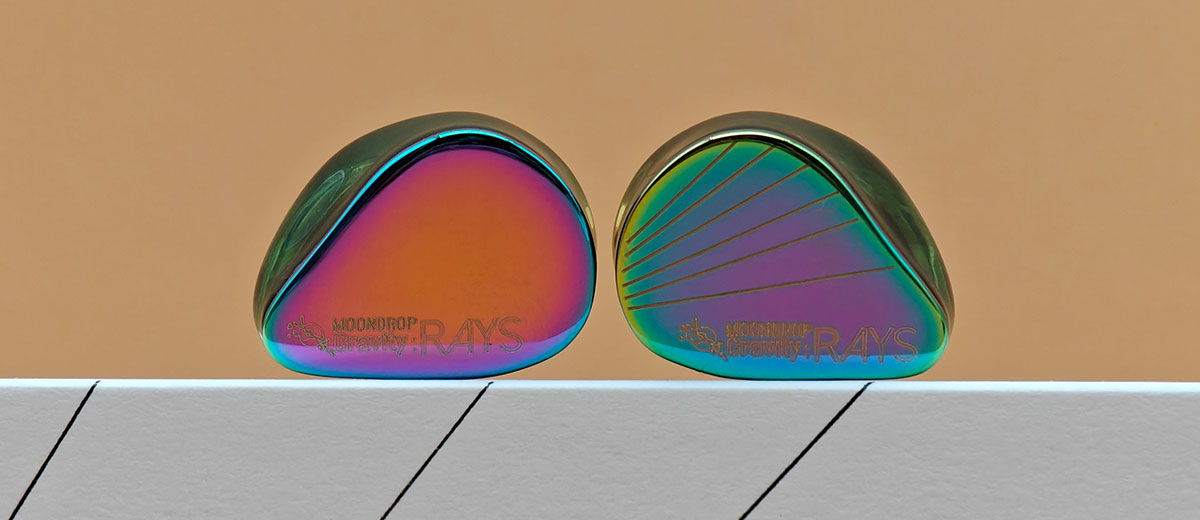
Synergy
Efficiency & Sensitivity
With a sensitivity of 120 dB/Vrms and an impedance of 30 ohms, the MOONDROP RAYS is easy to drive from any USB-C device.
One notable thing is that its built-in DSP avoids any crossfade delay, unlike other DSP IEMs, keeping the start of tracks intact without cutting anything off.
At low volume levels, a soft static noise can sometimes be heard in the background. This is typical for DSP-based IEMs and doesn’t get in the way once music starts playing.
Vocals stay clear even at quieter volumes, holding their position in the mix. However, treble takes a noticeable step back, with finer details becoming harder to hear.
Pushing the volume higher brings a stronger midbass impact and added weight to every hit. Treble extension also improves at louder levels, bringing back the sparkle and air that was missing at lower gain.
Pairings
Since the MOONDROP RAYS is a DSP-based IEM, I was only able to test it using a phone and a laptop. I don’t have any DAPs with USB-C output, so I couldn’t explore other sources beyond those two.
On both devices, the output volume was surprisingly high with very little effort. I rarely needed to go past 20 to 30 percent to reach my usual listening levels.
Sound quality stayed consistent between the phone and the laptop. There was no sign of crossfade or signal delay, and the only static I heard was during very low volume playback.
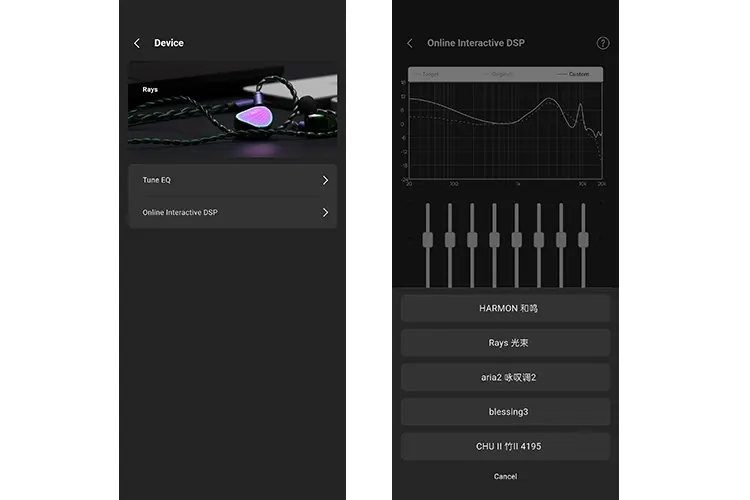
MOONDROP’s app and website offer a simple way to access EQ options for the RAYS. I had no issues connecting or making adjustments, and everything responded quickly without noticeable lag.
The app includes two EQ modes called Custom EQ and Tune EQ. Custom EQ gives you full control with a layout similar to PEQ tuning, and it also allows downloading user-created profiles.
Tune EQ comes with several preset options labeled as Default, FPS1, FPS2, Rhythm Game, and 3A Game.
I mostly stuck to the Default preset during testing, but the other modes are tailored for specific game genres and offer quick access for users looking to swap profiles on the fly.
Select Comparisons
MOONDROP MAY
Technical
The MOONDROP MAY uses a hybrid driver setup consisting of one sapphire full-frequency dynamic driver and one 6mm annular planar magnetic driver.
A two-way crossover is used to split the frequency range, assigning the dynamic driver to handle the bass and mids while the planar driver takes care of the treble and air region.
This configuration aims to provide a natural and classic timbre in the lower range, paired with smooth and lower-distortion treble above 8 kHz. The goal is to create a more seamless blend between the two drivers without noticeable gaps or harsh transitions.
Design
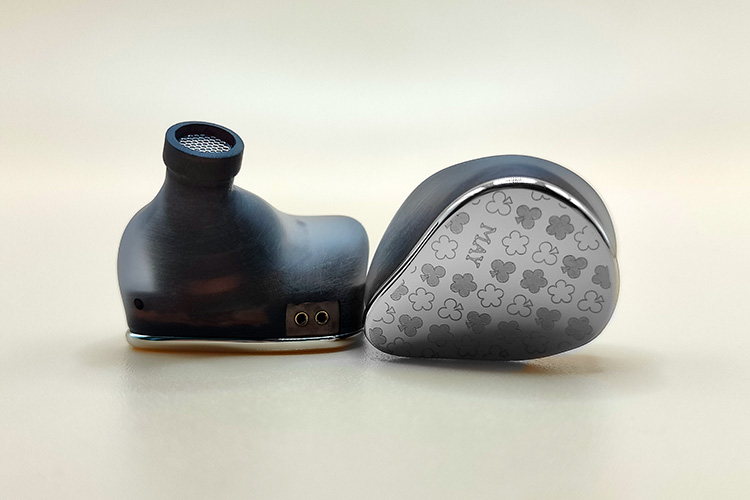
The faceplate of the MOONDROP MAY features a unique clover or club-shaped design with a reflective finish. The club pattern is not just visual but also physical, with a noticeable texture that can be felt when touched.
Variations in the faceplate include striped and hollow club shapes, along with the word “MAY” placed subtly on the left side. The shell is a dark translucent black that reveals the internal driver layout when light hits it at certain angles.

Performance
The MOONDROP MAY offers stronger subbass rumble, giving more depth and low-end extension. The RAYS trades that for better midbass presence, offering a punchier and more energetic impact that feels tighter overall.
In the midrange, the RAYS takes a clear lead with a more natural timbre that avoids the slight artificial tone found in the MAY. Both struggle with vocal nuance and don’t fully reveal finer textures like breathiness or trailing edges, but the RAYS manages to sound more grounded in comparison.
Treble performance goes in different directions depending on preference. The RAYS is smoother and better controlled with no sibilance, while the MAY pulls ahead in raw detail retrieval by revealing more of the upper-frequency information. It is a little brighter but never harsh, which may appeal to listeners who want a livelier top-end.
Staging on both is similar in terms of width and how they position elements across the stage. Neither feels overly wide or tall, but the experience stays coherent and well-layered.
Separation is slightly better on the RAYS, as different sounds don’t blur as much as the MAY. While both have limitations in layering, the RAYS keeps complex mixes slightly cleaner overall.
MOONDROP Aria 2
Technical
The MOONDROP Aria 2 features a single 10mm dynamic driver and continues the Aria line with a new internal configuration.
It uses a TiN ceramic-coated spherical dome diaphragm paired with a composite magnetic circuit and independent brass cavity to reduce distortion and smooth out the treble.
While it drops the ultra-fine Daikoku voice coil used in previous versions, the overall tuning still follows MOONDROP’s VDSF target. This keeps it in line with their signature tuning approach despite the hardware changes.
Design
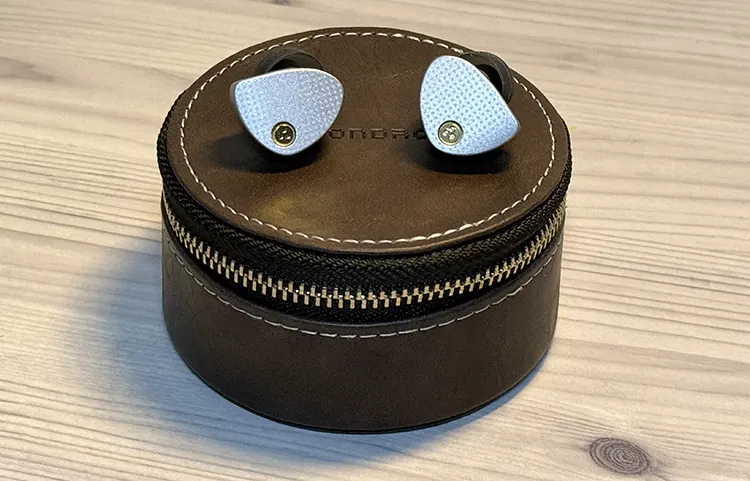
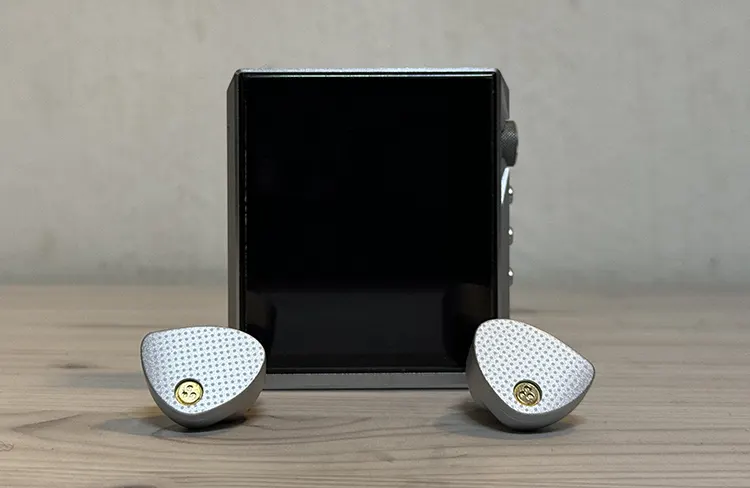
The Aria 2 keeps the same ergonomic shell shape as the original but updates the look with a grey-titanium matte finish. The surface feels more refined and has a solid, well-built appearance.
Up close, a fine dotted pattern can be seen on the shells, matching the design of the outer packaging. It’s a clean evolution of the Aria series styling without overdoing it.
Performance
Bass is more impactful on the MOONDROP RAYS, with stronger subbass rumble and livelier midbass punch. Neither set caters to bassheads, but the RAYS carries more energy and presence in the low-end compared to the Aria 2.
Midrange is better executed on the Aria 2, offering a more natural timbre and smoother vocal presentation. It also pulls ahead in vocal nuance, revealing finer microdetails and better handling of vocal texture.
Both IEMs avoid a fatiguing treble, keeping the top-end relaxed and easy to listen to. The RAYS adds more sparkle, giving certain elements extra presence, though the Aria 2 doesn’t feel lacking either.
Sibilance is well-controlled on both, making them suitable for longer sessions. Instruments sound more grounded and lifelike on the Aria 2, while the RAYS leans into a slightly sharper presentation.
Staging is slightly wider on the RAYS, giving more horizontal space to the mix. However, the Aria 2 edges ahead in imaging accuracy and includes a touch of verticality that makes the stage feel a bit more immersive.
My Verdict
The MOONDROP RAYS delivers a balanced, relaxed sound that works well for music and gaming.
Its cable adds real utility with a USB-C DSP chip, AI noise-canceling mic, and straightforward EQ access through app and browser. Comfort is top tier, making it a solid pick for extended gaming or listening sessions without fatigue.
It delivers not only as a great gaming IEM but one that feels complete and purposeful rather than just a half-baked release with gaming slapped on the label.
MOONDROP RAYS Technical Specifications
- Driver Type: One (1x) 10mm sapphire-plated dynamic driver and one (1x) 6mm annular planar magnetic driver
- Plug: 0.78mm 2-pin with USB-C DSP
- Frequency Response: 7Hz – 39kHz
- Impedance: 30-ohms @ 1kHz
- Sensitivity: 120 dB/Vrms
