

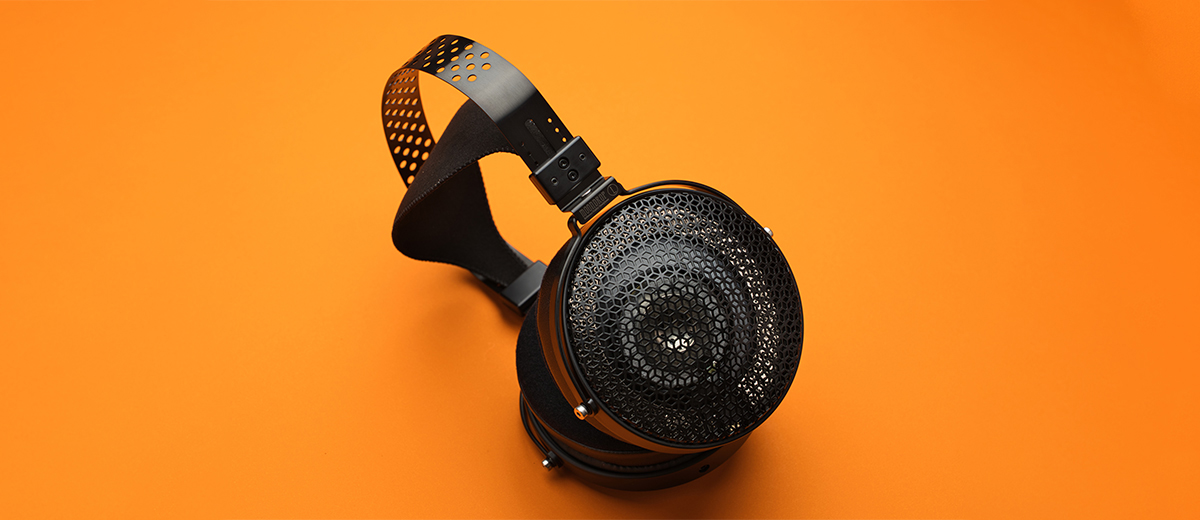
Synergy
Under no circumstances have I heard the Horizon pick up some noise from any device, even when the cables are placed close to the DAPs or phone. Horizon is also not sensitive enough to expose the noise floor of the sources I used in this review.
Horizon is very easy to drive; it can be driven with a small, low-powered DAC without causing audible strain to the dongle. I observed no reduction in the bass, soundstage, and instrument separation associated with struggling dongles.
The Horizon has good synergy with all the sources in this review, if I stay within its previously discussed power handling limitations.
Pairings
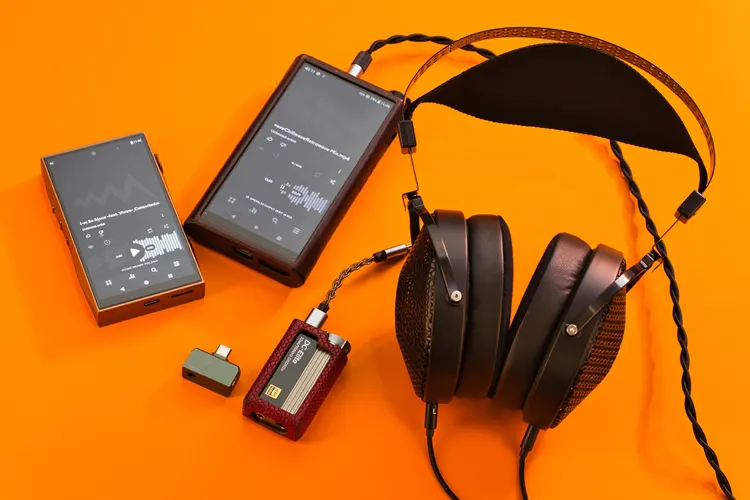
The Horizon pairs happily with all the sources used in this review, with no apparent signs of difficulty; however, it is only mildly revealing of the positive and negative attributes of sound quality in the sources, which means it has a forgiving sound.
The Celest CD2 dongle DAC, with its 60mW at 32Ω power output rating, is very comfortable driving the Horizon. Due to its modest power, I had to set the volume near or at maximum to achieve a satisfying level, and it never pushes the Horizon beyond the limit.
The CD2 retains its warm sound signature, featuring good bass and extended upper treble, along with a spacious soundstage in this pairing. Indicating a good pairing.
With larger dongles, such as the iBasso DC-Elite and xDuoo Link10, which have higher power ratings. I must be mindful of the volume settings and not exceed 80 percent to prevent overdriving the Horizon. Horizon only mildly reveals the difference between the two, but it sounds good with both.
When paired with the tube hybrid MUSE Hifi M5 Ultra, a subtly perceived difference in sound is noticeable between its tube and transistor modes. The tube output mode sounds effortless and non-straining with the Horizon; it sounds smoother than the transistor mode, with both modes exhibiting good dynamics.
And finally, when paired with higher-powered DAPs such as the FiiO M15s and Shanling M3 Plus, which have 800mW and 1,000mW power output ratings, respectively, the sound becomes even more effortless, with a spacious soundstage and good details.
I confirm that MOONDROP is true to its word that the Horizon is designed to be sensitive, easy to drive, and pairs well with just about any source available.
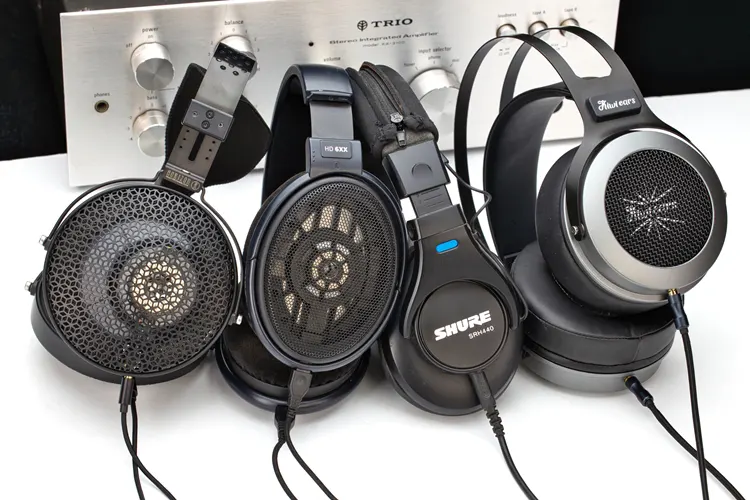
Select Comparisons
Sennheiser HD 6XX
Technical & Design
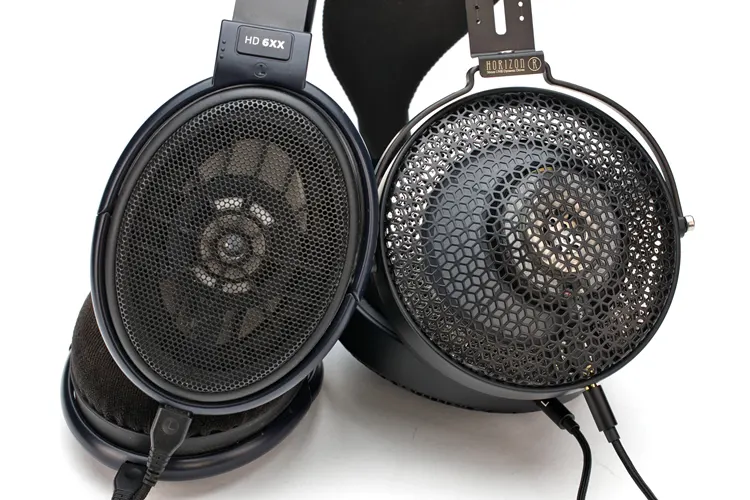
The HD 6XX utilizes a 38mm dynamic driver in an open-back acoustic design. It has a sensitivity of 109 dB, an impedance of 300Ω, and a weight of 260 grams.
The HD 6XX is primarily made of plastic, except for the grill and the clamp on the headband. The design is utilitarian and uninspiring; it includes a detachable 6-foot-long cable, 3.5 mm TRS with a 1/4″ adapter.
Performance
HD 6XX is slightly more neutral and accurate than the Horizon. It has an old-school kind of neutrality, which is flat to the point of sounding boring. In reality, the HD 6XX is slightly biased towards a warm tonality, compared to absolute neutrality, just like the Horizon.
The Horizon has more sub-bass, less upper midrange, and more upper treble, compared to the warm and slightly mid-centric sound with more upper, laid-back treble of the HD 6XX. Making the somewhat U-shaped sound signature of the Horizon more apparent in this side-by-side comparison.
Horizon has more fine details in the treble. It offers higher resolution, instrument separation, and layering. The treble has more air and has a delicate, shimmering sound on some songs that the HD 6XX lacks, which I attribute to the higher driver technology used in the Horizon.
And due to having more resolution and air, the Horizon also has a more spacious soundstage, which sounds more atmospheric and natural, compared to the more intimate and darker soundstage of the HD 6XX.
Regarding imaging, I find both to be average, with the HD 6XX noticeably better due to a more stable center vocal image. The upper treble energy appears to interfere with the center images in the Horizon, preventing them from forming as stably as those of the HD 6XX.
Shure SRH440
Technical & Design
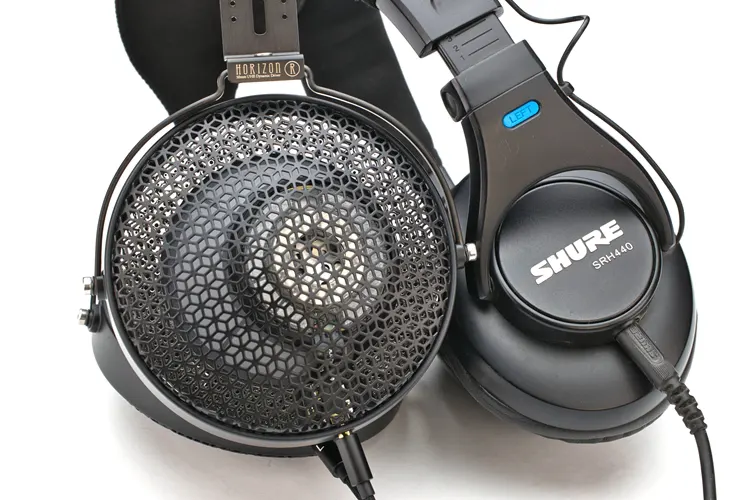
The Shure SRH440 utilizes a 40mm dynamic driver in a closed-back acoustic design. It has a sensitivity of 105 dB, an impedance of 44Ω, and a weight of about 320 grams.
The SRH440 features a utilitarian design that doesn’t attempt to be aesthetically pleasing, allowing the user to focus on the musical production rather than marveling at the design in a studio environment. It includes a heavy-duty detachable 3.5mm cable with a 6.35mm adapter.
Performance
The SRH440 is known to be one of the first headphones to closely follow the old Harman tuning curve above 120Hz, as opposed to the VDSF curve that the Horizon follows. They have different response curves, but both are intended to yield a correct or accurate sound if followed closely.
The SRH440 is more accurate and more neutral above 120 Hz; it sounds brighter and more forward than the warm-sounding Horizon. The SRH440 lacks sub-bass, a known weakness. But it has a flatter frequency response from mid-bass to upper treble.
There is not much difference in sound stage size. Only in their stage rendition does the apparent difference exist, with the SRH440 having a wider sound stage while the Horizon has a deeper one.
Regarding imaging, the SRH440 has more accurate and defined imaging, with better holography, clearer panning, and better placement. Horizon’s images sound diffused in comparison.
I find the SRH440 more suitable for sound monitoring due to its more accurate sound, provided one accounts for the lack of sub-bass. However, the Horizon is much better suited for home and audiophile listening use due to its more pleasing, warm tuning.
Kiwi Ears Altruva
Technical & Design
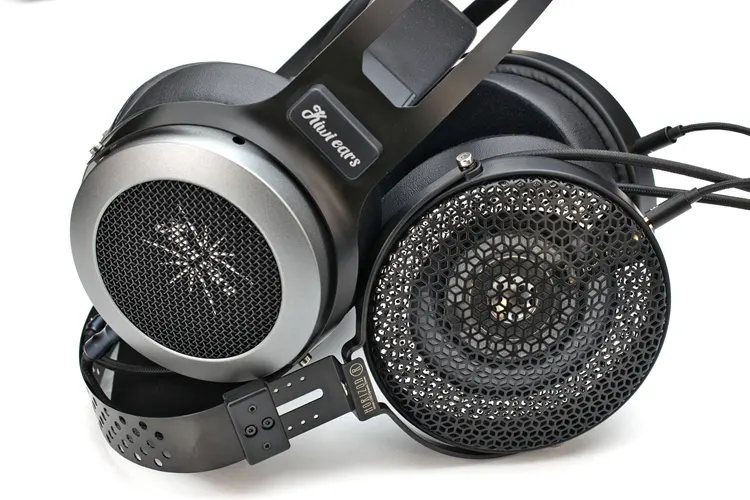
The Kiwi Ears Altruva utilizes a 50mm dynamic driver in an open-back acoustic design. It has a sensitivity of 98 dB, an impedance of 32Ω, and a weight of 327 grams.
It features a modern design and a sturdy build, combining plastic and metal that inspires confidence. It includes a 3-meter 3.5mm detachable cable with a 6.35mm adapter.
Performance
The Altruva is designed to feature studio monitoring and accurate sound. It has a flat, slightly V-shaped sound signature with tight bass, a clear and slightly forward midrange, and treble. Compared to the warm, somewhat U-shaped sound of the Horizon.
There is a slightly lesser sub-bass extension with the Altruva when compared to the Horizon. But aside from that, the Altruva is more neutral, has a more forward sound presentation, and is more accurately sounding overall.
The Altruva has a bigger and wider soundstage, with a more open-air feeling than the Horizon. But the shape is flatter compared to the deeper stage of the Horizon.
Both are average and are about equal in terms of imaging, with Altruva presenting more forward images and Horizon presenting laid-back images due to their difference in perceived frequency response.
Both headphones are suitable for home, audiophile-type listening as well as casual listening. Altruva has a forward presentation that prioritizes clarity, while Horizon prioritizes a relaxed and warm musicality.
They are different in flavor, much like apples and oranges, but both are very enjoyable for listening to music.

My Verdict
The MOONDROP Horizon is a beautiful and unique-looking headphone, featuring a warm, forgiving, non-fatiguing sound that is both detailed and energetic.
I appreciate how sensitive, efficient, and easy it is to drive, even with low-powered dongle DACs; they don’t suffer from sound degradation associated with difficulty in moving headphones. They sound as good as they should.
However, due to its sensitive design, which allows low-powered sources to drive it, its upper power handling limit suffers. The Horizon is loud when fed modest power, making it easier to overload when pushed to its limits.
I must say that before Horizon reaches its power limit, the sound is already loud and not safe for prolonged listening. However, I wish MOONDROP would release a less sensitive, yet more powerful, version of the Horizon with a similar sound signature.
Despite the above, I would still warmly recommend the MOONDROP Horizon for its non-fatiguing sound and beautiful design at a fair price.
MOONDROP Horizon Technical Specifications
- Driver: 50mm UHE Dynamic Driver
- Impedance: 32Ω ± 15%(@1kHz)
- Frequency Response: 20Hz-34kHz (IEC61094, Free Field)
- Sensitivity: 109 dB/Vrms (@1kHz)
- Effective Frequency Response Range: 20Hz-20kHz (IEC60318-4, -3 dB)
- Total Harmonic Distortion: THD≤0.1% (@1kHz, 94 dB)
- Plugs: 4.4mm Balanced Plug + 3.5mm Single-ended Plug
- Connector: Dual 3.5mm Headphone Connector
- Weight: 351 grams (excl. Cable )
