

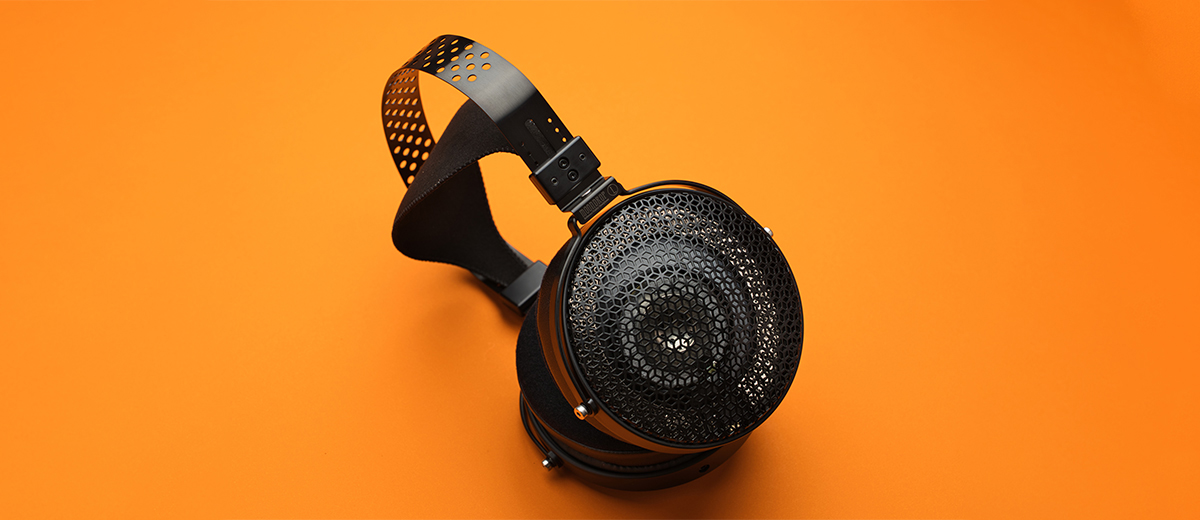
Marcelo reviews the MOONDROP Horizon, a new and affordable set of high-sensitivity inclined 50mm dynamic driver open-back headphones. They are currently priced at $199.
Disclaimer: This sample was sent to me in exchange for my honest opinion. Headfonics is an independent website with no affiliate links or status. I thank MOONDROP and Shenzhen Audio for their support.
Click here to read more about MOONDROP products we have previously reviewed on Headfonics.
This article follows our current scoring guidelines, which you can read here in more detail.
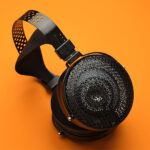
MOONDROP is back with another strikingly designed product: the MOONDROP Horizon open-back dynamic headphones, priced at a reasonable $199.99.
The company has a long history of producing high-quality and memorable IEMs but has only recently begun making headphones, including the MOONDROP PARA, COSMO, Venus, Void, and Joker.
What makes the Horizon special among the MOONDROP headphones mentioned above is its departure from the flat back grill design, and most importantly, the offset and angled driver placement, which is supposed to improve sound staging.
MOONDROP has established a high reputation for releasing products that offer both good sound and aesthetics.
Will the Horizon live up to that good sound reputation, or how will it compare to other headphones, such as the classic Sennheiser HD 6XX and the recently released Kiwi Ears Altruva? Find out in my review below.
Features
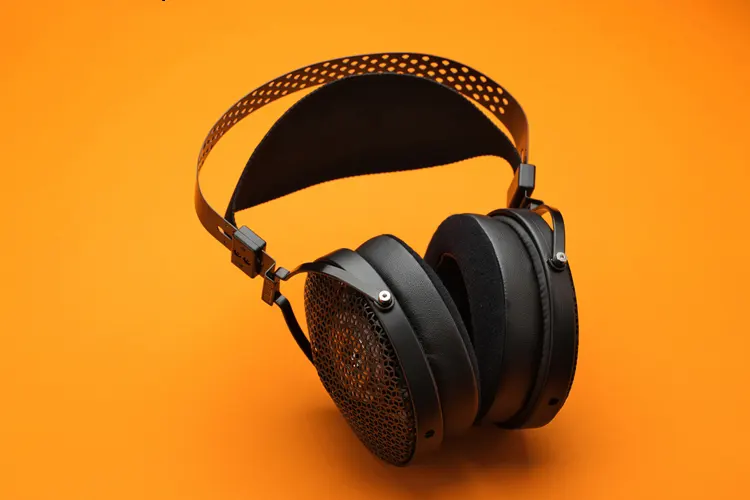
The MOONDROP Horizon features a 50mm dynamic driver with a Titanium-Plated, high-rigidity polymer dome, which is more rigid than the standard PET dome diaphragm, and a dual-layer liquid silica gel suspension diaphragm.
Finite element analysis or FEA-Optimized Dual Internal-External Composite Magnetic Circuit that can reach up to a very high magnetic flux density of 1.85T in the magnet gap, which gives it high sensitivity and efficiency.
A newly designed Naturally Inclined Driver for High-Transmission Auricle Coupling in the Front Cavity. Which means the driver is offset towards the front of the ear cup and angled towards the rear.
The Horizon features dual 3.5mm sockets at the bottom of each ear cup, has an impedance of 32Ω, indicating it is easy to drive, and a sensitivity of 109 dB/Vrms. We’ll find out later if it truly is easy to drive.

Design
MOONDROP has nailed it with the design of the Horizon.
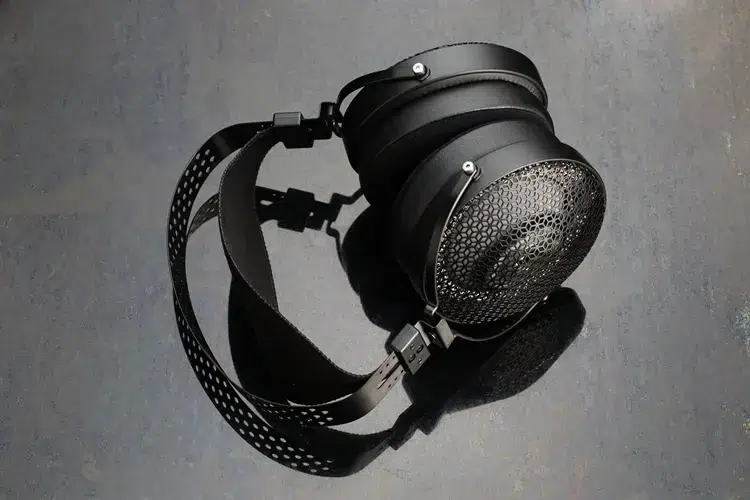
The first thing my eyes noticed was the design of the metal open-back grill, which is semi-domed with a flattened surface near the back of the driver, as well as the geometric opening pattern of hexagons and parallelograms.
Unlike the more common designs used by others, such as wire mesh or a round perforation pattern, which are monotonous and mundane to look at.
From the outside diameter of its full-sized round ear cups, when you peer through the grill, a flat halo with a reflective surface is visible, leading to the acoustic part where the driver is mounted.
This gives the Horizon design an illusion of seeing through the earpads behind it, when in fact it reflects the object in front.
There are round perforations on top of the headband, rather than flat ones, which makes it more visually interesting. The metal headband is connected to a metal yoke on both sides, allowing the ear cups to swivel and tilt, making it more compatible with different head sizes and shapes.
Two sliding parts near both yokes are connected via a bridge made of a soft, leather-like material, allowing the headphone to adjust its height easily on the head.
Ear Pads
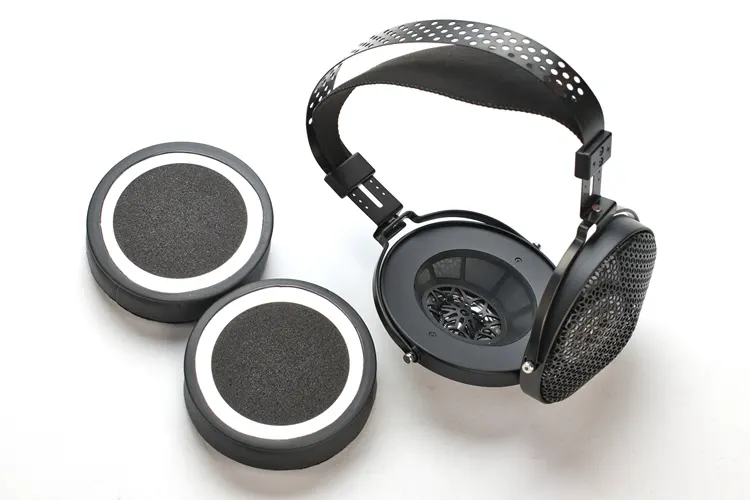
A pair of velour ear pads with leather coverings on both the inside and outside are easy to remove; they are magnetically mounted in place.
The Horizon ear pad quality feels good, but I wish they had included another pair of ear pads with a different composition for variety in sound.
Stock Cable
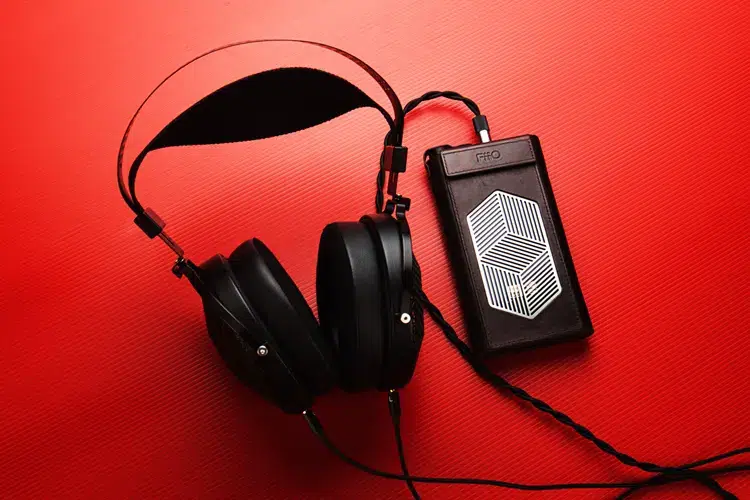
I like the 1.5-meter sleeved 2-core modular cable, which includes both the 3.5mm and 4.4mm plugs. The quality of the build is good; it uses metal parts and has nicely thick wires that are neither too thick nor too thin.
Utilizing dual 3.5mm connectors on the headphone ends, the Horizon’s stock cable is compatible with many other modern headphones, as this type of connection has gained popularity in recent years.
Comfort
The Horizon’s combination of moderate clamping force, median weight, and soft ear pads makes it a comfortable headphone to wear even during long listening sessions.
There is sufficient clamping force to prevent it from moving or falling off, even if I shake my head or nod slightly to the music.
Due to the ear cups’ unique mounting design, they conform to the shape of my ears, making it a very good fit for me.
However, I wish the Horizon’s clamping force were slightly stronger for a more secure mounting. Horizon has the least clamping force compared to other headphones in this review.
Packaging & Accessories
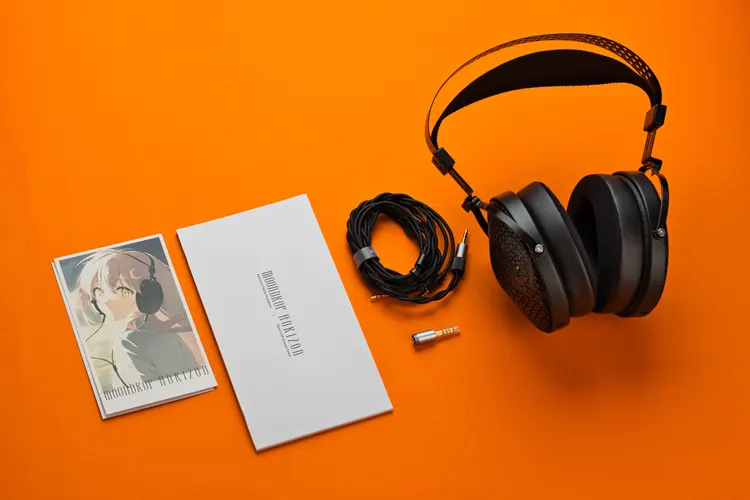
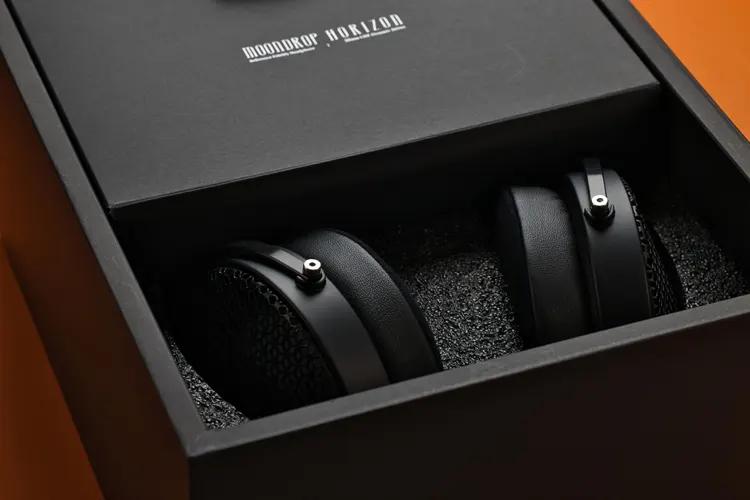
The MOONDROP Horizon comes in a rigid black box with an anime girl wearing a headphone-printed white sleeve evokes a youthful, fun feeling in me, which reminds me of my childhood, when I had nothing to worry about.
I find the box to be highly protective of the product inside and does not waste too much material. It contains the headphones, a 1.5-meter-long modular cable that includes the 3.5 and 4.4mm plugs, and a user’s manual.
There is no carrying pouch or case for the headphones.
Sound Impressions
MOONDROP claims high sensitivity with the Horizon due to the design of the motor system in the drivers. So I used a wide variety of sources with different power and price classes to see whether that claim is true.
I tested a range of sources, from the low-powered and inexpensive dongle DAC to the high-powered and expensive DAP, which included the Celest CD2, iBasso DC-Elite, MUSE Hifi M5 Ultra, Shanling M3 Plus, and the FiiO M15s.
Summary
To ensure the Horizon’s drivers have settled, I spent approximately 24 hours of a burn-in period, spanning three days, with about 8 hours of playtime per day, letting it play on a spare DAP at low and medium volumes.
In hindsight, 1 hour of burn-in should be enough, as I didn’t hear much difference after that, presumably due to Horizon’s high-rigidity titanium-plated dome and cone, combined with a soft suspension of liquid silicone gel.
The Horizon has a nice mix of warm and slightly U-shaped sound signatures, with a laid-back sound, yet it presents details with many nuances in the vocals and instruments.
There is a perceived reduction in response in the lowest part of the bass, known as the sub-bass, which is prevalent in open-back headphone designs.
However, there is a slight boost in the mid-bass, making the roll-off in the sub-bass sound less noticeable. The Horizon has the most sub-bass among the headphones in this review.
A slightly rounded, soft-textured yet articulate characterizes its bass sound, which adds to its overall warm, relaxed, and pleasing tonality.
Midrange is lush, warm, and slightly thick, combined with a somewhat relaxed perceived upper midrange response, which gives instruments and vocals proper note weight and body, preventing them from sounding thin.
Treble is slightly relaxed, smooth, and dark, but not too dark; it conveys a lot of information and detail, rendered in a somewhat laid-back manner and never aggressively. Suffice it to say, the upper midrange and treble never become shouty, piercing, or fatiguing.
The upper treble is very extended, with a subtle elevation in energy, adding life to its laid-back upper midrange and treble demeanor, which prevents it from sounding boring.
That said, the Horizon is a nicely tuned open-back headphone that sounds pleasing, slightly relaxed, yet never dull.
Coloration
There is no conspicuous sound coloration with the Horizon. It has subtractive coloration, rather than additive, which is characterized by a slight reduction in response in the upper midrange and lower treble regions.
A noticeable but certainly not offensive, in fact, pleasant, reduction in the sharpness and energy of the snare drum, harsh vocals, and most instruments, making the overall sound smoother than it should.
Staging
Thanks to its open-back design, the Horizon features a spacious soundstage that is deeper than it is wide, with good height. It is not the biggest I’ve heard, but certainly above average.
I enjoyed the illusion that some of the sounds are coming from outside the head and not just in between the ears, giving me a sensation of being in a natural listening environment.
It is not that big, though; I estimate its size to be that of a medium-sized club, rather than a gymnasium or a concert hall.
Imaging
The Horizon has an average imaging performance. However, it has good instrument separation and layering, but the images are not as distinct and defined as I would like, especially the center vocal image, which lacks the palpability of the best I’ve heard in this regard.
I attribute this to the relaxed tuning of the upper midrange and lower treble, which affects the focus, definition, and presence of the images, but makes the sound pleasing to the ears and the soundstage deeper.
It seems MOONDROP sacrificed a little on the Horizon’s imaging performance, in exchange for a pleasing and slightly laid-back sound signature and a bigger sound stage.
Dynamics
Despite its relaxed and pleasing tonality, the Horizon is dynamically energetic; it responds well to dynamic swings, especially in the bass, and has a good slam, never sounding anemic, boring, or dull.
However, it overloads at high volume levels with songs that feature deep bass when played at extremely high volumes. There is an abrupt ceiling to its dynamic headroom, characterized by a loud crackling noise and distortion when the volume is set too high.
It is due to the sensitive design of the Horizon’s driver that won’t require big, high-powered, and expensive amplification. Horizon is designed to pair well with tiny, low-powered, and inexpensive devices, which I will discuss further below.
That said, I have to be more conscious and back off the volume whenever I want to listen loudly. I wish it could take more power, though, as there are times I want to enjoy the music very loud.
Click on page 2 below for my recommended pairings and selected comparisons.
