

Synergy
Efficiency & Sensitivity
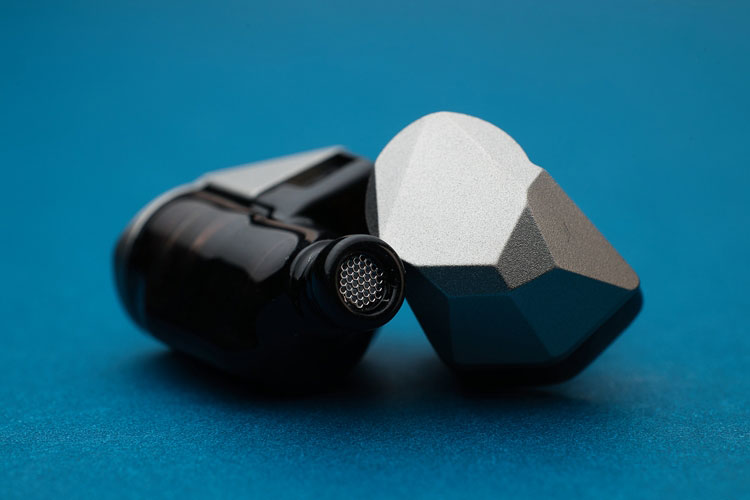
Moondrop Harmon, with its below-average sensitivity, I had to crank up the volume control higher by around 6 dB to match the volume of my other IEMs, which may cause some sources to run out of headroom, but not with the sources used in this review.
On the other hand, the low sensitivity and impedance make it more difficult to hear the noise from the hiss of the source. There is no audible noise from the sources, and I hadn’t experienced any RF noises picked up by the cable during use.
My sources had an easy time with the Harmon, but I wouldn’t recommend lower-powered sources if you wish to get the excellent bass dynamics the Harmon is capable of.
Pairings
Moondrop Harmon, despite its warm sound signature, is sensitive to the source paired. This is due to its clean and low-distortion glass composite diaphragm; I easily perceive the changes in sound when I switch sources.
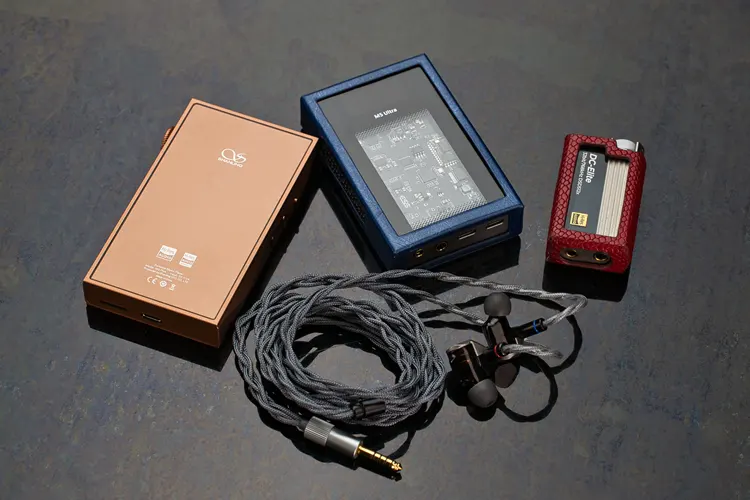
At first, I used the Shanling M3 Plus and enjoyed its tight bass and forward sound presentation; there is good revelation of micro-details and dynamics. The soundstage is wide but not as deep, and the imaging is good, but not the greatest.
I then switched to the Muse HiFi M5 Ultra in its vacuum tube output mode, and the sound changed into a very analog type as opposed to the more analytical sound of the Shanling M3 Plus.
There is an obvious change in tonality from neutral to warm, the presentation is more laid-back, and the soundstage depth has expanded longitudinally.
Lastly, the iBasso DC-Elite. Its slightly U-shaped sound signature is noticeable right after switching from the warm M5 Ultra.
The presentation of details is more forward and vivid, the bass is more controlled, and the soundstage expands even further. The images are holographic but only within the soundstage capability of the Harmon.
Though not the most chameleon-like regarding changes with the source due to its obvious bassy, warm sound signature. It never sounded bad with any of them. Therefore, I would say that the Harmon is a forgiving IEM due to its safe tuning.
Select Comparisons
Moondrop Blessing 3
Technical & Design
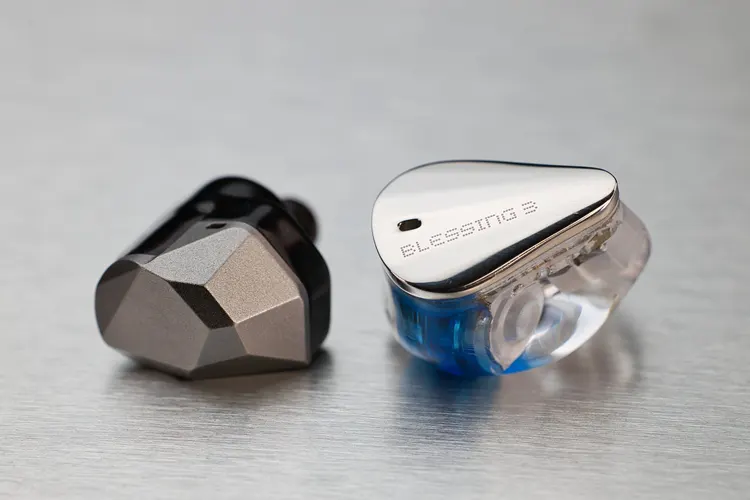
The Blessing 3 is priced at $359 and has a dual dynamic driver and 4 BA driver configuration. Its dual dynamic bass drivers are similarly configured as the Harmon with the Horizontally Opposed Dual Dynamic Driver Unit System (HODDDUS).
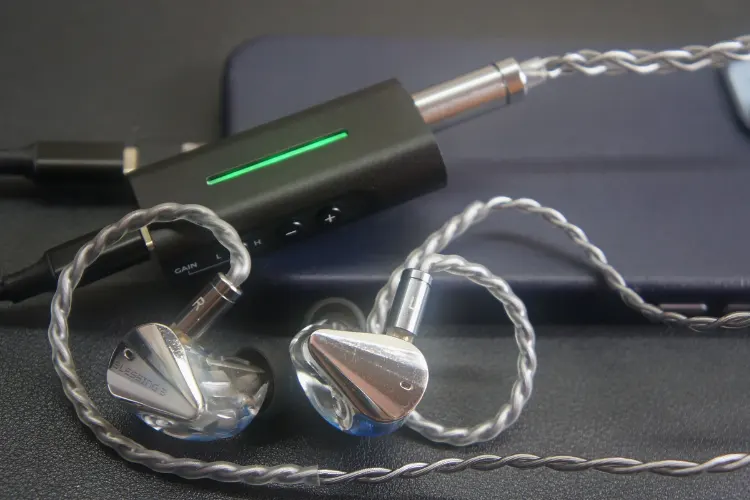
Its beautifully shaped 3d printed shells are clear, allowing us to see the drivers inside, and are covered with a mirror-like finished metal faceplate. The thin silver-plated cable is not my favorite, but it is serviceable.
Performance
The Moondrop Blessing 3 has the usual Moondrop tuning of old; the bass is neutral, but the upper midrange and treble are forward, making the vocals vivid and intimate. It isn’t bad, but it is the opposite of Harmon.
Both have excellent dynamics regarding bass, but the difference in presentation is big. The Blessing 3 is much leaner sounding, giving it a quicker, clearer, and more defined bass, compared to the warm, weighty, and thick bass of the Harmon.
Both are punchy with great dynamic headroom in the bass due to their dual 10mm dynamic drivers targeting the bass.
I like both tuning styles, but the Blessing 3 leaned too much into its tuning direction, making it sound analytical and cold sometimes. Its details are delightful to listen to, but will make you fatigued in a short time. On the other hand, the Harmon sounds polite and too safe in comparison.
Regarding Moondrop’s tuning, I like that they now have variations (no pun intended) in their tuning styles, instead of their homogeneous tuning style across their products in the past.
I would have liked it better if the Harmon weren’t too warmly tuned, and Moondrop gave us a more balanced IEM with excellent bass extension, treble presence, and big soundstage. Perhaps in your next IEMs, Moondrop.
Kiwi Ears Astral
Technical & Design
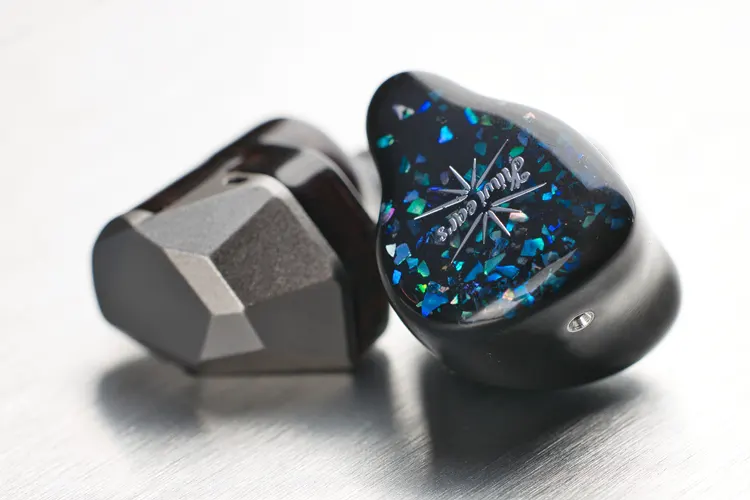
The Astral is priced at $299, but has a more conventional driver configuration of a single dynamic driver and 6 BA. It has a sensitivity of 105 dB and an impedance of 23Ω.
It has a nice-looking 3d printed resin shell with an astral-designed faceplate. The grey 4-core modular cable is thick and soft, which I like.
Performance
The Kiwi Ears Astral has a similar tuning style to Harmon, with elevated bass and warm tonality; the main difference is that the Astral has more upper treble energy.
I like how the Astral has more upper treble energy, making the details sound clearer and the musical presentation more engaging.
On the other hand, I like how the Harmon has clearer vocals and cleaner-sounding treble over the Astral.
Dita Audio Project M
Technical & Design
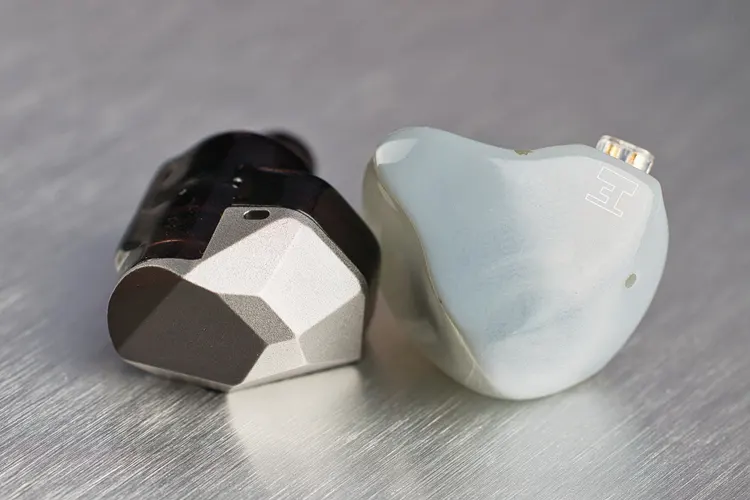
The Project M is priced at $325 and has a hybrid arrangement featuring DITA PM1+ Dynamic driver and Knowles 33518 BA. It has an impedance of 32Ω and a sensitivity of 107 dB/mW @1 kHz.
I like the minimalist-looking resin shell design, which is available in clear, grey, and pink. And the glow-in-the-dark stock ear tips. But the thin cable is not to my liking as I find it too thin for my taste, but it is certainly serviceable.
Performance
There’s a drastic difference in tuning; Project M is much brighter with leaner bass than the Harmon, as if they were tuned opposite. I like the bigger soundstage size and the clearer details of the Project M, but the Harmon has better imaging and warmer tonality.
These two are excellent alternatives to each other due to their contrasting tuning style.

My Verdict
The triple-dynamic driver MOONDROP Harmon in-ear monitor may not have the technical performance as its primary attribute, but the sound signature and tonality more than compensate for that.
It may not wow you with the most pinpoint imaging or a stadium-like sound staging, but what you have instead is a warmth that fills your soul, or at least your musical hunger.
I understand this type of tuning; it is close to the so-called ‘Meta Sound’. I’ve heard this type of sound several times before.
Its priorities are bass, tonality, and warmth, and the technical performance usually takes a back seat. This makes a pleasant sound that would please many audiophiles tired of bright-sounding IEMs.
With that said, I recommend the Moondrop Harmon to those seeking an impressive bass performance, warm tonality, and clean and polite treble.
Moondrop Harmon Technical Specifications
- Model: Harmon In-ear Monitors (Coaxial Four-Cavity Frequency Crossover / Three Dynamic Drivers)
- Driver Configuration: 10mm Dynamic Driver with Glass Dome Composite Diaphragm + Dual 10mm Paper Cone Composite Diaphragm Bass Dynamic Driver. (H.O.D.D.D.U.S.)
- Impedance: 19Ω±15% (@1kHz)
- Sensitivity: 114dB/Vrms (@1kHz)
- Frequency Response Range: 10Hz-60kHz
- THD: THD≤O.1% (@1kHz, 94dB)
- Effective Frequency Response Range: 20Hz-20kHz (IEC60318-4, -3dB)
- Plug: 4.4mm Balanced / 3.5mm Single-ended
- Pin: 0.78-2pin
