

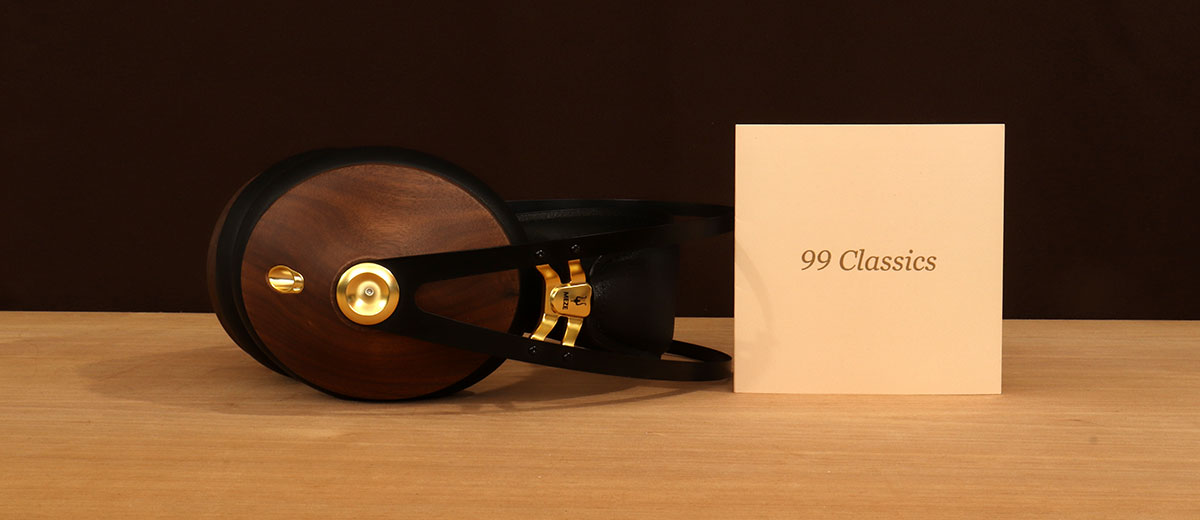
Synergy
Acoustic Inserts
The Meze Audio 99 Classics 2nd Generation acoustic inserts are there if you want a different sonic profile that’s more gentile and one with high frequencies that are darker and not as bright, making them more pleasing to people who are top-end sensitive.
But somehow and simultaneously, these inserts take the bass down to a point where I can feel its effectiveness down to 9Hz. Before the inserts, the bass dropped considerably below 30Hz and was completely ineffective below 17Hz.
These inserts don’t affect the tonality or accuracy much. Detail is better without the inserts, but you lose out on a couple of the mentioned benefits, which include an increase in bass extension and smoother mids and top end. The inserts also quell the mentioned 2.5kHz, which mellows out the overall presentation.
Efficiency
The difference between the original 99 Classics and the 2nd Generation in efficiency is nil, and an AB test confirms that, since I have both versions as stated on hand.
The 99 Classics 2nd Generation seems to use power more efficiently and is tuned to display all the frequencies at any volume.
The original model, at one point, would drop high-frequency production when the volume drops near zero. The 99 Classics 2nd Generation proves again to be the more balanced set.
Pairings
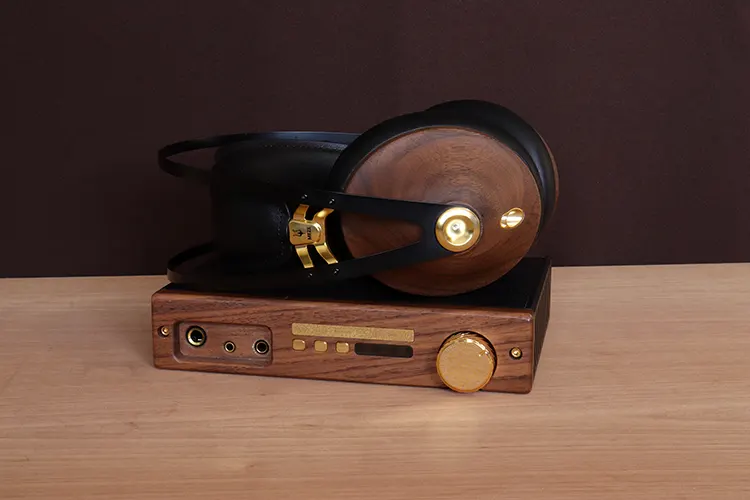
The fact that the 99 Classics 2nd Generation is not too source sensitive makes them extremely versatile. This is one of the most overlooked aspects of these headphones, and in the 2nd Generation, this aspect has been improved.
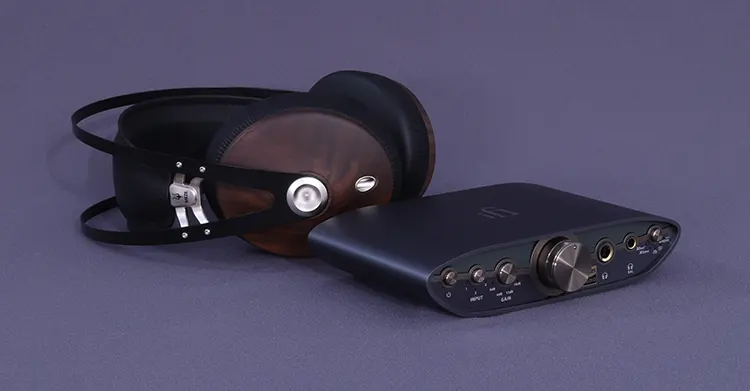
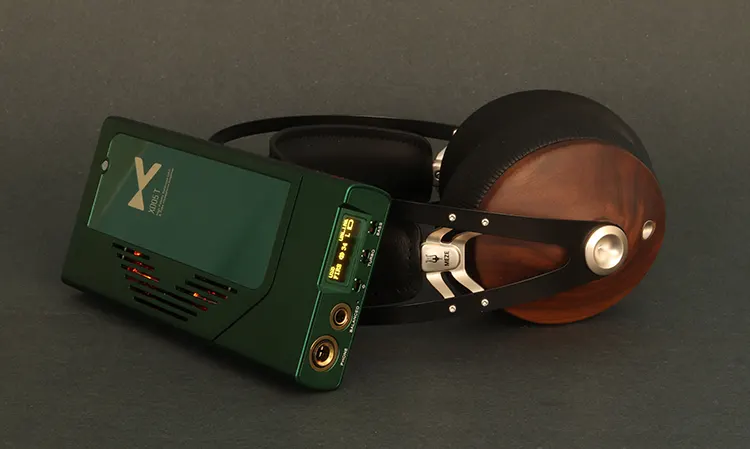
You can get enjoyment from using a high-power setup like the SMSL SU-X and SH-X combo or by simply connecting them to the included dongle, which I’m estimating to output around 30mW max.
Tonality remains the same also regardless of what you use. They’re also forgiving of bad recordings up to a point, although good ones bring out the best in them.
I did obtain slight differences when using the Rose Technics RT-5000 when engaging the filter system and an increase in fun factor.
This combo not only made an aesthetically pleasing looking combo that combines wood and gold trim, but also produced sonics that I can certainly live with.
Select Comparison
Meze 99 Classics V1
Technical
The Meze Audio 99 Classics has to be one of the most popular headphones of all time. I’ve had a set for many years, and it’s broken in now. I have the silver and Walnut version, but the OG version also came with the gold trim.
In my opinion, the 99 Classics was Meze Audio’s turning point that took them internationally. It was their statement piece of commitment within the industry, and since then, they have improved tenfold.
Since then, they’ve worked full speed ahead and released the illustrious POET, the Liric 1 and Liric II, the Elite, the Empyrean, the 109 PRO, and the 105 AER/SILVA.
Design
How times have changed. Here’s a perfect example of that. The 99 Classics 2nd Generation comes with a modern-day dongle, while the original version came with a dual 6.35mm airplane adapter. Who’s still using those nowadays?
The cable was also extended from five feet to six feet; however, the quality hasn’t changed, and both use rubber-insulated thin wire above the Y split.
Again, they should have used the same bungee cord wrapped cables they used on the bottom portion of the stock cable that came with the 99 Classics 2nd Generation.
Nothing has changed as far as the headphone’s overall construction, except for the pads, which are now mounted on a ring that uses a 6-point mount and the smaller cups.
The previous model just slid into the crevice between the front bezel and the cup, making it easier to match up with aftermarket pads.
Performance
There are some noticeable sonic differences between these two. Version 2, in a nutshell, produces a more neutral bass, more midrange presence, and similar high frequencies, but with enhanced definition.
Starting with the bass, the 99 Classics 2nd Generation has a more polite approach and doesn’t produce as much body as the original version. The 99 Classics 2nd Generation focuses the most on tightening up the low end in favor of one that is cleaner, and they effectively produce more distinction between notes.
The midrange seems more forward on the new version, and abrasiveness is kept under control on the 99 Classics 2nd Generation.
They produce a better-balanced sonic experience with tighter bass, a more realistic midrange, and treble response that always remains polite with less fatigue that never becomes blazingly strident.
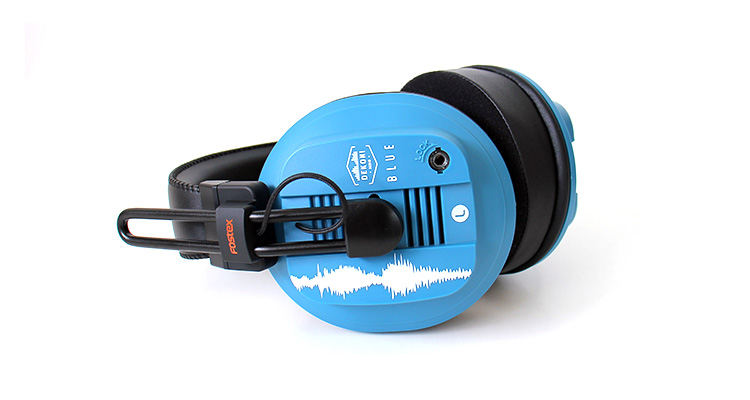
DEKONI Audio Blue
Technical
The DEKONI Audio Blue is the antithesis of the Meze Audio 99 Classics 2nd Generation, even though both models are closed-back headphones. They’re based on different principles and are made for different purposes as well.
These cans use what’s called a regular phase planar magnetic driver that gives rise to the RP within the Fostex line name. This line of Fostex RP monitors gave rise to the Dekoni Blue, particularly the MK3.
One of the tricks the DEKONI Blue employs as a modification is that they found out they can kill off a nasty peak detected on the original version by simply reshaping the inner ear portion of the pad.
Which, on my end, is a necessity to replace because the stock Fostex pads are dire to say the least.
Design
With the pad modification, DEKONI gave the Blue an acceptable comfort level that rivals the 99 Classics 2nd Generation’s comfort level. I like the comfort level of the stock pads on the 99 Classics, but prefer the DEKONI pads because of their durability and added comfort level.
The DEKONI Blue is one of the most durable headphones you can buy. The shells are made of a very hard plastic, and the metal sliders that form the headband assembly are thick. They can take a beating and come right back at you.
Performance
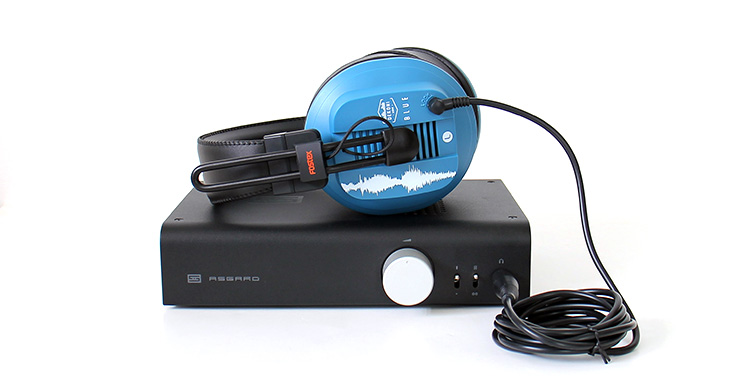
One thing is for certain: the DEKONI Blue or any of the same Fostex headphones are headphones that, when you acquire one, hopefully you’ll have enough power to drive them correctly because they need lots of it. Meantime, you could power the 99 Classics 2nd Generation with a low-powered dongle.
The DEKONI Blue has one inherent problem, and that is the lack of balanced connectivity options. I would love to have that ability to tap into the more powerful ports, which are better suited to drive these cans.
The DEKONI Blue is a fun-to-listen-to headphone, but it remains dark-sounding even though the original was made for studio use. I would not call it a reference headphone by any means. The 99 Classics 2nd Generation is the more neutral of the two and does not depend much on the source.
I think one previous reviewer said it best when he said that to enjoy the Fostex T50 or the DERKONI Blue at their fullest, you need to put 8 watts into them, but that’s impossible with the single-ended modern-day headphone output. These seriously need an overhaul to accept balanced connectivity.
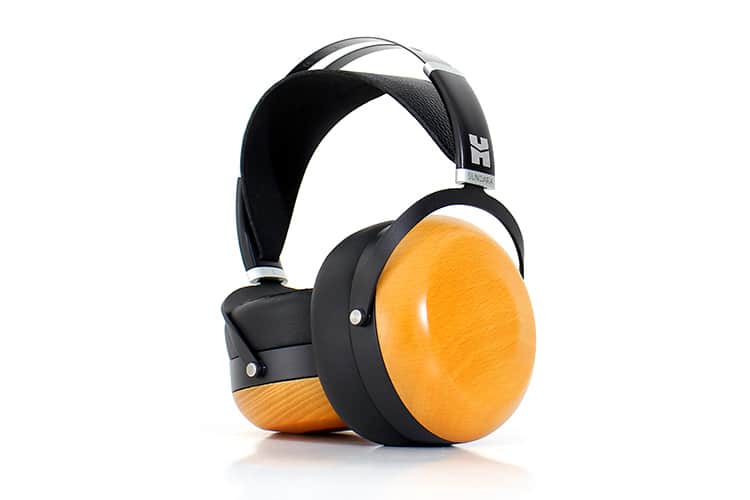
HIFIMAN Sundara Closed Back
Technical
Some would consider the Sundara Closed Back an underdog because HIFIMAN recently dropped its price tag considerably and is possibly the best buy in this comparison at present because of that price drop.
It sports wooden cups and a sealed back design. However, it uses a planar magnetic driver in the likes of the driver used on the Audivina and the HE-R10P. It’s more in line with the Fostex regular phase magnetic driver.
Design
The only aspect that the Sundara Closed Back shares with the original is the comfortable headband, which uses a headstrap to evenly distribute weight on top.
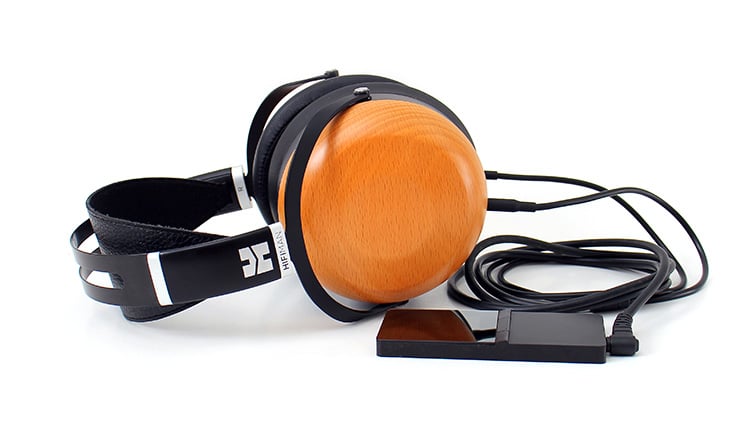
The cups themselves resemble burger buns. The orange hue and round shape make it so. The overall headphone is heavier, but they don’t seem to affect comfort.
I would consider the Sundara Closed Back to be more comfortable than the 99 Classics 2nd Generation. That’s my opinion, and you can find the contrary on this one. Which will last longer is another thing.
Performance
The one aspect that I like about the Meze Audio 99 Classics 2nd Generation is the realistic vocal presentation. On the Sundara, vocals sound compressed in comparison. The original open-back variant handles this section of the spectrum way better.
The Sundara Closed Back can perform better when it comes to high-frequency production and can produce highs with added extension. But they also tend to conglomerate within the center stage, making the high frequencies sound narrow.
HIFIMAN makes some great open-back headphones, but when it comes to closed-back, Meze Audio seems to be better at it. Perhaps the new Audivina LE will do better. Stay tuned to find out.
My Verdict
The Meze Audio 99 Classics 2nd Generation has turned out to be one of the most versatile headphones under $500 I’ve run into, and it’s a fun headphone to listen to with a surprisingly large soundstage for a closed-back design.
They cater to musicality rather than sterility and detail retrieval. It’s not a headphone to dissect tracks with, but to enjoy them with, and do so with whatever clean source you have, regardless of how low the output power of the driving device is.
The Meze Audio 99 Classics 2nd Generation is a great headphone to choose from, especially if you need closed-back isolation. There are not many good ones out there. It belongs to a very short list of closed-back headphones that I consider a generally fun-to-listen-to daily driver.
Meze Audio 99 Classics 2nd Generation Technical Specifications
- Driver Type Dynamic
- Driver Size 40 mm
- Frequency Range 15 Hz – 25 kHz
- Impedance 16 Ω
- Sensitivity 103 dB SPL/mW at 1 kHz
- Input Connector Dual 3.5 mm TS Jack
- Total Harmonic Distortion <0.1% at 1 kHz
- Ear Cups Walnut Wood
- Weight 290 g (10.23 oz)
