

Select Comparisons
SIMGOT EM10
Technical
The EM10, a premium release from SIMGOT, is a tribrid 10-driver universal IEM with a single dynamic driver, eight balanced armature drivers, and one piezoelectric ceramic driver using a 4-way RC crossover.
The 8 mm dynamic driver handles the low frequencies, while the balanced armature and the piezoelectric drivers handle the mids, highs, and ultra-high frequencies.
The EM10 is rated at 41.6 Ω ±15% for impedance with an SPL of 120 dB/Vrms. It is an easy-to-drive IEM; however, it can take some extra juice with confidence. Compared to the Ember, it needs fewer volume clicks.
Design
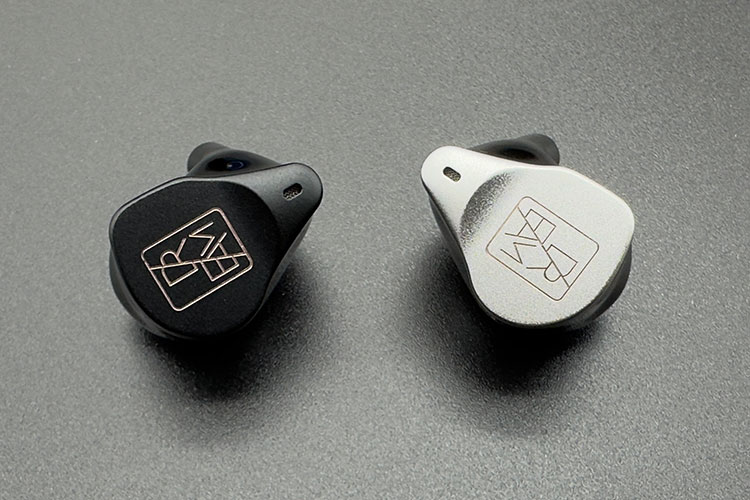
The IEM, built in resin, features a distinctive design theme, with one side sporting a silver faceplate and the other a matte black finish.
Each shell is engraved with the codename “DREAM” in a subtle copper font, adding a unique touch to the overall aesthetic. The shells are lightweight and do not feel large. Fit remains an easy one.
Ember, with its metal shells, is more appealing in build and finish. The smaller shells give you a more confident fit.
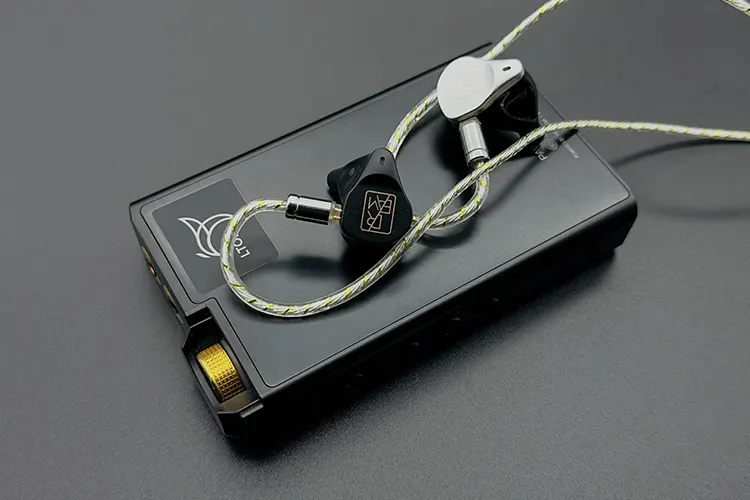
Both IEMs use a standard 2-pin connection system. EM10’s stock cable features a modular design with 4.4mm balanced and 3.5mm single-ended plugs. I find the stock cable on Ember to have a better build.
Performance
EM10 comes in with more bass on tap, and it is the deep kind. The sub-bass reaches lower and hangs around longer. You get more rumble and a deeper low end. It feels more authoritative and hits you harder and cleaner.
The mid-bass feels a bit shy and does not explode like the sub-bass. Ember flips that balance. It does not go as deep as EM10, but it hits with more punch in the mid-bass and feels cleaner doing it.
Midrange is where Ember feels more settled. It has a calmer and smoother tone and hits the right timbre. Vocals sit in a comfortable spot, instruments do not feel stretched apart, and it just sounds more natural to me.
The EM10 is more open and spaced out than the intimate Ember. It feels like it is chasing size and air more than that organic, glued-together sound Ember does better.
EM10 has more presence up top, and it shows. The lower treble region is a clear differentiator. The problem is that it can come off splashy. It gives you more shine, but not always more refinement.
Separation in busy sections is not as clean as I would like, and that extra energy can make some tracks feel a bit edgy. Ember stays safer.
Cymbals, hi-hats, and snare cracks lose some bite on Ember. You miss some details and openness. Smoother, more coherent, less glare, and easier to run for long sessions without thinking about it.
Technically, EM10 is slightly ahead. The stage has better width and height, and it gives instruments more breathing room. Ember is not cramped, but it is more intimate with a smaller stage presentation.
Softears RSV-MKII
Technical
The RSV-MKII is the new iteration of Softears’ widely acclaimed IEM, the RSV, which was originally launched in early 2021. The IEM houses five balanced armature drivers, all sourced from Knowles.
For the low end, it uses two Knowles CI series drivers. The midrange is handled by a Knowles ED driver, while the high frequencies rely on a composite Knowles SWFK driver. It features an upgraded 4-way crossover with four independent acoustic tubes.
The RSV-MKII is easier to drive and is fairly sensitive at 7Ω and 122 dB @ 1 kHz SPL.
On my LPGT, the RSV-MKII reaches a comfortable level around volume 30, and just a few extra clicks can make it too loud. Ember, though it can be played with most of the sources around, does ask for some extra juice.
Design
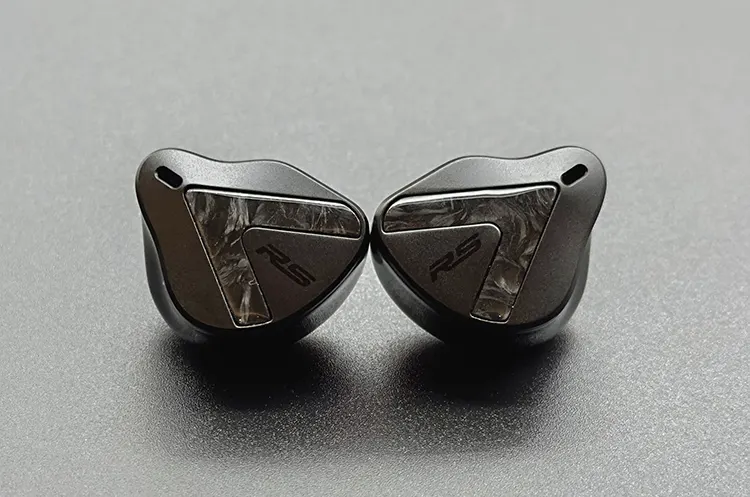
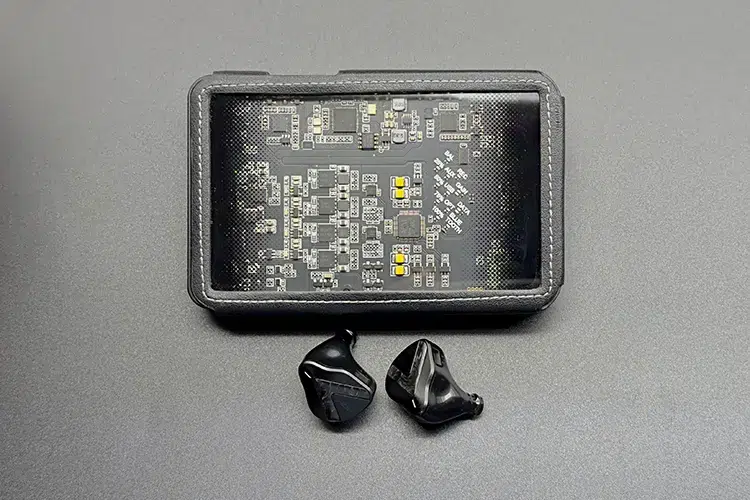
The RSV-MKII is built in a simple, all-black finish. The body is made from medical-grade resin, and the faceplate is matte anodized aluminum, neatly shaped through CNC machining.
It has a clean and straightforward look, which is typical of Softears. Ember also goes for an all-black design, but its glossy metallic finish gives it a more premium touch.
The RSV-MKII has larger shells with a wider body, but the ergonomics ensure the fit stays snug. If you have smaller ears,
Ember will offer a better fit, but the RSV MKII does not fit badly either, as it is lightweight and has smooth curves along the body.
Softears packs the RSV-MKII in a compact, clean package that feels thoughtful. It includes nearly everything you would expect in terms of accessories. Ember’s packaging uses more air and foam.
Both IEMs use a standard 2-pin connection system. Both stock cables are functional, but I prefer the RSV MKII’s stock cable for its cleaner, neater look.
Performance
Ember has more sub-bass presence, so you get that extra rumble and depth, which makes the bass confident and stable. RSV-MKII, though, has more mid-bass, and it dominates the overall bass shape.
That gives drums more “thump” and body, but on bass-heavy tracks, it creeps upward, adding a bit of thickness to the mix.
Ember, in comparison, feels more controlled and cleaner down low. It is punchy, but it does not bloom, and it stays more composed even when the track is loaded with bass. RSV-MKII can sound bigger, but Ember sounds tighter and more disciplined.
Midrange is a tougher fight, but RSV-MKII pulls ahead for me. It has that Softears secret sauce with a kind of studio-like balance that aims for neutral without turning dry or analytical.
Vocals sit a bit closer to the ears, feel more present, and there’s a nicer sense of extension that makes instruments feel more “complete.” Ember’s midrange sits a touch more relaxed in the overall picture. RSV-MKII has a crisper upper midrange with more energy.
Treble stays smooth on Ember and livelier on RSV-MKII. RSV has more sparkle and air, so cymbals shimmer longer, and the stage feels brighter and more open. Ember keeps it polite and even, avoiding any sharpness, and it stays easy for long sessions.
Technically, I would not put them very far off, but RSV-MKII is a winner here. The stage feels deeper on RSV-MKII. Resolution feels better on the RSV-MKII.
Macro-dynamics go to the RSV-MKII that hits harder and rides big swings in volume with more authority, largely thanks to that bold mid-bass.
If you want that extra top-end energy and a more illuminated presentation, RSV-MKII does it better. If you want a smoother, safer listen with deeper rumble and cleaner bass control, Ember makes more sense.
THIEAUDIO Oracle MKIII
Technical
The Oracle MKIII was released last year with a 2DD + 2BA + 2EST configuration. The IEM uses two ultra-high-frequency drivers, one high-frequency driver, one mid-frequency driver, and two low-frequency drivers, with a 4-way crossover system.
The MKIII also utilizes IMPACT2 technology for its low end, which appears in many of the brand’s premium releases.
The Oracle MKIII has an impedance of 13Ω at 1 kHz and a sensitivity of 99 dB/Vrms. It can be driven comfortably by lower-power sources such as dongles and smartphones, but it shines best with some additional power. On my LPGT, it takes a similar volume level as the Ember.
Design
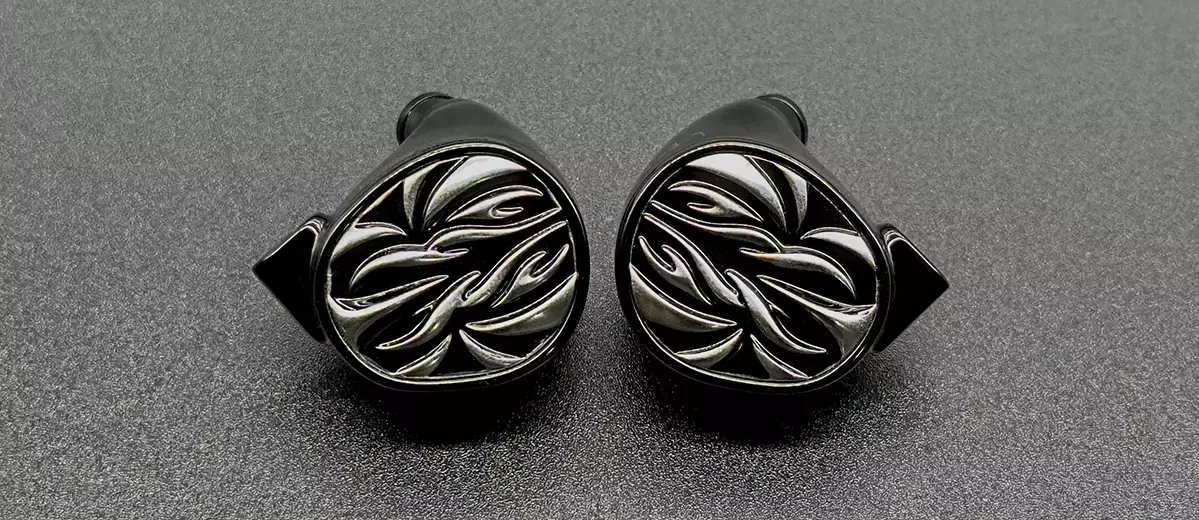
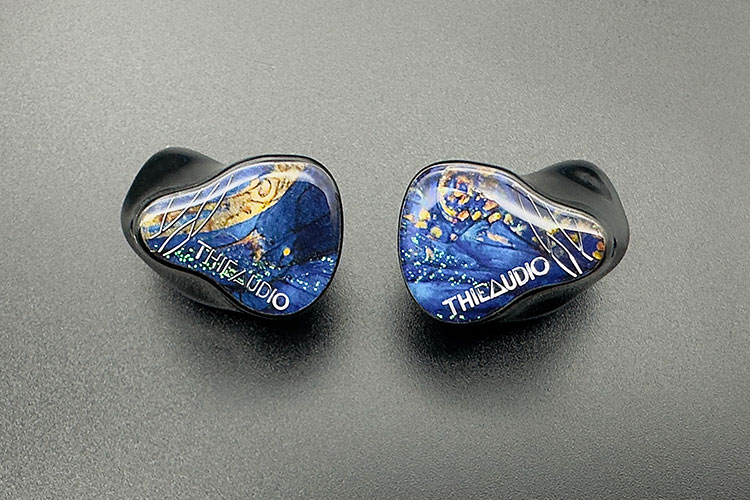
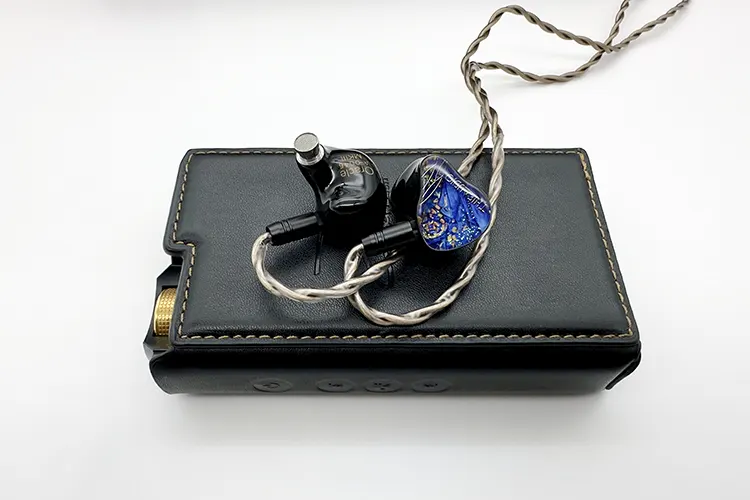
The Oracle MKIII features resin shells with a sleek, all-black look. The faceplate stands out with an intricate yet minimalist design, showing a deep blue base accented by light brown patterns. The Ember, in comparison, has a minimal design theme, subtle yet classy.
The Oracle MKIII also features a metal nozzle, though it is a bit smaller in size. Ember’s shells are quite small; thus, fit-wise, they are easy over the Oracle MKIII’s shells, though the latter does not have a large shell either.
Both IEMs connect via a 0.78 mm 2-pin socket. The Oracle MKIII includes a high-grade silver-plated OCC modular cable that lets you choose between 4.4 mm, 3.5 mm, and 2.5 mm plugs. Both the stock cables are mostly functional, nothing beyond ordinary.
Performance
Ember comes in with the bigger low-end posture. The bass has more impact to offer. The sub-bass has plenty of rumbles and goes a lot deeper than Oracle MKIII. The mid-bass also hits hard, stays controlled, and gives the whole tuning a warmer, fuller foundation.
The Oracle MKIII feels leaner down low. It is not bass-light, just less physical and more controlled. The trade-off is that it sounds a bit cleaner and less “pressurized” in busy mixes, especially when the track has multiple layers fighting for attention.
The Oracle MKIII’s midrange is quite neutral. Vocals feel cleaner and more illuminated, and instruments like guitars and pianos pop with better edge definition. It has that clearer, more immediate delivery, so small phrasing details and vocal texture come through easier. Ember takes a more relaxed route.
Vocals sit a touch behind the instruments, and the midrange feels smoother and more forgiving, with a natural tone that does not try to impress you with sharp outlines. The midrange has less warmth and has better separation on Oracle MKIII.
Treble is where Oracle MKIII separates itself the most. It brings more sparkle and air, so cymbals have extra shimmer, and the stage feels a bit more open. Details also stand out more, especially tiny accents and trailing decays.
Ember keeps the treble polite. It is smooth, easy to listen to, and avoids any splashy peaks, but it does not have the same airy lift. If you want energy and crispness, Oracle MKIII is the one, but it can be sharp at times.
Technically, Oracle MKIII is more about details and precision in delivery. Its stage spans wider but lacks a good depth. Instruments have more space around them. It also presents a more layered sound. Imaging is more accurate on Oracle MKIII.
My Verdict
Every time I see a new planar IEM, I have the same question: what is it really going to do differently? E
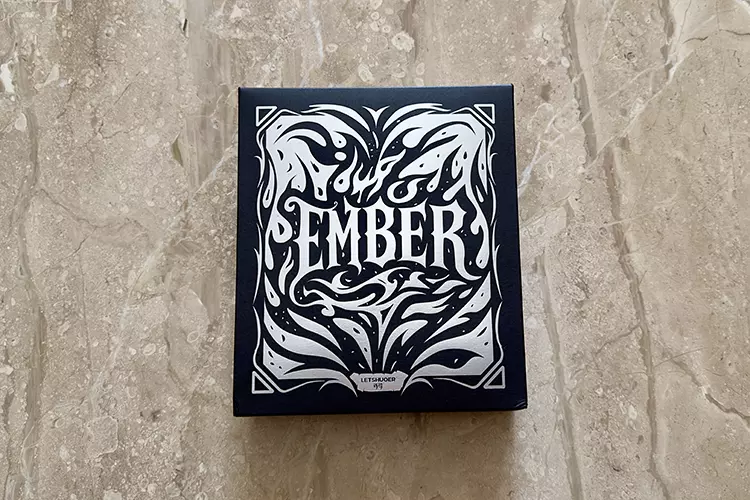
mber, though, is not one of those “same thing, new shell” releases. It genuinely messes with the planar stereotype for me. The tonal balance is quite natural and pleasing here. It does not lean into that overly clean, slightly sterile vibe that a lot of planar IEMs fall into.
The bass is a bit of a surprise. Planar IEMs normally tap you on the shoulder; this one punches you hard, and that is what gives Ember its own flavor. The bass hits feel satisfying in a way that makes you stop thinking about driver tech and just enjoy the track.
Ember doesn’t chase the absolute last word in micro detail, but the coherence, the musical flow, and that bass give it plenty of reasons to exist.
With how well LETSHUOER has handled planar IEMs in the past with sets like the S12 and S15, I can see how they had the confidence to swing for something like Ember. In LETSHUOER’s lineup, it is placed a tier above the S15 and a tier below the Mystic 8, confidently filling that mid-fi gap.
If you ask me whether the premium price tag is justified by the tuning, I will say a less confident “yes.” Looking at the release as a whole, it falls a bit short of creating a wow factor. I had more expectations from this release, more because of how LETSHUOER has been delivering in the recent past.
But the Ember definitely deserves to be on your to-try-IEMs list. It has real qualities that will earn it plenty of fans and praise, no question.
LETSHUOER Ember Technical Specifications
- Driver Configuration: 14.8 mm custom planar magnetic driver
- Impedance: 30 Ω @ 1 kHz
- Sensitivity: 103 dB
- Frequency Response: 20 Hz–40 kHz
- Cable: 26 AWG, 4-core, UP-OCC monocrystalline copper cable (Effect Audio Collaboration)
