

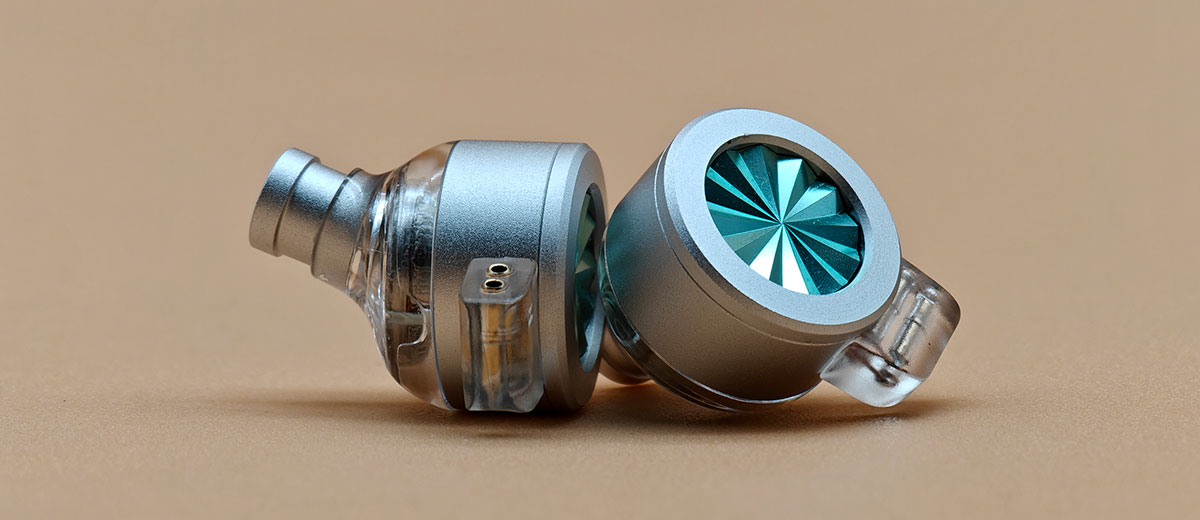
Kurt reviews the LETSHUOER D02, an ultra-affordable 11mm dual-magnetic circuit, dual-chambered dynamic driver IEM priced from $29.99.
Disclaimer: This sample was sent to me in exchange for my honest opinion. Headfonics is an independent website with no affiliate links or status. I thank LETSHUOER for their support.
Click here to read more about LETSHUOER products previously tested on Headfonics.
This article follows our latest scoring guidelines, which you can read in more detail here.
LETSHUOER was one of the first brands to push planar IEMs into the spotlight with the well-regarded Tape and S12.
Since then, their catalogue has expanded with a steady stream of releases, culminating with their latest high-end flagship, the Cadenza 12.
Now, they step into the ultra-budget category for the first time with the dynamic driver LETSHUOER D02, priced from $29.99.
With a newly developed 11mm dynamic driver designed to deliver improved stability and control, how will the D02 perform in a competitive market that includes the Hidizs ST2 Nebula Pro and the FiiO JD1? I find out in more detail in my full review below.
Features
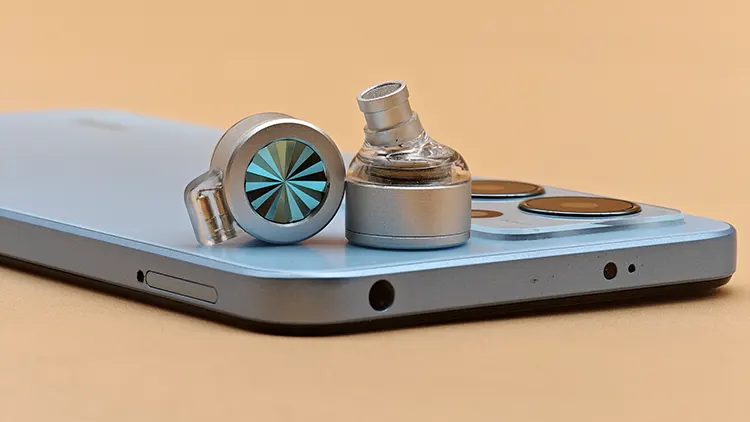
The LETSHUOER D02 utilizes a newly developed 11mm dynamic driver, featuring a dual-magnetic circuit. This strengthens the force on both sides of the diaphragm, giving it firmer control and steadier movement.
A dual-cavity layout is also used inside the chamber to regulate airflow and pressure. By reducing resonance and keeping the diaphragm stable, the driver can perform more consistently across its range.
The D02 is rated at 26Ω for impedance with an SPL of 108 dB/mW @1Khz, so I doubt it will require strong amplification to sound optimal.
Design
Two available color options are available for the LETSHUOER D02, Berry and Aqua. The bright Berry version offers a playful pop of color while Aqua delivers a cooler and more subdued option.
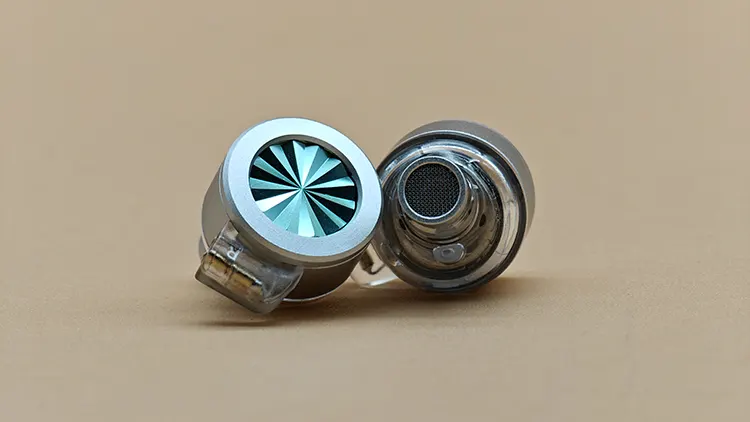
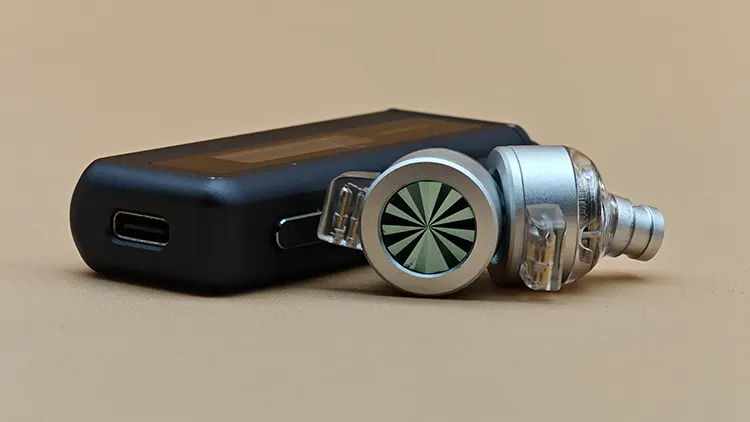
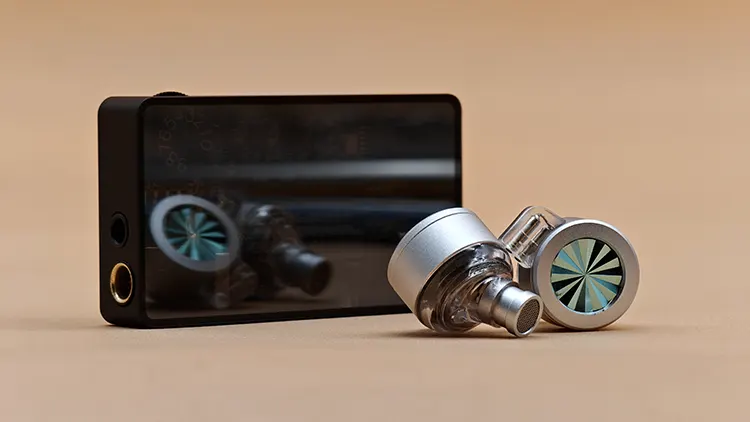
Its gem-cut aluminum faceplate is paired with a translucent polycarbonate shell that shows parts of the inner chamber. This combination gives the D02 a mix of reflective metal detail and a clear, rounded body.
The round body is compact with smooth edges that keep the overall profile simple. A long metal nozzle extends outward, finished with a fine mesh filter to secure tips and protect the chamber.
Markings are minimal, with only small indicators placed near the connector. The 2-pin block sits clearly at the top without additional branding or large printed logos.
Comfort & Isolation
The LETSHUOER D02 has a compact, rounded shell that sits naturally in the ear without creating hotspots. Its lightweight build makes it easy to wear for extended sessions without discomfort.
The nozzles are moderately long, helping to secure a stable insertion that doesn’t feel forced. Once in place, the design allows them to sit flush enough that they don’t stick out awkwardly.
Passive isolation is decent thanks to the snug fit, blocking out a fair amount of external noise during commutes or indoor use.
It isn’t designed to be a deep-insertion monitor, but it provides enough separation to enjoy music without constant interruptions.
Ear Tips
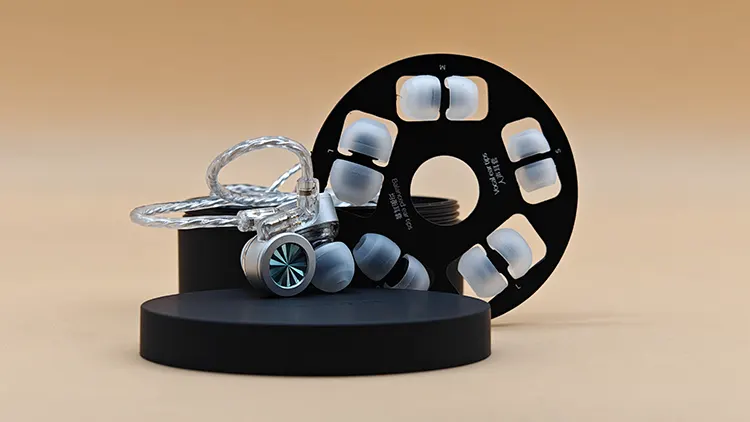
Two sets of silicone tips come with the LETSHUOER D02, split between balanced bore and wide bore types. Each set is provided in small, medium, and large sizes, arranged on a circular tip plate.
The balanced tips are designed for a secure seal and don’t noticeably alter the sound.
They offer reliable isolation and stability, making them the most consistent option for daily use.
The wide bore tips create a slightly more open sound but reduce isolation. Due to their looser fit, the bass feels slightly weaker, giving the presentation a drier feel.
Stock Cable
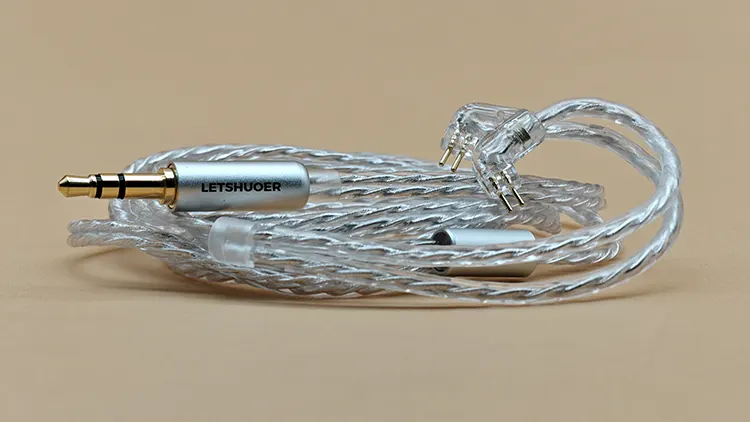
Two cable options are offered for the LETSHUOER D02, with either a standard 3.5mm termination or a Type-C version that carries a built-in DAC and microphone.
The latter brings extra functionality for everyday use, while the 3.5mm version is the more straightforward choice.
The unit I received came with the 3.5mm cable, which feels stiff in the hand and tangles too easily. Its texture comes across as cheap, making it a weak part of the overall package.
Packaging & Accessories
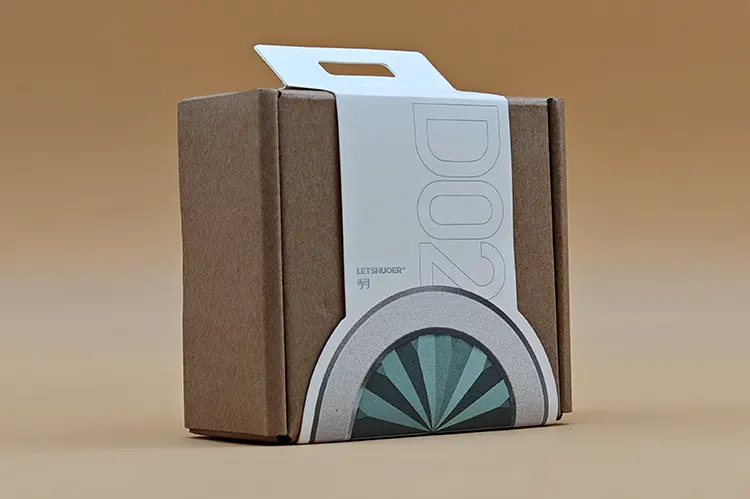
The LETSHUOER D02 arrives in a compact cardboard box with a white paper sleeve wrapped around it. The sleeve features a cutout where the faceplate design is displayed, giving a small preview of the IEM inside.
Sliding the paper sleeve off reveals a plain brown box with the LETSHUOER logo printed at the front. On the back, key specifications such as impedance, sensitivity, and driver details are listed.
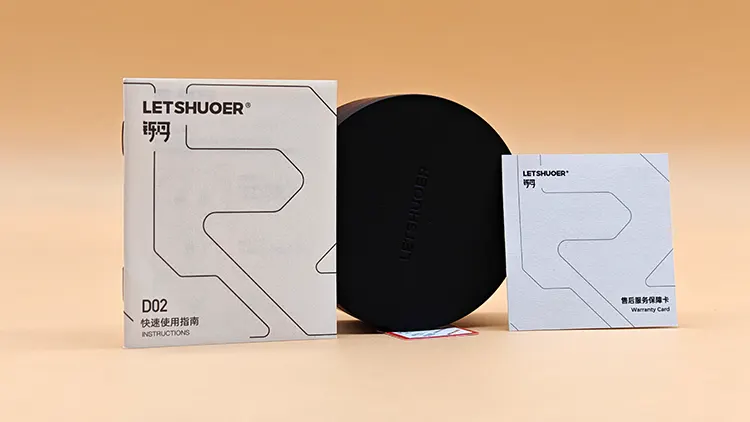
Lifting the lid reveals a round black carrying case with the LETSHUOER name embossed on top. It sits snugly in the cardboard frame, giving the unboxing a more organized look.
Beneath the case are the quick start guide and warranty card. These are placed flat under the insert, rounding out the small set of paperwork included.
Inside the case, the D02 is already connected to its cable. Alongside it is a circular ear tip holder with two full sets of silicone tips in small, medium, and large sizes.
Sound Impressions
The following sound impressions of the LETSHUOER D02 were completed using the FiiO JA11, the Heartfield R1, and the Colorfly CDA-M2 dongle DACs.
Bass
The low end on the LETSHUOER D02 comes across as almost nonexistent, with both subbass and midbass failing to deliver any weight or body. Notes land lightly without impact, leaving bass-driven tracks feeling hollow.
Subbass cannot be felt even when the music usually calls for a deep rumble. Midbass fares no better, offering no punch to drums or rhythm that would normally carry energy.
There is a slight bleed into the mids despite the lack of presence. Instead of adding body, it only smears into the lower range and reduces definition.
Texture is thin and unconvincing, never giving the sense of grip or authority expected from a dynamic driver. The result is a foundation that feels missing rather than supportive.
Mids
The midrange is pushed forward, giving the vocals of the LETSHUOER D02 a clear spotlight in the mix. While this positioning keeps them audible, it also exposes their weaknesses.
A grainy texture runs throughout the mids, preventing voices and instruments from sounding clean. This makes timbre feel unnatural and leaves longer sessions fatiguing.
Clarity struggles whenever tracks become busy, with instruments smearing together. Instead of layering smoothly, the midrange feels congested and lacking definition.
Both male and female vocals miss the weight needed to sound convincing. They sit in front of the mix but rarely come across as lifelike.
Treble
Treble is one of the stronger aspects of the LETSHUOER D02, reaching further than expected for this range. Detail retrieval is solid, letting smaller nuances come through even when the rest of the signature falls short.
Cymbals and upper harmonics are reproduced with decent clarity, keeping them from sounding muted. The extension here helps balance out the otherwise weak low end.
There is no sibilance present, so the upper range avoids harshness. This makes the treble easier to listen to, even if it cannot add openness to the sound.
Air is completely absent, leaving the top end closed off. What could have been a bright point instead feels restricted and lacking space.
Staging & Dynamics
Its soundstage feels cramped, as its width never pushes or stretches outward properly. Sounds are kept close to the head, leaving no sense of expansiveness or immersion.
Imaging doesn’t provide much accuracy, with positions only loosely defined. Once tracks get busy, things collapse into each other, and the already weak precision is lost.
Layering struggles to create depth, as instruments sit on top of each other. The stage lacks distance front to back, keeping everything flat and shallow.
Shifts in volume come across muted, with little contrast between soft and loud moments. The lack of dynamics makes the overall sound feel dull and unvaried.
Synergy
Efficiency & Sensitivity
The LETSHUOER D02 is very easy to drive and reaches loud volumes without effort. Even basic dongles and phones have no problem powering it.
At lower volumes, the sound stays forward but never gains fullness. Bass in particular feels absent, leaving quieter listening sessions lacking foundation.
Adding more power doesn’t change its character or bring extra control. The D02 refuses to scale, staying thin and closed in regardless of the source.
Noise is not an issue, as the D02 stays silent across different outputs. There is no hiss, and the sound remains consistent, though always limited in dynamics.
Pairings
Using a phone directly, the LETSHUOER D02 sounds thin and forward without much else to offer. Its weak bass and narrow stage are immediately obvious here.
The FiiO JA11 adds brightness to the mids, pushing vocals out even further. This pairing makes the grain more noticeable, which can be fatiguing.
With the Heartfield R1, the D02 gains a touch of warmth but still lacks body. Imaging remains flat, and the closed stage doesn’t open up.
The Colorfly CDA-M2 highlights detail retrieval in the treble, but cannot fix the lack of bass or space. Even with its stronger output, the D02 sounds constrained.
Select Comparisons
Hidizs ST2 Nebula Pro
Technical
The Hidizs ST2 Nebula Pro uses a single 10mm dynamic driver with a dual magnetic circuit. Its PU+PEEK composite diaphragm is paired with the motor system to keep movement stable and controlled.
The internal setup is kept simple with no crossover system in place. All frequencies are handled by the single driver, making it a straightforward one-DD configuration.
Design
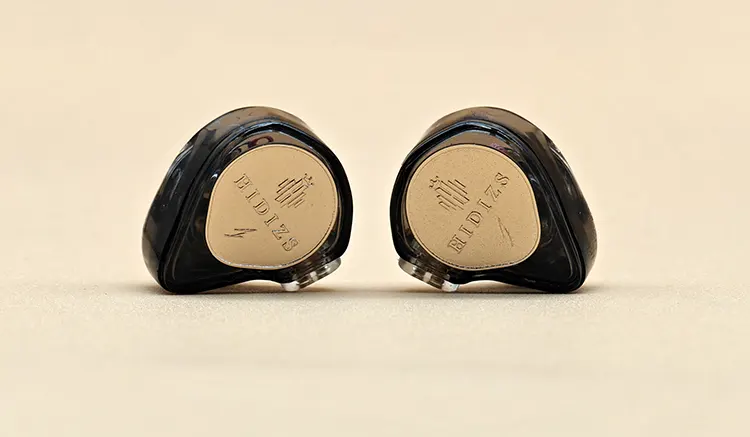
The Nebula Pro features a resin shell with smooth, rounded edges and a reflective aluminum alloy faceplate etched with the Hidizs logo. A metal nozzle extends from the body and is finished with a fine mesh filter for protection.
It comes in both black and white transparent versions that reveal the internal structure. The detachable cable uses USB-C, giving it modern connectivity while matching the IEM’s polished aesthetic.
Performance
The ST2 Nebula Pro immediately pulls ahead in low-end weight, slamming harder with both subbass and midbass. The D02 can’t keep up here, coming across empty and lacking the foundation that drives rhythm.
Where the ST2 leans heavily on the bass and leaves the mids behind, the D02 pushes vocals to the front with greater presence. Its forwardness and clarity make voices easier to follow, while the ST2 sounds hollow and thinned out from its bass dominance.
Highs are the strongest point of the D02, with extension and detail that the ST2 cannot match. Treble stays controlled and avoided sibilance, while the ST2 feels rougher and less refined up top.
Both keep the soundstage small, but the flaws differ between them. The D02 sounds closed and restricted, while the ST2’s bloated bass narrows separation and crowds out instruments.
FiiO JD1
Technical
The FiiO JD1 uses a 10mm LCP (liquid crystal polymer) dynamic driver with asymmetrical internal and external magnetic circuits.
This dual-magnetic design is meant to increase magnetic flux around the voice coil for better control and transient response.
A front-rear cavity balanced pressure relief system is built in to reduce eardrum pressure and improve driver freedom. The driver carries the full frequency range, with no crossover in play.
Design
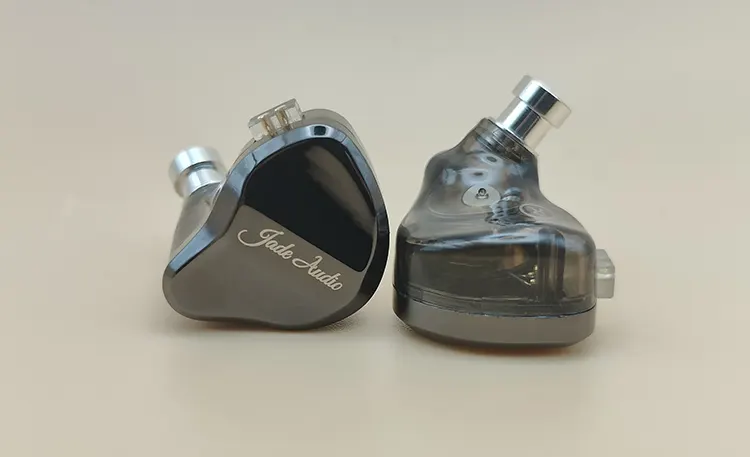
The JD1 shell is molded from translucent acrylic, revealing internal chambers and wiring, while the faceplate is made of liquid die-cast zinc alloy with a polished finish. Its compact body weighs about 7 grams per side, giving it a barely-there feel in the ear.
Color variants include translucent black and clear/transparent. A removable 0.78mm 2-pin cable is featured, and the USB-C version uses a DSP-equipped cable with in-line controls as part of its design flexibility.
Performance
Bass impact is immediately more present on the JD1, with its heavy-handed low end delivering far more weight than the D02. That same excess, however, brings muddiness and bloat, while the D02 sounds cleaner but far too lean to give any sense of fullness.
Moving into the midrange, the JD1 struggles with clarity as its bass masks detail and leaves vocals sounding thin and unnatural. The D02, while not free of grain, still has the edge with a forward vocal presentation and better clarity overall.
High frequencies are handled more gracefully by the D02, which extends further and manages detail retrieval without harshness. The JD1 plays it safe by avoiding sibilance, but its metallic tone and lack of refinement leave it sounding less convincing.
Soundstage feels cramped on both, but the JD1’s bloated bass further collapses the sense of space. Imaging is passable on each, though the D02 takes a slight advantage by keeping instruments more separated, even if its stage remains small.
My Verdict
The LETSHUOER D02 left a strong impression with its treble, showing refinement and control that stood out in this price range.
Comfort is also a clear win, with its lightweight build sitting securely in the ear for long sessions, while the gem-cut faceplate gives it a design that feels more premium than expected.
While the included cable is tangly and not the best in hand, LETSHUOER deserves credit for offering a USB-C version that adds real convenience.
Taken as a whole, the single dynamic driver LETSHUOER D02 IEM manages to deliver style, comfort, and a treble response that carries it above its flaws.
LETSHUOER D02 Technical Specifications
- Driver Type: One (1x) 11mm dual magnetic circuit dual-chambered dynamic driver
- Plug: 0.78mm 2-pin with 3.5mm or Type-C termination
- Frequency Response: 20Hz – 40kHZ
- Impedance: 26Ω
- Sensitivity: 108 dB
