

Synergy
Efficiency
The Kiwi Ears Septet is difficult to drive, with a 15Ω impedance and a sensitivity of 95 dB SPL/mW. It needs a considerable amount of power to reach a proper listening volume and won’t perform well from weak sources or basic dongles.
The included stock cable has a copper modular design that offers low resistance and does not affect the Septet’s drivability. Both the 3.5mm and 4.4mm terminations make it easy to pair with different sources, but the cable itself does not affect output or efficiency.
At low volumes, the Septet loses much of its midrange presence, and overall detail retrieval suffers. The bass is still present, and the treble keeps its sparkle, but the sound feels flat and the intended technical performance is not fully realized.
Once enough power is provided and the volume is raised, the Septet opens up and all seven drivers come together. The bass, mids, and treble start performing at their best, revealing the full technical capability of the IEM.
Pairings
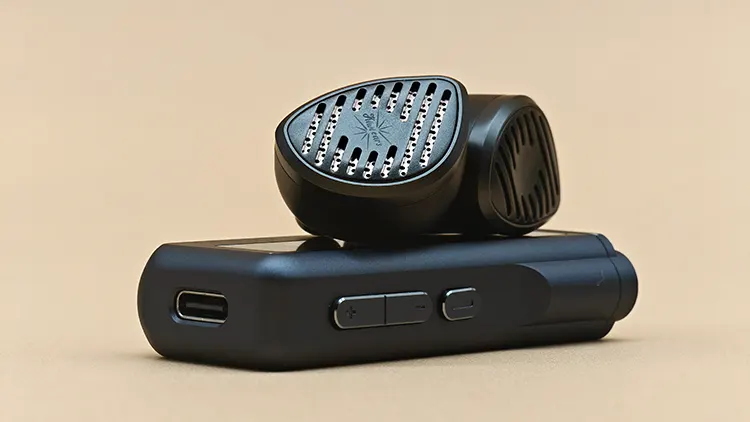
The Kiwi Ears Septet proved challenging to power across several sources, with each device needing more volume than usual to bring out a proper listening level. Using the FiiO JA11 on a 3.5mm termination, I had to push the volume to 100 percent just to get the Septet sounding adequately loud.
With the Colorfly CDA-M2 and a 4.4mm connection, I found 40 percent volume sufficient, though my music player still needed to be maxed out for the best results.
This setup gave the cleanest and most consistent performance, with the CDA-M2 staying neutral and not adding much coloration to the sound.
The Heartfield R1 struggled the most, unable to drive the Septet to proper loudness before static and noise crept in past level 5. When it did work, the R1 introduced a welcomed warmth to the mids and brought a lush intimacy to vocals that was missing on other sources.
Among all three, the Colorfly CDA-M2 offered the most reliable pairing in terms of raw power, while the JA11 added brightness and pushed vocals slightly forward in the mix.
The Heartfield R1 gave the most character, with a warmer, smoother midrange that I was looking for originally.
Select Comparisons
ddHiFi Surface
Technical
The ddHiFi Surface uses a hybrid setup with one dynamic driver and four balanced armature drivers, a configuration chosen for its strong technical ability and versatility.
MOONDROP handled the tuning, drawing on their experience from Blessing 2, and used a three-way crossover structure like their established designs.
What makes the Surface unique is its dedicated circuit board for the crossover, with multiple revisions done to achieve a technically strong yet musical presentation.
The dynamic driver is tasked with the low end, two balanced armatures handle the midrange, and the remaining two take care of the treble and upper-treble regions.
Design
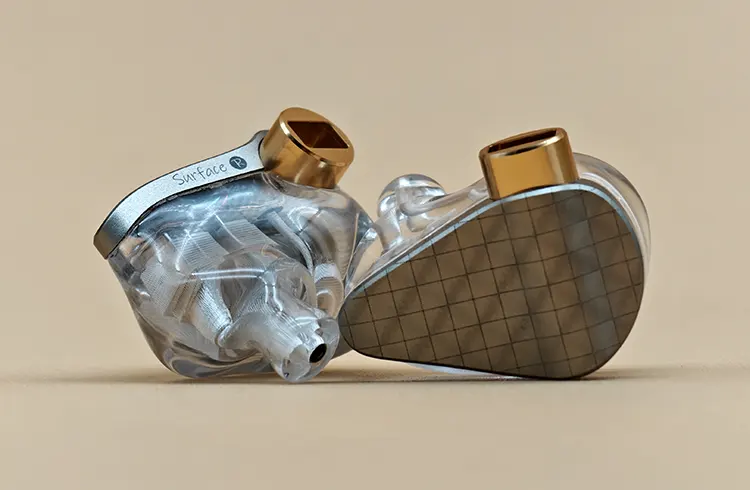
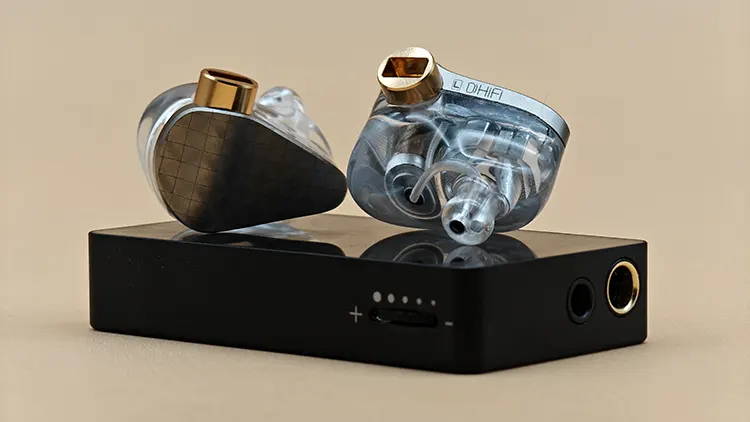
The ddHiFi Surface features a metallic faceplate finished in muted gray, etched with a grid pattern that gives it a precise and industrial feel.
The shell is fully transparent, showing off every internal component, from the wiring to the drivers and the dedicated crossover board, with no added tints or extra patterns to distract from the layout inside.
A lipless nozzle creates a smooth, seamless transition from the shell but may lead to some tips fitting less securely.
Markings are clear and practical, with “ddHiFi L” printed on the left and “Surface R” on the right, while gold rectangular 0.78mm connectors add a bit of color contrast as they protrude slightly from the body.
Performance
Bass presentation is a clear point of difference, with the Septet standing out for its clean, controlled low end and excellent clarity.
The Surface counters with a stronger and punchier mid-bass, bringing more energy and punch, though it falls behind the Septet in overall control and refinement.
In the midrange, the Surface puts vocals forward, giving them a stronger presence and focus compared to the Septet’s more laid-back vocal positioning.
The Septet, however, excels in revealing vocal nuances and texture, making subtle details more noticeable even if it occasionally becomes sharp.
Treble is decisively better on the Septet, offering greater airiness, sparkle, and a higher level of detail retrieval. Cymbals and high hats are rendered with more realism and proper metallic tone, whereas the Surface can sometimes mask these elements or soften their natural character.
For staging and imaging, the Septet easily takes the lead with its open-back design, delivering a wider stage and more accurate placement of sounds.
Dynamics, however, are handled better by the Surface, which maintains consistent volume and balance regardless of how busy the track becomes.
TANGZU Zetian Wu Legend
Technical
The TANGZU Zetian Wu Legend uses a dual planar driver setup, combining a 14.2mm planar driver with a 6mm flat diaphragm planar driver in a compact shell.
The larger 14.2mm driver is responsible for the bass, midrange, and main treble duties, acting as the primary engine for the overall sound.
The 6mm flat diaphragm driver is dedicated to the upper treble and air frequencies, giving the Zetian Wu Legend improved clarity and greater detail in the highest registers.
This dual-planar approach reduces the workload on the main driver and aims to deliver better precision and refinement compared to previous Tangzu models.
Design
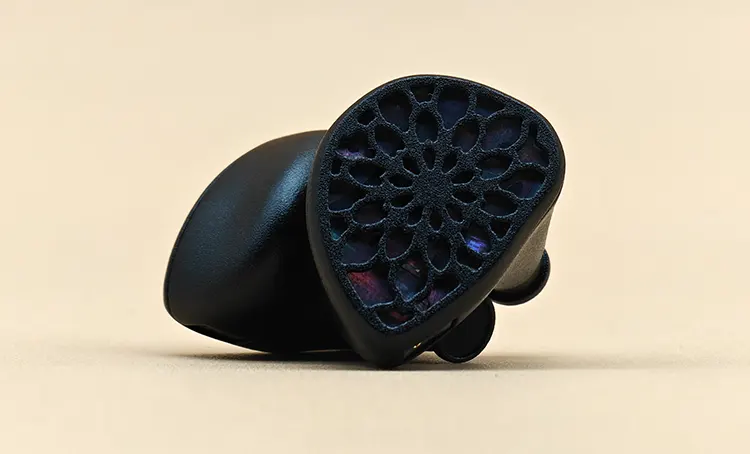
The Zetian Wu Legend features a durable aluminum alloy shell finished in solid black, with no sharp edges for a comfortable fit.
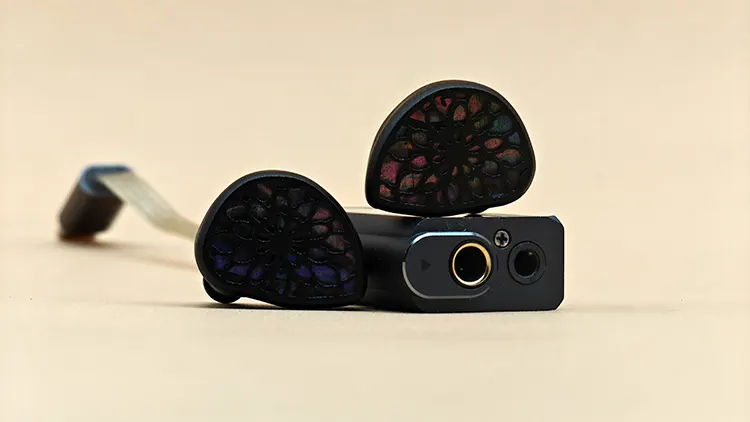
The faceplate is the main visual highlight, sporting a lotus cutout design with a colorful abalone-like material underneath as its centerpiece.
Depending on the angle and lighting, the faceplate shifts from deep purple to a full spectrum of rainbow colors, giving it a striking and dynamic look.
The abalone is not just for show, as it also carries cultural meaning, being associated with good fortune in Chinese tradition.
Performance
Bass performance is not close, as the Septet brings a level of detail and refinement that the Zetian Wu Legend simply cannot match.
The sub-bass rumble and mid-bass punch on the Septet are both more controlled and better defined, making the Zetian Wu Legend feel less dynamic in comparison.
In the midrange, the Septet continues to pull ahead with its natural timbre and realistic tonality, avoiding the metallic edge and sharpness found in the Zetian Wu Legend.
Airiness is present in both, but the Septet maintains a more balanced and lifelike presentation.
Treble is where the Zetian Wu Legend is supposed to shine, but the Septet’s refinement and control still come out on top.
Sibilance is better managed with the Septet, resulting in a smoother and less fatiguing experience, even during longer sessions.
Staging and imaging follow the same trend, with the Septet’s open-back design giving it a much wider and more immersive soundstage.
Imaging accuracy is also stronger, as sounds can move freely and distinctly within the larger stage, leaving the Zetian Wu Legend behind in overall spaciousness and precision.

My Verdict
The Kiwi Ears Septet shows what careful driver integration and tuning can achieve, offering a technical yet enjoyable sound that avoids the usual hybrid pitfalls.
Its bass is clean and defined, midrange is natural with realistic timbre, and the treble is energetic without becoming overly fatiguing.
With its wide open-back soundstage and excellent imaging, the Septet creates an immersive experience that’s hard to match at this level.
It stands as a strong example of a complex configuration done right, showing that unique hardware can deliver more than just a spec sheet talking point.
Kiwi Ears Septet Technical Specifications
- Driver Type: One (1x) 10mm dynamic driver, four (4x) balanced armatures, one (1x) micro-planar driver, and one (1x) piezoelectric driver
- Plug: 0.78mm 2-pin with modular 3.5mm and 4.4mm termination
- Frequency Response: 8Hz – 30kHz
- Impedance: 15-ohms @ 1kHz
- Sensitivity: 95 dB SPL/mW @ 1kHz
