

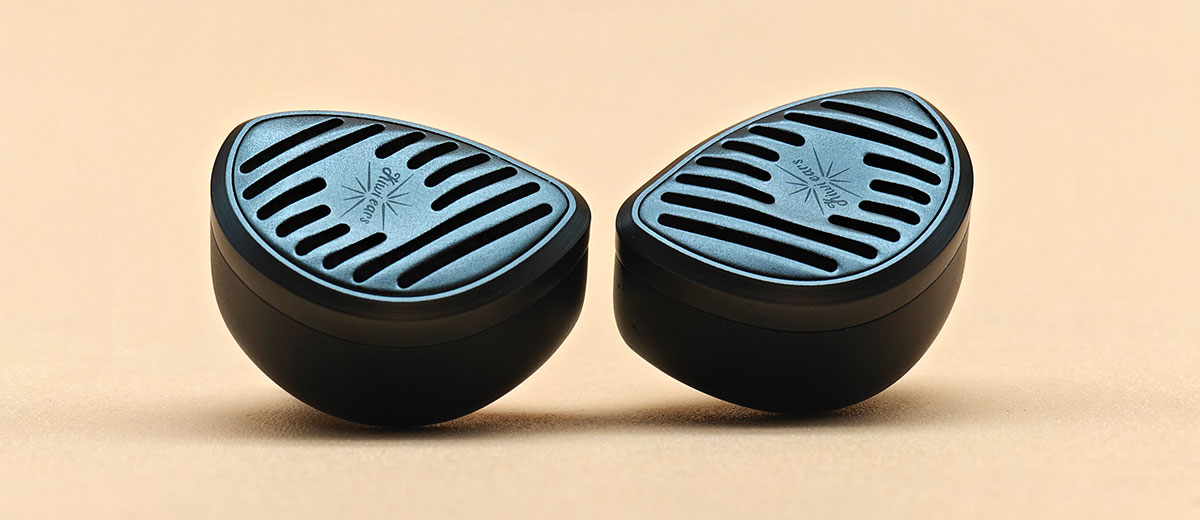
Kurt reviews the Kiwi Ears Septet, a new hybrid 10mm dynamic, quad BA, micro-planar, and piezoelectric driver open-back universal in-ear monitor. It is currently priced at $269.
Disclaimer: This sample was sent in exchange for my honest opinion. Headfonics is an independent website with no affiliate links or services. I thank Linsoul and Kiwi Ears for their support.
Click here to read up on Kiwi Ears gear previously reviewed on Headfonics.
This article follows our latest scoring guidelines, which you can read in more detail here.
Kiwi Ears has quickly become one of the more recognized names in the IEM market, especially after the success of models like the Orchestra Lite, Aether, and Cadenza.
They’ve built a reputation for delivering well-tuned and great value IEMs, while also exploring more unique driver configurations and technologies along the way.
The Septet is a new hybrid IEM featuring seven drivers, four different driver types, and a five-way crossover system that stands out even among recent releases.
Will Kiwi Ears create a unique hit with the Septet, or will it end up as another experimental IEM designed for specific tastes?
Features
The Kiwi Ears Septet uses a seven-driver array split across four driver types, making it one of the most intricate hybrids in the lineup.
At its foundation is a 10mm composite dynamic driver dedicated to the sub-bass and mid-bass. The midrange and mid-treble are handled by four balanced armature drivers, each assigned to a specific frequency range through separate crossover networks.
The highs are split between a micro-planar driver and a single piezoelectric driver for the ultra-highs. A five-way passive crossover and a three-bore nozzle system manage all seven drivers.
The Kiwi Ears has a 15Ω impedance rating with an SPL of 95 dB/mW @1kHz, making this a fairly inefficient in-ear monitor that will require decent power to sound optimal.
Design
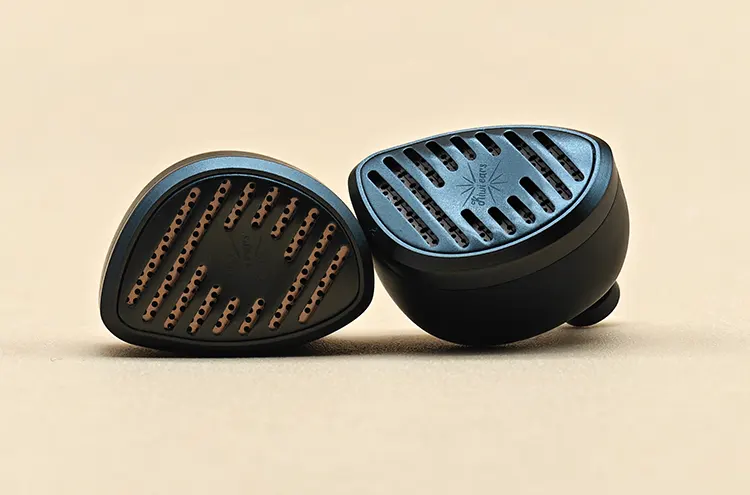
The faceplate of the Kiwi Ears Septet features a dark gray finish, with a contrasting jet-black shell, creating a subtle two-tone appearance.
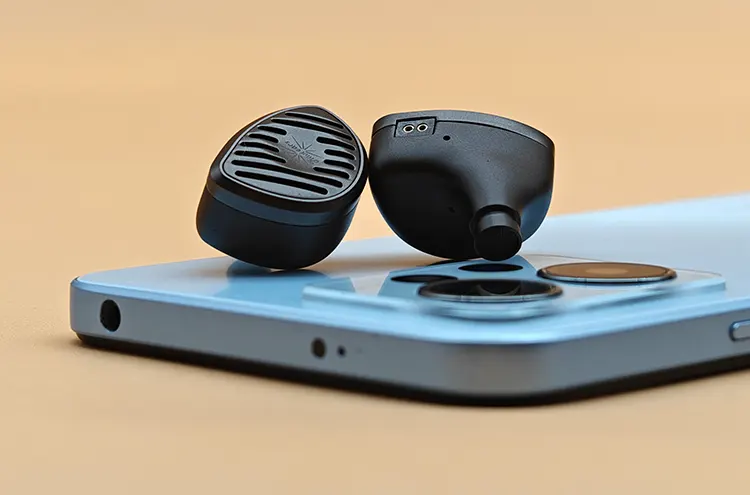
Beneath the faceplate is a brownish-red open-back grille with rows of uniform holes, making the open-back design visible at a glance.
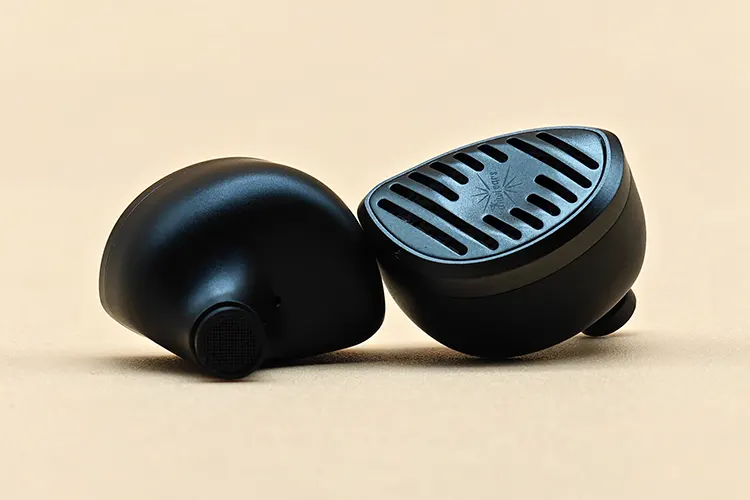
The shell is made of smooth metal, free from any markings, seams, or decorative elements. Its rounded shape is simple and undecorated, keeping the overall look clean.
There are no markings or prints on the shell itself, with only the Kiwi Ears logo at the center of the faceplate for branding. This minimal approach keeps the design uncluttered and focused.
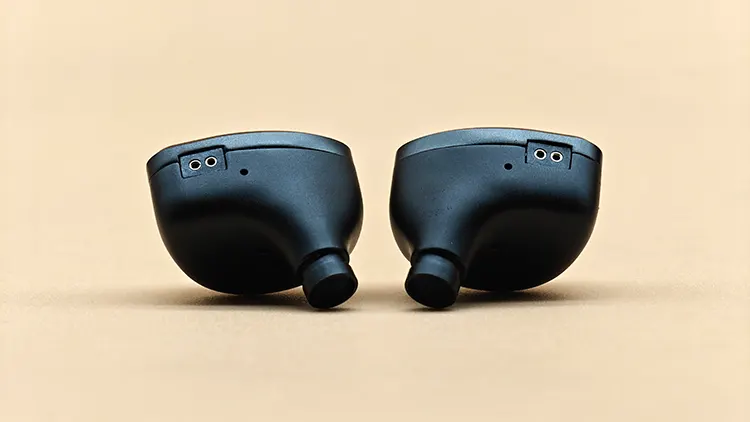
Despite the open-back structure, there are two small vents, with one located near the 0.78mm connector and another near the base of the nozzle. Both vents are subtle and blend into the shell, contributing to pressure relief and airflow.
The connector uses a recessed 0.78mm 2-pin socket at the top of the shell, providing a secure fit for cables. The nozzle is short, finished with a mesh grille and a defined lip, though its length can make it a pain to use with longer stem ear tips.
Comfort & Isolation
Comfort on the Kiwi Ears Septet is good, with the shell shape sitting naturally in the ear. Despite housing seven drivers, the IEM is relatively normal-sized and never feels bulky or awkward during use.
The choice of ear tips has a big impact on the fit, as tips with longer stems tend to make the shell protrude outwards. Smaller ear tips create a better seal and help the Septet sit closer in the ear.
Isolation is not a strong point, as the open-back design allows outside noise to pass through easily. I could hear my surroundings, including conversations and street noise, even while music was playing.
During travel, the lack of isolation became more obvious, with sounds like cars, chatter, and other background noise easily making their way in. This makes the Septet less ideal for use in noisy environments or commutes.

Ear Tips
The Kiwi Ears Septet includes twelve ear tips in total, with three pairs each for two different styles. There are short, wide-bore tips and regular balanced tips, both finished in black silicone with a simple, unbranded look.
The short, wide bore tips create a flush fit with the nozzle, but the flange is too wide and short to be comfortable for longer sessions. Their shape prevents a secure seal, making it difficult to achieve proper isolation or bass response.
The balanced tips provide a better overall fit and seal compared to the wide-bore tips. However, even with the balanced tips, the seal is not fully secure, as there is still some wiggle room, so I needed to adjust and reinsert them multiple times to get a fit that was just satisfactory.
Stock Cable
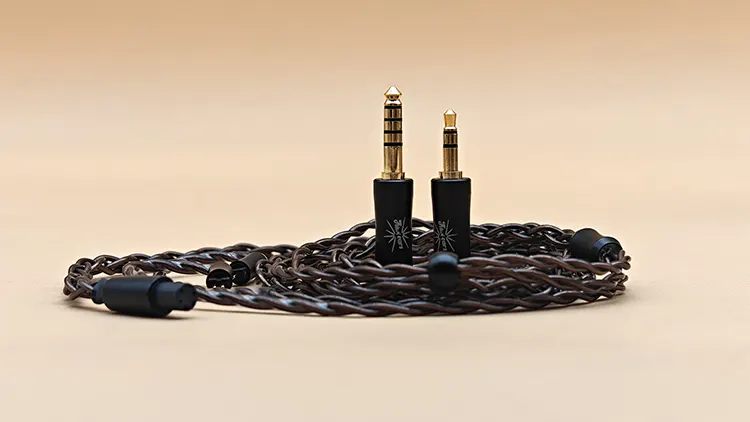
The stock cable of the Kiwi Ears Septet uses a copper-colored finish with a soft and slightly glossy texture. It starts as four braided wires up to the splitter, then splits into two thinner braids leading to each earpiece.
The splitter is simple and plain black, with no added markings or decorative details. Both sides of the cable above the splitter retain a consistent braided structure, keeping the look uniform and neat.
Channel identification is handled with small blue and red square dots on the connector housings, where blue is for the left side and red is for the right. There are no printed L or R markings anywhere on the cable.
Both the 3.5mm and 4.4mm plugs are finished in matte black with the Kiwi Ears logo printed in white. The cable uses a direct pull-and-insert modular system, making it quick and easy to swap plugs without needing to twist or lock anything in place.
Packaging & Accessories
The Kiwi Ears Septet box uses a soft pink and red gradient with a bold “Septet” text printed across the bottom. A large image of the Septet sits in the middle, with the Kiwi Ears logo and driver configuration highlighted at the top right for easy reference.
Inside, the Septet is displayed in custom foam cutouts, faceplates up, giving a first look at the open-back grille design as soon as you open the box.
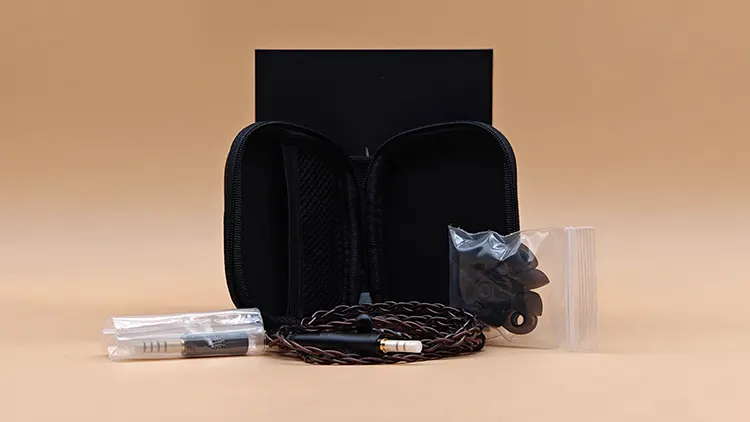
After removing the foam cutout, the black carrying case with a stamped Kiwi Ears logo is revealed, sitting neatly below. All accessories are kept hidden inside the zippered case, keeping the packaging tidy and organized.
Inside the carrying case is the modular cable with 3.5mm and 4.4mm terminations and twelve silicone ear tips. There are no filter replacements or brushes here, unlike in other Kiwi Ears IEMs.
Sound Impressions
The following sound impressions of the Kiwi Ears Septet were completed using a mix of the Heartfield R1 and Colorfly CDA-M2 for decoding and amplification (balanced output).
Bass
The bass on the Kiwi Ears Septet is excellent, with a clear focus on clarity and definition rather than weight or boom. Each note is precise, letting the character of bass guitar strings come through with ease.
Sub-bass rumble is present and felt, adding depth and body to the overall sound and preventing any sense of dryness. Mid-bass is controlled with a quick decay, making sure it never muddies the rest of the mix.
There’s a refined quality to the tuning, with the low-end never sounding forced or exaggerated. Subtle details from drum hits are easy to pick out, and each low-frequency sound lands with its distinct shape.
The bass here is not energetic or overwhelming, instead leaning into a more balanced and natural presentation. The emphasis is on texture and subtle impact, letting each part of the bass register be heard clearly.

Mids
The midrange on the Kiwi Ears Septet offers excellent timbre, giving instruments and vocals a natural and realistic quality. There is no hint of balanced armature timbre, so the mids avoid any artificial or plasticky character.
Vocal texture comes through clearly, adding extra detail and life to the listening experience. Vocals are not forward in the mix and can sometimes get pushed behind by the bass and treble, especially during more complex passages.
Male vocals are well articulated but lack some weight, which takes away from the fullness and emotional heft of deeper voices. Female vocals, on the other hand, can sound sharp at times due to the upper midrange emphasis, which can stand out on certain tracks.
Despite these issues, the overall midrange remains engaging and lifelike, capturing plenty of nuance and keeping the presentation free from the typical drawbacks of multi-driver hybrids.
Treble
The treble on the Kiwi Ears Septet is impressively well integrated, making it impossible to distinguish between the piezoelectric and micro planar drivers. Cymbals and high hats have a proper shimmer and energy, with a natural metallic tone that brings realism to the upper registers.
Detail retrieval in the treble is strong, allowing plenty of nuance and texture to come through in tracks. There is a good sense of airiness, helped by the open-back design, giving the presentation an expansive and lively feel.
Clarity in the treble is high, but it does fall short of true refinement, preventing it from fully punching above its price. Sibilance is not fully addressed, as sharpness can appear with certain recordings or higher-pitched vocals.
Sparkle is always present, making the upper end feel energetic and engaging without crossing into harshness most of the time. This keeps the treble sounding lively while still letting the overall signature stay balanced.
Staging & Dynamics
The soundstage of the Kiwi Ears Septet is a highlight, thanks to its open-back design that creates a wide and spacious soundstage.
The width is impressive and easily felt, while vertical staging remains limited, but there is still some upward and downward movement in the presentation.
Imaging is precise, with numerous sounds having plenty of space to move around and easily finding their spot in the mix without overlapping with others. Instrument separation is strong, keeping each element distinct even during busier or more complex passages.
The Septet handles layering well, with instruments and vocals remaining easy to follow no matter how busy the track becomes. Everything has enough room to breathe, making the overall presentation feel open and organized.
Dynamics are less convincing, as vocal loudness tends to drop when the treble grows more active. Even when the treble is not dominating, the bass can still have more presence than the vocals, making the presentation less balanced dynamically.
Click on page 2 below for my recommended pairings and selected comparisons.
