

Synergy
Efficiency
With an impedance of 15Ω and sensitivity of 110 dB SPL/mW, the Orchestra II is relatively easy to drive from most sources. It reaches comfortable listening volumes even from smartphone headphone outputs and basic dongles.
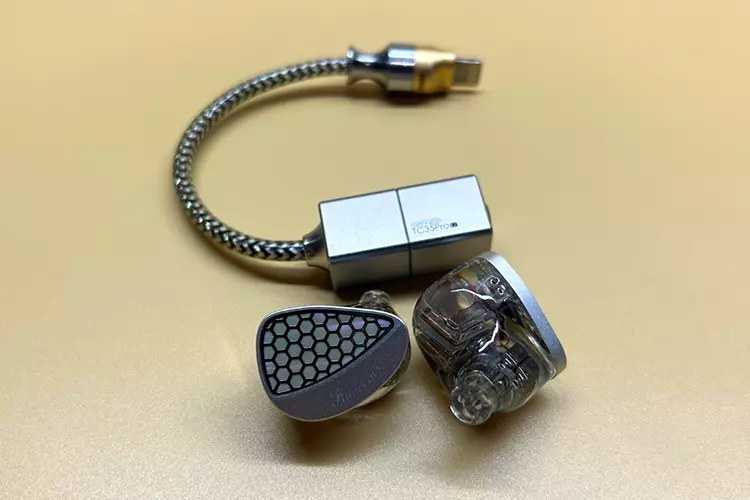
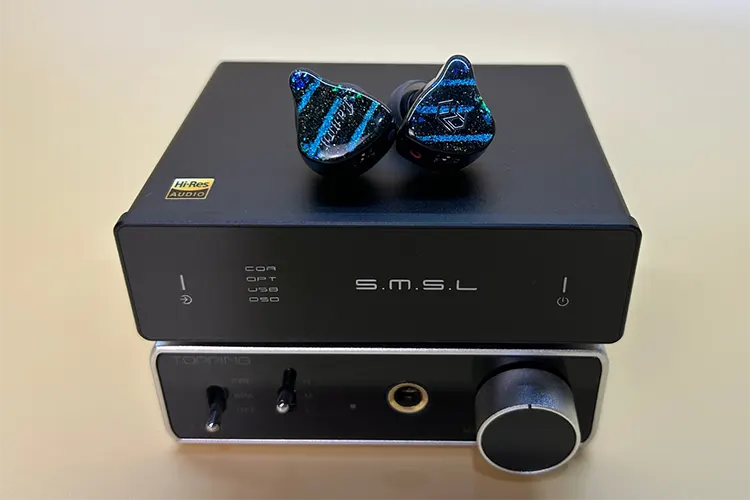
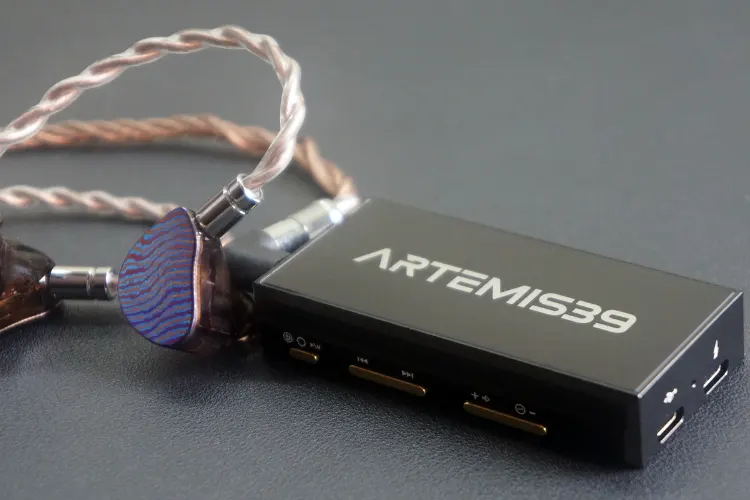
However, the Orchestra II clearly scales with source quality and power output. Throughout my testing, I paired it with the ddHiFi TC35Pro E2, the iFi audio GO link Max, the iFi audio ZEN DAC, the 7HZ Artemis39, and FiiO’s K11 desktop amplifier
I observed noticeable improvements in bass control and treble extension when powered by more capable sources. The FiiO K11 and iFi ZEN particularly enhanced the dynamic range slightly
However, I never felt like I needed a full-sized desktop amplifier just to maximize the Orchestra II. On most days, I did my listening on either the TC35 Pro E2 or the iFi audio GO link Max.
Pairings
With its mild-U shaped tuning, I preferred pairing the Orchestra II with more neutrally tuned sources.
For portable use, the ddHiFi TC35Pro E2 emerged as my preferred pairing. Its neutral, transparent presentation complements the Orchestra II’s tuning without adding coloration.
The compact form factor makes it ideal for on-the-go listening, and it provides sufficient power to drive the Orchestra II to satisfying volume levels.
For desktop listening, the FiiO K11 proved to be my go-to pairing. The additional power reserves unlocked greater dynamic range and improved the Orchestra II’s already impressive separation and layering capabilities.
The K11’s neutral tuning allows the Orchestra II’s characteristics to shine through without interference.
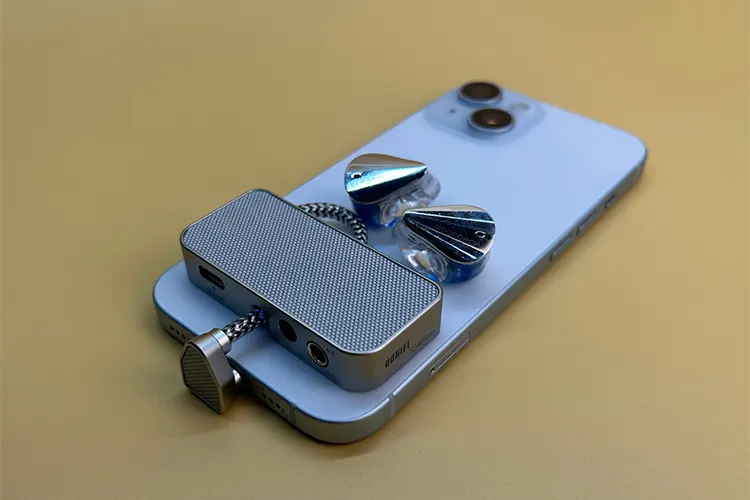
I initially tried the iFi GO Link Max, which impressed me with its powerful output and feature set. However, I found its slightly warmer tilt and enhanced bass response added unnecessary coloration to the Orchestra II’s already well-balanced signature.
Select Comparisons
MOONDROP Blessing 3
Technical
The Orchestra II employs an all-BA configuration with 10 custom balanced armature drivers per side, utilizing a 4-way crossover. It has an impedance of 15Ω and a sensitivity of 110 dB SPL/mW.
The Blessing 3 features a hybrid setup with two 10mm dynamic drivers and four balanced armature drivers per side. It has an impedance of approximately 14.8Ω and a sensitivity of 120 dB/Vrms.
In practice, I found the Blessing 3 required slightly more power to achieve optimal performance, despite its higher sensitivity rating. The Blessing 3 also benefits more dramatically from high-quality amplification compared to the Orchestra II.
Design
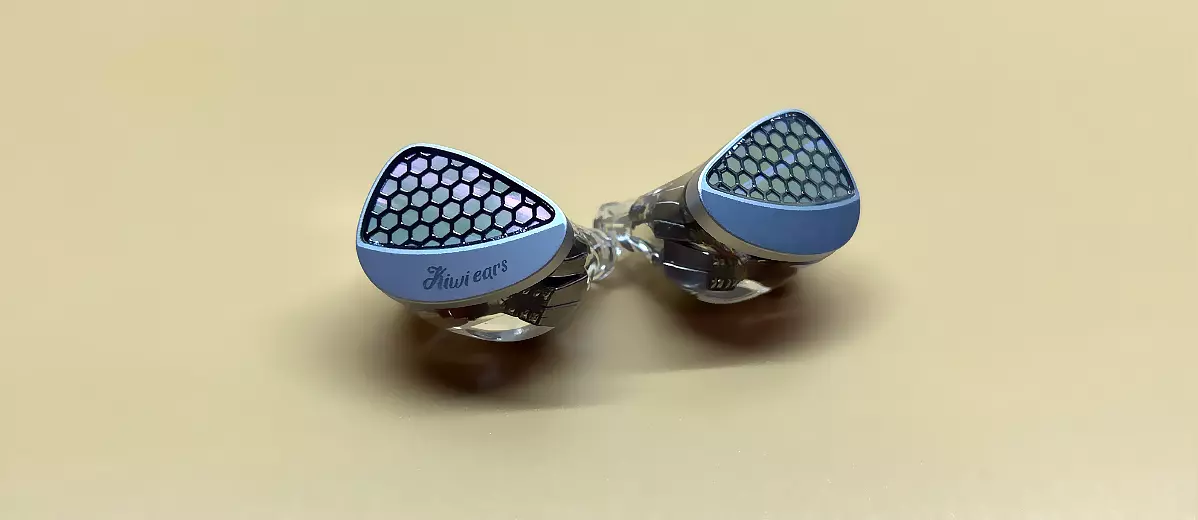
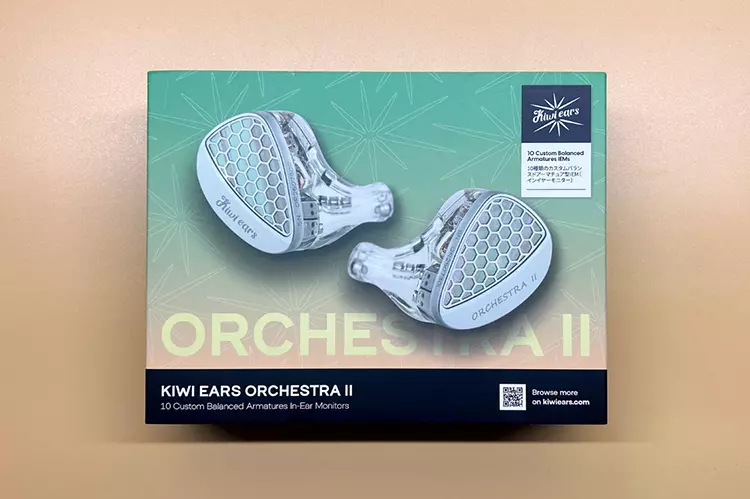
The Orchestra II features transparent medical-grade resin shells with aluminum honeycomb faceplates and an iridescent finish.
The see-through design showcases all internal components, creating a visually striking appearance. The shells are rounded and bulbous, measuring approximately 7 grams each.
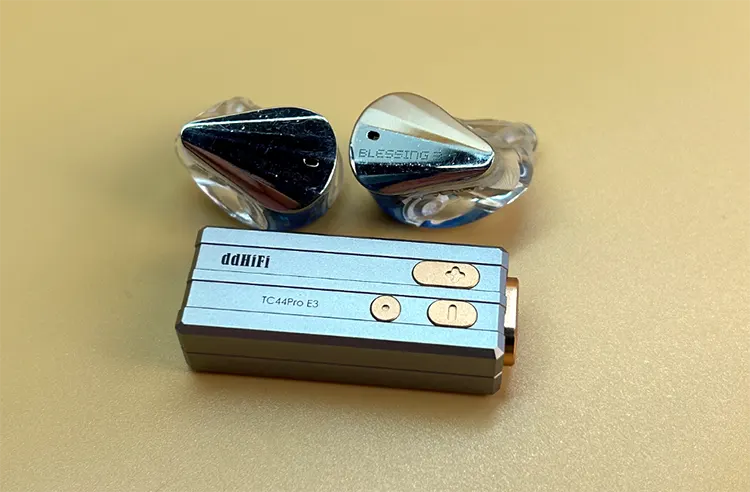
The Blessing 3 combines transparent resin shells with CNC-machined stainless-steel faceplates in an angular, geometric design. The steel faceplates have a mirror-polished finish that creates a more industrial, technical aesthetic compared to the Orchestra II’s elegant transparency.
In terms of fit, I found the Blessing 3 more comfortable for extended sessions. Its slightly smaller shell felt lighter in my ear, though both IEMs were comfortable enough for day-long use.
Both IEMs feature standard 2-pin connectors, though the Orchestra II’s modular cable system with both 3.5mm and 4.4mm plugs provides better out-of-the-box versatility than the Blessing 3’s fixed termination.
Performance
The Orchestra II and Blessing 3 represent fundamentally different tuning philosophies. The Orchestra II pursues a mild V-shape or smooth U-shaped signature, while the Blessing 3 adheres to a more neutral tuning with a mild warm tilt
The bass presentation differs significantly between the two. The Orchestra II features a noticeable sub-bass bump that delivers deeper-hitting impact without causing lower midrange bloat.
Combined with elevated treble, this makes the Orchestra II notably better suited for hip-hop and electronic music compared to the more neutral Blessing 3.
The Orchestra II’s mid-bass isn’t as full or thick as warmer IEMs, but provides enough body for bass guitars, with bass riffs carrying slightly more energy than the Blessing 3’s restrained presentation.
Midrange tuning reveals the most substantial differences. The Blessing 3 delivers a more neutral, balanced midrange where delicate acoustic guitars and strings receive better air and detail retrieval.
The Orchestra II’s upper-mid emphasis brings female vocals forward with strong energy, making them stand out prominently. Higher-pitched female vocals can occasionally sound shouty or artificially elevated.
However, the Orchestra II excels with synths, delivering a notably stronger presentation with excellent detail and resolution in the upper-mid synth region.
Treble characteristics showcase another clear distinction. The Orchestra II carries substantially stronger treble emphasis. Trap and snare drums have a forward presentation without quite crossing into fatiguing territory. Cymbals carry substantially more emphasis with greater sparkle and presence.
In treble-heavy tracks, the Orchestra II occasionally struggles with treble balance. Conversely, in simpler tracks, it expertly renders different string instruments with good soundstage and instrument separation.
Yanyin Canon II
Technical
The Orchestra II employs 10 custom BA drivers per side with a 4-way crossover, rated at 15Ω impedance and 110 dB SPL/mW sensitivity.
The Canon II utilizes a hybrid design with one dynamic driver and four balanced armature drivers (1DD+4BA). It has a marginally higher impedance of 27Ω and a sensitivity of 112 dB.
In practice, both IEMs require similar amounts of power to drive adequately, reaching comfortable listening volumes from most portable sources without strain.
Design
The Orchestra II features transparent medical-grade resin shells with aluminum honeycomb faceplates and an iridescent finish.
The see-through design showcases all internal components, creating a visually striking appearance. The shells are rounded and bulbous, measuring approximately 7 grams each.
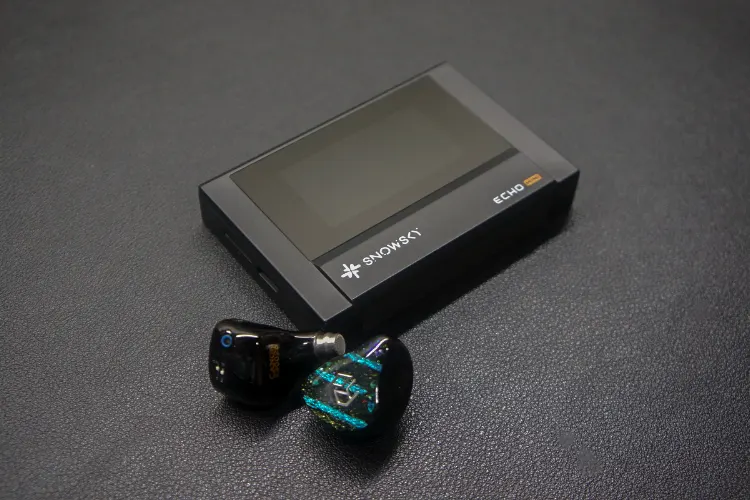
The Canon II also utilizes a one-piece 3D-printed resin shell that appears pitch black under most lighting. The faceplate features a glitter-infused, galaxy-style motif that leans more playful and eye-catching compared to the Orchestra II’s technical elegance.
I found the Canon II to be more comfortable, especially during long-term use. But I was still able to use the Orchestra through a full workday without any comfort-related concerns.
Performance
The Canon II features a stronger V-shaped sound signature compared to the Orchestra II’s milder U-shaped tuning.
This more pronounced V-shape creates a more relaxed and less compressed presentation, particularly noticeable in larger orchestral arrangements and tracks with complex midrange content.
Bass presentation reveals nuanced differences. The Canon II carries slightly more sub-bass presence than the Canon II, though the Canon II is by no means bass light. Both IEMs excel in bass texture and quality, delivering well-controlled, articulate low-end performance.
However, low-end string instruments like bass guitars have noticeably more body and weight on the Orchestra II, benefiting from its warmer lower-mids and mid-bass region.
Midrange characteristics showcase each IEM’s distinct strengths. The Orchestra II delivers a warmer, more musical-sounding midrange with its slight warmth and excellent vocal detail.
Lower-register vocals carry substantially more weight and body on the Orchestra II, with enhanced detail retrieval in these frequencies. Percussive instruments also demonstrate stronger dynamics and texture on the Orchestra II.
The Canon II counters with better detail retrieval for high-pitched acoustic string instruments, rendering delicate guitars and violins with superior air and resolution.
The Canon II’s significantly larger soundstage becomes staggeringly obvious when listening to tracks with complex midrange arrangements, where instruments have more space to breathe and separate naturally.
Treble tuning further differentiates these IEMs. Treble instruments on the Canon II carry more emphasis, snap, and bite while remaining non-sibilant. This creates a more energetic upper-frequency presentation compared to the Orchestra II’s smoother treble approach.
The Canon II’s wider soundstage and less compressed midrange presentation make it superior for acoustic genres and complex arrangements, while the Orchestra II’s warmer tonality and enhanced vocal weight prove more engaging for vocal-focused and modern productions.
7Hz Aurora
Technical
The Orchestra II employs 10 custom balanced armature drivers per side with a 4-way crossover, rated at 15Ω impedance and 110 dB SPL/mW sensitivity.
The Aurora utilizes a tribrid setup combining a 12mm composite diaphragm dynamic driver, two custom full-range balanced armatures, and a 6mm micro planar driver.
The Aurora has a higher impedance at 30Ω and a sensitivity of 105 dB/Vrms. In practice, the Aurora requires noticeably more power to achieve optimal performance.
Design
The Orchestra II features transparent resin shells with aluminum honeycomb faceplates and iridescent coating. The see-through design showcases internal components while maintaining an elegant, refined aesthetic. The shells are rounded and weigh approximately 7 grams each.
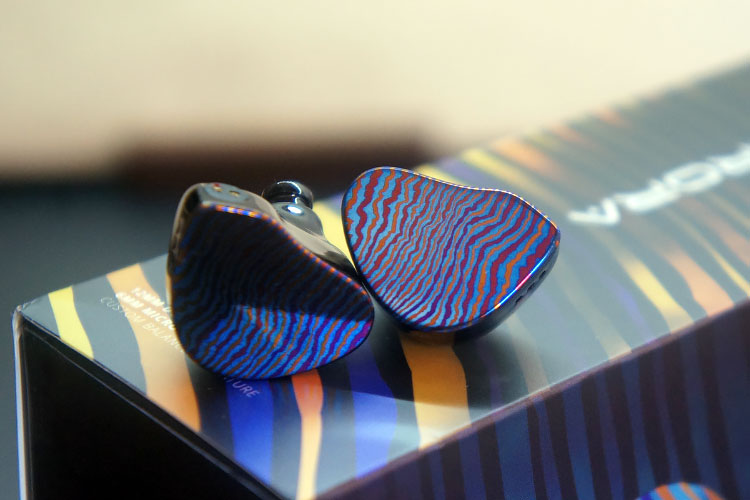
The Aurora utilizes 3D-printed resin shells with a translucent, glossy brown finish that allows glimpses of internal components.
The faceplates feature titanium-based Damascus-type filament, creating unique holographic patterns that shift with lighting. The overall aesthetic leans more artistic and exotic compared to the Orchestra II’s technical elegance.
Comfort-wise, I found the Orchestra II superior for long-term wear. The Aurora’s slightly larger shells and heavier construction created more noticeable weight and pressure points.
The Orchestra II’s lighter weight and better ergonomic shaping resulted in a more disappearing fit during extended sessions.
Performance
The Orchestra II and Aurora represent contrasting approaches to multi-driver implementation, each with distinct sonic signatures that cater to different listener preferences.
Bass performance reveals significant differences in tuning philosophy. The Aurora delivers deeper, darker bass with slightly more bloat throughout the sub-bass and mid-bass regions.
This elevated low-end presence, combined with the Aurora’s forward treble, creates an energetic, engaging presentation particularly well-suited for hip-hop and modern music productions.
The Orchestra II maintains a cleaner, more controlled bass response with better articulation and less bloom into the midrange frequencies.
Midrange tuning diverges notably between these IEMs. The Aurora’s midrange sits more recessed compared to the Orchestra II, resulting in a less musical presentation, especially noticeable in rock tracks.
The Orchestra II delivers a better-balanced midrange with less peakiness and a smoother presentation of electric guitars, keys, and acoustic guitars.
Vocals sound smoother on the Orchestra II, though with slightly less detail retrieval compared to the Aurora. The Aurora’s elevated detail in vocal frequencies comes at the cost of a harsher, less natural presentation that can fatigue during extended listening.
Treble characteristics show the Aurora’s more forward, aggressive presentation compared to the Orchestra II’s smoother approach. While the Aurora excels in raw detail extraction, the Orchestra II proves more versatile and forgiving across varied recording qualities.
Soundstage dimensions remain similar between both IEMs, with the Aurora creating a slightly larger presentation.
However, the Orchestra II surpasses the Aurora in instrument separation, maintaining better distinction between individual elements even in complex, densely layered tracks.
My Verdict
Kiwi Ears has delivered a solid entry into the competitive $300-400 price bracket with the 10 BA driver Orchestra II IEM. Its greatest strength lies in its mild U-shaped tuning that prioritizes energy and excitement without completely sacrificing technical performance.
It handles modern genres like hip-hop, electronic, and pop with impressive competence, leveraging its sub-bass emphasis and elevated treble to create an engaging presentation that outperforms more neutrally tuned competitors in these specific genres.
However, listeners seeking the most natural, balanced presentation across all musical styles may find better satisfaction with more neutrally tuned IEMs.
The Orchestra II’s upper-mid emphasis and occasional tendency to overpower delicate acoustic instruments means it won’t be the ideal choice for acoustic purists or classical music enthusiasts.
For listeners who value forward, detailed presentation with excellent synth reproduction, superior noise isolation, the Orchestra II is worth a solid listen
Kiwi Ears Orchestra II Technical Specifications
- Driver Type: 10 Custom BA (2 Low + 4 Mid + 2 High + 2 Ultra-High)
- Impedance: 15Ω
- Sensitivity: 110 dB SPL/mW
- Frequency Range: 20Hz-20kHz
- Cable: 2-pin 0.78mm
- Plug: 3.5mm + 4.4mm (modular)
