

Synergy
Étude is moderately challenging to drive. Most dongle DACs or DAPs with a power output of over 100mW can drive it comfortably without exhibiting any signs of difficulty; however, less capable tail dongle DACs, such as the Samsung USB-3.5mm adapter, struggle to drive it.
I hear no noise when connected to the sources, and no music is playing. Étude is not sensitive to picking up any radio frequency interference.
Pairings
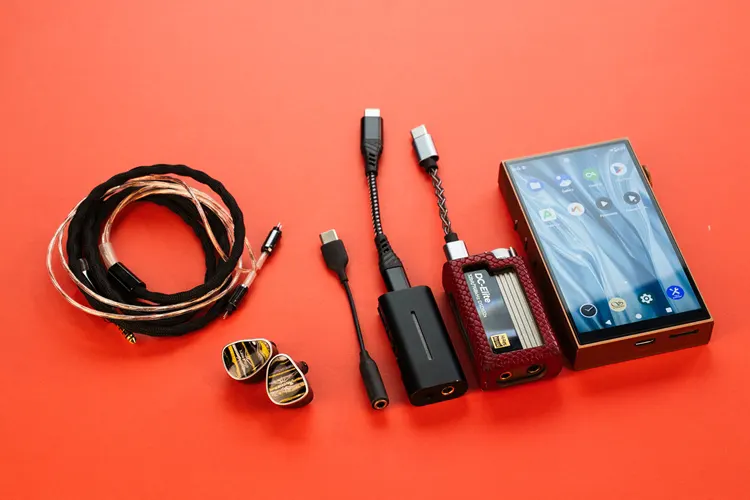
Kiwi Ears Étude has a tonal balance that is generally pleasant-sounding when paired with any of the sources. However, it easily reveals the nuances and differences in sound quality with different sources.
You need to remember that the Kiwi Ears Étude has a low impedance of 5Ω, which means it is challenging to drive, as 32Ω is considered the norm.
Ohm’s law dictates that the lower the impedance, the higher the current it draws from the source. Therefore, weak sources would struggle in supplying the Étude with the appropriate current.
I used a mix of sources with varying quality and price brackets, and still, the Étude sounds good with all of them, except with the Samsung small tail USB to 3.5mm adapter, where it indicated a struggle due to the Étude’s low impedance.
I easily recognize the warm tonality of the LETSHUOER DT03 dongle DAC, with good detail and micro-detail presentation and a big soundstage. There is great sound transparency and dynamics with this pairing, and at no time did it indicate a struggle.
I then switched to the expensive iBasso DC-Elite dongle DAC, and I noticed an improvement in micro-details, soundstage, and musicality, as the sound became more transparent and airy. As expected.
Lastly, the Shanling M3 Plus DAP has a powerful 800mW per channel of rated output power. Here, its power and bass control are demonstrated.
There aren’t many source pairings that the Étude wouldn’t sound good with. It is not fussy with source pairing; as long as you avoid the lowest-powered sources available, you should pick a source with at least 100mW of output power to be safe.
Selected Comparisons
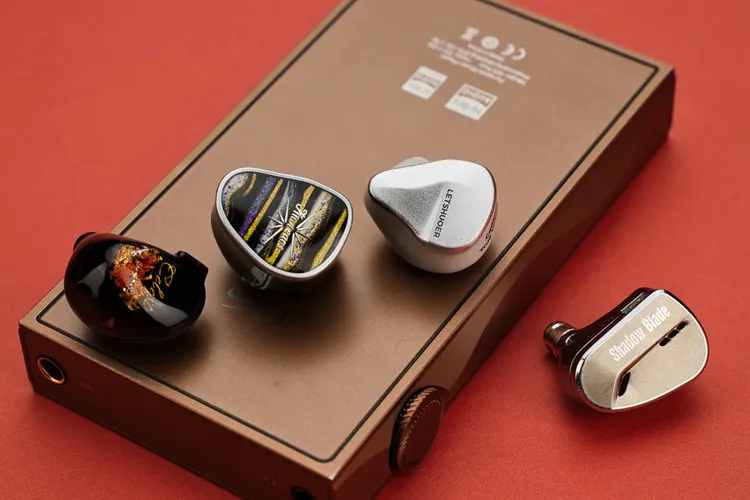
Kinera Celest Plutus Beast
Technical
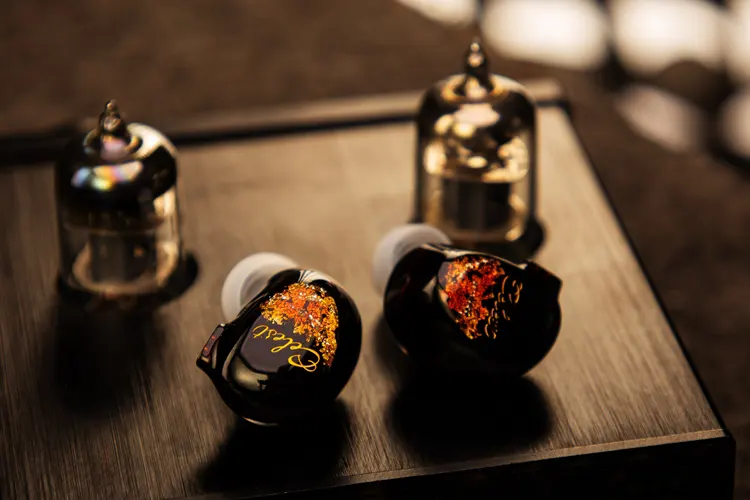
The Celest Plutus Beast features one bone conduction driver, similar in function to the vibration transducer used in the Etude, one balanced armature driver, and one square planar driver. It has a low 8Ω impedance and a sensitivity of 108 dB.
Design
The Plutus Beast features a beautiful black 3D-printed shell with a nice-looking design on the faceplate, which looks mysterious and classy at the same time. It features a silver-colored, 4-core, silver-plated cable with all-metal components.
Performance
There are apparent differences in their tonalities; the Plutus Beast is more of a V-shape with subdued or darkish treble, while the Étude has a slightly V-shaped neutral sound with open and airy sounding treble.
The Plutus Beast Bass is more mid-bass focused and sounds punchier, while the bass on the Étude is more neutral with a slight sub-bass emphasis, resulting in a softer-textured bass.
There is more pinna gain or upper midrange boost with the Plutus Beast, resulting in a more forward yet more defined vocal and instrument presentation. In comparison, the Étude is more relaxed and sounds more diffuse in this area.
The most significant difference is in the treble; there is more air and treble energy with the Étude, while the Plutus Beast sounds dark and rolled-off in comparison.
The Étude has a bigger and wider soundstage. The Plutus Beast has a deep soundstage, but not as wide open as the Étude’s.
Regarding imaging, the Plutus Beast has more defined imaging, albeit more intimate in presentation. The Étude has less defined imaging but is still easily recognizable.
CVJ Shadow Blade
Technical
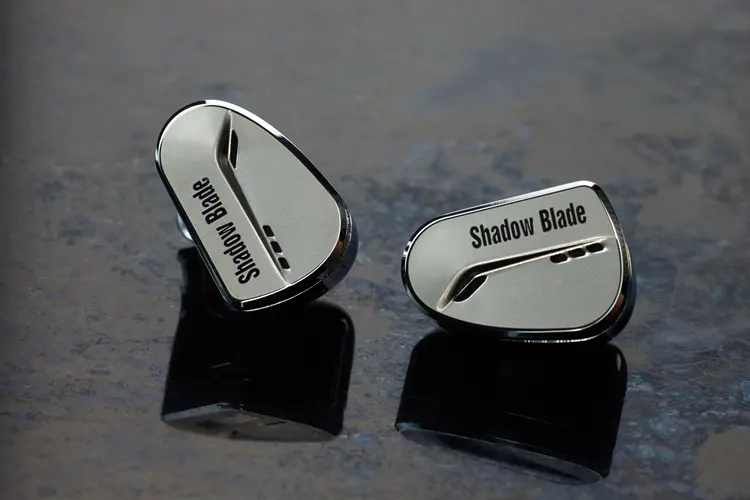
The Shadow Blade is a gaming IEM set featuring a 10mm dynamic driver and a vibration unit, similar in function to the one found in the Etude. It has a low impedance of 8Ω and a sensitivity of 101 dB.
Design
My Shadow Blade unit features a chrome-plated, full-metal shell with a clean, minimalist design. There are vents at the faceplate as well as near the replaceable nozzle. It includes three nozzles that the user can change to accommodate his/her sound preference.
It is a gaming-focused set that includes a 2-meter-long modular cable for desktop use, featuring user-replaceable plugs, including a USB-C plug for direct connection and a 3.5mm plug. It also consists of a microphone.
Performance
Shadow Blade has a less neutral, deeper U-shaped sound signature. It has less bass boost, but has a more recessed upper midrange, making the imaging even less distinct and more diffused than the Étude.
The treble in Shadow Blade is very extended but has a more relaxed presentation than the Étude.
They both have a large soundstage presentation, but I find the Étude to have a more natural-sounding soundstage; the soundstage on the Shadow Blade feels like you are in a dark, cold cinema.
There is a noticeable difference in how strongly their vibration transducers vibrate; the Shadow Blade’s is much stronger. It can walk on top of a flat, solid surface with its vibration, while the Étude cannot.
For daily use, the Kiwi Ears Étude is a more suitable IEM. However, for movies and gaming, the Shadow Blade is more immersive and therefore better suited as a gaming and movie IEM.
LETSHUOER Cadenza4
Technical
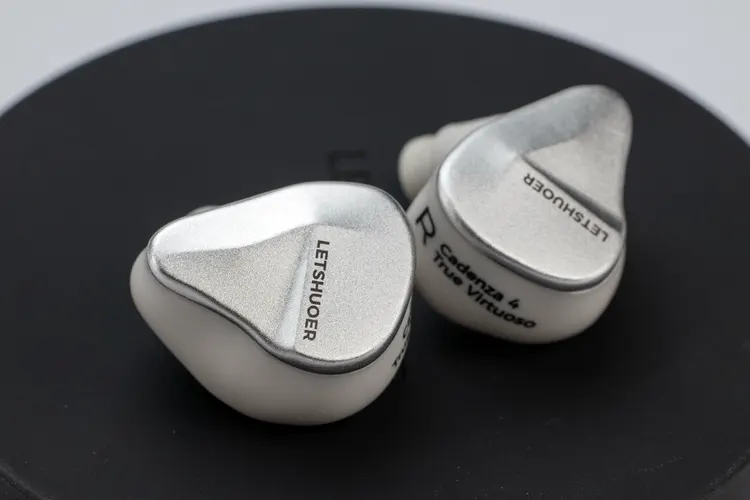
LETSHUOER Cadenza4 has a similar driver configuration to Etude of 1x 10mm beryllium-coated DD + 3 balanced armature drivers made by Knowles and Sonion, except that it is without a vibration transducer.
It has a 15Ω impedance rating, with an SPL of 102 dB, and a frequency response of 20 to 40 kHz.
Design
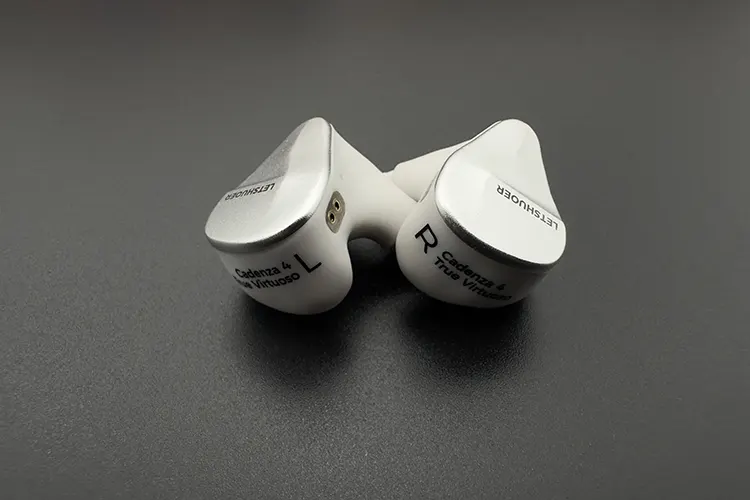
Cadenza 4 features a minimalist, off-white 3D-printed resin shell with a silver metal faceplate. There are three output tubes at the nozzle, rather than the grills typically found in most IEMs.
The included cable is a modular cable with swappable plugs, featuring 2.5mm balanced, 4.4mm balanced, and 3.5mm unbalanced connections, which is more premium-looking than the cable on the Etude.
Performance
The LETSHUOER Cadenza4 has a neutral but leaner and more airy sound signature, with the Kiwi Ears Étude sounding warm in a side-by-side comparison, even though it is neutral in reality.
Cadenza4 has a leaner, flatter, and more neutral bass; there are no boosts in the bass. In comparison, the Kiwi Ears Étude has a slight increase in the sub-bass region.
The Cadenza4 has a slightly more forward and accurate upper midrange, resulting in better and more defined imaging than the Étude.
Cadenza4 has a more detailed and airy treble by an easily noticeable margin; it is simply more resolving, resulting in a better separation and layering of the vocals and instruments.
Regarding soundstage, both have a big and spacious soundstage, but I feel the Cadenza 4 has a broader stage.
Choosing between the two ultimately comes down to whether you prefer the highest resolution or a balance between tonality, decent resolution, and technical performance, which are the strengths of the Cadenza4 and the Étude, respectively.
My Verdict
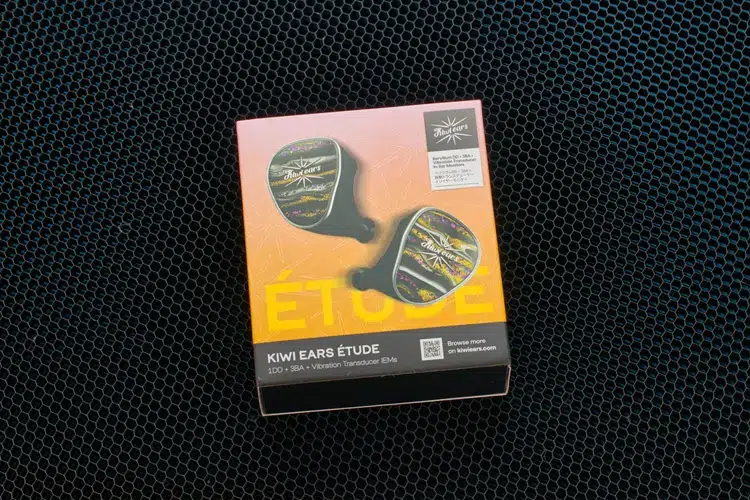
I’ve been observing the IEM market in the competitive, entry-level $100 price range for over a couple of years now, and I’ve seen how manufacturers strive to provide consumers with the best balance of sound quality, innovation, design aesthetics, features, and value for money. And the Kiwi Ears Étude is a good example of that.
Étude may not have the best resolution or the most defined imaging, but it is among the best in its price range in terms of resolution, and the imaging is not bad either, just not the best.
Kiwi Ears Étude is an entry-level IEM that features a well-balanced, lively tuning, resulting in a smooth and pleasing listening experience that is neither boring nor monotonous.
It uses a vibration transducer to subtly enhance the sound by adding another layer of bass to the musical experience, a good value for money, and thus, recommended.
Kiwi Ears Étude Technical Specifications
- Model: Kiwi Ears Étude
- Drivers: 1 Dynamic Driver + 3 Balanced Armatures + 1 Vibration Transducer
- Sensitivity: 104dB SPL/mW
- Impedance: 5Ω
- Frequency Response: 20Hz – 20kHz
- Cable Details: 0.78mm 2-Pin Connector
- Cable Length; 1.2 Meters
