

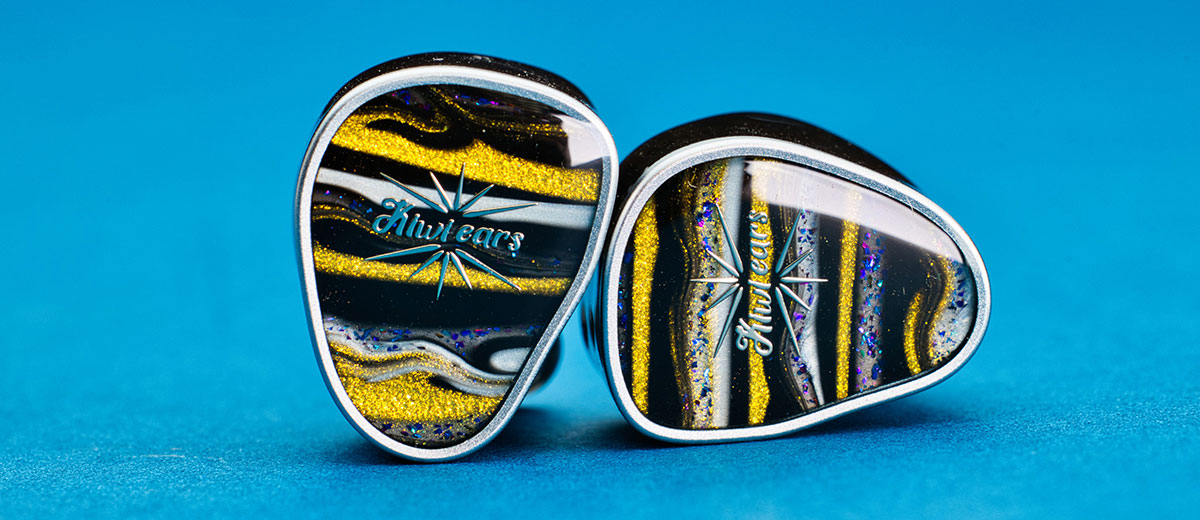
Marcelo reviews the Kiwi Ears Étude, a single dynamic and triple BA driver universal IEM with new Kiwi Vibration Transducer (KVT) technology. It is currently priced at $119.00.
Disclaimer: This sample was sent in exchange for my honest opinion. Headfonics is an independent website with no affiliate links or services. I thank Linsoul and Kiwi Ears for their support.
Click here to read up on the Kiwi Ears gear previously reviewed on Headfonics.
This article follows our scoring guidelines, which you can read in more detail here.
Kiwi Ears Étude is another interesting IEM from Kiwi Ears, which has been releasing great-sounding and innovative IEMs recently.
My experience with Kiwi Ears IEMs began a year ago, when they released the Kiwi Ears KE4, which departed from the standard tuning style of the time, known as Harman tuning, and introduced Meta tuning instead.
It addressed the complaints of many people about the Harman tune, which includes an elevated upper midrange, a lack of midbass and lower midrange, and sometimes a perceived lack of upper treble due to the elevated upper midrange.
What’s special about the Kiwi Ears Étude is the inclusion of a vibration unit they call the Kiwi Vibration Transducer, or KVT. It produces shell vibration in conjunction with the music, which can be felt in the ear, adding an extra dimension to the music listening experience.
Competitively priced at $119, I wonder how it compares to other similarly priced, as well as more expensive and less expensive IEMs, such as the Kinera Celest Plutus Beast, LETSHUOER Cadenza4, and CVJ Shadow Blade, respectively. Let’s find out in my full review below.
Features
Kiwi Ears Étude is a tri-brid IEM that uses three types of transducer technology.
It features a 10mm Beryllium-Plated Diaphragm Subwoofer that operates below 250Hz, a balanced armature driver for the midrange, two balanced armature drivers for the treble, and a vibration driver known as the Kiwi Vibration Transducer.
The 3D-printed shells have tuned acoustics that sing in conjunction with the vibration transducer, making the use of the vibration transducer more effective.
I can hear the acoustic sound of the shells when I bump them together; they make a funny sound.
One of the most important features I’d like to mention, but often ignored in other reviews, is the inclusion of a properly working pressure release system for the ear canal.
I hate it when my listening enjoyment is ruined by pressure buildup and constant changes in air pressure in my ear canal, which cause nausea during walking exercises on an otherwise great-sounding IEM. The Kiwi Ears Étude doesn’t have that issue.

Design
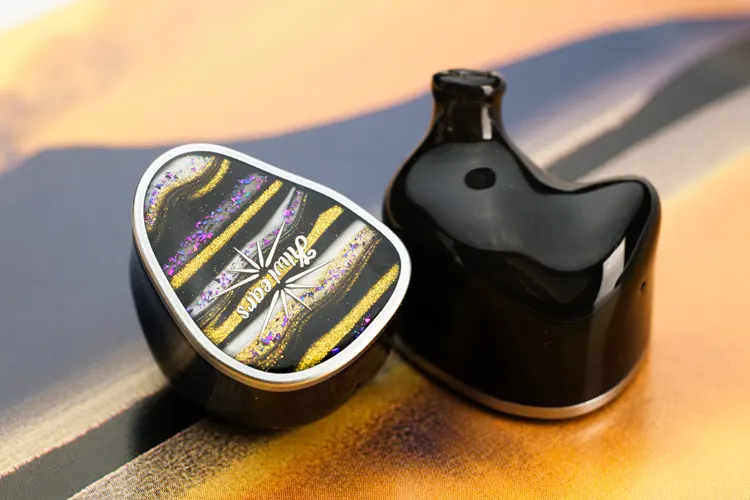
The Étude has a slightly above-average size and a comfortable shell but is below-average in weight.
It weighs 5 grams, which is 1.5 grams below what I consider the average weight, 6.5 grams. The lightweight is due to the hollowed-out, acoustically tuned shell.
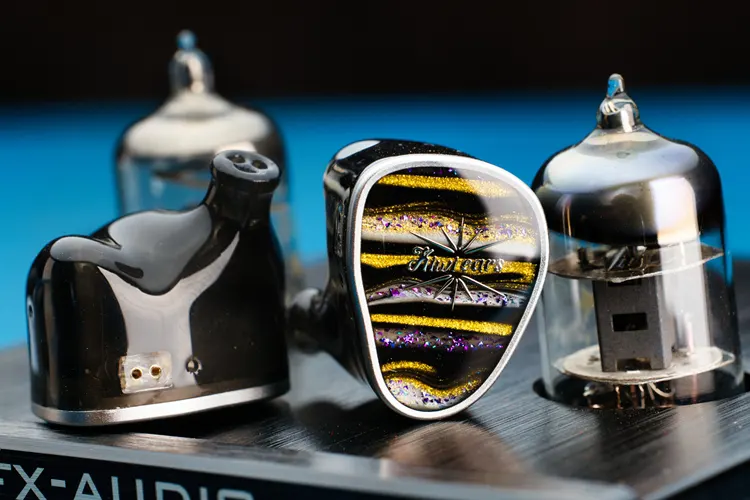
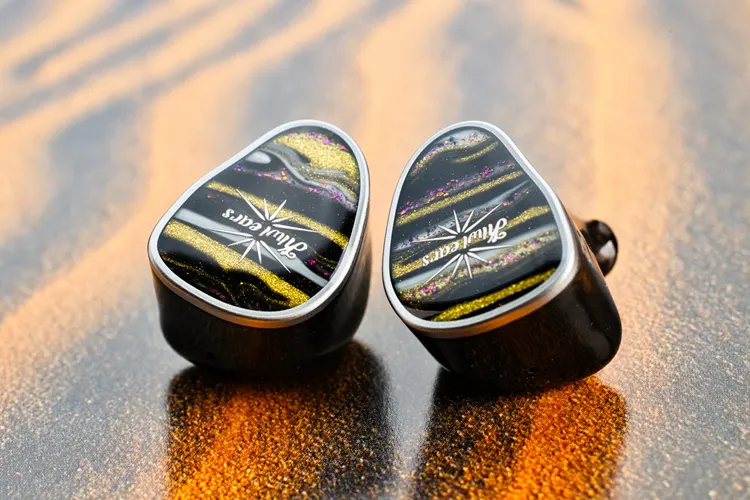
An attractive-looking faceplate covers the back of the shells, featuring a silver metallic edging, an artsy stripe pattern reminiscent of the surface of planet Jupiter, and the metallic Kiwi Ears logo at its center.
I like how Kiwi Ears spent resources in making the IEM look good, considering its entry-level price and innovative use of various driver technologies. Instead of making so much effort to make the packaging and accessories look expensive.
Which brings us to the stock cable. The included non-modular 4-core cable has good build quality, featuring metal parts, but utilizes thin wires that can tangle easily and don’t match the aesthetic of the IEM faceplate as well.
Luckily, cables are easy to replace, and there are plenty of IEM cables priced under $15 that feature thicker wires and a better appearance.
Comfort & Isolation
The Kiwi Ears Étude features a slightly above-average but still comfortable nozzle width of 6.3mm, and when combined with the included ear tips, it provides a secure grip on the ears.
I tried a vigorous walking exercise, and I never felt it want to fall off; I don’t need to re-adjust it often. It is also easy to seal. I just put it in my ears, and I’ve never had a hard time sealing it; it’s properly sealed without any effort.
The Étude features an ergonomically shaped shell that never applies concentrated pressure to any part of my ears, which can cause discomfort over time. It feels very comfortable during long listening sessions.
External sound isolation is average, comparable to that of other IEMs I’ve tried recently. The same isolation I observed with other IEMs when I go to a coffee shop to relax. Nothing remarkable and nothing to complain about.
Packaging & Accessories
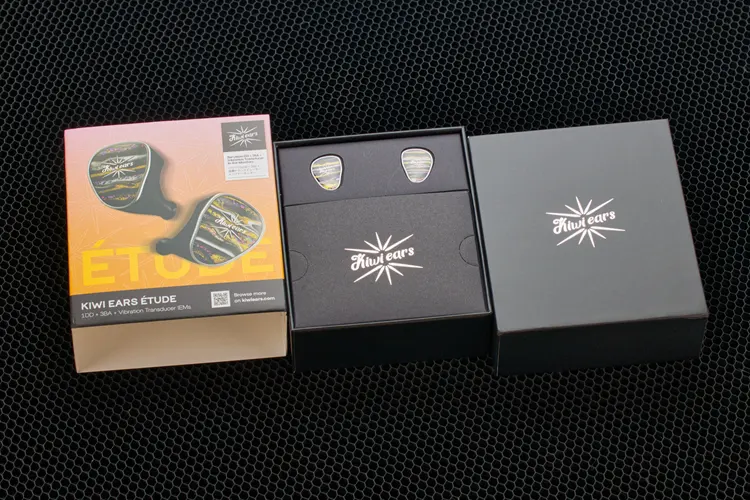
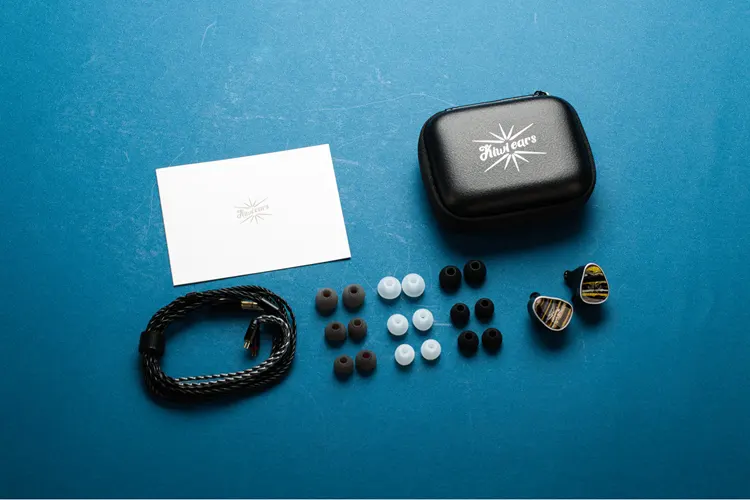
It’s nice to see manufacturers save on packaging and invest more in making the IEM sound and look good. The packaging of the Kiwi Ears Etude is efficient and straightforward, consisting of a black rigid box with a graphics-laden sleeve.
The package includes a user’s manual, a warranty card, three sets of ear tips, a cable, a carrying case, and a pair of IEMs.
Sound Impressions
I used a mix of different sources with drastic differences in capability and sound signature to see how the source pairing would behave with the Etude’s very low impedance of 5Ω, instead of the 32Ω standard for the majority of headphones and IEMs available.
Aside from the usual sources that I use for IEM reviews, including the LETSHUOER DT03, iBasso DC-Elite Dongle DACs, and Shanling M3 Plus DAP, I added a small tail dongle DAC and my old Samsung USB-C to 3.5mm adapter, which I got as a freebie with a phone purchase many years ago.
Objective Impressions
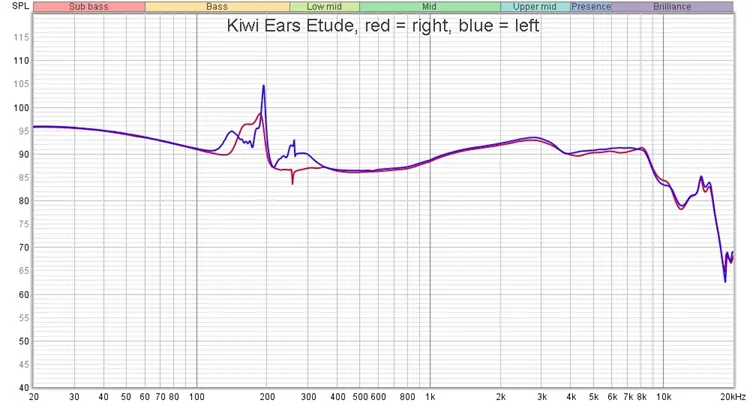
Kiwi Ears Etude’s measured graph shows an excellent channel balance, despite its five-driver-per-channel setup, indicating a high manufacturing standard.
The bass boost is slightly focused on sub-bass frequencies below 60 Hz, with minimal impact on mid-bass frequencies, resulting in a fast, clean, and deep bass response.
Those peaks, centered at 200 Hz, correspond to the resonance frequency of the Kiwi Ears Vibration Transducer, or KVT.
They don’t sound as bad as they look; they are not obvious and only manifest as felt vibration in the ears rather than an audible bass boom in that area.
Kiwi Ears Etude has a very smooth midrange and treble response; the pinna gain peak, which is essential for making IEMs sound natural, is only a mild 7 dB.
The treble is smooth with a gradual hump centered at 8 kHz. And mild bumps above 13 kHz, which should only add air and not brightness.
Subjective Impressions
I completed my standard 24-hour burn-in for IEMs by leaving it playing with a spare DAP, and I kept busy with other matters, checking in periodically. I noticed that the sound didn’t change much after the burn-in, and I can safely say a two-hour burn-in would suffice.
Of the three types of included ear tips, I used the black tips as I find them the smoothest sounding.
I used both PowerAmp and UAPP music player Apps as the source music player. I didn’t use any sound equalization, filters, sound field, or other sound enhancement features. Music was played without any non-essential processing.
I would have used the included cable, but unfortunately, it has a 3.5mm plug. I must use a 4.4mm balanced connection to have equality with the other IEMs in the review, which the Etude will be compared to.
I used a third-party cable, specifically the Venture Electronics VE Dic Vita Cable, which is a 4.4mm cable.
The first thing that came to mind regarding the sound of the Kiwi Ears Etude was the clarity of midrange, treble, and vocals, without rendering the tonal balance thin.
It has a very balanced sound energy, ranging from sub-bass to upper treble, resulting in an excellent overall tonal balance that is a delight to listen to.
Étude has a slightly V-shaped neutral sound signature, characterized by deep bass, a clean and clear midrange, and an energetic yet non-fatiguing treble that is brimming with energy and detail.
Bass
My first and last impressions of the bass are that it is almost neutral with only a modest amount of sub-bass boost. Sub-bass is more elevated than mid-bass. It doesn’t overwhelm the musical experience; instead, it is well-balanced with the midrange and treble.
Étude’s bass has excellent articulation, speed, extension, and details, which I attribute to the near-neutral tuning. However, the moderate boost in the sub-bass ensures that the bass never sounds thin or lacking weight and impact; it sounds powerful when the music demands it.
It has a good amount of energy, preventing the musical experience from being boring. The bass is bubbling with controlled enthusiasm, creating an engaging sound experience without sounding muddy. It responds quickly to dynamic changes in the music.

Kiwi Vibration Transducer (KVT)
KVT adds a perceivable and pleasant vibration to the music, especially at louder volumes. It adds another layer of bass to the musical experience that cannot be achieved without it. But subtle enough not to spoil the excellently tuned tonal balance and sound signature of the Étude.
I noticed an added presence in the mid-bass, especially on electric drums on some ’80s music, making them more palpable.
It has good speed, so it doesn’t slow down the dynamic driver; the effect is more felt than heard. It is well calibrated that I didn’t wish to turn it off, unlike the other IEM in this review with a vibration unit, which I sometimes wish I could turn off.
Midrange
By limiting the response of the dynamic driver up to 250Hz only, it leaves the balanced armature to reproduce the midrange, which it does an exemplary job, making the midrange sound so clean.
Due to the inherent speed of balanced armature drivers, the lower midrange doesn’t sound overly thick or muddy; it sounds clean and lush. However, its moderate pinna-gain or upper midrange elevation prevents it from sounding thin.
Kiwi Ears did a great job in tuning and balancing the midrange response; there is never too much or too little of anything, allowing the music to pass through with very good transparency. If I were to design my own IEM, this is how I would tune the midrange.
Treble
Detailed, dynamic, smooth, and airy. It is slightly elevated in response, but never tilts the good tonal balance. It is clear, uncongested, and never fatiguing, with good macro and micro details.
The balanced armature drivers used are of very good quality; despite their elevated response, they never sound metallic or cheap, and they exhibit very good cohesion with the rest of the audio frequency range. There is no inter-driver coherency issue.
Étude’s treble has very good speed, it retains its clarity even at loud volume levels, and there is no congestion even with very complex music; instruments are well resolved by the Étude’s treble.
I must say that the treble tuning of the Étude is very good and tastefully done.
Soundstage
Étude’s soundstage is wide open and deep with good height. It has a natural and atmospheric feel that doesn’t remind you that you are listening to an IEM. It sounds similar to open-back headphones with great sound staging.
The soundstage size is easily above average and spherical, with roughly equal height, width, and depth. Allowing good holography of the images. However, the imaging performance is not as defined as the best I’ve heard.
There are sound directional cues indicating where the images are coming from, but they are not as precise as the best, nor are they diffuse. The images are easily locatable, but the edges are not the most defined.
Étude sacrificed a little imaging performance for greater sound staging and tonality, which, in my opinion, is an excellent trade-off.
Instrument layering and separation are excellent even when playing loud. There is barely noticeable degradation in this regard when comparing low and loud volumes; the sound remains consistent, indicating low driver distortion, a good dynamic range, adequate power handling, and sufficient headroom.
Click on page 2 below for my recommended pairings and selected comparisons.
