

Synergy
Efficiency
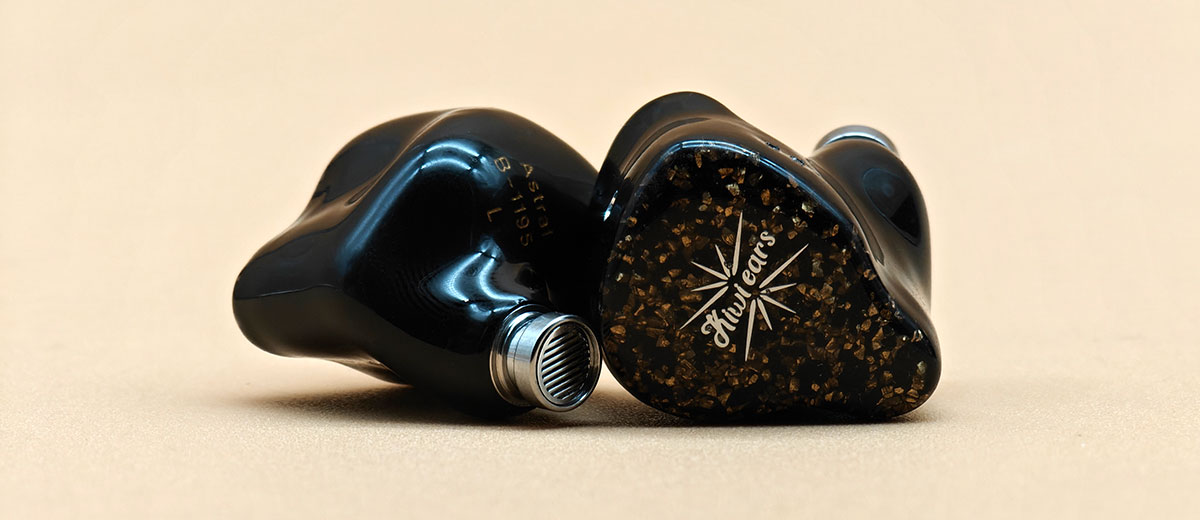
The Kiwi Ears Astral has a sensitivity of 105 dB @1kHz and an impedance of 23Ω. It is easy to drive from most portable sources and dongles, not requiring additional amplification to reach a satisfying volume.
The included modular cable supports both 3.5mm and 4.4mm terminations, making it easy to pair with a wide range of devices.
The 4.4mm balanced connector is the better option overall, as it gives the Astral more headroom and helps reach a comfortable listening level with improved stability.
With its excellent dynamics, differences between low and high-volume listening come down to user preference for loudness.
Across all listening levels, the Astral keeps its strong subbass, rich vocals, and highly detailed treble consistent and clear.
Pairings
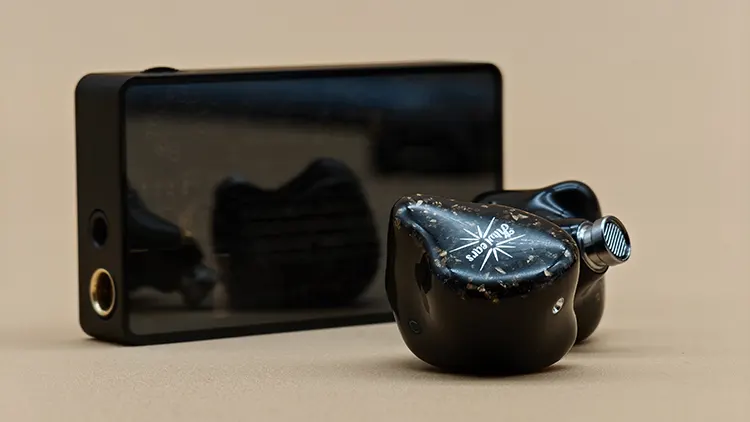
The Astral isn’t picky with sources and maintains a consistent sound signature across different setups. Whether paired with the FiiO JA11, a phone’s 3.5mm jack, or the Colorfly CDA M2, its overall performance remains stable with no significant changes.
Most sources brought out the Astral’s usual strengths, keeping its tuning and technical ability intact. There was little variation in clarity, balance, or overall presentation regardless of the device used.
The only exception was the Heartfield R1, an R2R DAC, which gave the Astral a noticeable midbass bump. This pairing brought a stronger punch to the low end, making the Astral feel like a true basshead IEM while still retaining its original balance.
Select Comparisons
Kiwi Ears Septet
Technical
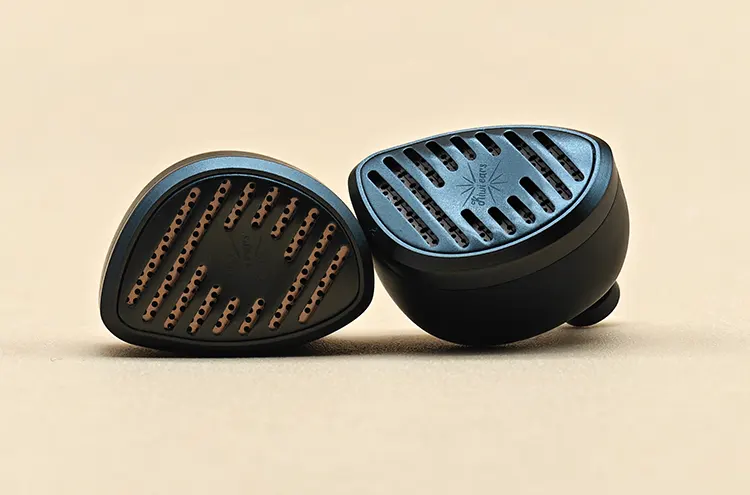
The Kiwi Ears Septet uses a seven-driver hybrid setup, featuring one dynamic driver and six balanced armature drivers for each side.
The dynamic driver is responsible for the low-end, while a mix of Knowles and custom balanced armatures covers the midrange and treble regions.
A multi-way crossover is used to assign each frequency band to its designated driver. Each driver operates within its own range, aiming for clean separation and efficient use of the hybrid configuration.
Design
The faceplate of the Septet has a swirling marbled pattern with gold and blue accents, finished with the Kiwi Ears logo at the center in metallic gold. The look is distinct and gives the IEM a vibrant appearance.
The shell is crafted from dark, glossy resin with smooth, rounded curves and an ergonomic profile for a comfortable fit. Markings are kept minimal, and the metal nozzle is finished with a proper lip to secure ear tips.

Performance
Both the Kiwi Ears Septet and Kiwi Ears Astral differ in ergonomics, with the Septet proving better suited for daily use.
Its shell sits naturally in the ear and does not stretch the ear even during long sessions, while the larger Astral shell is only comfortable for shorter periods before discomfort sets in.
Moving to the low end, the Astral stands out with a more potent subbass, delivering deeper rumble and greater presence than the Septet.
The Septet excels in the midbass, offering more punch and energy by default, similar to what the Astral produces when paired with a warmer source such as the Heartfield R1.
Both models handle the midrange well, but the Astral provides added refinement and smoothness. Sharpness in the upper midrange is avoided on the Astral, whereas the Septet can sometimes sound a bit edgy.
The treble is another area where the Astral comes ahead, offering more air, higher detail retrieval, and a refined top end. There is no hint of sibilance or fatigue, while the Septet may become fatiguing with busier tracks.
Soundstage width is similar on both, but the Astral introduces more vertical staging and improved imaging accuracy. This adds to the sense of immersion and provides a more realistic placement of instruments compared to the Septet.
ddHiFi Surface
Technical
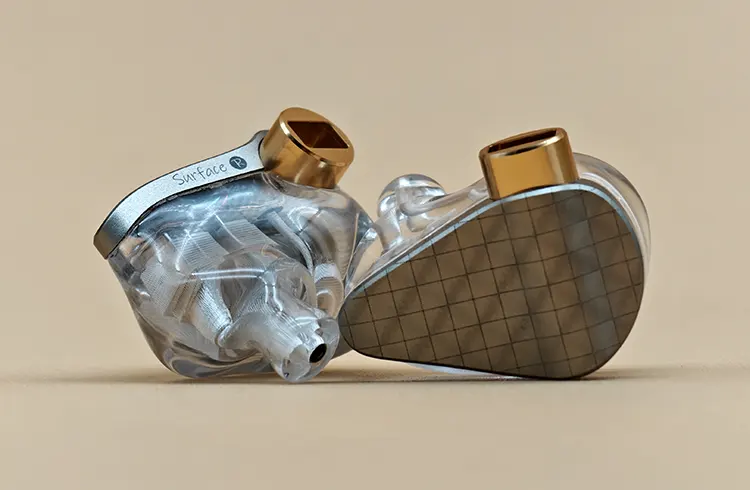
The ddHiFi Surface uses a hybrid driver configuration with one dynamic driver and four balanced armature drivers in each shell.
The dynamic driver is responsible for the low-end, while a pair of balanced armatures covers the midrange, and another pair handles the treble and upper-treble frequencies.
A dedicated circuit board is used for the three-way electronic crossover, dividing the frequency bands precisely between the dynamic driver and the armatures. Each driver is set to handle its intended range, aiming for efficient integration within the compact shell.
Design
The faceplate of the Surface is metallic with a muted gray finish and a grid-like etched pattern, giving it a clean and industrial appearance. The shell itself is fully transparent, making all internal components, drivers, and the crossover board visible.
Both shells are labeled with “ddHiFi L” and “Surface R” near the connector for easy identification. The nozzle is finished in metal and follows a lipless design, while a single vent is placed on the underside of the shell, blending with the overall look.

Performance
Both the Astral and Surface deliver genuinely great bass, but the emphasis differs between the two.
The Astral leans more into subbass, offering a deeper and more powerful rumble that edges into basshead territory, while the Surface puts its strength in the midbass, giving a heavier and more pronounced punch that the Astral doesn’t quite reach.
In the midrange, the Astral stands out for its vocal refinement and lifelike detail, letting nuances in the vocals come through more easily.
The Surface, in contrast, has a softer and lusher character, with vocals pushed more forward in the mix for a stronger presence compared to the more balanced approach of the Astral.
Treble is another area where the Astral takes the lead, pulling ahead in both refinement and detail retrieval.
Subtle details and textural realism, especially in percussion like cymbals and hi-hats, are easier to hear and feel more natural on the Astral, while the Surface remains a step behind in both layering and extension.
Staging also favors the Astral, which has a noticeably wider and more spacious presentation. The Astral offers some vertical staging as well, allowing for more accurate imaging and placement of sounds, while the Surface stays flatter and more confined in comparison.

My Verdict
The Kiwi Ears Astral stands out for its strong sub-bass, natural and balanced midrange, and clear, highly detailed treble.
The modular cable and included accessories add a practical touch, while the overall build and design help it feel like a premium offering.
Although the larger shell limits comfort for longer listening, the Astral’s sound remains consistently immersive and technically capable on any source.
It confidently delivers on its promise as an excellent hybrid IEM that continues to showcase Kiwi Ears’ impressive quality and execution.
Kiwi Ears Astral Technical Specifications
- Driver Type: One (1x) 10mm bioceramic-diaphragm dynamic driver and six (6x) balanced armatures with two (2x) modified SWFK tweeters
- Plug: 0.78mm 2-pin with 3.5mm and 4.4mm modular termination
- Frequency Response: 10Hz – 22kHz
- Impedance: 23-ohms @ 1kHz
- Sensitivity: 105 dB @ 1kHz
