

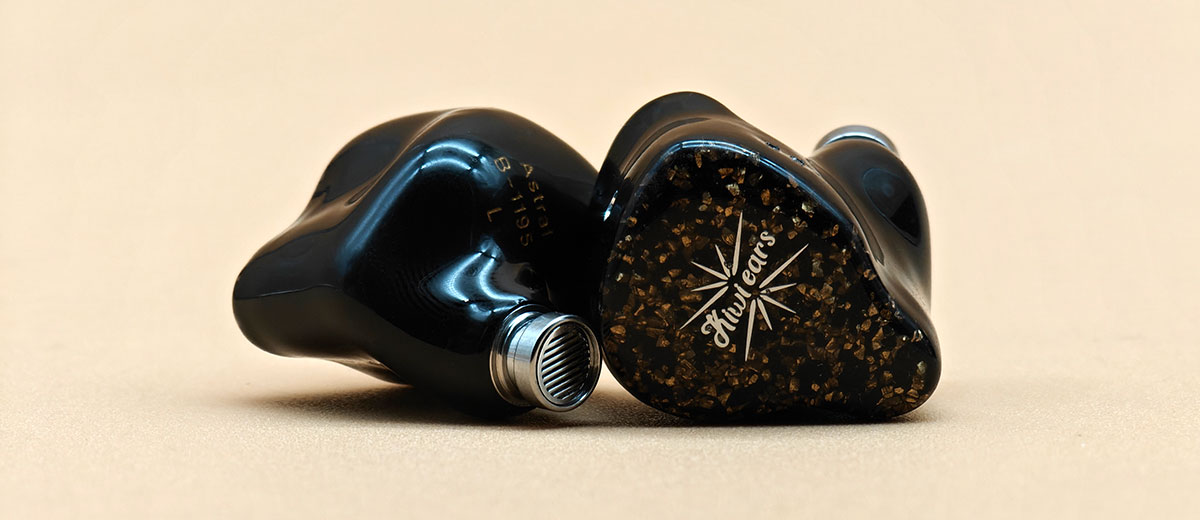
Kurt reviews the Kiwi Ears Astral, a hybrid custom 10 mm bioceramic‑diaphragm dynamic driver and 6 BA universal IEM priced at $299.00.
Disclaimer: This sample was sent in exchange for my honest opinion. Headfonics is an independent website with no affiliate links or services. I thank Linsoul and Kiwi Ears for their support.
Click here to read up on the Kiwi Ears gear previously reviewed on Headfonics.
This article follows our scoring guidelines, which you can read in more detail here.
Kiwi Ears has steadily built its reputation as a brand offering well-tuned IEMs such as the Septet and the Aether. IEMs that consistently balance technical capability with enjoyable sound.
Their releases span from entry-level options to more complex hybrids, each aiming to deliver performance that matches the brand’s growing presence among enthusiasts.
Now, the Kiwi Ears Astral enters the lineup with a classic 1 dynamic driver and 6 balanced armature configuration, promising a familiar yet potentially refined listening experience.
Will the Astral manage to offer something new with this established formula, or does it simply reinforce what Kiwi Ears already does well? I found out in more detail my full review below.
Features
The Kiwi Ears Astral uses a 1 dynamic driver and 6 balanced armature hybrid setup, pairing an in-house 10mm bioceramic diaphragm dynamic driver as its subwoofer with six balanced armature drivers.
The dynamic driver is tuned with a gentle roll-off at 300Hz to allow the bass to blend naturally into the midrange.
Supporting the dynamic driver are two dual custom midrange balanced armature units and a dual ultra-high frequency tweeter.
The dual midrange drivers are tuned for a neutral and accurate response for vocals and instruments, with a compensated peak at 2.8kHz to match natural ear perception.
The tweeter section uses a modified SWFK design, optimized to extend the treble response smoothly up to 15kHz without introducing harshness or peaks.
This setup is intended to keep upper frequencies detailed and uniform without unwanted glare.
All drivers are linked through a precisely engineered crossover, with each frequency band assigned to its respective driver group.
This configuration allows every driver in the Astral to do their job without getting in the way of the others.

Design
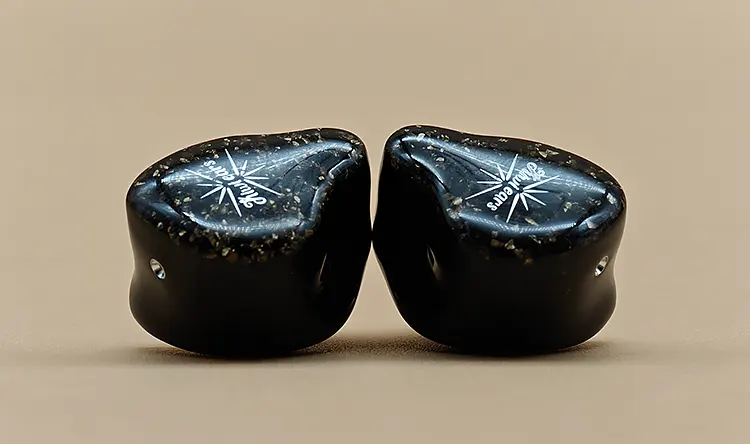
The faceplate of the Kiwi Ears Astral features a dark resin base filled with metallic gold flakes, giving it a subtle shimmer when viewed under light. The Kiwi Ears logo sits at the center in white, standing out clearly against the textured background.
The shell is made from deep black, glossy resin, shaped with rounded curves and a slightly bulbous profile. Its smooth finish and ergonomic contours are designed to follow the natural lines of the ear.
Markings are kept simple with gold text showing the model’s name, channel, and unit number printed near the connector on the inside of each shell. There are no other logos or decorative elements elsewhere on the shell.
A pair of vent holes can be found on the underside of the shell, while a single circular vent is positioned closer to the outer edge. These openings are neatly integrated, blending well with the rest of the design.
The connector uses a standard 0.78mm 2-pin layout at the top of the shell for a secure cable fit. The nozzle is made of metal with a wide bore, and it features a grooved grill tip with a replaceable mesh filter that keeps debris out and helps secure ear tips in place.

Comfort & Isolation
The Kiwi Ears Astral has a big and bulky shell that can be difficult for smaller ears to wear comfortably. Its size means it is less suited for those looking for a more compact fit.
The shell can create a great seal, but it tends to stretch the ear and becomes uncomfortable with medium to long use. The secure fit, however, keeps the IEM stable once inserted.
Isolation is generally quite good thanks to how snugly the Astral fits. It blocks out a good amount of outside noise, making it effective for cutting down on ambient sounds.
Using the Astral while sleeping is not ideal, as the shells protrude out of the ear and can press uncomfortably against surfaces. For commuting, the added bulk and pressure also make it less comfortable to wear during travel.

Ear Tips
The Kiwi Ears Astral comes with only one set of ear tips, featuring a blue stem and a translucent flange. The included tips are available in small, medium, and large sizes.
It’s a disappointing selection, especially since other Kiwi Ears IEMs, even entry-level models, usually offer more options. The lack of variety limits the flexibility for different ear shapes and preferences.
The bore is not as wide as typical wide-bore tips, but it is noticeably wider than standard balanced tips. The stem is short, which matches well with the Astral’s shorter nozzle and ensures a secure fit.
This ear tip slightly pushes the bass forward, adding more presence to the low end without noticeably changing the mids or treble. The tuning effect is subtle, but it does give the Astral a bit more weight in the bass.

Stock Cable
The stock cable of the Kiwi Ears Astral has a blue and silver color mix that gives it a sleek look. Its build feels high quality, with a four-strand design that splits into two strands for each side.
The cable features a smooth silver metal splitter and a matching slider, tying the overall look together. Both the 3.5mm and 4.4mm terminations are finished with the Kiwi Ears logo, adding a nice, branded touch.
It strikes a good balance in weight, feeling neither too hefty nor too light in hand. The cable resists tangling but tends to retain bends or folds from how it’s stored, so it can be a bit of a hassle to keep perfectly straight.
Modularity is a highlight here, as the cable supports both 3.5mm and 4.4mm terminations. Swapping between them is simple and smooth, using a pull-and-insert mechanism that’s easy to operate.

Packaging & Accessories
The front of the Kiwi Ears Astral box uses a soft beige and light pink gradient, giving it a subtle and clean look.
Once the outer box is removed, a matte black box with the Kiwi Ears logo is revealed in the center. The presentation is simple and clean, with no extra text or markings.
Opening the black box shows the Astral shells placed securely in a black foam tray, each set into its own cutout.
After lifting the foam tray, a black carrying case with the Kiwi Ears logo is found in a molded compartment on the right side.
Inside the carrying case, all included accessories are packed in separate pouches: the stock cable, both 3.5mm and 4.4mm modular terminations, a single set of blue stem ear tips in three sizes, extra nozzle filters, and a Kiwi Ears-branded cleaning cloth.
Sound Impressions
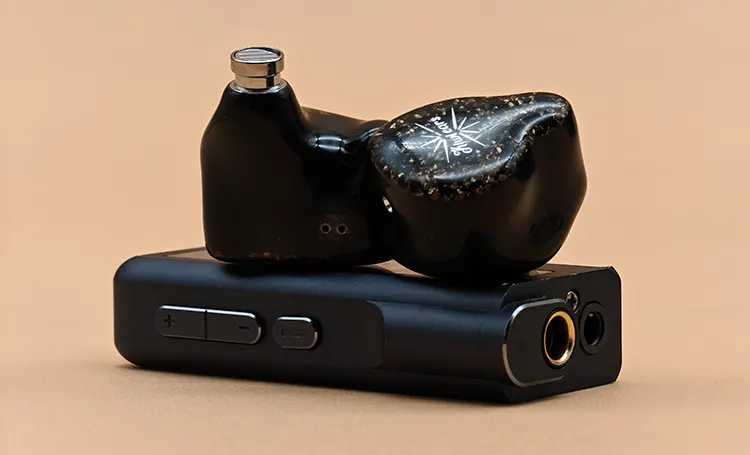
The following sound impressions of the Kiwi Ears Astral were completed using a mix of the Colorfly CDA-M2 and Heartfield R1 dongle DACs.
Bass
The subbass on the Astral is plentiful and powerful, reaching into levels that bassheads would appreciate. It delivers deep rumble and impact, though it can sometimes be a bit too strong for more balanced listening.
Midbass is a little bit lacking, which lets the subbass dominate and occasionally overwhelm the overall low-end presentation. The punchiness is still there, but sits a notch below the intensity of the subbass rumble.
This balance gives the Astral a low-end that feels heavy yet slightly uneven, with the focus pulled toward the subbass rumble more. It creates a shift in emphasis, making the bass feel a bit less balanced in busy tracks.
Fortunately, bass detail is a great highlight, especially with bass guitars and drums. Each beat stands out with a clear and distinctive character, making it easy to pick out individual lines in busy passages.
Mids
The Astral delivers vocals that feel incredibly balanced, with a sense of emotion and life that stands out immediately. They sit in the mix at just the right spot, never sounding pushed back or overly forward.
There’s no hint of harshness or sharpness, with a slight touch of brightness that is handled tastefully. The overall timbre is excellent, free from any BA timbre or unnatural qualities.
Instruments are rendered with impressive accuracy, especially guitars, where each pluck sounds realistic and rich. The movement of the guitarist’s hands across the fretboard and strings is easy to hear, giving every note depth and presence.
Vocals maintain a natural tone, letting subtle details and textures come through clearly. Female vocals have microdetails that shine, while male vocals have enough weight to stay grounded.
This balance keeps the midrange engaging and realistic, with both male and female voices presented cleanly. The result is a midrange that remains full of life without drifting into bloat or excess warmth.

Treble
The treble on the Astral is highly detailed, bringing out plenty of nuances and subtle sounds in every track. Small details in the upper range are easy to pick out without ever becoming overwhelming or distracting.
There is no trace of sibilance, and listening fatigue is minimal even with the treble’s energetic character. Percussion, such as cymbals and hi-hats, has a bright and metallic tone that comes across as lifelike and accurate.
The treble never feels boosted or artificial, maintaining a natural and unforced presentation throughout. Every sound in the upper registers is easy to place, with excellent separation between different instruments.
Resolution is a strong point, making it simple to identify different elements within busy passages. The clarity in the treble allows every sound and instrument to be easily distinguished, even in more complex tracks.
Staging & Dynamics
The Astral has a spacious soundstage with a wide sense of space and a decent amount of height. The presentation gives music and effects plenty of room to breathe without sounding boxed in.
Imaging is precise, making good use of both the wide and vertical staging. Each sound is placed accurately, and there’s no sense of congestion or instruments being out of place.
For gaming, the stage feels set quite far out of the ear, which adds a real sense of immersion during play. This openness helps with picking out positional cues and details in busy environments.
Dynamics are impressive, as bass, mids, and treble all work together in a highly cohesive way. The transitions feel natural and refined, letting each part of the sound complement the others rather than compete.
Click on page 2 below for my recommended pairings and selected comparisons.
