

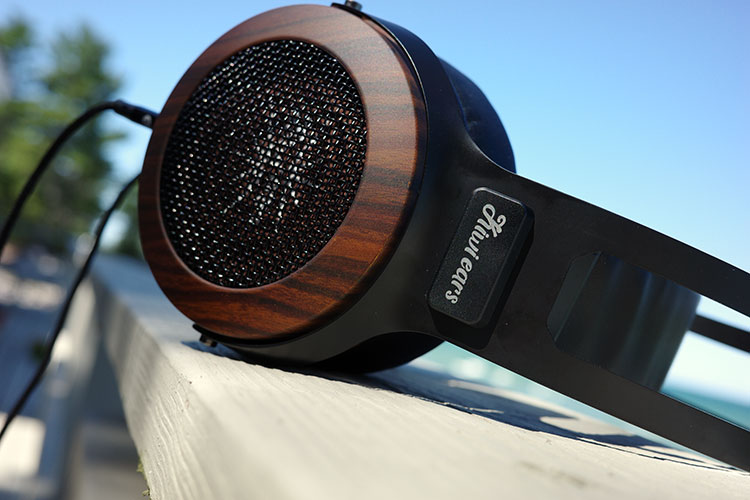
Synergy
Efficiency & Sensitivity
The Altruva is somewhat easy to drive. But it does require a bit more amplification to achieve a very listenable level. Thankfully, though, when at lower volumes, the quality of music still comes across with very good detail retrieval.
So even though more power is desired, the Altruva can commit itself to good sound qualities at lower volumes.

Pairings
The HiBy R4 is slightly warmer than the FiiO DAPs used here, and it shows. The sound emanating from the duo comes across as musical, with good warmth, but lacks a smidge of detail that the M21 or JM21 can present.
I cannot state that any of these DAPs were my favorite, but each did present a slightly different touch to the Altruva.
Where the R4 comes across as the “warmest” of the three, the JM21 represents the most analytical of the three. With very good detail retrieval, the Kiwi Ears seemed destined for a source such as the thinner-sounding FiiO JM21.
Pairing together brings out the best of the duo, allowing the Altruva to add note weight where needed, while the JM21 provides a succinctness that may be lacking in the tuning of the Altruva.

The FiiO M21 may be the “just right” of the three, presenting excellent low-end notes and weight, while moving the midrange up a bit. While that is elevated to me, this tuning provides a lift to the treble notes, presented with a bit tighter control, without losing weight.
Where the M21 adds girth to both ends, the JM21 presents a more detailed response. And the R4 has a warmer, richer tonality with the Altruva. This comes across with a bit less detail and a bit more emotive effect using the R4.
The addition of the desktop amplifier added power, yes, but also allowed for that top-end extension I mentioned in the sound impressions section.
Adding power to the Altruva allowed the volume levels to be lower while providing better clarity. It also allowed me to raise the volume to higher levels than the others, without losing quality.
This is, of course, something that a quality desktop or portable amplifier or dongle can provide.
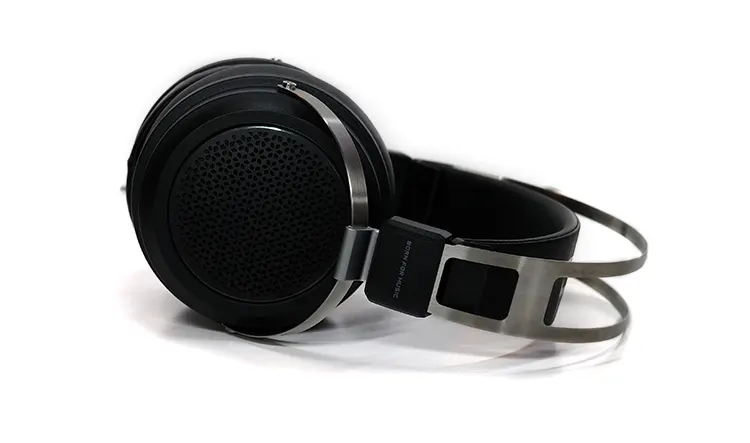
Select Comparisons
FiiO JT1
Features
The JT1 uses a 32Ω rated 50mm dynamic driver, based around a PEK+PU+aluminum polymer diaphragm purportedly for low distortion characteristics, and uses a brass gasket for quicker musical responses. Similar to the Altruva in both size and impedance.
The JT1 is equipped with high-performance N52 magnets and a high-tension CCAW voice coil, which, when combined with the polymer driver diaphragm, purportedly achieves a natural and accurate sound. The JT1 is fairly easy to drive, much like the Altruva.
Design
The JT1 is a closed-back over-ear headphone developed with the help of listeners and influencers, according to FiiO. The focus quickly became a user-friendly and cost-efficient design.
There is a good amount of plastic in the design, highlighted by an aluminum yoke leading to a non-adjustable stanchion. Instead of an adjustable stanchion, FiiO uses a two-cable spring-tensioned setup on the inner headband.
The similarities in suspension system between the two are evident, but the Kiwi Ears come across with a more upscale, premium look to it, with better fit and finish, too.
The JT1 is noisier to wear, too. Any movement was transmitted between the headphone and my listening, unlike the nearly-quiet Altruva.
The silver/chrome accents move over to the outer cup surrounds, giving the JT1 an elegant, understated look. That said, if it came down to looks, the Altruva would be ahead.
Those cups are easily detachable, using the “old school” slot behind the pad mounting system.
This means you could change pads to another if you desire, instead of the plastic button-type earpad you might usually find at this level. And much like the Altruva, with the same level of “effort” I mentioned above, but without the ring.
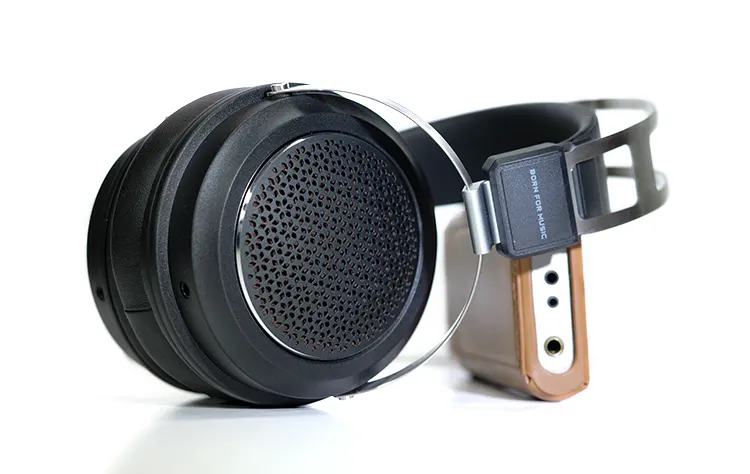
Performance
An elevated bottom end drops into the mids, smoothly until about 650Hz, making bass the highlight, running deep, but cooling off at that break. Elevated mids carry the signature forward with a peak at roughly 6kHz, dropping off again and eventually quite steeply at roughly 13kHz.
As a result, sub-bass is defined, but it also sounds boomy. It also does not sound as deep-reaching as the Altruva.
The dip allows very little bleed into the midsection (slightly better than the Altruva), where the building of notes moves slightly forward, but not in a punchy way; instead, rather smoothly.
But, while the Altruva may “bleed” a bit more than the JT1 does, this is for the connective purpose, rather than a lack of control. There is a difference.
I noted a more holographic sound from the JT1 over the Altruva, but this translated into a distant relationship to the sound, instead of the emotive expression of the Altruva.
Treble notes carry energy, but the rounding of notes gives the signature a lack of true sparkle, in keeping with the warmer signature. The top does not reach as high, or with as much quality and character in the JT1, giving a decided advantage to the Altruva.
A wide soundstage helps to space notes across the setting, but with less depth and height. Out-of-head experiences do occur, but seem a bit flattened when only looking at the stage. The expression in the Kiwi Ears comes across as more thorough and engaging overall.
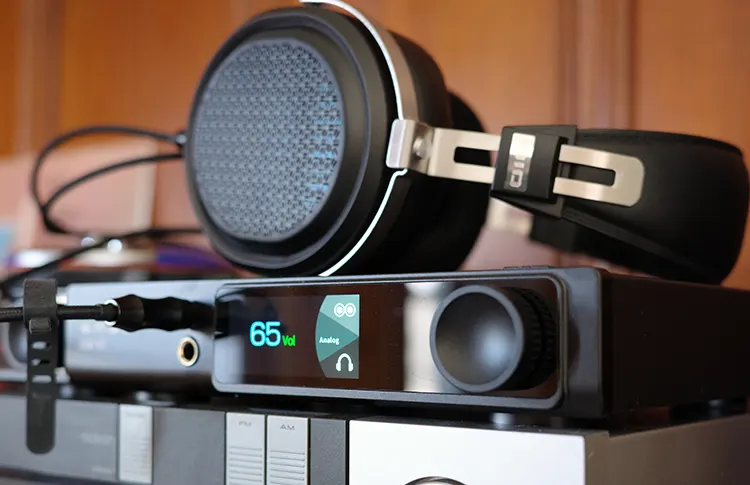
FiiO FT1 Pro
Features
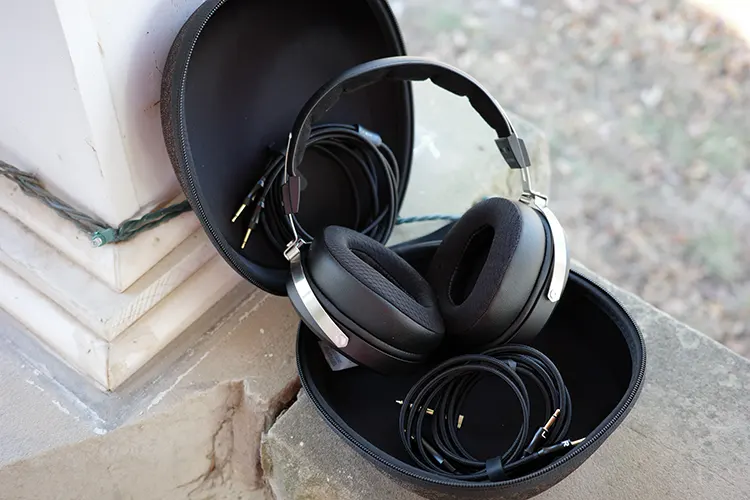
The FiiO FT1 Pro is a set of open-back planar driver headphones equipped with a 95mm x 86mm in-house developed planar magnetic driver and a rounded corner dual magnet array to create a more evenly distributed magnet field for this size of the driver.
With a much larger driver array than the Altruva and different technology, this is probably the most opposed comparison here.
The 20Ω lower impedance means the FT1 Pro isn’t that inefficient, though its 95 dB/mW | 112 dB/Vrms rating might mean pushing the volume a bit more on weaker sources than you are used to.
The 32Ω impedance of the Altruva makes for a slightly harder to drive headphone, but one that is countered by the harder to drive aspect of the planar driver. Here anyway.
Design
There is no mistaking the open-back look, with an ornate aluminum faceplate built into the cup shell.
Aluminum helps to keep the headphone light, continuing into the stanchions and yoke with what looks to be pressed shapes. There is a premium look and feel to the FT1 Pro that fits right in with the quality offered in the Altruva.
The all-black cups and pads are countered by the steel yoke, stanchions, and connecting hardware, giving the FT1 Pro a smooth, upscale look.
The FiiO logo on an aluminum inlay is above the yoke, while small lines on the inside of the stanchions let the user know if each side is pulled out evenly.
The silver/black look of the FiiO versus the black and wood pattern of the Altruva will be in the eye of the beholder.
The single headband of the FT1 Pro has six separate “pillows” underneath for padding cut in a suede-like material, with a soft black pleather top.
Usually, a single headband does not work well for me since I prefer a suspension system, but the FT1 Pro fits well and stays put. And, even with the dual suspension of the Altruva, the FT1 Pro looks and feels the part just as much.
The thick pleather and suede ear pads are very comfortable, and the whole unit fits with the right amount of pressure. Only those with very large heads may feel it to be too much.
The rear of the pads are slightly thicker, canting the cup forward a bit, but not noticeably so. The Altruva pads are more comfortable and softer, too. This can make longer listening sessions more pleasant.
Performance
The FiiO FT1 Pro promotes an exuberant signature, with enough verve to satisfy those who like a speedy signature. It also carries a melodic, natural tonality to it, exemplifying the planar driver within.
Bass reach, while not too deep, is taut with control and matching attack and decay. The midrange sits behind both ends but comes across as organic and natural.
Succinct transient responses also highlight the midrange, giving it excellent weight characteristics. Control down low is better in the FiiO, but without the reach.
In this case, I prefer the Altruva’s lower extension, but the FT1 Pro’s taut control is something that many will desire.
The treble note extends further than many planar driver units I have tried lately, and is higher than the Altruva. The sapphire coating shows its mettle here with very good extension and tight control over the high end.
There is a thinning to that top-end, which the Altruva does not show. The extension feels a bit disconnected in the FiiO when moving between the two, but I appreciated its lifting effect after acclimation.
Never lacking in note weight, the signature also does not become saturated with thickness, either. As expected, these two are at (mostly) the opposite ends sound-wise and will come down to signature preference.
MOONDROP Edge
Features
The Edge comes with a 40mm low-distortion dynamic driver, high-resolution beryllium-plated dome, and flexible surround composite diaphragm, which is smaller than the Altruva. While the Edge is a TWS headphone, due to the price, I consider it valid.
Paired with hybrid ANC, the Edge does not lead in any categories but tends towards MOONDROP’s propensity for tailoring units for their own merits. The Edge is also harder to drive than the Altruva.
Dual microphones handle call duties, but I will note they are near the controls, and I did bump them until I acclimated myself to the controls. Isolation is excellent, especially with ANC on, but even without that, the closed-back nature of the Edge shows forth.
Design
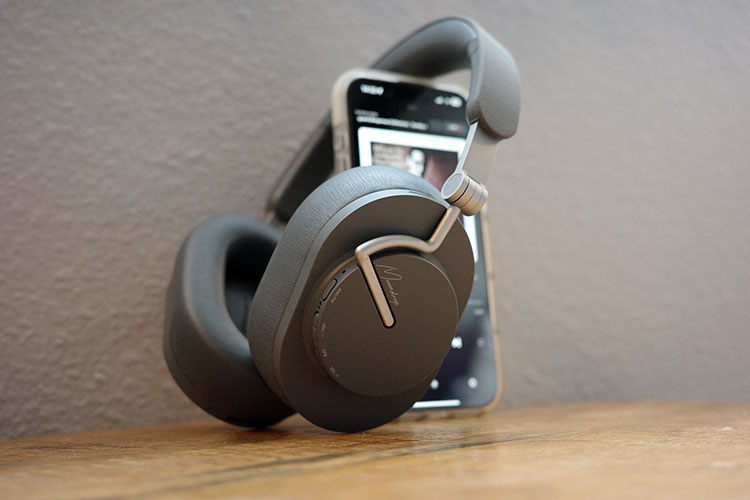
The medium gray color is accented by silver stanchions and swivels, with the same gray color highlighted on the headband and pad. The top of the headband carries a grippy fabric cover, enhancing the user’s ability to hang onto the Edge.
The ear cups only swivel 90 degrees, but do fold into the headband for a smaller, more portable stature. Those rectangular ear pads are soft and pliable as well as deep enough to provide a good listening cavity.
All controls are on the right ear cup, with lighter gray lettering denoting each control. The lettering is hard to read, and the buttons are nearly flush with the side, making them hard to not only decipher, but also use.
The fit is good, with only minimal pressure on my head below my ears. Adjusting the straps is straightforward but requires effort. It does show fingerprints after use.
The Altruva gives off a more premium look and feel to it, while also providing a better fit. The nature of the single headband and the nature of being a TWS headphone are shown here.
I never felt pressure on the top of my head from the band, which meant I could wear the Edge for long sessions. The matte gray finish of the cups does collect fingerprints, though, so keeping the Edge clean is a must. Both fit well, but there was slight pressure from the Edge below my earlobes.
Mind you, I could wear both for long periods, but the Altruva would lend for a more comfortable listening experience.

Performance
All critical listening was done using the “Standard” EQ, and after 75 hours of burn-in, much like the Altruva.
The MOONDROP Edge presents a fairly vibrant signature across the board. With decent reach down low (more so with the R10 EQ) and a more neutral than not signature, the Edge carries a tune across many genres.
With ANC on, the bass becomes forthright and prominent, much like many TWS headphones do to cover outside noise.
That boominess covers the midrange, showing a bleed into the lower mids, hindering clarity. That said, the tying of the midrange to the treble notes provides a good gateway to the top. The Altruva is much more connected across the spectrum.
Treble reach does not become strident or stretched due to the neutrality, but neither does it carry much verve and energy without EQ’ing.
The extension is good, but smoothed a bit in comparison to the Altruva. The caressing of the top end in the Altruva is better, allowing for the extension to come across smoothly and accurately.
My Verdict
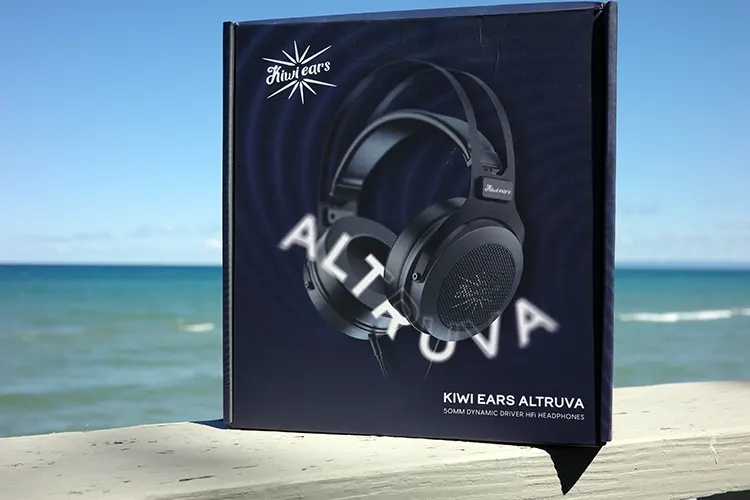
The dynamic driver Kiwi Ears Altruva is the most “budget-friendly” model of the Kiwi Ears wired lineup. It is an affordable, full-sounding headphone that quite possibly could represent their best value out there.
The emotive sound emanating from the Altruva can become intoxicating, but not let you forget that this could be a gateway into other models.
The Altruva does lack a bit in some parts, specifically the length of the cable, the warmer pleather earpads, and a lack of a carry case. But this can be forgiven once you place the Altruva on your head.
For that is when the fun begins, with a quite detailed sound coming forth, aided by the deeper reaching low and smoothly extended highs that do not bother.
When taken as a whole, the Altruva not only presents itself as a good headphone for those who may like an addition to their “modestly-priced” models, but also a gateway into what the company presents.
And for that, I am glad that the order of my reviews came about in this manner.
Kiwi Ears Altruva Technical Specifications
- Driver Unit: 50mm Dynamic Driver
- Impedance: 32Ω
- Sensitivity: 98dB ± 3dB
- Frequency Response: 20Hz – 40kHz
- Plug: 3.5mm + 6.35mm adapter
- Cable Length: 3m
