

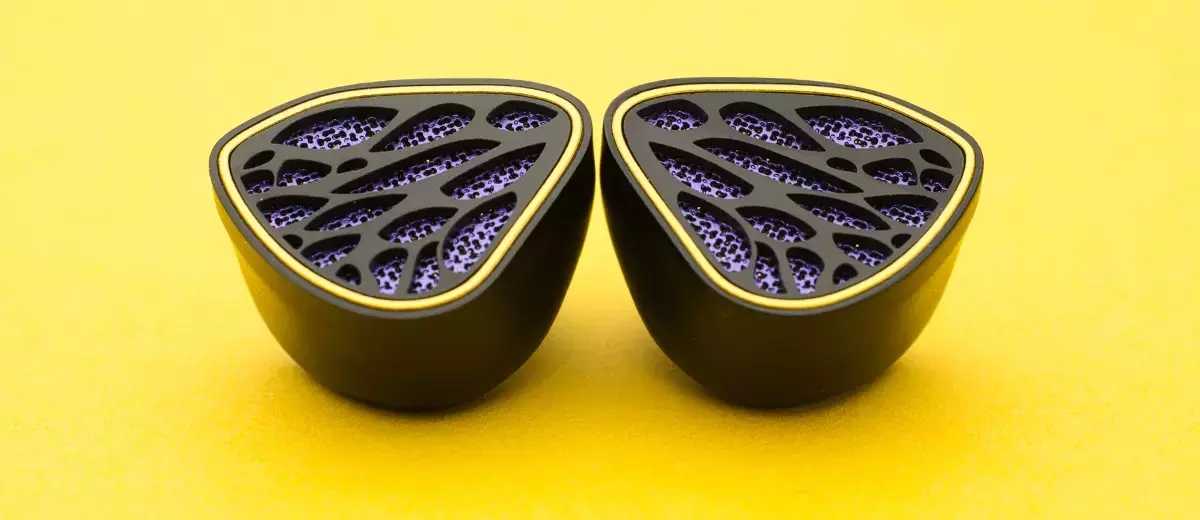
Marcelo reviews the Kinera NOTT Phantom, a hybrid 8mm dynamic and quad balanced armature driver universal IEM currently priced at $430.00.
Disclaimer: This sample was sent to me in exchange for my honest opinion. Headfonics is an independent website with no affiliate links or status. I thank Kinera for their support.
Click here to learn more about Kinera products previously reviewed on Headfonics.
This article follows our latest scoring guidelines, which you can read in more detail here.
When it comes to releasing good-looking IEM sets, one brand almost always comes to mind first: Kinera, for consistently making their IEMs unique and artistically looking. Some of which have been reviewed here at Headfonics, including the ThorKing, Freya 2.0, and LOKI, to name a few.
The $442 Kinera NOTT Phantom is no exception, with its uniquely designed shell and aesthetically matching cable.
Stunning good looks are beneficial when it comes to a wearable item such as IEMs, but will the NOTT Phantom’s sound quality match its good looks?
Or will it be able to compete with other hybrid IEMs such as the Softears Volume S and Dita Audio Project M? Find out in my full review below.

Features
The Kinera NOTT Phantom is a 5 Driver Hybrid IEM featuring an 8mm polymer fiber composite diaphragm dynamic driver for lows, two customized full-range Knowles balanced armature drivers for mids, and two customized Sonion balanced armature drivers for highs and ultra-highs.
The NOTT Phantom’s drivers are housed in a fully metal, aluminum alloy shell with a semi-open back 3D structured metal cavity and a composite faceplate that combines multiple damping materials.
This design achieves a Helmholtz resonator-like behavior that cancels refraction, reflection, and distortion at specific frequencies, resulting in cleaner sound.
A 3-way crossover is employed to give the drivers an optimum frequency range for clean sound, which also serves as protection for the more delicate balanced armature driver from producing low frequencies.
The NOTT Phantom features a pressure relief system that prevents pressure buildup in the ear canal, which can cause nausea and headaches. The NOTT Phantom has an average weight of 6.7 grams, an impedance of 54Ω, and a sensitivity rating of 105 dB/mW.
Design
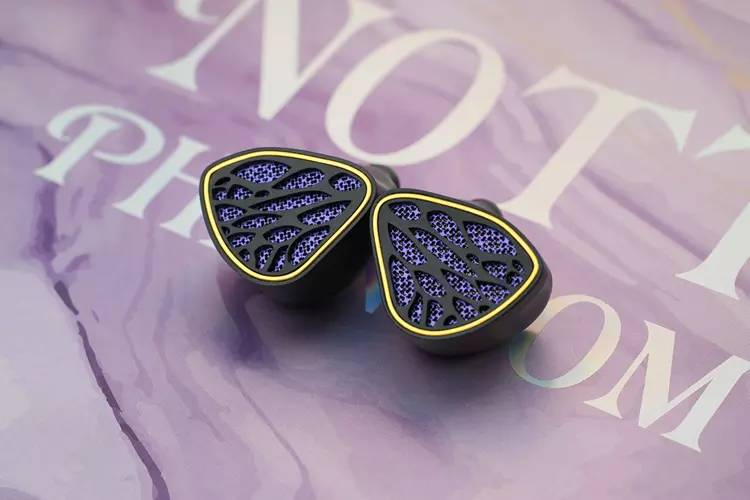
The NOTT Phantom features an attractive black, gold, and purple-themed ergonomically shaped aluminum alloy shell that suits its name perfectly.
Cleanly designed and well-made, a gold line surrounds the faceplate. The faceplate is flush with the gold line of the shell. There is no obvious glue line between the shell and the faceplate.
Composed of multiple materials used for damping, tuning, and venting, the faceplate looks unique with an intricate design consisting of three layers.
The top layer is black metal with randomly patterned eye-shaped holes. Below that is a purple plate with small holes, and then underneath that, there is a gold colored material that looks like a mesh.
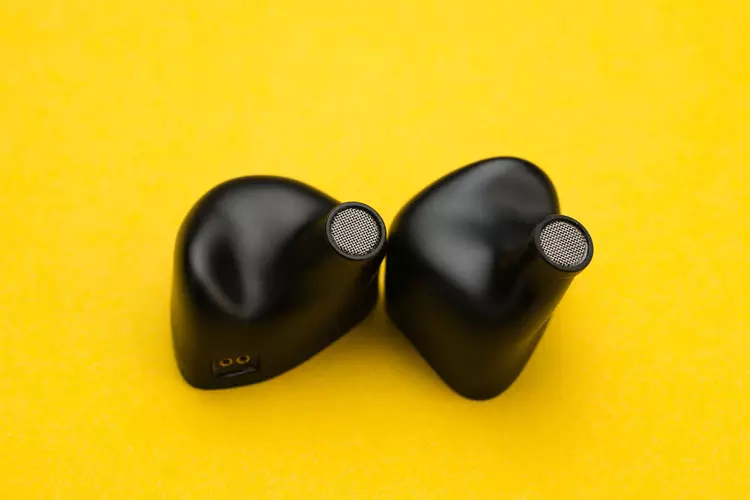
All venting and pressure release are accomplished through the semi-open faceplate, so there are no other holes in the shell except for the output nozzle, which is covered with a mesh-type grill, and the 2-pin connector located near the faceplate, making it look sleek and clean.
Comfort & Isolation
Thanks to its ergonomic shape, moderate size, and light weight, the NOTT Phantom is very comfortable to wear, even during long listening sessions, anytime, anywhere.
Although there is no audible driver flex, I feel a slight pressure when inserting the NOTT Phantom; fortunately, the pressure equalizes within 5 seconds.
Stock Cable
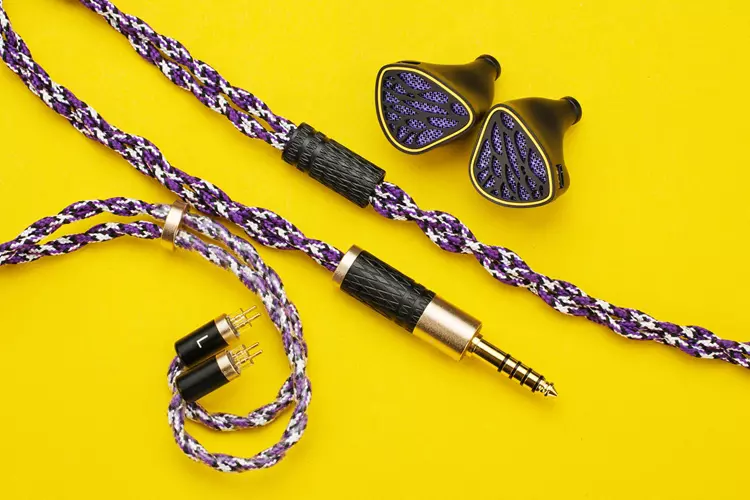
The NOTT Phantom stock cable features a thick yet soft and compliant four-core design with OCC silver-plated stranded wires, cotton sleeving, and 1.8mm thick.
It features a design that aesthetically matches the shells, making the entire set look cohesive during use.
A modular plug system is used, allowing the user to switch between the included 3.5mm and 4.4mm plugs. It is terminated with 2-pin connectors at the other end. All hardware is made from customized metal parts.
Packaging & Accessories
The NOTT Phantom features Kinera’s unique hexagonal-shaped, purple-colored box with gold accents, “NOTT Phantom” written at the front, and some specifications at the back. Unboxing it feels luxurious.
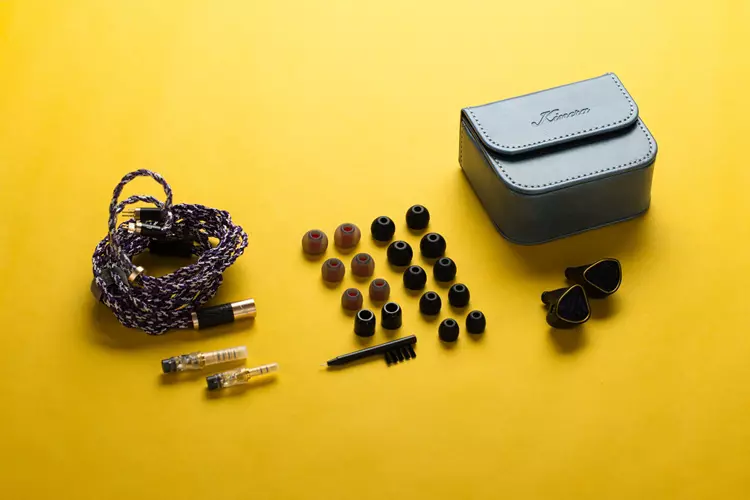
Package includes a pair of NOTT Phantom IEMs, a manual, a detachable plug cable with 3.5mm and 4.4mm plugs, nine pairs of ear tips, and a storage case.
Sound Impressions
I did my standard 24-hour burn-in by letting it play with a spare dap for 8 hours a day for several days.
In my observation, the NOTT Phantom doesn’t require a long burn-in; 8 hours should be sufficient, as I haven’t observed any noticeable changes after that.
I used a mix of sources, chosen for their differences in sound quality and power output, including the FiiO M15S, HiBy R3Pro II, iBasso DC-Elite, the SNOWSKY Melody, and FiiO’s JIEZI B. No EQ or any sound enhancements were used.
PowerAmp and UAPP music player Apps were used with my Android phone and FiiO M15S DAP.
NOTT Phantom includes four types of ear tips. I find the dark grey with a red stem sounds the best, as it is the most neutral and open-sounding.
Other ear tips have a narrower bore, which slightly constricts the midrange. The pair of included foam tips reduced the sound’s extension in the bass and upper treble.

Measurements
There is an excellent channel matching in my measured graph, indicating a high level of manufacturing quality. Bass is modestly boosted, with only 8 dB of elevation below 50 Hz, and slowly glides down towards the midrange at 600 Hz, indicating a neutral-sounding bass.
The pinna gain at 2 kHz is mild with only 7 dB elevation, followed by a slight added peak of 2 dB at 2.6 kHz. This indicates that it is safe for pinna gain-sensitive listeners, yet satisfying for those who prefer the presence of instruments and vocals.
There are some gentle peaks in the treble, but they shouldn’t cause any issue when listening. The treble is very extended, which should make it sound airy. There is a negligible and inaudible dip above 18 kHz. The overall graph looks like a neutrally tuned IEM.
Summary
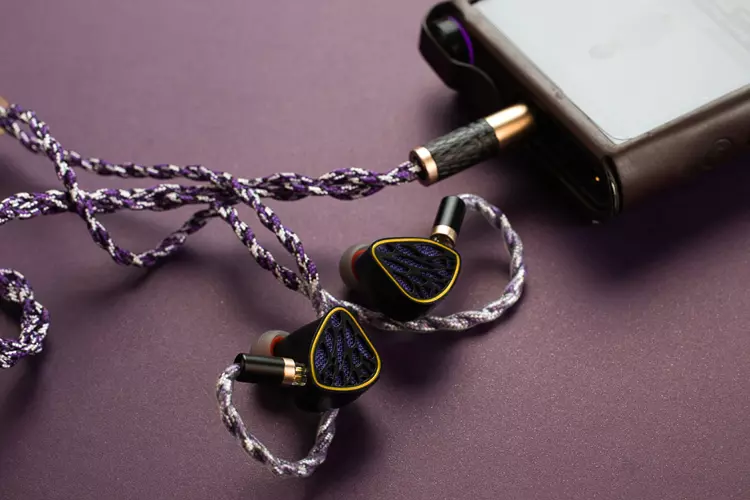
The Kinera NOTT Phantom features a neutral sound signature with a slight midrange centricity when used with the grey-red ear tip; however, I would not call it mid-centric, as it is equally energetic in the bass and treble.
Bass is flat, neutral, and very extended with terrific slam, speed, weight, texture, and articulation. It effectively conveys the scale of the musical performance through its depth and detail, with a granular presentation of the bass waves. In short, it has a clear-sounding extended bass.
Midrange is lush, clean, and clear, with very good technicalities. There is very good instrument separation, and synths, pianos, and keyboard sounds seem to float in the air, flowing in time with great clarity. It has smooth and fluid characteristics.
Percussive instruments have an accurate timbre and are presented with a fast attack and clean decay. Natural recorded sibilance is rendered without exaggeration, and they also exhibit a quick attack and clean decay, making them sound both natural and technical.
Treble is very detailed, highly resolving, and open-sounding, yet never too forward, fatiguing, or harsh; however, there is a slight spiciness. There is a slight elevation of energy when producing the air and shimmer in the vocals and instruments, adding fun to its sound.
Overall, NOTT Phantom has a neutral, transparent, and highly technical sound signature, yet it is also fun-sounding, non-fatiguing, and possesses natural musicality.

Coloration
Every IEM has coloration in sound; NOTT Phantom’s sound coloration is very minimal and certainly way below average due to its neutral tuning and clean-sounding driver, which yields a very transparent sound.
However, upon careful listening, there are audible but gentle peaks in the treble, which occur at 2.6 kHz, 5 kHz, 8 kHz, and 12 kHz. According to the graph, I have observed these gentle peaks before my measurements were taken.
I want to emphasize that the peaks mentioned above do not present themselves as coloration as much as they add air, details, and sparkle, which makes the NOTT Phantom more engaging because they make the sound more spicy, energetic, and exciting.
However, if I must nitpick, I believe the peak at 5 kHz contributes to the faint sound coloration, which prevents the NOTT Phantom from achieving the cleanest background decay. Nevertheless, the background is dark, and the decay is clean, albeit not as clean as the best I’ve heard.
Soundstage
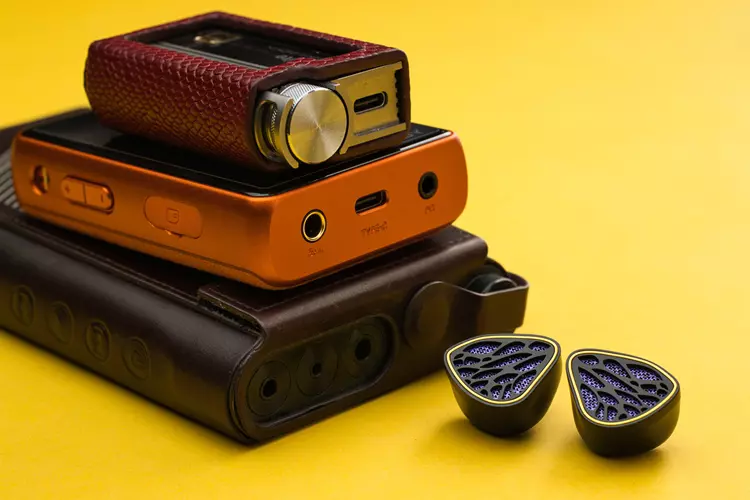
The NOTT Phantom boasts a spacious, wide-open soundstage presentation, thanks to its clean, airy, and transparent sound.
Imaging is wider than it is deep, and yet it never sounds flat; there is good depth, allowing the background instruments to emanate behind the lead singer.
I hear good and stable lateral panning of the instrument with no breaks in the middle, and front-to-back layering of the instrument.
Center vocals are stable and defined with good palpability. It sounds clear enough to allow the listener to imagine the singer performing in front easily.
Dynamics
The NOTT Phantom can take vast amounts of power without distortion; my ears would be the first to surrender, yet it remains sensitive and efficient enough to work well with small dongle DACs and modest power ratings.
Subjectively, NOTT Phantom sounds very dynamic, engaging, and fun. Bass, midrange, and treble are equally highly energetic. There is never a dull moment with the NOTT Phantom.
Click on page 2 below for my recommended pairings and selected comparisons.
