

Selected Comparisons
Softears Enigma
Technical
The Softears Enigma is a tribrid multi-driver IEM that includes dual dynamic drivers, six custom balanced armature drivers, and four Sonion electrostatic drivers.
For the low end, the Enigma uses a combination of an active 10 mm wool-based biological diaphragm dynamic driver along with two additional BA drivers, delivering a blend of power and speed.
There is also a second beryllium-coated diaphragm dynamic driver deployed in a passive role to absorb unwanted vibrations and standing waves.
The midrange is handled by four full-range custom balanced armature drivers, while the high frequencies are covered by four third-generation Sonion electrostatic drivers.
The Enigma is rated at an efficient 10 ohms with a sensitivity of 121.5 dB/Vrms at 1 kHz, and it requires more power than the EPITOME and scales up more effectively. On more powerful sources, you can expect Enigma to be more stable.
Design
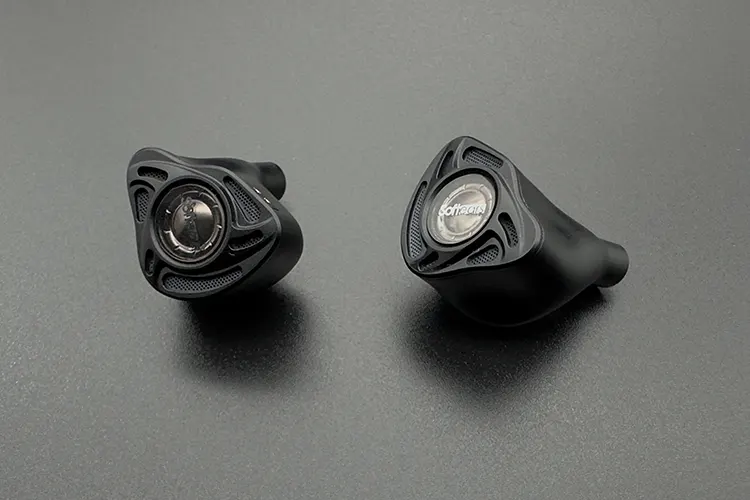
Enigma sports a very futuristic look, with cutouts on the faceplate that resemble a rotating disc and an artificial sapphire-like crystal at the center.
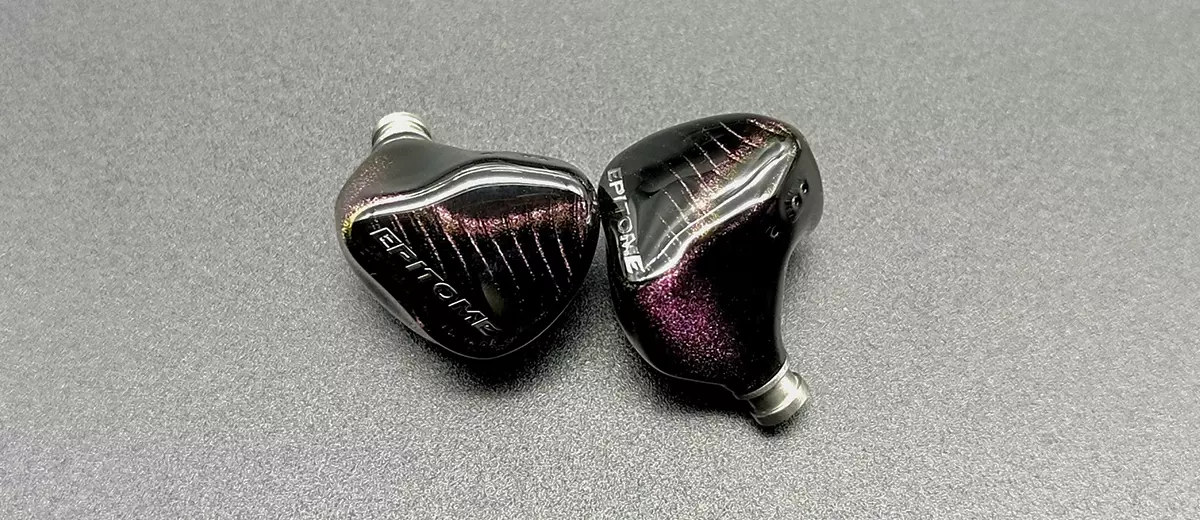
EPITOME, built in resin, follows a different design language by adding depth with a shimmery feel when it catches the light. Its faceplate feels quite artistic.
Comparing the design elements, I rank Enigma above the EPITOME. Enigma’s shell is crafted from an aluminum alloy, giving it a very durable build.
One strong point of the Enigma is its long-lasting matte black finish, which has not worn off even after nearly a year and a half of use.
Enigma’s shells are not too large and are lightweight, which makes them more comfortable on the ears overall.
Enigma’s narrower, longer nozzle allows for deeper insertion, resulting in a more secure and stable fit. Ergonomically, both shells have very smooth curves, with nothing that would bother you in terms of fit.
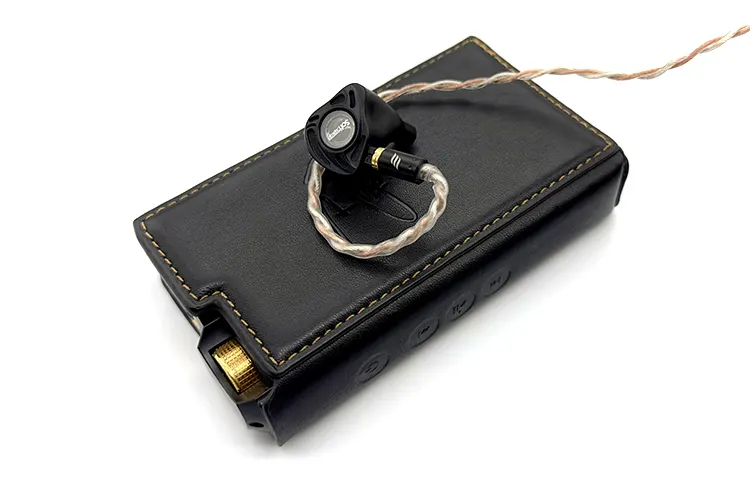
Enigma also packages the IEMs and accessories in a very grand presentation. It comes bundled with an Effect Audio cable that complements its aesthetics well.
iBasso keeps it a bit toned down but packs in all the useful accessories. The extra cable is a nice touch.
Performance
In the low end, Enigma offers more volume and fullness down low, with more sub-bass presence and that thicker, weightier foundation. It has more physicality and warmth, and you can feel that low end taking up more space in the mix.
EPITOME is more about control. The bass feels more balanced, with a cleaner, faster style that stays in its lane. EPITOME does not carry that extra warmth upward, so the overall presentation stays super clean and never feels like the low end is tinting the rest of the sound.
Midrange is where Softears does its usual magic. Enigma has that natural, organic tone that makes vocals and instruments feel “right” without effort. Female vocals come through with a very believable extension and timbre, and the whole midrange feels emotionally direct.
EPITOME is not far behind, but it takes a different route. It sounds cleaner and more open. Enigma feels more relaxed and slightly warmer. EPITOME feels more spaced out and cleaner around the edges.
Treble follows the same split. Enigma is smoother and a bit more muted up top, with less sense of air and sparkle. It is easy to listen to and never tries to show off.
EPITOME feels more open and more naturally airy, with a nicer sense of shimmer and lift. It does not go overboard or turn sharp, but it sounds more alive and more “lit.”
Enigma throws a taller image and feels vertically convincing, but EPITOME spreads wider and feels more spacious overall.
Coming straight from EPITOME, Enigma can feel a bit more intimate and closed-in, even though it is not actually small. It trades some of that openness for dynamics and fullness, and that is exactly why some people will still prefer it.
64 Audio Fourté
Technical
The 64 Audio Fourté is a flagship IEM that uses just four drivers, compared to the twenty-driver setup in the EPITOME.
That’s where the Fourté challenges the common belief that more drivers automatically lead to better sound quality, showing that a smaller driver count can still deliver exceptional performance.
Its configuration includes a tia high driver, a high-mid driver, a tia mid driver, and a dynamic driver handling the lower frequencies.
The Fourté is rated at 10Ω at 1 kHz with a sensitivity of 114 dB SPL, making it an easy-to-drive IEM, but the EPITOME is an easier one to drive.
In practice, on my LPGT, Fourté goes five to six additional volume steps compared to the EPITOME. Fourté also remains more stable on a powerful source.
Design
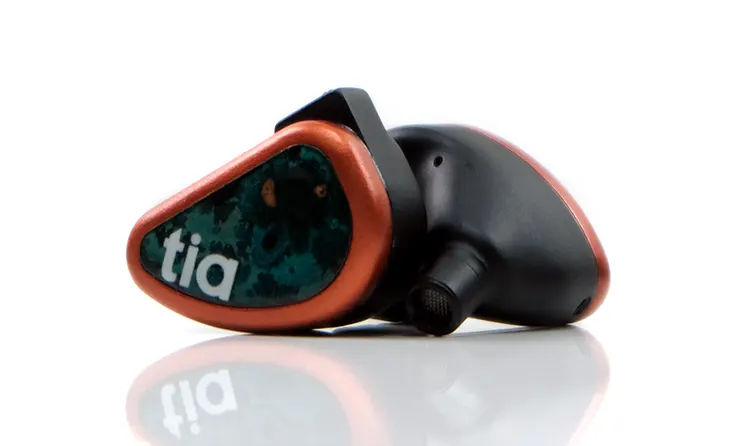
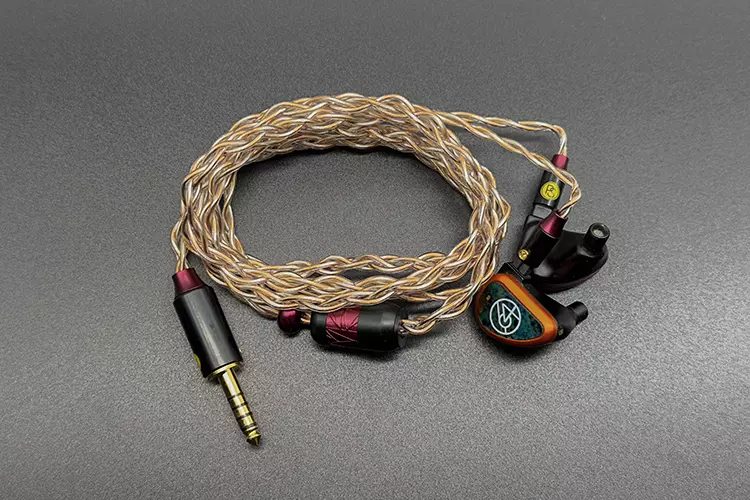
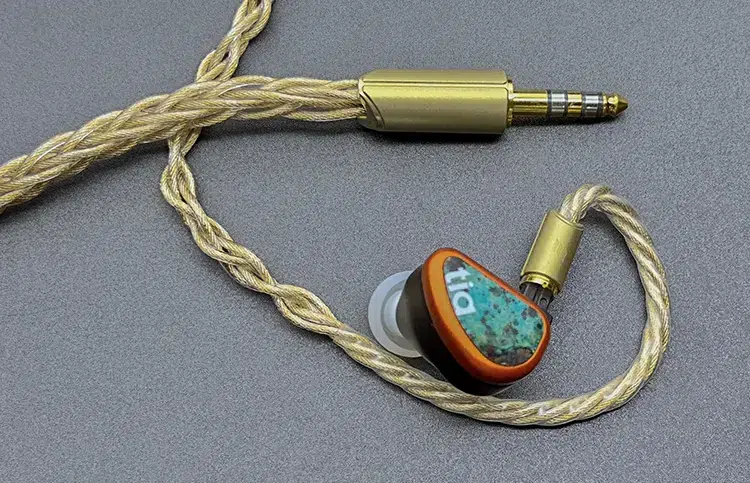
Like most 64 Audio IEMs, Fourté keeps the design simplistic. It wins you over with its vibrant-colored faceplate and small, easy-to-fit shells.
EPITOME plays the color game too, but differently. The resin shells have shimmering elements all over, giving them a very vibrant tone when facing light. In low light, though, the shells do not feel flashy.
Fourté’s shell is machined from solid aluminum and has a very robust build. Each faceplate carries a unique patina pattern. My Fourté is still going strong after three years of regular use.
The Fourté’s shells are light and slim, making them very comfortable on the ears. Its narrow and long nozzle allows for deeper insertion, which helps with fit and stability.
EPITOME also has an easy fit. The shells may appear large, but they are very light, and the ergonomics make them easy to live with. That said, if you are super conscious about size and your ears run small, Fourté will make more sense.
The Fourté comes with a 3.5 mm-ended silver-plated OCC copper cable, which is largely just functional.
Honestly, EPITOME does not pack a very solid cable either, but you do get two cables, and one of them is modular. That helps with multiple source types and makes the cable a bit more usable.
Performance
In the low end, Fourté can dig deeper and sound very accurate without an obvious bass boost to make its point. It has that effortless depth that reminds you a dynamic driver is doing the heavy lifting.
EPITOME is leaner and more balanced. Impact is not miles apart, but the physical “push” and that dynamic-driver sensation are dialled down. Fourté also ends up sounding more dynamically expressive.
In the midrange, EPITOME sounds cleaner, more transparent, and more organized, with less warmth hanging around the notes. Fourté, on the other hand, feels lusher and more colored, especially in the lower-mid body.
Strings and instruments get a richer tone on Fourté. EPITOME brings vocals forward more confidently, so singers feel clearer and more “present” in the mix, while Fourté can feel a touch more relaxed and stuffier.
Up top, Fourté is the more energetic one. It throws a lot of air and sparkle into the presentation, and there are spots where it can feel a bit emphasized. When it works, it sounds exciting and open.
When it does not, it can lean a bit too bright or eager. EPITOME stays calmer. It does not push energy the same way. Details still show up, and you still get air and shimmer, just without that occasional “hey, look at me” flare.
Technically, Fourté has a very realistic stage, and it is one of the reasons people still swear by it. Imaging feels believable.
EPITOME makes everything feel more spacious, giving instruments extra room and air to breathe. Layering is also easier on EPITOME. Notes flow more freely, and separation stays cleaner.
Coming from EPITOME, Fourté can feel a bit more closed-in, not because it is cramped, but because EPITOME sets such a wide-open baseline for space and cleanliness.
PLUSSOUND SONORA SE
Technical
PLUSSOUND’s recent refresh, SONORA SE, packs a modest count of eight drivers per side in a clean tri-hybrid layout.
You get two 10mm dynamic drivers for the low end, four balanced armatures covering the mid-lows through the mid-highs, and two electrostatic drivers handling the top end.
The low frequencies are built around a dual dynamic setup in an isobaric arrangement. Tying everything together is a 6-way crossover network, plus a 3D-printed acoustic chamber to help organize airflow and driver interaction.
The SONORA SE has an impedance of 10Ω at 1 kHz and a sensitivity rating of 110 dB/Vrms. It scales up nicely and asks for a lot more power than what EPITOME does.
On my LPGT, SONORA SE comfortably goes past a volume level of 35. I even push it up to 40 when I want a few extra hits of its bass.
Design
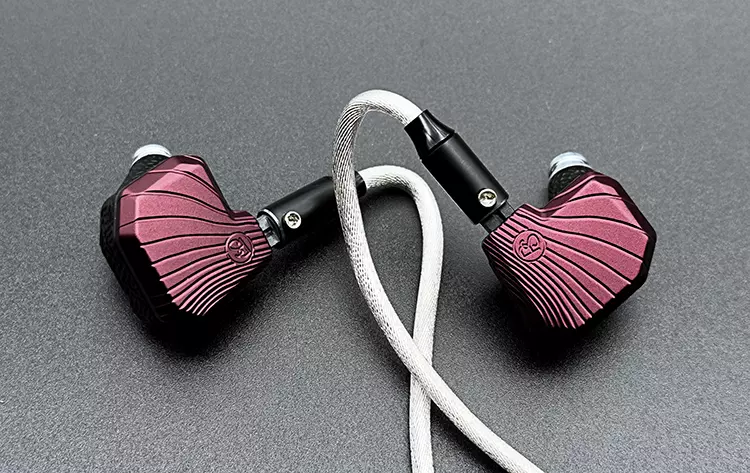
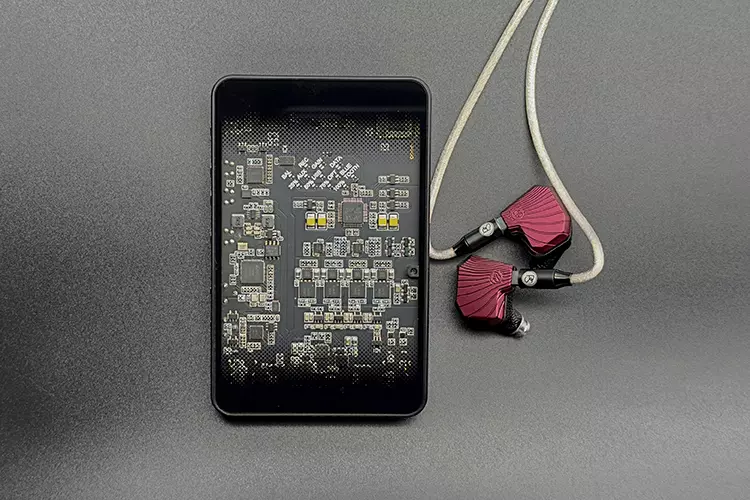
If you are aware of the PLUSSOUND design language, you already know those square block-designed IEMs. SONORA SE carries the same vibes but is very comfortable to put in the ears. On the shells, you get sharp little facets, tiny steps, and clean edges all over.
The faceplate has a fan-like pattern, like a sunburst carved into metal, with ridges that run outward and then fade into flatter panels. The mix of deep wine red and the black inner parts of the shells gives it a very premium look, adding a layer of sophistication.
For me, EPITOME is basically the resin design at its best. It has depth and layers in the design. There are shimmers all over, which show up only when the shells catch light; otherwise, you will not notice them much.
So, in a way, it is not a flashy design but rather a “shows up when needed” type. It has better ergonomics, but the shell size on both the IEMs is more than average, so people with small ears should try them first to check the fit.
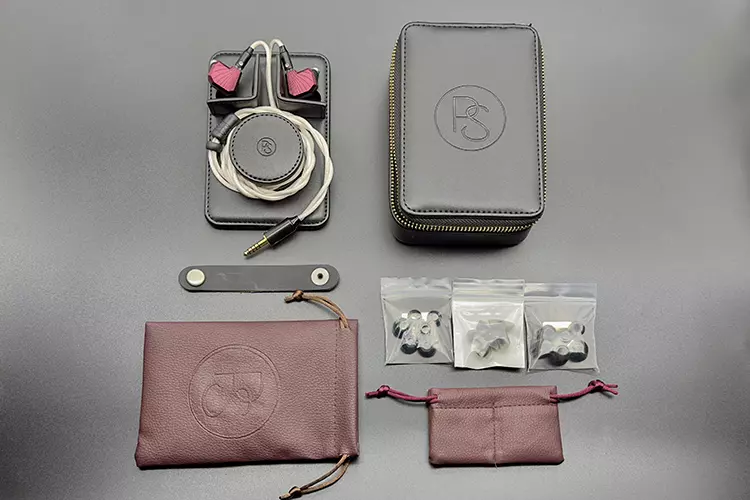
In terms of boxing and presentation, I feel PLUSSOUND packs in more accessories in a more compact way, and that feels well done. The carry case especially has more than enough space for your cable and IEMs.
Being a cable-pro brand, PLUSSOUND also throws in a very solid cable, matching the flagship vibe. EPITOME’s cable is just okay-ish in direct comparison.
Performance
In the low end, SONORA SE is the one that shows up with authority. It hits hard, digs deep, and carries a thunderous weight that makes you nod your head even on casual volume.
EPITOME is leaner in comparison. You still get texture and definition, and you can hear the layers in the bass line, but the physical shove is toned down.
Midrange is where EPITOME starts playing its own game. It tricks you with space and separation. Everything feels neatly spaced out, and vocals have the right touch of forwardness that makes the midrange feel more alive and natural.
Tonality is the key here. EPITOME has that musical ease where notes land clean, carry their shape, and do not feel pushed or forced.
SONORA SE leans more toward reference in comparison and feels slightly less “emotional.” It stays coherent and well-managed, but it does not chase that same organic pull.
Treble is a different kind of contrast. SONORA SE feels more present and more lit up. Shimmer is more obvious, and the top end has a crisp, detailed personality. EPITOME is smoother and more effortless up top.
It does not push energy as hard. It still keeps the air and sparkle intact, just in a calmer way. You do not feel like it is trying to impress you, yet you rarely feel like anything is missing.
SONORA SE brings bigger macro swings because of that low-end impact, so tracks can feel more physical and dramatic when the music ramps up.
EPITOME counters with staging and separation. It feels wider, more open, and less cluttered, and layering comes through with less effort.
Coming from EPITOME, SONORA SE can feel a bit more compact, not because it lacks a stage, but because EPITOME spreads everything out so aggressively.
My Verdict
With iBasso, nobody’s asking whether they can build a decent IEM. The real question is whether they can bottle that clean, disciplined DAP philosophy into a flagship IEM and make it feel special. EPITOME answers that pretty quickly.
The 20-driver setup is obviously a statement, but what matters is how well it is tuned, and iBasso has nailed that part. This does not sound like a driver-count flex. It sounds like a cohesive, finished product that can stand tall next to the heavy hitters in its price range.
The sound is transparent and composed. It carries a sense of effortlessness that you usually associate with top-tier gear.
The stage is the reason you will remember it. It is massive and genuinely cavernous, sometimes to the point where it feels unreal in the best way. That space changes how you listen.
You start following movement, distance, placement, and little ambient cues because the IEM gives them room to exist.
It is like looking at the music under a microscope, not in an ultra-detail-chasing way, but in a “wait, I did not know this was here” kind of way. The more you throw tracks at it, the more it keeps surprising you.
EPITOME delivers across the board. The bass is excellent for an all-balanced armature setup, and tip rolling can help you get the best low end. It is built to be clean, open, and balanced, and that choice is exactly why the stage and layering come through the way they do.
iBasso took a bold swing with EPITOME, and it paid off. If you are shopping in this bracket and you care about staging, realism, and that “big system in your ears” feeling, EPITOME is not one to skip.
iBasso EPITOME Specifications
- Driver Configurations: Eight Sonion EST drivers + Ten Sonion Balanced Armatures + Two Knowles Balanced Armatures
- Impedance: 17 ohms @ 1 kHz @ 1 mW
- Sensitivity: 113 dB SPL/mW
- Frequency Response: 20 Hz – 20 kHz
- Cable: 0.78 2-pin 5N mono crystal Copper Litz structure
- Modular: 4.4mm BAL, 3.5mm SE, USB-C
- Weight Per Side: 6.2g
