

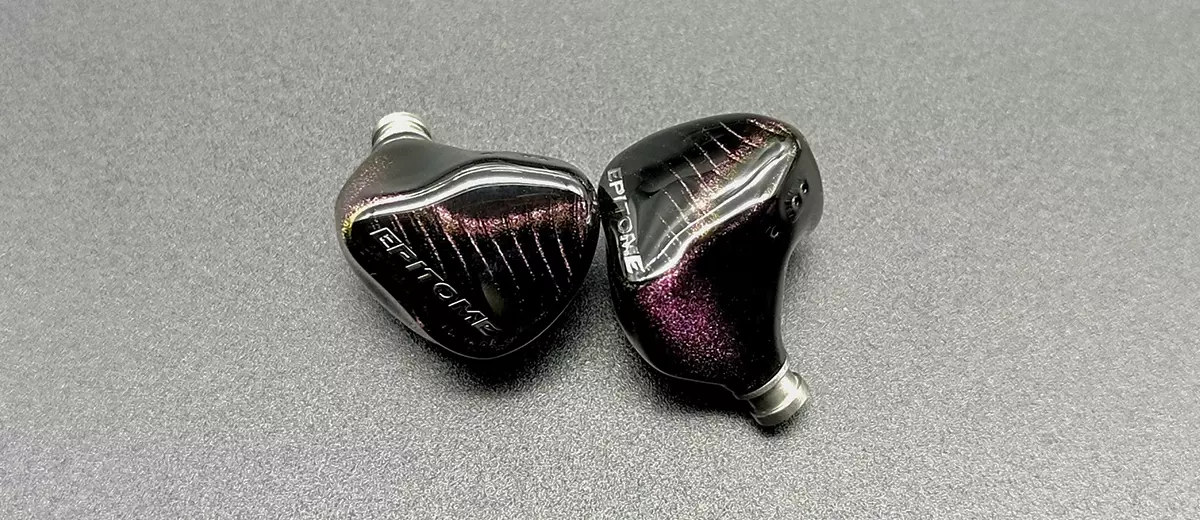
Sound Impressions
The following sound impressions of the iBasso EPITOME were completed using a mixture of my main source, the Lotoo Paw Gold Touch, and the Questyle CMA18P Dac/Amp.
For the review, I paired the IEMs with the stock cable and stock ear tips (black tips with green stems), size L.
Summary
EPITOME is one of those sets where you read “20 drivers,” and your brain instantly starts expecting fireworks. And it does give you flagship vibes, but not through cheap wow tricks.
The wow here is how calm and sorted everything feels. It sounds transparent and clean, like the music is being poured out of a bigger system, not squeezed out of an in-ear.
Coming from bass-heavy sets, it may take a while to adjust to this tuning, but it is still solid, just a different flavor.
That soundstage is the headline, no question. It is massive, and it can get borderline ridiculous on the right tracks. It is not just width either. It is the sense of open air around instruments, the way notes hang in space without getting crowded.
Bass is where EPITOME digs quite deep despite using all balanced armatures for bass. If you are coming from dynamic driver sets, you will not miss the depth and body much.
It gives the track a good supporting base but keeps things balanced at the same time. And honestly, it fits the personality of the set.
The midrange makes it feel musical instead of clinical. Vocals have tone and a touch of warmth, not syrupy, not dry. Instruments come through with natural weight, and the timbre feels believable.
Detail is everywhere, but it is not shoved in your face. You just notice it because the presentation is so uncluttered.
Treble finishes it off with good extension and a lot of air. Shimmers and tiny cues are there, cymbals sound right, and nothing turns sharp or tiring.
The overall impression is simple: EPITOME is not trying to impress you by screaming detail. It impresses you by sounding effortless, huge, and real.

Bass
For an all-balanced armature driver setup handling the low end, the bass on EPITOME feels impressive right off the bat.
It does some flexing, giving a solid bass floor to the mix, and never overwhelms the rest of the spectrum. You may need to play through the set of ear tips to get the best low end.
You don’t get that boosted, larger-than-life low end that immediately makes you grin, but you also don’t get a hollow or anaemic presentation.
The low end overall has classic all-BA behavior: quick hit, quick exit, but it lingers a bit and carries a little warmth, which does not let this bass go as dry as some BA bass can.
Sub-bass is the first place you notice what EPITOME is and isn’t trying to do. It shows up, outlines the note, and then moves on. The rumble is plenty, the pressure is ample, and it reaches that satisfying depth, pretty close to what a good dynamic driver can do in its sleep.
Mid-bass gives you good punch. Kicks have clean edges and good timing, but the punch is more controlled and balanced.
Bass guitars sound neat and separated, with more focus on outline and articulation than on thick weight. It gives you a good foundation, just not a very heavy one.
Where this approach really works is in how clean everything stays. The bass never tries to warm up the rest of the spectrum, never fogs up vocals, and never crowds details. Busy tracks stay readable, and the whole presentation keeps that composed, balanced character.
If you are even slightly forgiving of a deep, guttural bass, EPITOME will not let you down with the level of impact it offers, and it is doing exactly what it set out to do.

Midrange
The midrange on the EPITOME is where the whole tuning clicks into place. There is a gentle sense of lift and openness, but the core of the midrange stays clean and composed.
Vocals do not feel buried or overly pushed. They sit in a natural spot, slightly forward in a way that pulls you in without shouting for attention.
Lower midrange is rendered with a tasteful touch. It stays clean and lightly lit, but there are still a faint warmth and slight lushness, so vocals do not come off hollow or thin.
The key thing is that the warmth feels baked into the midrange, not borrowed from the bass. So, you get a body without blur and extra bloom.
Midrange is a touch syrupy, but not gooey. More like the exact amount that makes vocals feel human and instruments feel like they have an actual tone, not just edges.
The upper midrange is nicely extended and gives the whole presentation a mild forward tilt that works especially well for female vocals. They come out lively and textured, with nuances delivered in a subtle, almost casual way.
Separation is another strong point. Instruments sit with space around them, and the midrange does not bunch up when the track gets busy.
Tonality and timbre are the real strengths. Vocals have an emotional, flesh-and-blood tone. You can hear the throat texture, the breath, and the tiny inflections without it feeling like the set is pushing detail at you.
Resolution is strong, but it does not turn the midrange into a microscope. Clarity shows up naturally, which is why the midrange still feels relaxed even when it is pulling out detail.
Long story short: EPITOME’s midrange doesn’t shout, doesn’t sugar-coat, and doesn’t fatigue. It just feels… true.

Treble
EPITOME’s treble is one of those “high-end safe” tunings that still feels properly alive. It does not come off elevated or shouty.
There is a clear sense of presence and definition up top, just delivered with control. The attack is clean, edges are well drawn, and the overall treble line stays smooth enough that you can listen for hours without that creeping fatigue that brighter sets can bring.
What stands out is how coherent it feels with the midrange. The transition is seamless, so nothing feels like it is being stapled on for extra crispness.
Notes rise naturally and carry a fine layer of detail inside them, not just a sharp outline. That is where the EST character shows up in a tasteful way.
The treble has that airy, slightly ethereal openness, and it keeps subtle shimmer and ambient cues intact without turning the whole presentation into a sparkle show.
You get separation and space around treble elements, so the stage feels clean and uncluttered even when the mix gets busy.
Cymbal strikes sound convincing, with the right metallic tone and a natural decay instead of a splashy sound that hangs around too long.
Hi-hats have crisp leading edges, but they do not turn into needles. Wind instruments and strings come through with a clean, realistic bite, and pianos keep their top-end clarity without sounding glassy.
The upper extension is where the air really comes in, giving you that sense of openness and reverb trail that makes recordings feel more spacious and “finished.”
The net result is a treble that feels detailed, airy, and refined, but never hyper. It shows you the micro information when it is in the track, then steps back and lets the music flow.
Staging & Dynamics
EPITOME’s party trick is simple: it throws one of the widest stages I’ve heard in an IEM. On the right recording, the spread can feel almost absurd.
That sense of width is the EPITOME’s biggest trump card. Height and depth don’t get the same steroid shot, but they are solid.
Imaging is accurate and stable rather than razor-edged. It does not carve outlines with surgical sharpness, but it places elements with confidence. That combination, a massive stage with dependable placement, is what makes EPITOME technically confident.
Separation is another strong suit, and it ties everything together. Instruments do not bunch up, and there is basically no sense of congestion even on dense passages. The spacing feels natural. Busy tracks are handled with ease because the set does not smear lines into each other.
Details flow in naturally. It does not come at you with sharp edges or a forced spotlight. You hear the tiny stuff, but it never breaks the musical line.
EPITOME has a good dynamic swing in the sense that volume contrasts and transient rises come through cleanly, but the big physical cue, the low-end slam that makes macro hits feel alive, feels a bit controlled.
Micro-dynamics are where it secretly flexes. It does not rely on bass impact to create excitement. It relies on control, separation, and that massive stage to make the track feel alive. EPITOME keeps those low-level gradations intact that give music its realism.
Put together, the stage is dramatic, the imaging is dependable, the separation is effortless, the details are all there without being pushed, and the overall delivery stays musical the whole time.
EPITOME is musical first and technical second, yet it rarely feels like either side is compromised.

Synergy
Efficiency
The EPITOME has an impedance of 17 Ω at 1 kHz and a sensitivity rating of 113 dB/Vrms. It is super easy to drive and never feels hungry for power. You can pair it with small-spec devices without any real worry, so even a phone or tablet will get it loud and running clean.
It also does not have that “scales up with more power” behavior, where it suddenly wakes up only on stronger sources.
If anything, it just asks for a clean, well-behaved source so the detail and separation can come through without getting rough. On very powerful sources, it may pick up static noises, so I would prefer not to throw desktop amps at it.
On my Lotoo PAW Gold Touch, it takes a little more than 25 volume steps to reach a comfortable listening level.
Around 30 is basically my ceiling, because it gets properly loud by then and does not need extra clicks to feel alive. Source pairing matters more in terms of tone than power.
I enjoyed it more with a warm-leaning source than a bright one. Anything that pushes the presentation further into a crisp, hyper-detailed, or more neutral direction feels like it can take away from the easy, natural flow that EPITOME does so well.

Source Pairings
LPGT pairs quite well with the EPITOME. It does not suddenly turn EPITOME into a bass monster, but it does help a bit with low-end weight and lower-midrange body.
Sub-bass feels deep, while the mid-bass offers enough punch. The bass texture and definition stay intact, and the overall delivery remains very clean and balanced.
The midrange on this pairing is where things feel most “right.” It’s natural, uncolored, and very detailed, with a lot of space between instruments so details flow easily. It stays truer and more transparent, and that cleanliness works well with EPITOME’s overall character.
Treble is nicely extended and airy. Notes feel musical and well-separated, with energy that never gets excessive or sharp.
Soundstage is huge on the LPGT, with that wide canopy still being the standout, and height and depth are also well represented. Overall, this pairing hit a sweet spot.
Campfire Audio‘s Relay is another good pairing, mostly because it adds a bit more body down low. Bass gets a small boost here, so the low end feels slightly fuller.
The treble feels a touch more focused, but not in a way that turns fatiguing. The stage still stays big and open, so you are not losing the main EPITOME experience.
On the Questyle CMA18P, there is a lot of power on offer, but I do hear a hiss in the background.
Tonally, it stays closer to the LPGT, but it does not sound as clean or as detailed as the LPGT. The bass remains tight, the dynamics feel a bit improved, and the treble stays smooth without picking up any extra edge or unwanted bite.
I like this pairing more than the Relay overall, but the hiss does take away from that “clean and black background” feeling.
