


Synergy
I couldn’t hear any noise with the headphones and IEMs I used. There is no hiss, clicking, or popping sound when the device is turned on without music playing. The output is clean and noise-free.
The AP80 PRO MAX is comfortable driving all my IEMs, even those with low impedance. The power is more than enough to drive all my IEMs to a deafening level.
I did find it less comfortable driving the Sennheiser HD 6xx headphones, though, which will be discussed in the headphone pairing section below.
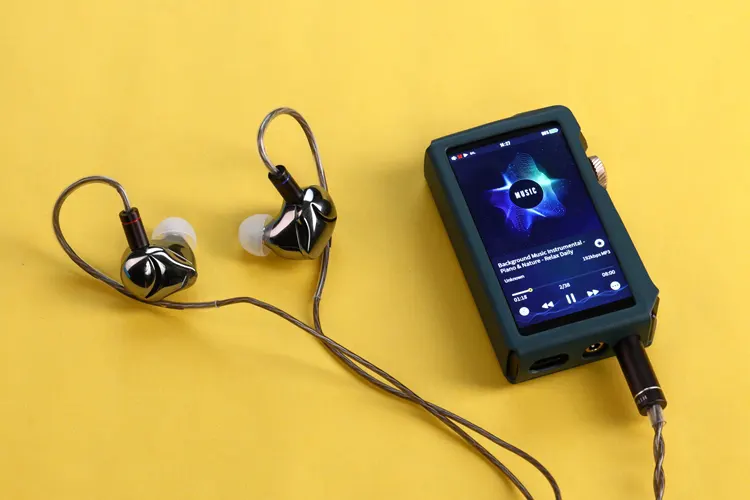
IEM Pairings
I find that it drives the Hidizs MK10, QoA Martini, Tipsy M5, and Kiwi Ears Astral IEMs easily to deafening volumes, without noise, distortion, compression, or any signs of difficulty.
When paired with the QoA Martini, which has a 14Ω load impedance significantly lower than the standard 32Ω load and demands much more power, it presents no issue for the AP80 PRO MAX.
I achieve a cohesive sound with warmth in the bass and an extended treble, resulting in a mild V-shape sound.
The Tipsy M5 sounds neutral and monitoring-like, thanks to its neutral reference monitoring tuning; many details can be heard, from bass to midrange and upper treble. The Kiwi Ears Astral features a detailed U-shaped sound signature, accompanied by a spacious soundstage and good imaging.
Lastly, the Hidizs MK10 is characterized by a mild V-shape, featuring boosted bass, full-bodied vocals with good presence, and an extended and detailed treble. The imaging and sound staging performance are also commendable.
I’m delighted to see this small DAP in my hands, providing effortless dynamics to all the IEMs in this review.
The soundstage is spacious with all of them; the overall sound is transparent and airy, although I get a slight hint of the AP80 PRO MAX’s ESS Sabre DAC chip’s sound signature, characterized by a slightly energetic treble.
However, I did notice that the slight lack of tightness in the bass, which I discussed in the timbre section above, persists with all the IEM pairings, but it doesn’t detract from the enjoyment of the music.
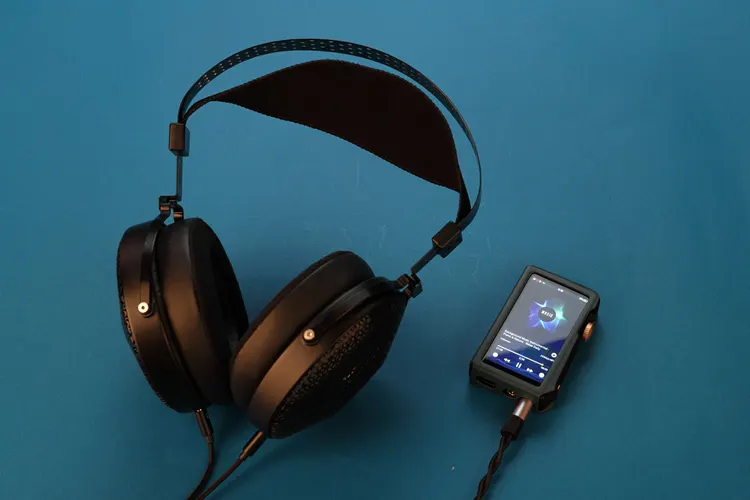
Headphones Pairings
When paired with the easy-to-drive, warm-sounding MOONDROP Horizon headphones, the sound is neutral with a slight hint of warmth.
There is good extension in the bass and upper treble, and the dynamics are good. The AP80 PRO MAX can easily overdrive the Horizon when I turn the volume up to above 80 percent.
Paired with the popular but difficult to drive Sennheiser HD 6xx, due to its 300Ω impedance, which is almost 10 times higher than the average IEMs with 32Ω impedance.
It sounds acceptable. I have to turn the volume up to 90 percent or higher to achieve a satisfying level. AP80 PRO MAX doesn’t go into clipping distortion, though, even when set at 100 percent volume driving the HD 6xx.
However, I would be lying if I said the AP80 PRO MAX and HD6xx pairing is optimal, as I’ve heard the HD 6xx in a desktop setup sounding glorious with its extended and impactful bass, clear and detailed midrange, extended and lively treble, a big soundstage, and effortless dynamics.
The AP80 PRO MAX and HD 6xx pairing doesn’t sound as good. I must say that this is not an ideal pairing, although it is acceptable.
Wireless Connectivity
Bluetooth Transmission
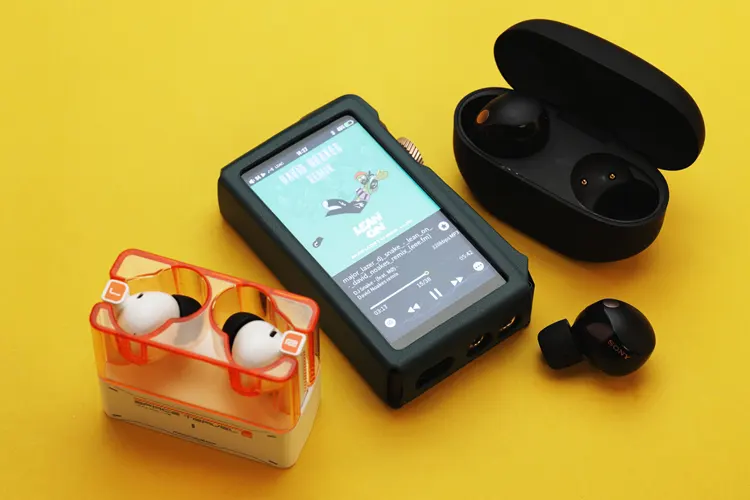
Once the initial pairing setup has been completed on the three Bluetooth receiving devices I included in this review — namely, the MOONDROP Space Travel 2 and Sony WF-1000XM5 TWS IEMs. The pairing speed is breakneck.
It only takes less than 5 seconds from the time I turn the Bluetooth on in the AP80 PRO MAX and the mentioned Bluetooth receivers. So fast that even before I put them in my ears or on my head, they are already connected.
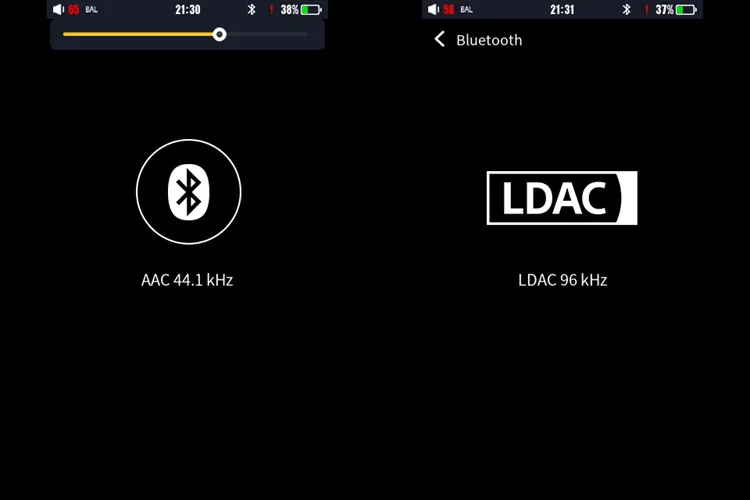
The AP80 PRO MAX can connect with the MOONDROP Space Travel 2 using SBC and AAC, and with the Sony WF-1000XM5 using LDAC.
AP80 PRO MAX has a strong signal transmission, allowing me to receive the music without interruption or signal cutout, even when I move to the next room, separated by a toilet with 5-inch or 125mm thick concrete walls.
I have to go far away, more than 30 feet outside the house, when the signal finally cuts off.
Bluetooth Receiving
After all the initial pairing was done, it only took about 5 seconds from the time I turned on the Bluetooth on both my Samsung S21 Ultra phone and the R3Pro II DAP to choosing the R3Pro II in the Bluetooth device list on the phone.
The signal strength is excellent. I can walk around the house with the phone inside my room without cutting off the signal. The sound quality is also fantastic, thanks to the LDAC codec connection.
However, AP80 PRO MAX does not work as a Bluetooth receiver for my OnePlus 13 phone. I tried it many times, and I’m not sure who to blame, but my OnePlus 13 works with all of my other Bluetooth devices.
I hope a firmware update on either the OnePlus phone or the AP80 PRO MAX can resolve this issue.
WiFi
Since we are limited to Qobuz and Tidal streaming apps on the AP80 PRO MAX, and neither is accessible in my country, as previously mentioned.
And since I don’t have any device that can transmit or receive AirPlay and DLNA, I can only test the WiFi speed using the WiFi music transfer feature, which allows transferring music files from a PC or laptop to the AP80 PRO MAX wirelessly.
To allow wireless music transfer from the PC, the AP80 PRO MAX needs to be connected to the same WiFi network as the PC I need to go to wireless and then to the import music page, where I’m shown an IP address that I need to type in my internet browser to go to the page where I can drop the music file.
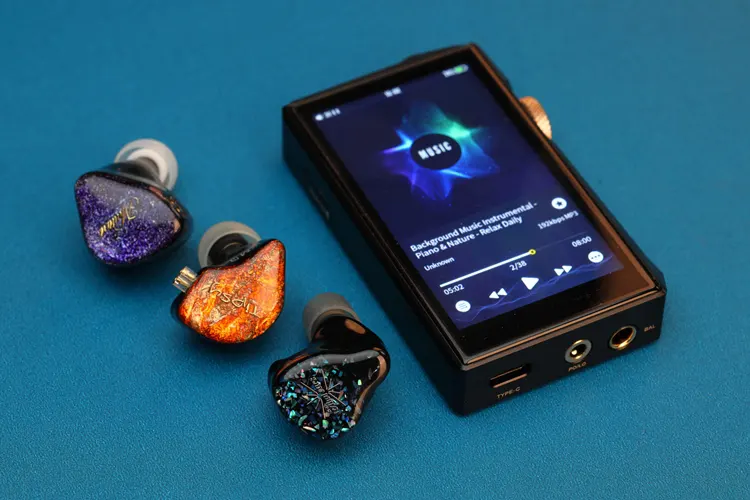
It took about 30 seconds to transfer a 50.2MB worth of music album folder with 13 songs, which isn’t bad in my opinion.
Wired Connectivity
As a digital source
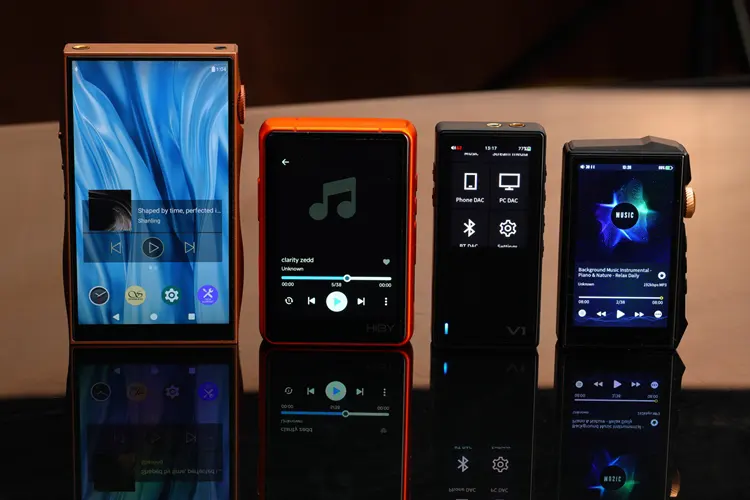
It works flawlessly as a digital source for all my DACs, including the small tail dongle DACs, medium-sized DACs, battery-powered DACs, and DAPS, namely the iBasso DC-Elite, Hidizs S9 Pro Plus, FiiO SNOWSKY Melody, MUSE HiFi M5 Ultra, HiBy R3 Pro II, Shanling M3 Plus, and Tempotec V1, among others.
As expected, it sounds great, as I didn’t experience any noise, popping sounds, or signal dropouts. Again, it works flawlessly.
USB-DAC
The AP80 PRO MAX operates similarly to most battery-powered DAC amplifiers, requiring it to be turned off and on each time I switch between digital sources. This differs from a non-battery-powered dongle DAC, which allows for seamless switching between sources.
Except when connecting to my Windows 11 PC and Windows 10 laptop, where the AP80 PRO MAX connects automatically without needing to be turned on and off.
I didn’t experience any noise or unusual behavior. The sound is excellent, and the device operates without any issues.
The AP80 PRO MAX functions as a DAC amplifier with all my digital sources, including my Samsung S21 Ultra and OnePlus 13 phones, as well as my Shanling M3 Plus, HiBy R3Pro II, and Tempotec V1 DAPs, and my PC and Laptop.
Select Comparisons
HiBy R3Pro II
Technical
The R3Pro II utilizes the Ingenic X1600E SOC processor, dual CS43198 DAC chip, and 4x OPA1622 headphone amplifier chips with up to 480 mW of power in its 4.4mm balanced output.
It features a 4000mAh battery capacity, Bluetooth 5.1, and a 3.3-inch touchscreen with a 720 x 480 resolution.
Design
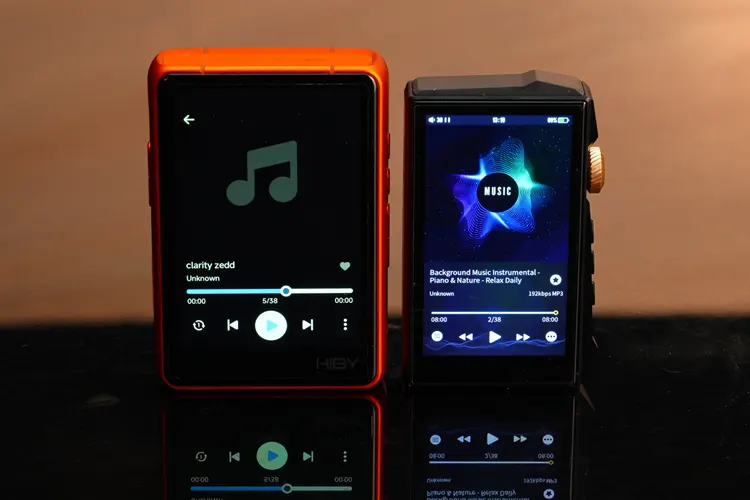
The R3Pro II features a fully aluminum alloy chassis, with the touchscreen positioned at the front and a suede cover on the back.
It has an attractive and youthful design, especially with the orange color of my review sample. The R3Pro II is a compact DAP, but it is still significantly larger and heavier than the AP80 PRO MAX.
Performance
The R3Pro II is warmer and bassier, with less perceived resolution and treble air, compared to the neutral and flatly perceived frequency response of the AP80 PRO MAX, which offers more perceived resolution and airier treble.
I find that the AP80 PRO MAX has a bigger and more open soundstage, thanks to its sharper instrument transients and cleaner decay. In comparison, R3Pro II has a slightly smaller stage due to its darker and more laid-back sound presentation.
When it comes to dynamics, I feel the R3Pro II has an edge due to its more pronounced bass presentation and higher power output rating, compared to the AP80 PRO MAX’s leaner bass and lower power rating.
The R3 ro II sounds more substantial and weighty, with increased slam and impact in the bass.
Shanling M3 Plus
Technical
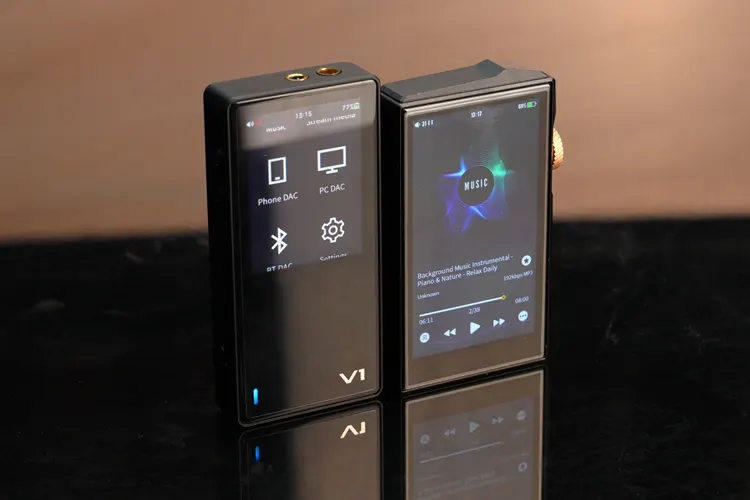
The M3 Plus utilizes a Qualcomm 665 CPU running on Android 13, 4 x 43198 DAC chips, and dual SGM8262, with a power output of up to 800mW in its 4.4mm balanced port.
It features a 3500 mAh battery, Bluetooth 5.0, and a 4.7-inch Sharp 1280 x 720 touchscreen.
Design
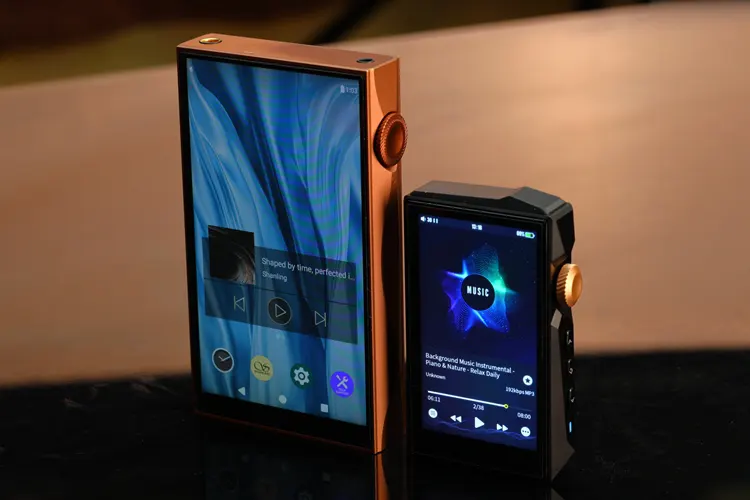
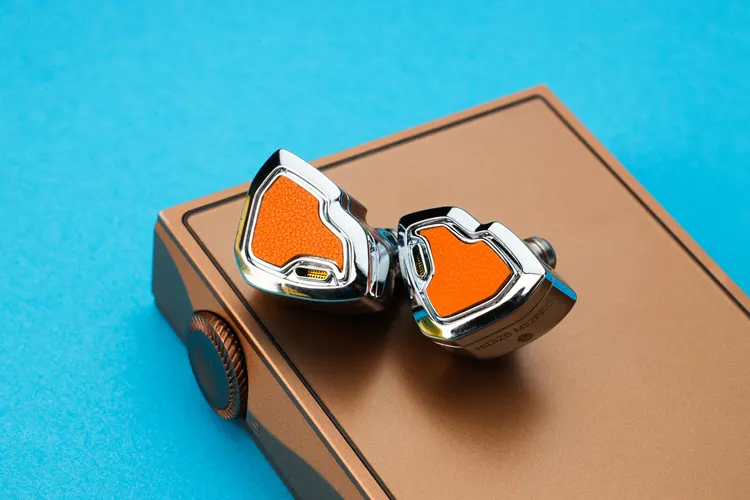
The M3 Plus features a CNC-machined aluminum alloy chassis that is sandwiched between the screen on the front and a tempered glass panel at the back.
It features 3.5 mm and 4.4 mm headphone jacks at the top, a volume knob on the right, three control buttons on the left, a microSD card slot, and a USB-C port at the bottom.
Performance
They share a neutral tonality. Still, the M3 Plus has a tighter and more impactful bass. Though the midrange and treble are very similar, M3 Plus’s upper treble is more extended.
It has a more resolving sound overall, compared to the AP80 PRO MAX, which has slightly boomy bass and less extended upper treble, as well as somewhat less resolution.
The Shanling M3 Plus has a slightly larger soundstage. Both are good when it comes to imaging, as they both offer defined images; however, I can hear that the M3 Plus has a cleaner background decay.
Regarding dynamics, the M3 Plus offers a more nuanced rendition of dynamic swings in music, thanks to its significantly higher power output rating. Still, the AP80 Plus isn’t far behind, as it can drive all my IEMs almost as easily as the M3 Plus.
Tempotec V1
Technical
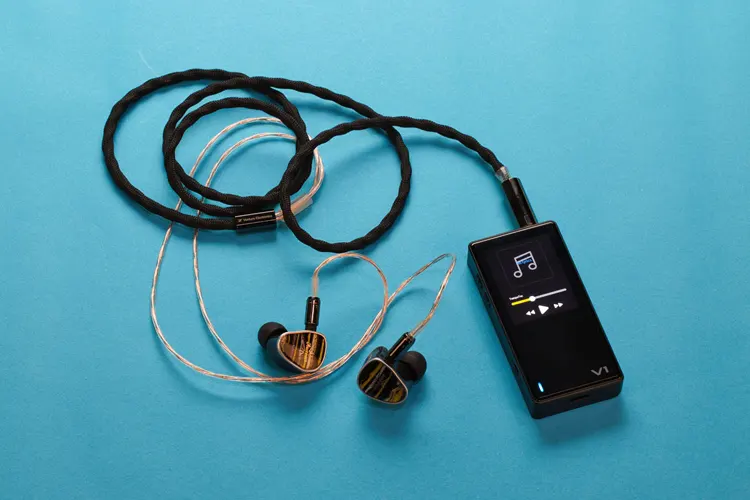
The Tempotec V1 utilizes two CS43131 DAC and amplifier chips, with a power output of up to 215mW in its 4.4mm balanced connection. It has a battery capacity of 1400mAh, Bluetooth version 5.1, and a 2″ 240*320 touchscreen.
Design
Tempotec V1 features a plastic chassis with the touchscreen positioned at the. It is smaller in size compared to the AP80 PRO MAX and has a less premium feel. The aesthetic has a nostalgic look, reminiscent of 1980s industrial design.
Performance
Both have neutral tonality and a similar sound with only subtle differences. Upon careful listening, I find that the V1 has tighter and more impactful bass.
In contrast, the AP80 PRO MAX has a more extended and forward-sounding treble presentation, making it slightly more forward-sounding than the V1.
I find the V1 has a slightly cleaner background, making the soundstage sound deeper than the AP80 PRO MAX; however, due to the more upfront treble presentation of the AP80 PRO MAX, its soundstage is wider.
In terms of dynamics, they are very similar and difficult to distinguish. Still, I feel that the AP80 PRO MAX is slightly more expressive in conveying the music’s dynamics.
My Verdict
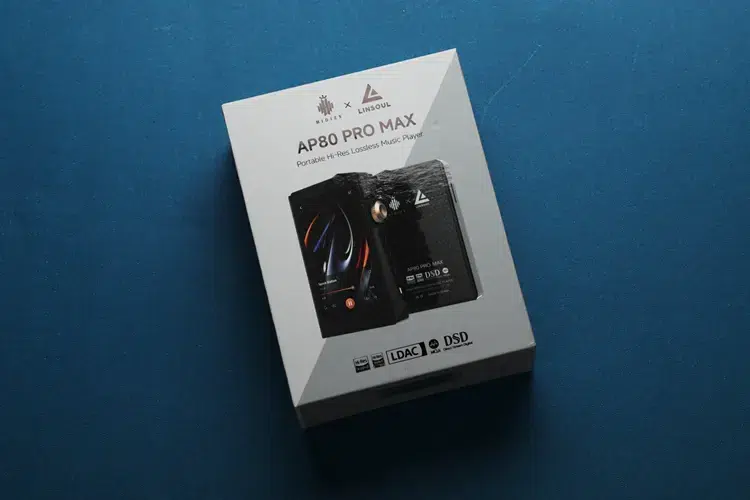
To answer the question whether I’m disappointed in the sound of the Hidizs AP80 PRO MAX, like I’m disappointed with the sound of other sub $300 DAPs?
The answer is no, as I prefer its neutral tonality, extended and airy treble, good transparency, and spacious soundstage.
Aside from the sound, I also like its design, including the leather protective case, its small size, the long battery life, the clear, contrasty, and responsive touchscreen, and the User interface.
I wish the bass were tighter and more powerful-sounding, as there is a hint of boominess in the low-end, although it’s not too noticeable.
With all that said, I believe Hidizs AP80 PRO MAX will keep many audio enthusiasts and music lovers happy and smiling with its decent-looking design, ease of use, and good sound quality.
Hidizs AP80 PRO MAX Technical Specifications
- SOC: X1600E
- DAC: ES9219C*2
- Display: 2.95 (360×640) IPS HD Touchscreen
- Max Storage: 2TB
- WIFI: 2.4 GHz
- Outputs: 3.5mm PO/LO, 4.4mm balance
- 3.5mm output: 70mW@32Ω, .0007% (1kHz) THD, 120 dB dynamic range
- 3.4mm output: 125mW@32Ω, .0005% (1kHz) THD, 122 dB dynamic range
- Dimensions: 8*51*15.5mm
- Weight: 81g
- Operating System: HiByOS (Linux-based)
- Battery: 1300 mAh
- Battery life: 8-10 hours balance, 10-12 hours 3.5mm output
- Standby times: 60 days
- Charging times: 1 hour
