

Connectivity
Bluetooth
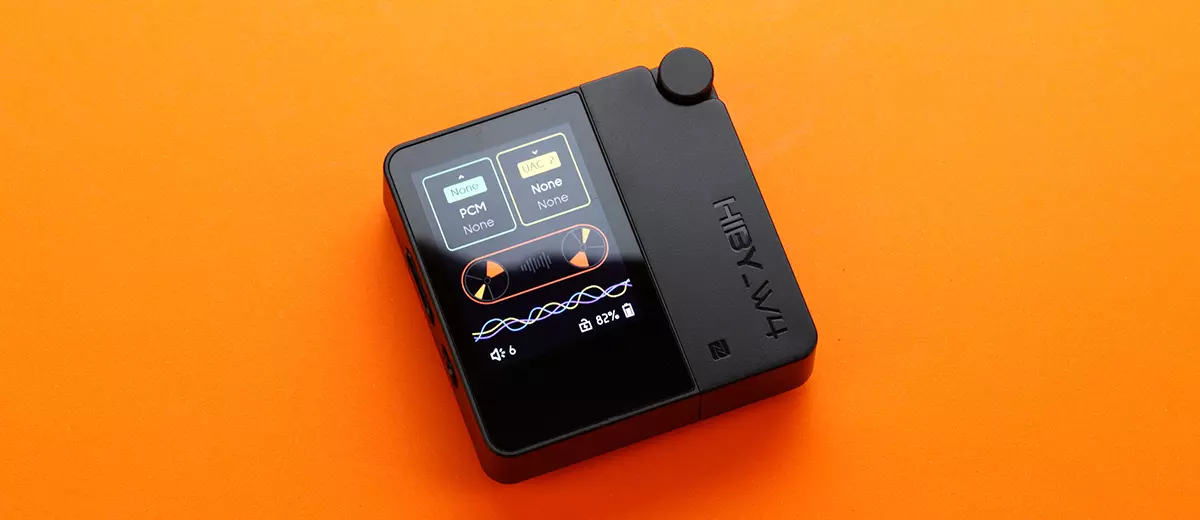
The W4’s Bluetooth only functions as a receiver. It uses the latest chip with Bluetooth version 5.4. That said, the initial pairing and the subsequent connection times are very fast.
The W4 accepts all audio codecs, including the aptX Adaptive/aptX lossless/aptX-HD/aptX/LDAC/AAC/SBC. Since my phone is a recent release, it is equipped with LDAC, the highest-quality codec. For this review, I exclusively used the LDAC codec.
The signal strength is good: I can walk around my house with my phone in my room, 30 feet away or more, with some obstructions, concrete walls, wooden doors, and experience uninterrupted audio.
USB-DAC
As a USB DAC, W4 works flawlessly with my PC, laptop, phone, and DAPs, which I find amazing, as not all Bluetooth DACs work with all my DAPs.
When plugged into my Windows 11 PC, there is no need for a driver; the W4 works natively and doesn’t require adjustments. The PC automatically switches its main audio output to the W4, and when I unplug the W4, the PC reverts to the previous output setting.
Synergy
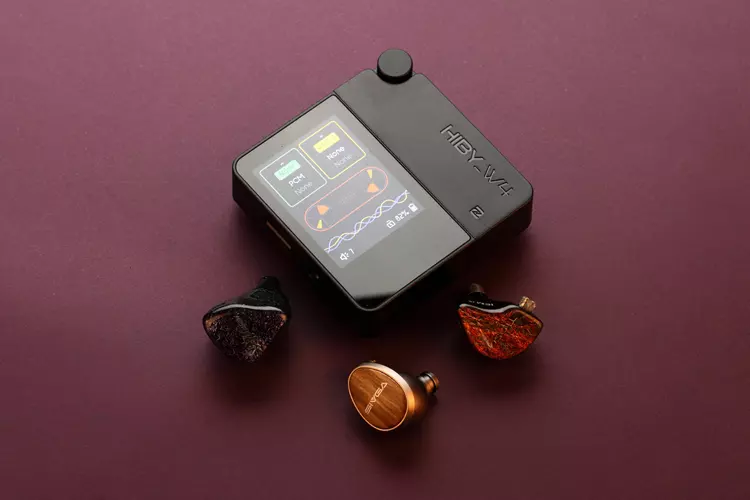
On the days that I have used the W4, whether during a walking exercise, in a coffee shop, or just at home, in bed writing a review, I have never heard noise from radio frequency interference or the noise floor of its electronics, even though it is magnetically stacked at the back of my phone with WiFi, Bluetooth, and data enabled.
The W4 can comfortably drive all, but not exclusively, the IEMs and headphones in this review.
IEM Pairings
When used with the Tipsy M5, which is a very neutral IEM, I hear a very neutral sound with a slight bloom in the midrange.
There is a slight flabbiness in the bass, but it never becomes boomy. Midrange is neutral, and the treble is extended with a lot of air.
The added looseness in the bass and the bloom in the upper bass and midrange are much-welcome additions to the SIVGA Nightingale PRO and W4 pairing.
Aside from the enhancement in the lower range, the upper midrange and treble sounds very transparent, detailed, and airy.
The bone conduction driver to the QoA Martini adds density to the bass and lower midrange. It is even more enhanced when paired with the W4.
The bass is thick and dense yet remains reasonably textured and weighty, never boomy. The upper midrange and treble are very transparent and airy with this pairing.
Headphone Pairings
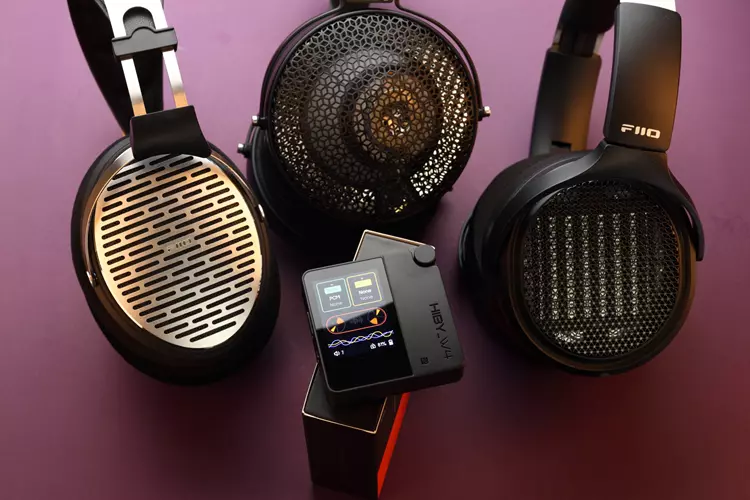
The MOONDROP Horizon is one of the most sensitive and easiest-to-drive headphones around.
With the W4, the sound is loud and has plenty of dynamic headroom. The W4 can overload the Horizon if I go overboard with the volume. I hear a warm, mildly bassy, mid-centric sound with a polite upper treble in this pairing.
With the FiiO JT3, which is average in sensitivity and ease of driving, the sound is dynamic and lively.
I hear a V-shaped sound signature with slightly boomy, less textured bass, a recessed midrange, and an elevated treble that sounds fun but lacks smoothness. Overall, the sound is dynamic and fun to listen to, but ultimately lacks refinement.
Finally, with the FiiO JT7, a 150Ω planar headphone with average sensitivity, but challenging for some sources. But even so, this pairing sounds effortlessly dynamic with plenty of headroom to spare.
Thanks to the planar driver, the bass is tight and relatively clean, the midrange is slightly bloomy with good note weight and spaciousness, and the treble is extended and airy.
Selected Comparisons
Khadas Tea Pro
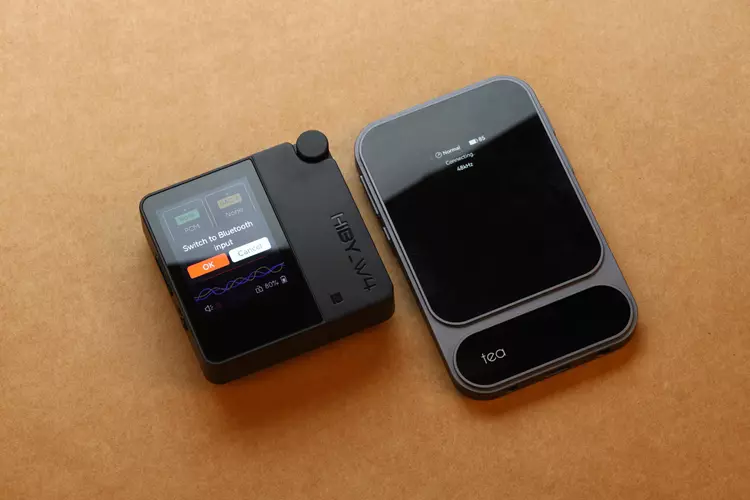
The Tea Pro is the latest product from Khadas, released in August 2025. It is an ultra-thin, compact BT DAC with a built-in magnetic back, unlike the W4, which requires a magnetic backplate case to magnetically stack with the phone.
Technical & Design
The Tea Pro utilizes an ESS ES9039Q2M DAC chip, 2 x TI OPA1612 opamps for I/V conversion, and another 2 x TI OPA1612 for low-pass filtering.
It is amplified by 2 x Ricore RT6863 amplifier chips, and two NJU72315 volume control chips sit between the low-pass filtering and amplifier.
I like Tea Pros’ flat, space-age, and industrial design, which mixes a CNC-machined aluminum chassis, Corning Gorilla Glass 3, and a Premium wear-resistant leather back panel.
There are two portions of glass at the front, the bigger glass houses the 0.95” AMOLED display, which displays the information and the menus for control.
Performance
The Tea Pro is neutral like the W4, but the sound is slightly leaner, with tighter bass and the lower treble more forward-sounding, which I attribute to its use of an ESS Sabre DAC chip. The W4 has a heavier note weight and a midrange bloom.
They have about the same soundstage width, but I find the W4 has a deeper soundstage with more front-to-back layering of the image and a more laid-back main vocal presentation, with a more diffused image, while the Tea Pro has a flatter stage with more forward, defined images.
Both are lively and dynamic-sounding, driving the IEMs and headphones well with plenty of headroom to spare.
xDuoo XD05 Basic2
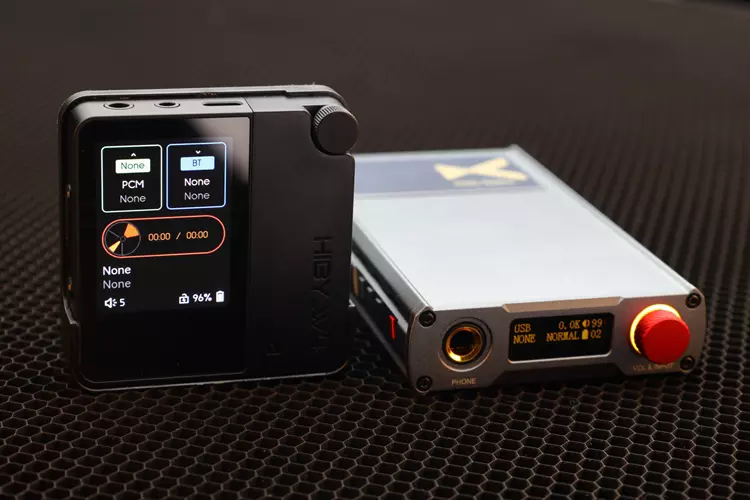
The XD05 Basic2 was released in April 2025. It’s a BT DAC with an all-metal shell and an old-school, high-tech design that doesn’t seem to worry about size or compactness.
Technical & Design
The XD05 Basic2 is a large Bluetooth DAC amplifier featuring a CS43131 DAC chip and replaceable op-amps.
It supports Bluetooth 5.4 with SBC, AAC, aptX, and LDAC codecs. It can output up to 700 mW and features a 3000mAh battery with a battery life of up to 11 hours.
The XD05 Basic2 combines a space-age and retro design aesthetic with a whole-metal body, a red knob, a small screen, and features only a ¼-inch headphone output jack at the front.
There are control buttons on the right side, along with USB-C ports, a slide switch, a pre-out jack, and a barrel power input jack at the back.
Performance
Like the W4, the XD05 Basic2 has an analog-style sound signature where resolution is not the priority; tonality is.
The differences are: XD05 Basic2 has tighter bass and a mild roll-off in the upper treble, while the W4 has less controlled bass, a bloomy midrange, and a neutral, extended treble.
The W4 has a larger soundstage with a more immersive surround sound feel, while the XD05 Basic2 has a more intimate soundstage.
Regarding imaging, both have slightly diffused centers, but I find the W4 more holographic.
Due to the slight upper treble roll-off of the XD05 Basic2, I find it less lively-sounding than the W4.
However, in sheer dynamics, the XD05 Basic2 is more dynamic, especially in how it handles the bass, which sounds more powerful and more controlled than the W4.
MUSE HiFi M5 Ultra
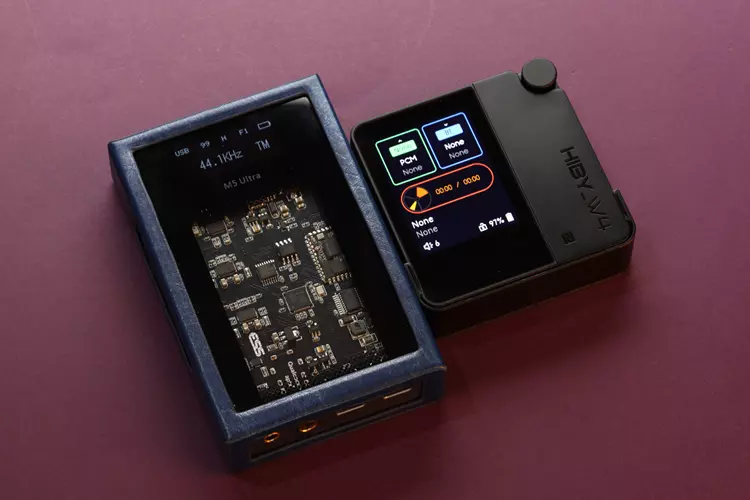
The M5 Ultra was released in October 2025 and can switch between tube and solid-state output. For this review, I used only the tube output to compare the W4’s analog-style sound to a real-tube BT DAC.
Technical & Design
At the heart of the MUSE HiFi M5 Ultra are two American-made RAYTHEON JAN6418 military-grade, NOS, direct-heated, mini pentode vacuum tubes.
The tubes are mounted in shock-absorbing mounts, and the Sabre ES9038Q2M DAC chipset includes a built-in suite of 7 user-controlled digital filters.
The M5 Ultra is a full-metal chassis with an angular design and modestly rounded edges, sandwiched between tempered glass panels on the front and back, with a nice, clean, and classy aesthetic.
The front-tempered-glass window showcases the well-laid-out printed circuit board.
Performance
Both are neutral, but I find the M5 Ultra smoother, especially in the treble. There is a slight tube-like midrange bloom with the M5 Ultra, like the W4, but I find the M5 Ultra cleaner and more detailed.
I also noticed the W4 has more bass bloom, while the M5 Ultra has tighter and more relaxed bass.
Though they are both neutral-sounding, I find the M5 Ultra warmer and the W4 brighter with more air. But the M5 Ultra has a cleaner, more refined overall sound.
The W4 has a wider soundstage, but the M5 Ultra has a deeper stage with cleaner background decay.
I also find the imaging on the M5 Ultra more precise, with better placement and more defined images, compared with the W4, whose images are slightly diffused.
Both are good in the dynamics department, but I find the W4 livelier and more dynamic-sounding. The M5 Ultra has a weaker bass punch than the W4, which is why I find the W4 more dynamic.
My Verdict
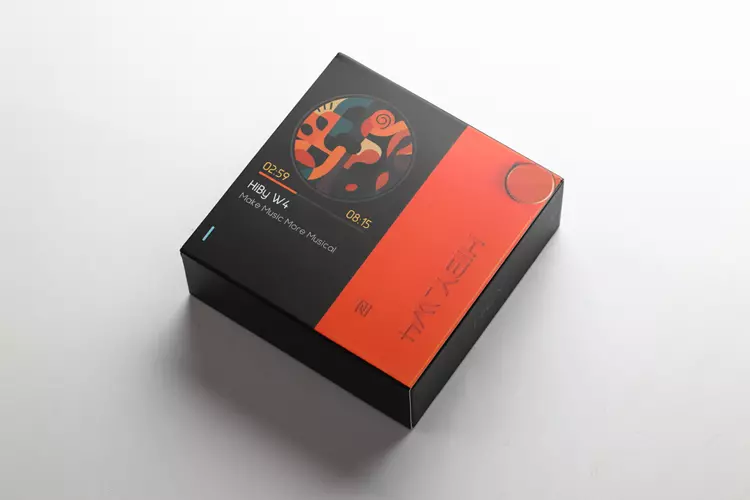
The HiBy W4 is a unique-looking little Bluetooth DAC amplifier with an analog style and a mildly euphonic sound signature that is neither technical nor analytical.
The sound is not the smoothest or the highest resolving, but I like its slightly bloomy midrange, extended, airy treble, and spacious soundstage, making it easy to enjoy the music.
I don’t like the relatively low perceived resolution compared to its peers, but my biggest gripe with the W4 is the tricky volume control implementation.
The HiBy W4 may not be technically perfect in terms of sound, far from it, but I like its analog yet without the treble roll-off, non-technical style of sound, with the big soundstage.
HiBy W4 Technical Specifications
- Color option: orange, black, white, green,
- Body material: Aluminum alloy + ABS
- Bluetooth Chip: QCC5181
- Bluetooth: 5.4
- Supported Bluetooth Codecs: aptX Adaptive/aptX lossless/aptX-HD/aptX/LDAC/AAC/SBC
- Bluetooth range: 10 meters
- DAC Section: Dual CS43198
- Supported audio specification: DSD512 / PCM768kHz
- Mic support: Yes
- Wired remote control: via 3.5 mm jack
- NFC: supported
- Battery capacity: 1500 mAh
- Battery Life:
- 5mm: 6.3hrs (Continuous AAC Playback)
- 4mm: 5hrs (Continuous AAC Playback)
- Weight: 93.3g
- Output Power
- 5 PO: 125 mW
- 4 BAL: 475 mW
