

Synergy
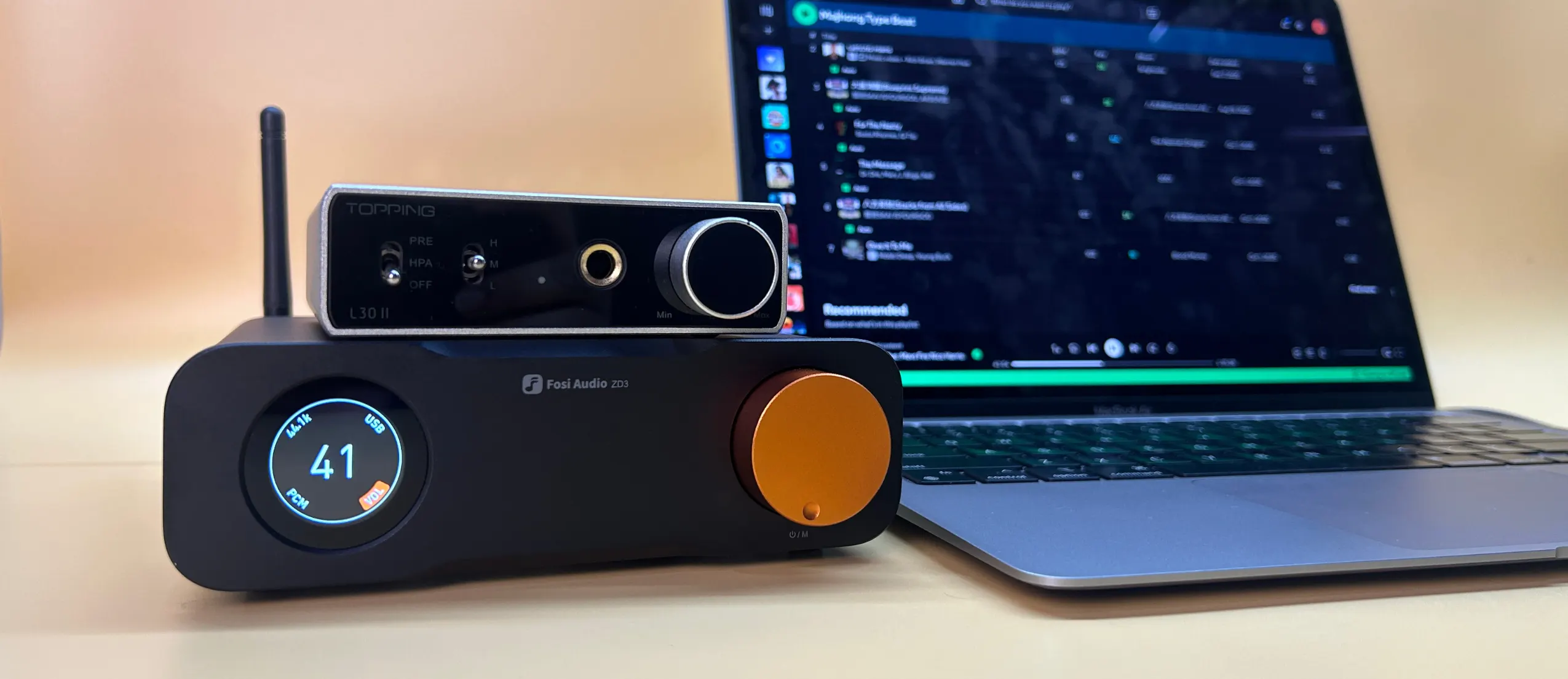
Given the ZD3’s slightly warm, smooth tonal balance, I found it paired best with neutral to slightly bright amplifiers. This approach maintains detail and air while benefiting from the ZD3’s natural timbre and forgiving nature.
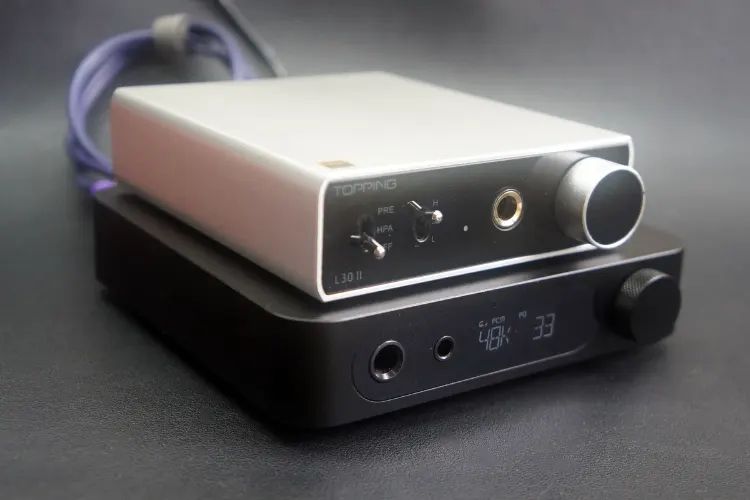
The Topping L30 II proved an excellent amplifier match. Its neutral, clinical-leaning character complemented the ZD3’s warmth perfectly, preserving the DAC’s smooth midrange while adding a touch of treble clarity and extension.
For headphones, the Sennheiser HD 600 worked well with the ZD3. The HD 600’s neutral tonal balance and somewhat lean bass benefited from the ZD3’s added warmth, resulting in a natural, engaging presentation with excellent vocal reproduction.
However, the ZD3 proved less ideal with warm or bass-heavy headphones like the Modhouse Argon Mk3. Pairing it with warmer, bass-emphasized cans risked making the presentation too thick and congested, with reduced clarity and treble presence.
On the IEM front, the neutral-leaning MOONDROP Blessing 3 paired exceptionally well. The Blessing 3’s slight analytical tendency was softened by the ZD3’s warmth, resulting in a balanced, musical sound that retained technical prowess while gaining emotional engagement.
Conversely, the V-shaped Yanyin Canon II proved to be a less-than-ideal match. The Canon II’s elevated bass and treble, combined with the ZD3’s mid-bass warmth and rolled-off highs, created an unbalanced presentation that emphasized impact over refinement.
Select Comparisons
SMSL D-6S
Technical
Both the Fosi ZD3 and SMSL D-6S feature the same ESS ES9039Q2M DAC chip, supporting identical PCM decoding up to 32-bit/768kHz via USB and native DSD512 playback. This shared foundation means their basic decoding capabilities are essentially matched.
However, the D-6S includes MQA decoding and MQA-CD unfolding, features completely absent on the ZD3. For those invested in the MQA ecosystem, this may be a significant advantage.
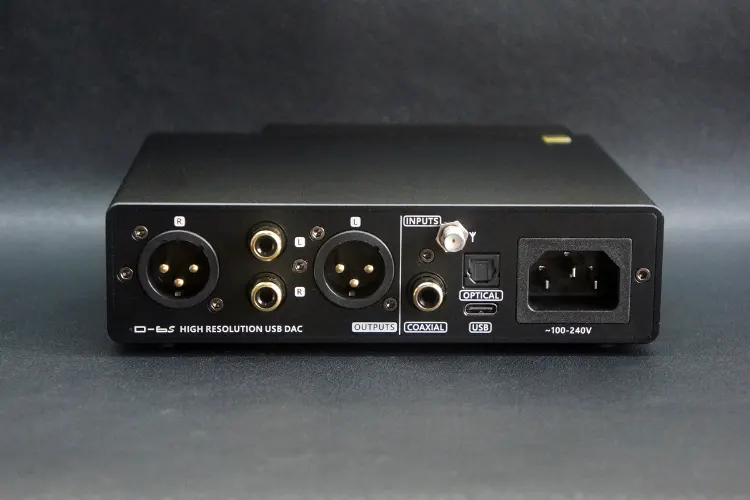
Connectivity differs greatly. The ZD3 offers USB-B, HDMI ARC, optical, coaxial, and Bluetooth 5.0 with aptX HD, aptX, AAC, and SBC. The D-6S provides USB-C, optical, coaxial, and Bluetooth 5.1 with LDAC, aptX HD, aptX, AAC, and SBC, but notably lacks HDMI ARC input.
Both units offer balanced XLR outputs (5Vrms) and RCA outputs (2.5Vrms), matching output voltages exactly. The ZD3 includes a 12V trigger in/out for system automation, while the D-6S omits trigger functionality entirely.
Feature-wise, both include OLED displays and infrared remote controls for convenient operation. The ZD3’s display is circular and 1.5 inches, while the D-6S uses a 7-segment LED display behind frosted glass. Both provide preamp functionality with variable volume control.
The ZD3 allows user-replaceable op-amps (LME49720 stock) for sound customization, while the D-6S uses fixed OPA1612 op-amps with no user-serviceable options.
The D-6S offers adjustable digital filters and DPLL bandwidth settings accessible via its menu system, features that the ZD3 doesn’t provide.
Power handling differs significantly. The ZD3 uses a 12V DC external power adapter, while the D-6S employs an internal 100-240V AC power supply with a three-prong connection, eliminating the need for an external power brick.
Design
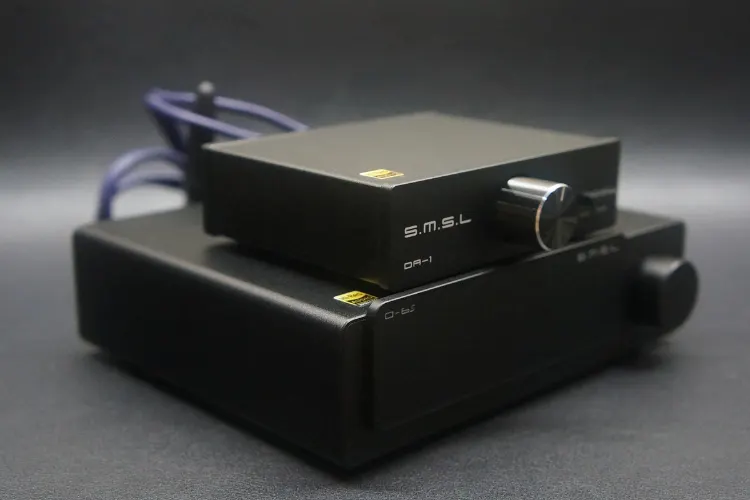
Both DACs embrace minimalist aesthetics with CNC-machined aluminum chassis finished in matte black anodizing. The ZD3 is slightly larger and heavier, but not enough to cause any issues, even in a desk setup
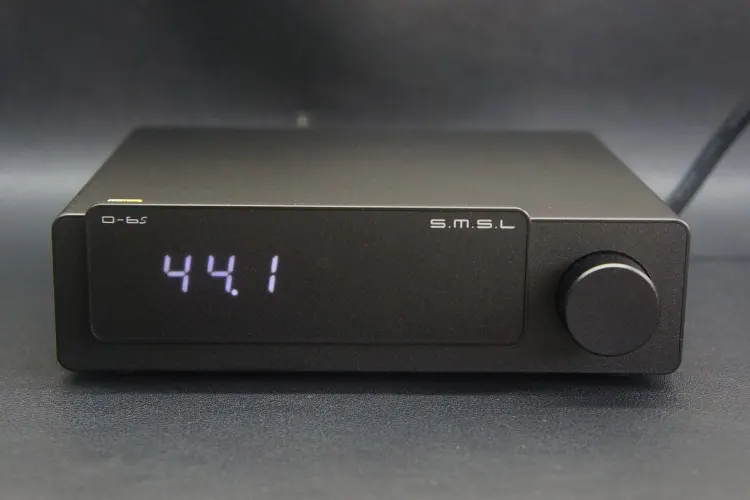
The D-6S features a frosted glass front panel that resists fingerprints better than glossy finishes, with a 7-segment LED display that becomes nearly invisible when powered off. The front panel protrudes slightly, creating a floating effect that adds visual interest.
The ZD3’s circular OLED display and orange volume knob create a more contemporary, symmetrical appearance with a stronger design personality.
However, its fully visible display means there’s always something to see, even when not actively in use. I personally found the display of the ZD3 to be much more usable than the D-6S.
Both units use volume encoder knobs that double as multifunction buttons for menu navigation and input selection.
Build quality is excellent on both, with tight tolerances and professional fit and finish. The D-6S’s slightly lighter weight makes it easier to reposition, while the ZD3’s extra heft provides marginally better stability with heavy cables.
One minor criticism of the D-6S is the sharp corners on its protruding front panel display, which can catch fingers during handling. The ZD3’s rounded edges throughout prove more comfortable to interact with.
Performance
Despite sharing the same DAC chip, the ZD3 and D-6S take different approaches to their sonic presentations.
The D-6S delivers a neutral, transparent, and highly dynamic sound signature with minimal coloration. Bass hits are tight and impactful without added warmth, maintaining excellent texture and control.
The ZD3 sounds warm and musical with enhanced mid-bass body and natural midrange timbre. Its presentation prioritizes listenability and organic character over clinical accuracy, creating a more forgiving sound with less-than-perfect recordings.
In the treble region, the D-6S provides superior extension and detail with a slight sparkle that enhances perceived resolution.
Cymbal crashes and high-frequency information are clearly articulated without introducing sibilance, maintaining smoothness while maximizing information retrieval.
The ZD3’s treble rolls off more gently, creating a relaxed, smooth top-end that avoids any hint of harshness but sacrifices some air and micro-detail.
Dynamics are a strength for both, though expressed differently. The D-6S excels at conveying the full dynamic range between the loudest and softest elements in a mix, creating an exciting, lively presentation that feels natural and engaging.

SMSL D1
Technical
The Fosi ZD3 features the ESS ES9039Q2M DAC chip, supporting PCM up to 32-bit/768kHz via USB and native DSD512, with both balanced XLR and single-ended RCA outputs.
The SMSL D1 uses the ROHM BD34352EKV DAC chip, matching the ZD3’s codec support at 32-bit/768kHz and DSD512.
The ZD3 takes the lead in connectivity with its five digital inputs: USB, HDMI ARC, optical, coaxial, and Bluetooth 5.0 with aptX HD support. The D1 offers only three inputs: dual USB-B (power and data), optical, and coaxial, with no wireless connectivity.
The ZD3 provides both balanced XLR outputs (5Vrms) and RCA outputs (2.5Vrms), giving it flexibility for different amplifier types. The D1 offers only RCA outputs (2Vrms), limiting its use to single-ended connections.
Feature-wise, the ZD3 includes amenities the D1 lacks entirely: a 1.5-inch OLED display showing sample rate and volume, an infrared remote control, preamp functionality with variable volume, 12V trigger in/out for system automation, and user-replaceable op-amps for sound tuning.
The D1, by contrast, is a pure DAC with no volume control, no display beyond LED indicators, and no remote. It relies entirely on capacitive touch controls for power and input switching.

Design
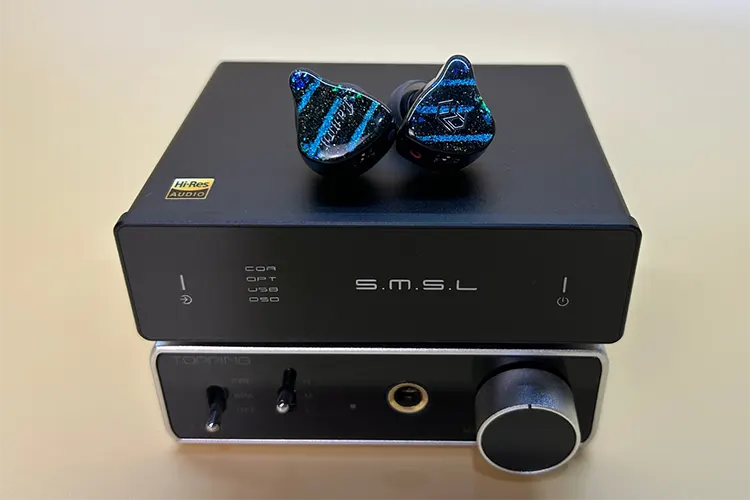
Both units embrace minimalist aesthetics but execute them differently. The ZD3 measures 160 x 125 x 41mm and weighs approximately 680g, while the D1 is significantly more compact at 101 x 90.1 x 30mm and around 200g.
The ZD3’s front panel features a modern, symmetrical design with an orange volume knob and a round OLED display. Its matte black anodized finish resists fingerprints and maintains a clean appearance over time.
The D1 uses a glossy acrylic front panel that looks sleek but collects fingerprints easily. Its capacitive touch controls offer a modern interface but lack tactile feedback, sometimes leaving you uncertain whether input was registered.
Both feature CNC-machined aluminum chassis with rubber feet for stability, though the ZD3’s greater weight and size provide better grip with heavy cables attached.
Performance
The ZD3 and D1 take distinctly different approaches to sound presentation. The ZD3 sounds warm and smooth, with enhanced mid-bass body and natural midrange timbre. Its treble rolls off gently, creating a forgiving, musical presentation.
The D1 delivers fuller low-end reverb and atmospheric presentation compared to neutral DACs, but emphasizes sub-bass and mid-bass differently than the ZD3. The D1’s treble can ride the edge of sibilance on certain tracks, while the ZD3 avoids this through its relaxed top-end.
The ZD3 offers wider soundstage width with better depth layering than the D1, creating a more three-dimensional presentation. The D1’s imaging is less precise, though still adequate, while the ZD3 provides clearer spatial positioning.
FIIO K11 R2R
Technical
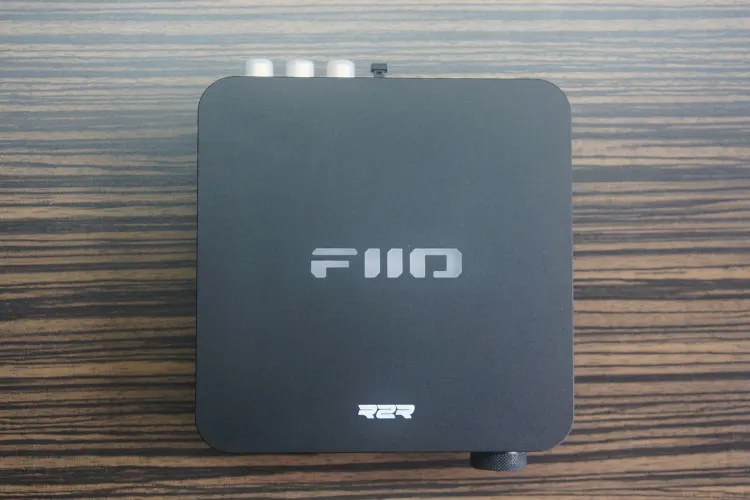
The Fosi ZD3 uses the ESS ES9039Q2M delta-sigma DAC chip supporting PCM 32-bit/768kHz and DSD512. The FiiO K11 R2R employs a custom 4-channel 24-bit R2R resistor ladder DAC with 192 precision thin-film resistors, supporting PCM 24-bit/384kHz and DSD256.
The K11 R2R is a DAC/headphone amplifier combo delivering up to 1300mW at 32Ω balanced and 400mW single-ended. It includes both 4.4mm balanced and 6.35mm single-ended headphone outputs. The ZD3 is a pure DAC/preamp with no headphone amplification.
Connectivity differs significantly. The ZD3 offers USB-B, HDMI ARC, optical, coaxial, and Bluetooth 5.0 inputs with balanced XLR and RCA outputs. The K11 R2R provides USB-B, optical, and coaxial inputs with RCA outputs plus headphone jacks, but lacks HDMI ARC and wireless connectivity.
Both feature OLED displays, though the K11 R2R’s is larger and shows more detailed information. The ZD3 includes a remote control and 12V trigger functionality absent on the K11 R2R. The K11 R2R offers oversampling (OS) and non-oversampling (NOS) modes for sound customization.
The ZD3’s user-replaceable op-amps (LME49720 stock) allow sound tuning, while the K11 R2R’s R2R implementation provides a different fundamental approach to digital-to-analog conversion.
Design
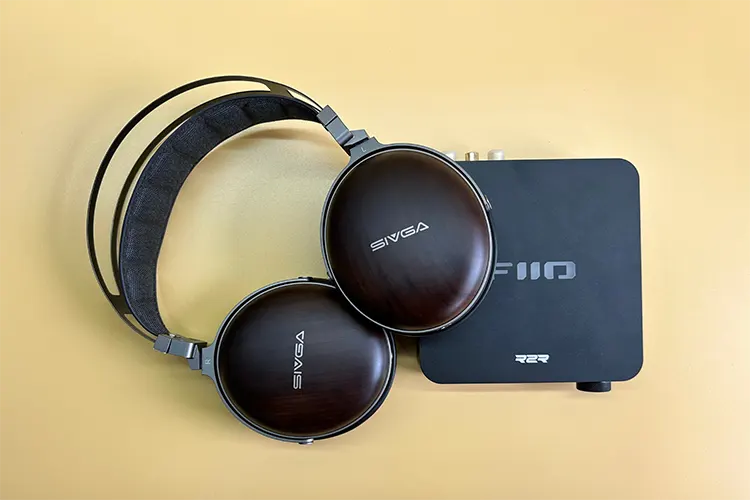
The K11 R2R measures 147 x 133 x 32mm, slightly smaller than the ZD3’s 160 x 125 x 41mm footprint. Both use anodized aluminum chassis with modern aesthetics, though they take different approaches.
The K11 R2R features a monochrome LCD and volume encoder knob, creating a clean, Mac Mini-inspired look. RGB LEDs indicate sample rate. The ZD3’s circular OLED display and orange volume knob create a more contemporary, symmetrical appearance.
Build quality is excellent on both, with solid construction and quality connectors. The K11 R2R’s slightly lighter weight (420g vs 680g) makes it easier to move but potentially less stable with heavy cables.
Performance
These DACs represent fundamentally different design philosophies. The K11 R2R’s resistor ladder architecture delivers an organic, analog-like presentation with natural timbre and smooth note transitions, particularly noticeable in NOS mode.
The ZD3’s delta-sigma implementation provides a slightly warm, smooth character but maintains more traditional digital precision. Both avoid harsh, analytical presentations, but the K11 R2R’s R2R character leans more towards the organic side
When used as a DAC connected to an external amplifier, K11 R2R offers fuller midrange body with particularly lush vocal presentation.
Its soundstage emphasizes width and immersion, creating an expansive listening experience. The ZD3 delivers respectable staging with good width but somewhat compressed depth.
Treble presentation differs notably. The K11 R2R’s top end is smooth and organic with gentle roll-off, particularly in NOS mode. The ZD3’s treble is similarly relaxed but maintains slightly more extension and energy.
The bass character varies between the two. The ZD3 emphasizes mid-bass warmth and body, while the K11 R2R delivers slightly tighter, more controlled bass with better sub-bass depth in OS mode.
The K11 R2R’s built-in headphone amplification makes it a complete desktop solution for headphone users. The ZD3’s balanced outputs, preamp functionality, HDMI ARC, Bluetooth, and remote control make it more versatile for speaker-based systems.

My Verdict
At $179, the Fosi Audio ZD3 delivers exceptional value by combining solid sonic performance with a feature set typically found on much pricier equipment.
The ZD3’s extensive connectivity options, including HDMI ARC, Bluetooth, and balanced XLR outputs, give it versatility that competitors struggle to match at this price. The inclusion of remote control and 12V trigger functionality further enhances its appeal.
It’s not perfect. The smooth, warm sound won’t satisfy those seeking absolute neutrality or maximum treble extension. The soundstage depth and imaging precision lag behind higher-priced units. Op-amp rolling requires disassembly and careful handling.
For those building their first serious Hi-Fi system, the ZD3 provides a solid foundation. Its balanced outputs ensure compatibility with high-end amplifiers, while its preamp functionality and remote control deliver convenience without compromising performance.
Fosi ZD3 Technical Specifications
- DAC Chip: ESS ES9039Q2M
- USB Processor: XMOS XU316
- Bluetooth Chip: Qualcomm QCC3031
- Op-Amp: LME49720 (user-replaceable)
- PCM Support: USB up to 32-bit/768kHz; Optical/Coaxial up to 24-bit/192kHz
- DSD Support: Native DSD512 via USB
- Inputs: USB-B, HDMI ARC, Optical, Coaxial, Bluetooth 5.0
- Outputs: XLR Balanced (5Vrms), RCA (2.5Vrms), 12V Trigger
