

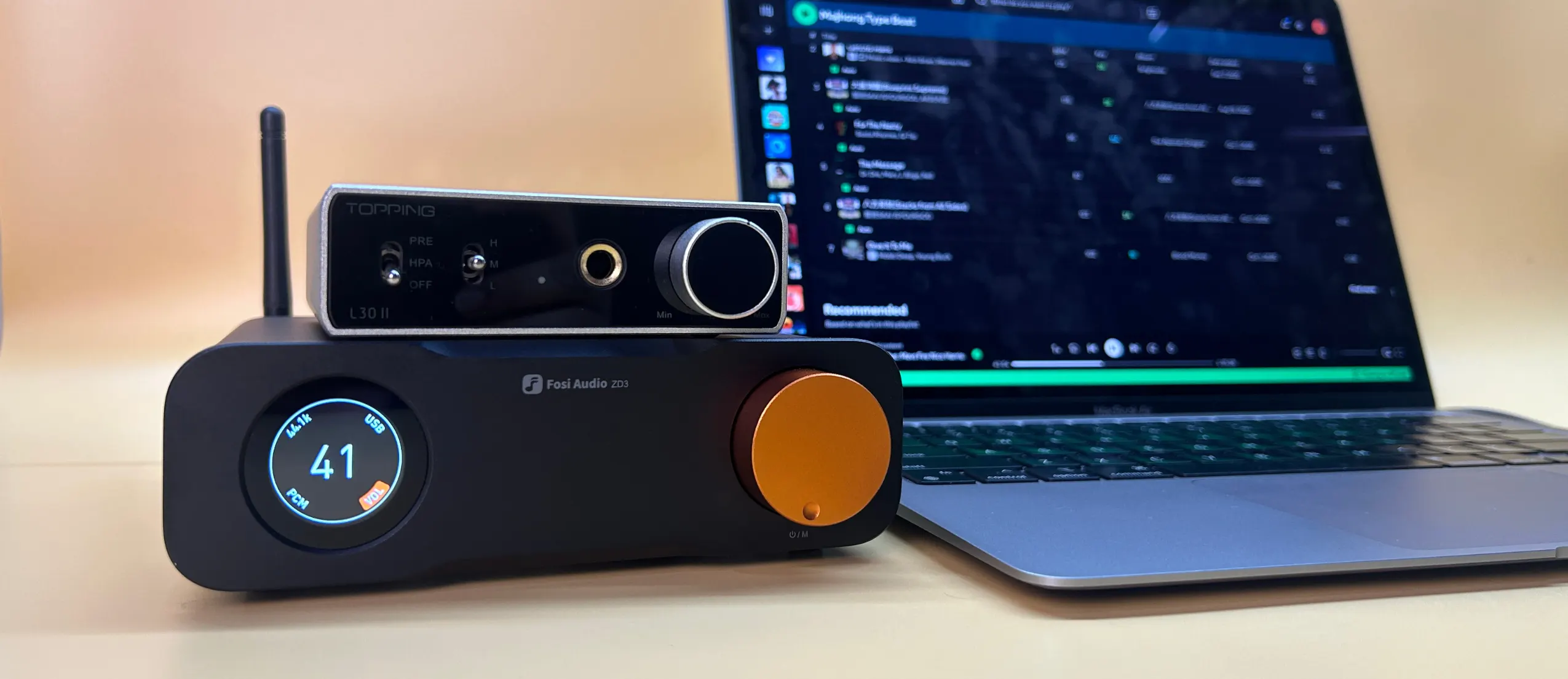
Meldrick reviews the Fosi Audio ZD3, a compact, fully-balanced ES9039Q2M-equipped desktop DAC with wireless Bluetooth streaming support. It is currently priced at $179.99.
Disclaimer: This sample was sent to me for my honest opinion. Headfonics is an independent website with no affiliate links. I thank Fosi Audio for their support.
You can click here to learn more about Fosi Audio products previously reviewed on Headfonics.
This article follows our current scoring guidelines, which you can read here.

As a rising brand in the high-value Hi-Fi market, Fosi Audio has been steadily expanding its product lineup with high-value Hi-Fi products such as the K7 and the i5.
Following the release of their amplifier offerings like the ZA3, they’ve now entered the DAC market with a fitting companion
The ZD3 is Fosi’s first “pure” desktop DAC, with its ESS ES9039Q2M DAC chip, HDMI ARC support, and fully balanced outputs. It aims to deliver premium features at a more wallet-friendly price.
Priced at $179.99, the ZD3 competes in a crowded segment filled with competitive alternatives such as the SMSL D1 and FiiO’s K11 R2R. Does it have what it takes to stand out from the pack? Read my full review below to find out.
Features
The ZD3’s spec sheet reveals an impressive array of features rarely seen at this price point. At its heart sits the ESS ES9039Q2M DAC chip, which enables the ZD3 to achieve an industry-leading 126 dB SNR and a THD+N of less than 0.00008%.
One of the ZD3’s most appealing features is its user-replaceable DIP8 dual discrete op-amps. The unit ships with LME49720 op-amps, but users can swap them for alternatives like NE5532, MUSES02, or SS3602 to tailor the sound signature to their preferences.
The ZD3 also comes with some nice-to-have connectivity features like Bluetooth connectivity and the novel inclusion of HDMI ARC inputs, making it fit perfectly in different listening set-ups.
Design
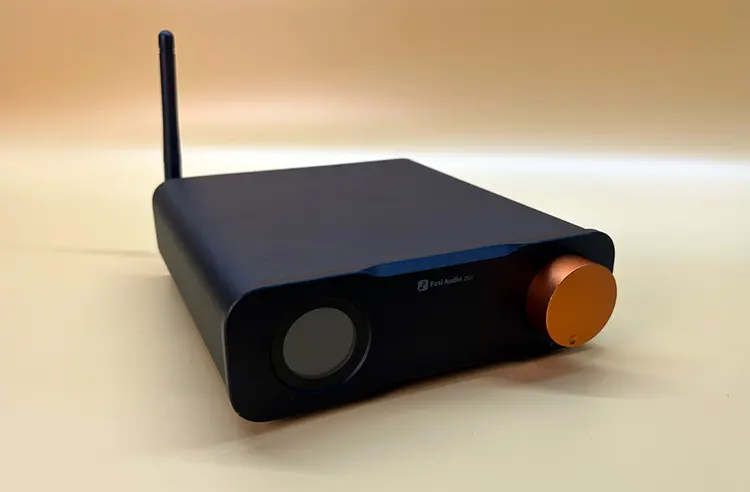
The ZD3 follows Fosi Audio’s modern design language that I first saw on the K7, featuring a clean, minimalist aesthetic that prioritizes both form and function.
The all-metal chassis is constructed from CNC-machined aluminum with a matte black anodized finish that resists fingerprints and looks professional in any setup.
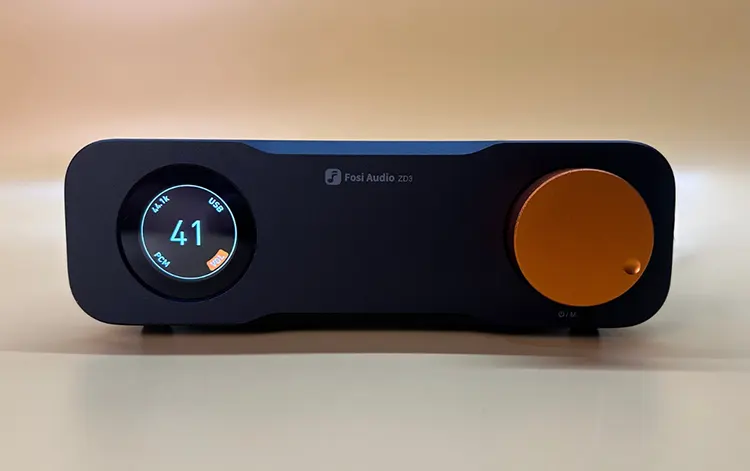
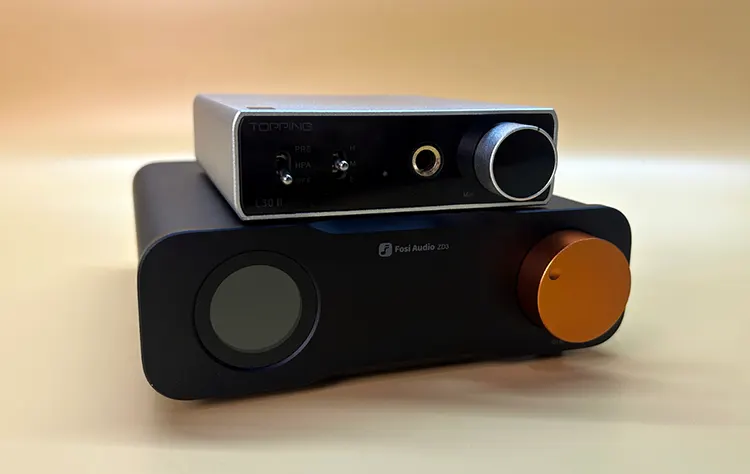
The front panel is dominated by two circular elements: a bright orange volume knob on the right and a 1.5-inch round OLED display on the left.
This symmetrical design creates a balanced, modern appearance that’s instantly recognizable as part of Fosi’s Z-series lineup.
The volume knob is made of aluminum with knurled edges for improved grip. It doubles as a multifunction button, allowing you to power the unit on and off, navigate menus, and switch between input modes with various press and turn combinations.
While I appreciate the knob’s solid feel and smooth rotation, it has relatively light resistance. This makes it easy to accidentally over-rotate when making fine volume adjustments, though you do get used to it over time.
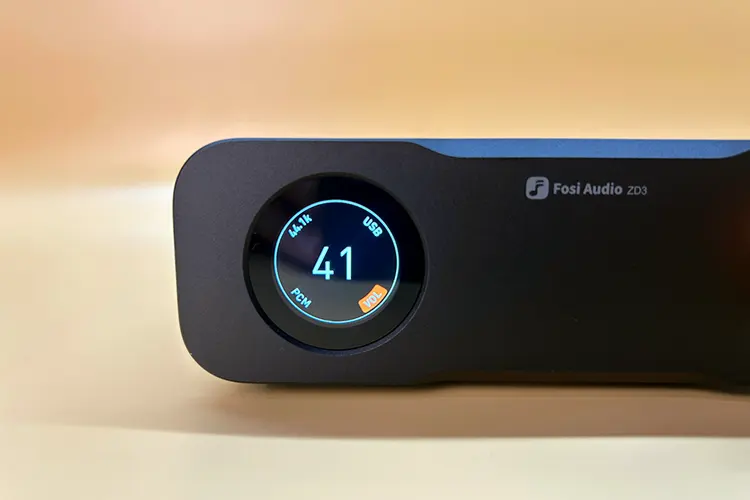
The OLED display is crisp and bright, showing key information like active input, volume level, sample rate, and bit depth. The screen can be set to stay on constantly or turn off after a period of inactivity, which is useful for those who prefer a distraction-free listening environment.
Four rubber feet on the underside provide excellent grip against flat surfaces. Despite its relatively light weight, the ZD3 remains stable even when heavy cables are connected to the rear panel.
The build quality throughout is excellent, with tight panel gaps and a solid, unified feel. I noticed that tapping the chassis produces a slight ringing sound, but it was very minor, and this doesn’t translate to any audible issues during actual use.
I/O
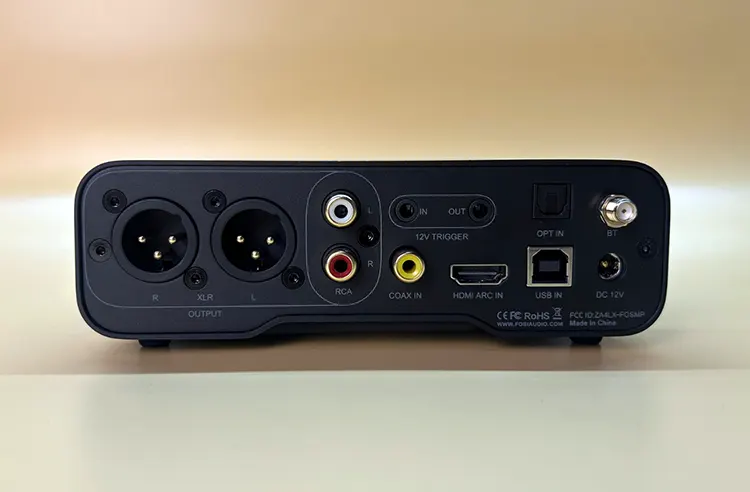
The ZD3’s rear panel is densely packed with connectivity options, making it one of the most versatile DACs I’ve tried.
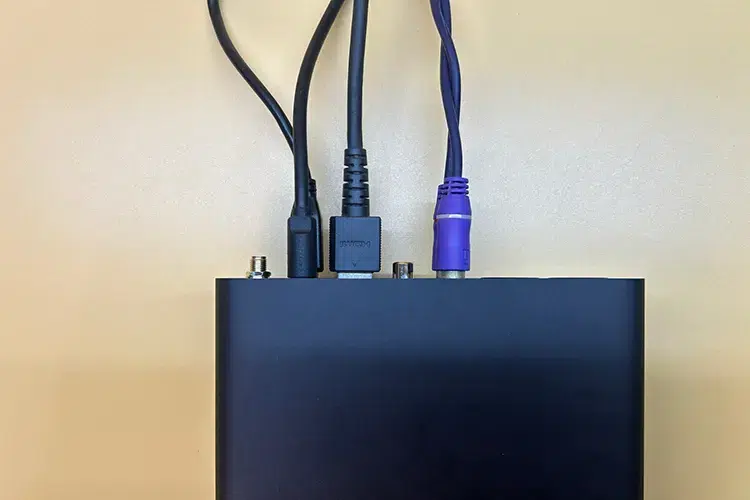
Starting from the left, you’ll find USB-B, HDMI ARC, optical, and coaxial digital inputs, along with a 3.5mm 12V trigger input. Moving right, the output section features both balanced XLR outputs (5Vrms) and single-ended RCA outputs (2.5Vrms).
The higher voltage output on the XLR connections makes the ZD3 particularly well-suited for pairing with power amplifiers that require more than the standard 4V to reach their maximum output.
A 3.5mm 12V trigger output sits alongside the analog outputs, allowing the ZD3 to automatically power on connected equipment. This is a premium feature rarely found at this price point, giving it more flexibility to be integrated into a two-channel set-up
The inclusion of HDMI ARC is particularly noteworthy, as it allows direct connection to modern TVs for high-quality audio playback. This makes the ZD3 an excellent choice for those looking to improve their TV’s audio quality without adding multiple components to their setup.
The USB-B connection supports Windows 7 and above with automatic driver installation, though installing Fosi’s dedicated driver unlocks the full 768kHz and DSD512 capabilities. macOS 10.6+, Linux, Android, and iOS work driver-free out of the box.
All optical and coaxial inputs support up to 24-bit/192kHz PCM, while the HDMI ARC input similarly handles 24-bit/192kHz. The Bluetooth connection, while limited to 24-bit/48kHz, still delivers respectable quality for casual listening.
Connectivity
The ZD3’s connectivity options represent one of its strongest selling points, offering both wired and wireless solutions that cover most use cases.
Wired Connectivity
With its range of five input options and dual outputs, the Fosi ZD3 allows users to connect multiple sources and playback systems simultaneously, offering flexibility in both input and output selection.
For this review, I connected the RCA output to my Topping L30 II headphone amplifier and SMSL DA-1 speaker amplifier. Inputs in use included USB from my laptop, Bluetooth from my phone, optical from a WiiM Mini streamer, and ARC from an LG Smart TV.
Wireless Connectivity
I tried to wirelessly pair to the ZD3 using my iPhone 14, MacBook Air M1, and ZTE Blade A75 Android smartphone.
Initial pairing to all 3 devices was a breeze, and I did not encounter any hiccups during setup. All devices maintained a solid connection with the ZD13, and I never noticed any signal dropouts.
Controls
The ZD3’s control scheme is refreshingly straightforward, centered around the large volume knob and supported by a simple yet comprehensive control scheme.
The primary control is the orange aluminum volume knob, which handles multiple functions depending on how you interact with it.
A simple turn adjusts volume in smooth, precise increments. The knob rotates with light resistance—smooth enough for quick adjustments but perhaps lacking the damping some users prefer for fine-tuning.
Pressing the knob once cycles through the different input options. The current selection is clearly displayed on the OLED screen along with the sample rate and bit depth of the incoming signal.
The included remote control provides convenient operation from a distance. It offers buttons for power, input selection, volume adjustment, and mute. While the remote is made of plastic and feels budget-appropriate, it’s fully functional and responsive.
I appreciate the inclusion of a preamp bypass switch on the bottom panel, which physically removes the volume control circuit from the signal path. This provides the cleanest possible output when using the ZD3 solely as a DAC with external amplification.
The OLED display is bright and easy to read from across the room. It shows volume level, active input, sample rate, bit depth, and format (PCM or DSD).
One small complaint: the display’s font size for input labels and sample rate information is somewhat small, requiring you to be within arm’s reach to read it clearly. Larger, more prominent text would improve usability.
Packaging & Accessories
The Fosi Audio ZD3 arrives in a well-designed retail box featuring product imagery and key specifications. Inside, dense foam inserts protect the unit during shipping, and everything arrives in pristine condition with no rattling or movement.
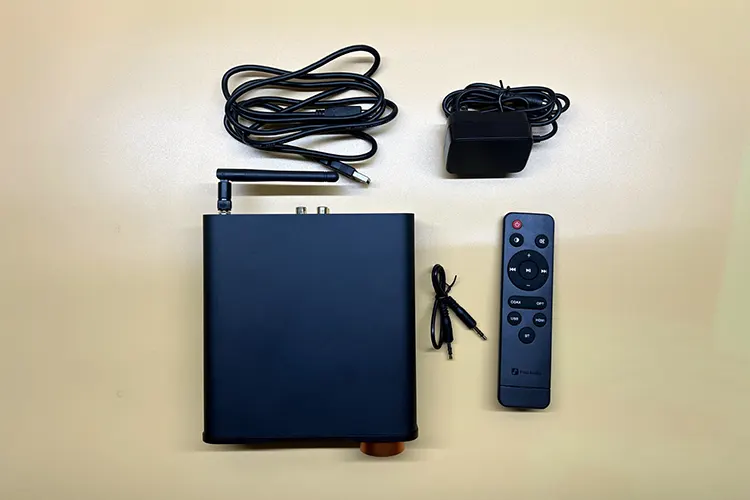
The package includes the ZD3 unit wrapped in protective plastic, a USB-B to USB-A cable for connecting to a computer, a power adapter, and a 3.5mm trigger cable for connecting to compatible equipment.
Also included is a compact infrared remote control (batteries not included), a user manual with clear instructions and specifications. Notably absent are RCA cables, though this is slowly becoming a rare inclusion in DACs at this price point.
I would have appreciated the inclusion of at least a basic set of RCA cables to enable immediate use in more systems. However, most users building a system around the ZD3 likely already have appropriate cables on hand.
Overall, the packaging is adequate and protective without being flashy, which is appropriate for a product focused on delivering value through performance rather than presentation.
Sound Impressions
The following sound impressions of the Fosi Audio ZD3 were completed using the Topping L30 II amplifier, the Sennheiser HD 600, HarmonicDyne BAROQUE, and Modhouse Argon Mk3 headphones, the MOONDROP Blessing 3, and Yanyin’s Canon II for my selected headgear.
I also tested the ZD3 with my SMSL DA-1 speaker amplifier paired with a pair of Wharfdale Diamond 3 bookshelf speakers. Testing was conducted using the single-ended RCA outputs to assess any performance differences.
Summary
The Fosi Audio ZD3 presents a slightly warm, smooth, and musical sound signature that prioritizes listenability and natural timbre over clinical precision.
This character makes it forgiving with less-than-perfect recordings while maintaining enough detail for critical listening.
Bass response is slightly elevated in the mid-bass region, lending kick drums and bass guitars added body and presence without becoming bloated or overwhelming.
Sub-bass extension is good, reaching deep on capable headphones, though it lacks the absolute slam and impact of more neutral DACs.
The midrange is the ZD3’s strongest suit, delivering vocals and instruments with natural warmth and realistic texture. Male vocals carry appropriate chest resonance, while female vocals maintain clarity and presence without sounding thin or hollow.
Treble is relaxed and smooth, rolling off gently in the upper regions. This presentation avoids harshness and sibilance even with bright recordings, but at the cost of some air and sparkle.
Cymbal crashes and high-hat hits have weight but can lack the delicate shimmer and extended decay of more neutral DACs.
Soundstage width is respectable, creating an enveloping presentation. However, depth layering is somewhat compressed, with instruments tending to cluster around similar distances rather than spreading front to back.
Imaging is clear enough to place individual instruments, though not with full pinpoint precision. In complex mixes, elements remain distinguishable, but their exact positioning can feel approximate rather than laser-focused.
Dynamics are a highlight, with satisfying impact and natural note decay. The ZD3 conveys the weight and texture of real instruments effectively, giving music an organic, analog-like quality that many listeners find engaging.

Timbre
The ZD3’s timbral presentation leans towards the warmer side; bass notes carry enhanced mid-bass emphasis, making electric bass and kick drums feel substantial and physical. I
n rock and electronic music, this added body gives tracks a satisfying sense of power and drive without muddying the midrange.
However, the sub-bass region, while extended, doesn’t hit with the visceral impact and raw depth of ultra-neutral DACs. Organ pedal tones and synthesizer bass notes are present and well-defined, but they lack that last bit of room-shaking authority.
The lower midrange is where the ZD3 truly shines, rendering vocals and lower-register acoustic instruments with rich, natural texture.
String instruments exhibit realistic body and harmonic complexity, with violin notes carrying appropriate woody resonance and piano strikes delivering both weight and clarity.
Male vocals benefit particularly from the ZD3’s tonal balance, with baritone voices displaying full chest resonance and appropriate warmth. Female vocals maintain clarity and presence, though they’re rendered with slightly less air and delicacy compared to brighter DACs.
The upper midrange through lower treble exhibits good detail retrieval without becoming analytical or fatiguing. Snare drums have snap and presence, guitars deliver texture and bite, and brass instruments maintain their characteristic brilliance.
However, the treble region shows a gentle roll-off in the highest frequencies. Cymbal crashes and high-hat strikes are clearly articulated with good definition, but they lack the shimmer and extended decay that more neutral DACs provide.
This treble character proves beneficial with bright or poorly recorded material, as the ZD3 tames harshness and sibilance.
Staging and Dynamics
The ZD3 delivers a wide and airy soundstage with excellent extension, creating an immersive, almost 360-degree listening environment.
This sense of openness makes music feel more expansive and captivating, especially in ambient, orchestral, or live recordings.
Imaging precision is adequate for the price point, allowing you to identify where instruments are positioned in the mix.
In simpler recordings, placement feels reasonably accurate, but in dense, complex mixes, the ZD3’s imaging becomes less precise.
Individual elements remain distinguishable from one another, but their exact positions can feel approximate rather than locked in place.
This won’t bother most listeners during casual enjoyment, but critical listeners may find it less satisfying than pricier alternatives.
Dynamics are a genuine strength of the ZD3, particularly in the bass and lower midrange. Drum hits carry satisfying weight and impact, with realistic attack and natural decay. This gives music a visceral, engaging quality that more clinical DACs sometimes miss.
Microdynamics are present, though not as finely resolved as more neutral DACs like the SMSL D-6s. You’ll hear the general shape and character of these nuances, but not every microscopic detail.
Click on page 2 below for my recommended pairings and selected comparisons.
