

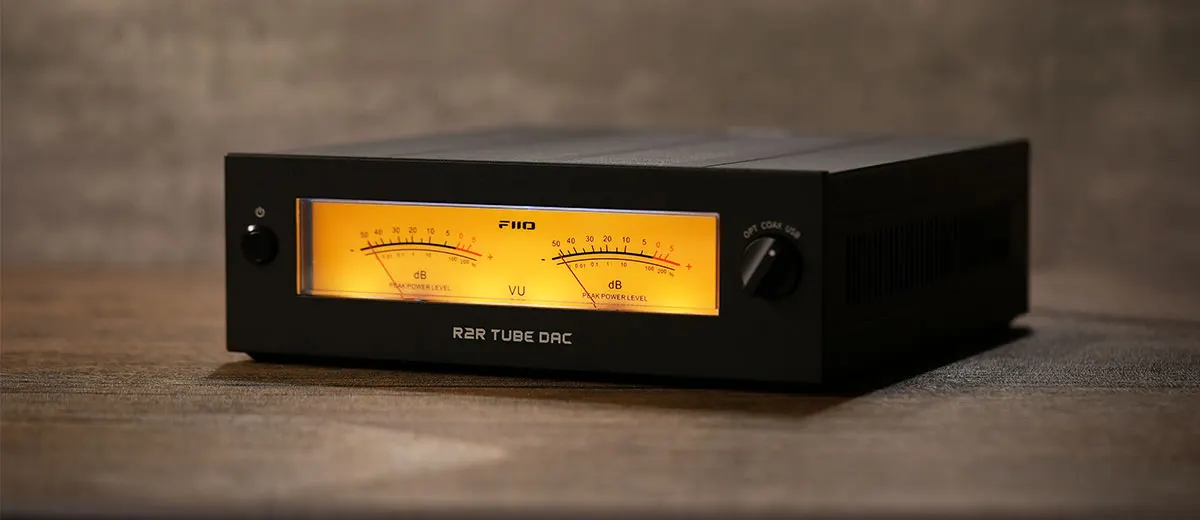
James reviews the FiiO Warmer R2R, a desktop 24-bit R2R DAC and tube buffer with up to DSD256 decoding and a retro-inspired external design. It is currently priced at $349.99.
Disclaimer: I received this sample in exchange for my honest opinion. Headfonics is an independent website with no affiliate links or services. I want to thank FiiO for their support.
You can click here to learn more about the FiiO audio products previously reviewed on Headfonics.
This post follows our current scoring guidelines, which you can read in more detail here.

Up for review today is FiiO’s latest R2R and tube-equipped desktop DAC, called the Warmer R2R, which is available at $349.99.
From the naming, it is clear what FiiO aims to convey to the audience. I can’t help but feel genuinely excited to hear how this desktop DAC, with a 24-bit resistor array and JJ Electronic E88CC tubes combo, can alter the output texture of selected amplifiers.
The inclusion of a NOS/OS switch, providing two signatures, along with the prominent physical VU meters on the front panel, also adds to the anticipation for the retro vibes and sound.
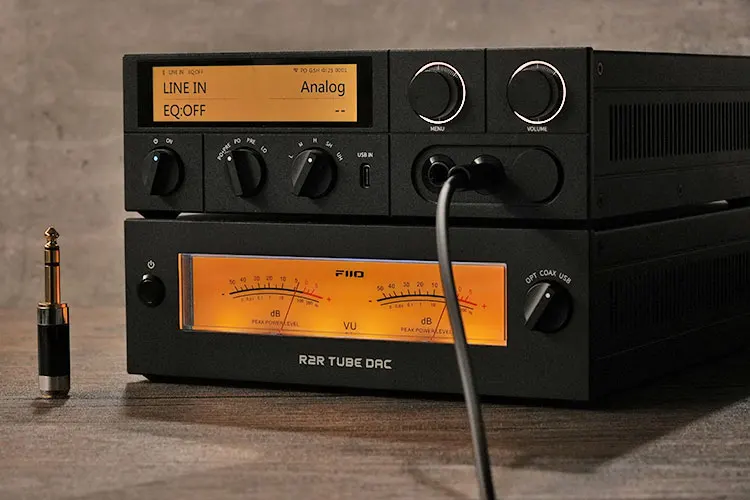
The Warmer R2R DAC stacks seamlessly on the K17 and K15, but the crucial question remains: how will they perform together? Keep reading to find out!
Features
R2R & Tubes
The Warmer R2R DAC is equipped with tube buffers and an R2R resistor array, capable of decoding USB signals supporting DSD256 / 32bit 384kHz PCM or connecting to traditional hi-fi systems via optical and coaxial inputs for decoding at 24bit 192kHz and 24bit 96kHz, respectively.
It has a fully-differential R2R ladder that utilizes thin-film resistors with 0.1% accuracy and a 30ppm rating, employed for its outstanding resistance stability even under high circuit temperatures for stable performance.
For those who are interested in the components, you will find four high-quality, low-distortion JJ Electronic E88CC tubes.
Each has a lifespan of 10,000 hours, operating at ±28V as buffers to introduce their coloration, enriching the output with enhanced fullness, body, and harmonics for a rounded, organic presentation.
These tubes sound quite modern to me, with an agile and clean response that teams up with the R2R design nicely for a tight, textured output.
Power
The Warmer R2R is very hefty with a 46W toroidal “O-shaped” transformer inside for stable power output with minimal ripple, vital for reducing distortion and enhancing clarity.
Utilizing a Linear PSU configuration, the Warmer R2R achieves a signal-to-noise ratio (SNR) of 114dB and maintains a noise floor of ≤7uV, which is commendable for a tube-driven design.
As for output power, the XLR output provides ≥3.8Vrms (1kHz @ 10kΩ) across the two channels, while the RCA output delivers a comparatively weaker ≥1.8Vrms output.
When it comes to total harmonic distortion plus noise (THD+N), the Warmer R2R delivers respectable performance given its R2R & Tube design, measuring just ≤0.053% (1kHz / -7dB @ 10kΩ).
NOS/OS
Similar to other R2R DACs I’ve tested, the Warmer R2R includes a toggle switch that allows users to seamlessly switch between non-oversampling and oversampling modes.
In my testing, I’ve found that the oversampling mode, which upsamples the output to 384kHz, consistently delivers a smoother, denser, and more controlled sound quality.
On the other hand, the non-oversampling mode sounds more relaxed and less tight in the vocal and feels more expressive in the mid-lows.
Depending on the genre being played, this feature enables users to adjust the timbre, offering two distinct ways to experience the same tunes.
Design
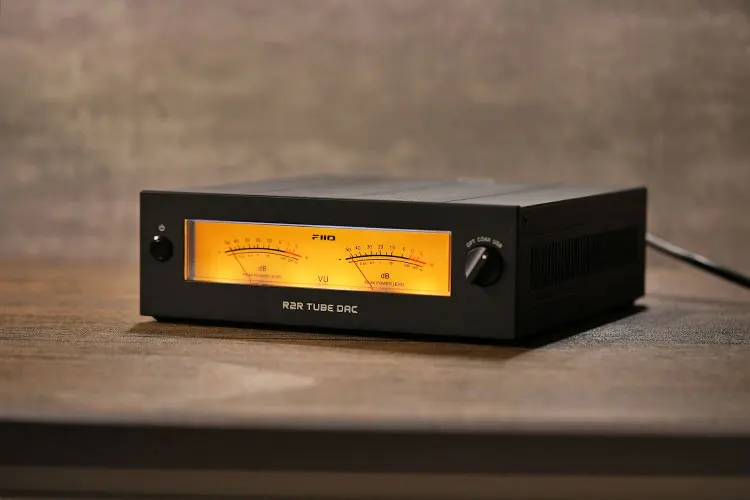
The Warmer R2R is available in two color options: silver and black, in line with the design theme of the K15 and K17.
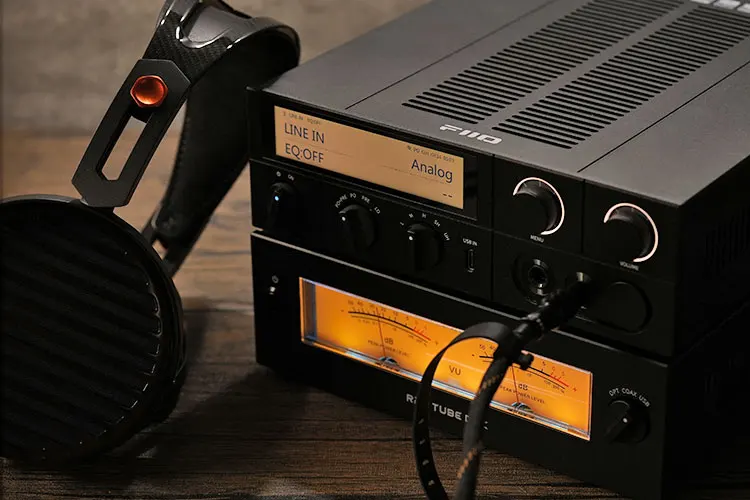
The retro vibes are accentuated on the Warmer R2R with the inclusion of two large, physical VU meters backlit in amber, reminiscent of vintage power amplifiers. The overall build is very solid, weighing in at nearly 3kg, and you can see thick jumpers from the side vents.
The design is sleek and minimalistic, featuring an on-off button and input selector on the front panel.
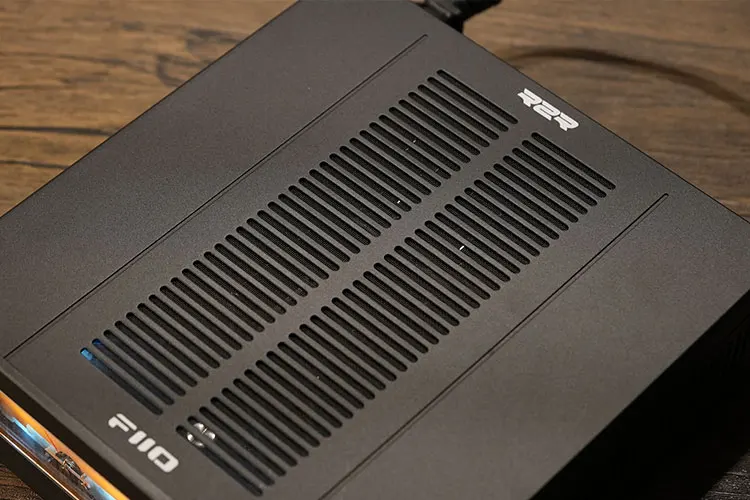
The casing is constructed using bent sheet metals, an effective method to reduce costs and weight. Heat dissipation vents are situated on the sides and top, with rubber legs underneath to dampen resonances.
While many modern devices with screens emulate VU meters for visual playback effects, nothing compares to the authenticity of physical implementations.
This design choice complements the analog theme embodied by Warmer R2R’s hardware configuration, enhancing the retro aesthetic and looks very pleasing.
One suggestion for improvement is relocating the NOS/OS toggle to the front panel for easier access, allowing users to switch between profiles more conveniently. However, it is also arguable that you can reach the back of the Warmer R2R to find the toggle switch easily.
I/O
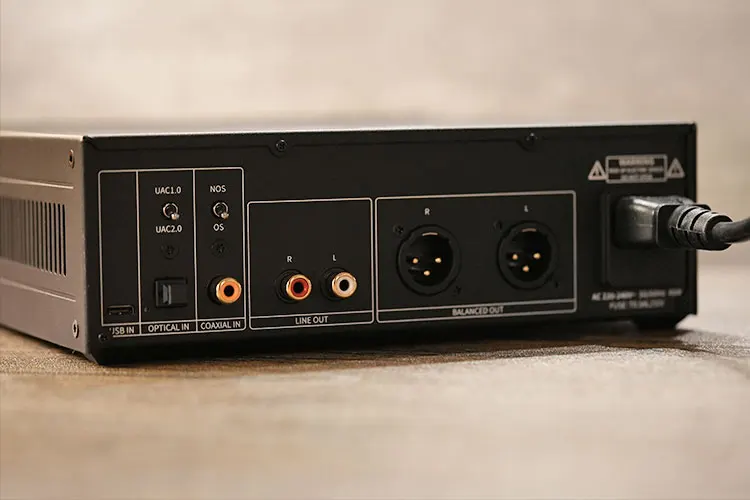
One aspect that I appreciate is the incorporation of UAC 1.0 and UAC 2.0 support, eliminating the need for drivers for various devices such as consoles, laptops, and phones.
With a USB-C port at the back, alongside Optical and Coax inputs, as well as RCA lineout and Balanced XLR outputs, the Warmer R2R offers great versatility, unless HDMI decoding is necessary.
It’s worth noting that with USB decoding, the device supports the highest decoding rates at PCM 384kHz/32-bit and DSD256.
For Coaxial input, PCM 192kHz/24bit decoding is supported, while Optical input can handle up to PCM 96kHz/24bit.

Packaging & Accessories
The Warmer R2R arrives in packaging akin to that of the K17 and K19, demonstrating a professional and well-protected presentation with foam cushioning.
Despite its compact size, the Warmer R2R is notably heavy, necessitating the use of thick foam padding for adequate protection. FiiO goes the extra mile by providing two layers of boxes to ensure sufficient safeguarding during transit.
Included accessories consist of a power cord, USB cable, spare fuse, user guide, and warranty card.
Sound Impressions
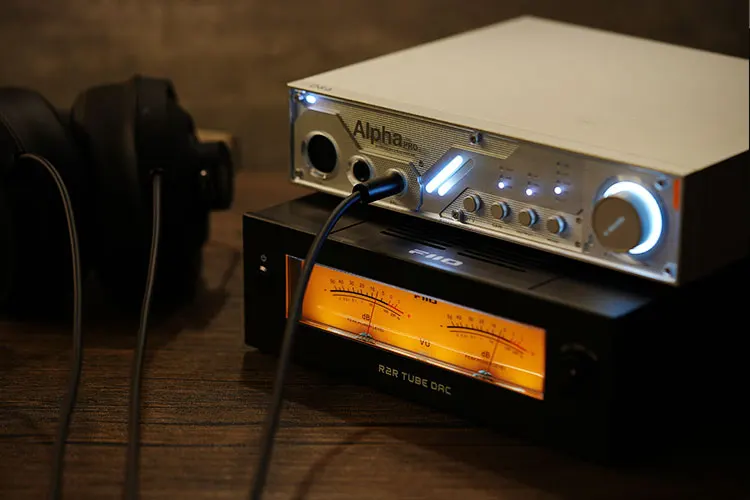
Since they are the same size as the Warmer R2R, I used the FiiO K17 and the K15 for testing, along with the K9 Pro ESS and other amplifiers such as the Luxsin X9, to assess their collective performance.
The Warmer R2R received approximately a week of run-in before I detailed my sound impressions below.
Summary
Upon initially learning about the Warmer R2R’s design featuring R2R and Tubes, I wondered if it might smooth out the sound, potentially sacrificing some power and texture.
However, upon listening to the actual output, it is tuned rather naturally without compromising details and dynamics.
The Warmer R2R delivers a smooth and powerful performance, offering delightful retro vibes as anticipated, while maintaining a commendable level of definitive power and firmness in its attack. This contributes to a richly layered and well-defined soundscape.
In general, if you possess an integrated DAC and amplifier that leans slightly towards a cooler and smoother sound profile, lacking an engaging midrange and resolution, the Warmer R2R steps in to enrich the output with lushness, denser punch, and enhanced vocal harmonics.
It refines the vocal line, imbuing it with more depth and richness, strengthening overtones, and ensuring clean, punchy, and impactful bass response.
Given the Warmer R2R’s relatively neutral and clean tonality for a Tube device, somehow not as bassy as I expected, I would recommend opting for the slightly Warmer R2R signature in NOS mode.
This mode not only presents a more organic presentation with vocal performances but also enhances the midrange with a smoother yet controlled character than in the OS mode, which outlines the vocal with better clarity and with a speedier response.
Timbre
The Warmer R2R offers good versatility in its applications, suitable for connections to devices with digital outputs, as well as phones and tablets through USB connections.
It can also complement entry-level integrated amplifiers with DACs that may lack focus on decoding or power supply.
Overall, the Warmer R2R exhibits a clean tuning with a decent dynamic range, delivering powerful output to the amplifiers I tested it with.
The blend of R2R and Tubes imparts a pleasing mix of dense texture, smooth midrange, elaborated harmonics, and punchy lows without compromising speed, making it suitable for various music genres, as it doesn’t sound overly colored or leaned to either side of the spectrum.
With a linear power supply inside, the bass gets more impactful and agile compared to integrated solutions like K15 that do not have a linear power supply.
Paired with the K15 and K17 or those amplifiers with cleaner, digital signatures, the Warmer R2R can help enhance the perceived power and provide a fuller, more organic timbre.
Staging
Even when connected via RCA, the Warmer R2R’s output delivers a spacious, layered output with a relaxed yet well-defined timbre across the spectrum.
The mid-range textures are intricately detailed, offering clear layering and soothing air that is sometimes lacking in integrated DAC and Amplifiers.
Switching to an XLR connection, the Warmer R2R exhibits enhanced clarity and spatial openness, providing a more transparent sound profile.
The mid-range strikes a balance, avoiding an overly warm rendering, ensuring strong vocals and instruments, especially those with deep bass, remain controlled and precise without bloating.
The Warmer R2R impressively extends both the low and high ends, presenting elaborate yet controlled bass with agile transients and tightness in the lower frequencies. This contributes to improved accuracy and positioning within the soundstage.
Vocals are slightly laid back, rendered smoothly with adequate separation power, and feel slightly fuller and more elaborated in the bass decay with NOS mode. Adjusting the 6-7kHz range slightly and boosting the ends could enhance roundness and signature excitement.
In oversampling (OS) mode, positional accuracy and textural clarity are heightened, allowing for distinct percussion instrument attacks.
For genres like jazz or slow instrumentals, switching to the Non-Oversampling (NOS) mode may blend elements more seamlessly, with the midrange frequencies being more powerful.
Click on page 2 below for my recommended pairings and selected comparisons.
